Going back through some old notes, I found some things I wrote down after the first lockdown on what community recoveries might be like. Having some sort of positive future vision for neighbourhoods to aspire and work towards was one of them.
I was at The Junction in Cambridge earlier this morning for their regular Arts & Minds creative cafe – although wearing a pale sweatshirt meant I had to stay a safe distance from the paints.
Above – Arts & Minds Cambridge
I’m not referring to the existing Neighbourhood Planning Process
Which you can read about here, and is more relevant to the towns and villages that have their own parish and town councils. In urban areas because there is no constituted level of governance that has its own permanent staff and resources allocated to it, producing a neighbourhood plan within our existing broken planning system is all but impossible without volunteers who have the time, expertise, resources, and the willingness to put into it.
“A neighbourhood plan attains the same legal status as a local plan (and other documents that form part of the statutory development plan) once it has been approved at a referendum. At this point it comes into force as part of the statutory development plan.”
Government guidance on neighbourhood planning
Above – this is an example of why I think the existing neighbourhood planning system is utterly broken. (You can read the legislation on neighbourhood plan referendums here). If you have a population with a high turnover – such as a ward or neighbourhood with a large amount of student accommodation or short-term-let properties, what are the chances that locals are going to get involved in the planning process let alone case an informed vote at a neighbourhood planning referendum? When you scroll through the guidance/Q&A, ask yourself how many people would be willing to read through the document in full and analyse everything to the extent where they are fully knowledgeable about the process? How many people would be willing to read through that entire document?
Unless someone is paid to understand the process (especially in a cost-of-living crisis in year 13 of austerity), it would take a very motivated individual to set aside the time and undertake such a task with a view to getting more people involved. Which is why I think when ministers talk about such neighbourhood planning they are basing it on a series of assumptions so strong as to be meaningless fantasy. It demonstrates how out of touch senior decision-makers are with how so many people live their lives. How many people know about the basics of local government and local town planning, let alone neighbourhood planning?
I’ve suggested books over the years (which you can find new and second hand here) …but there’s nowhere that adults can learn about this stuff even though we’re familiar with the phrase: “Ignorance of the law is no excuse!” Well…it is if successive education ministers have refused to put in place the mechanisms to ensure the basic concepts of the law and democracy is taught to everyone.


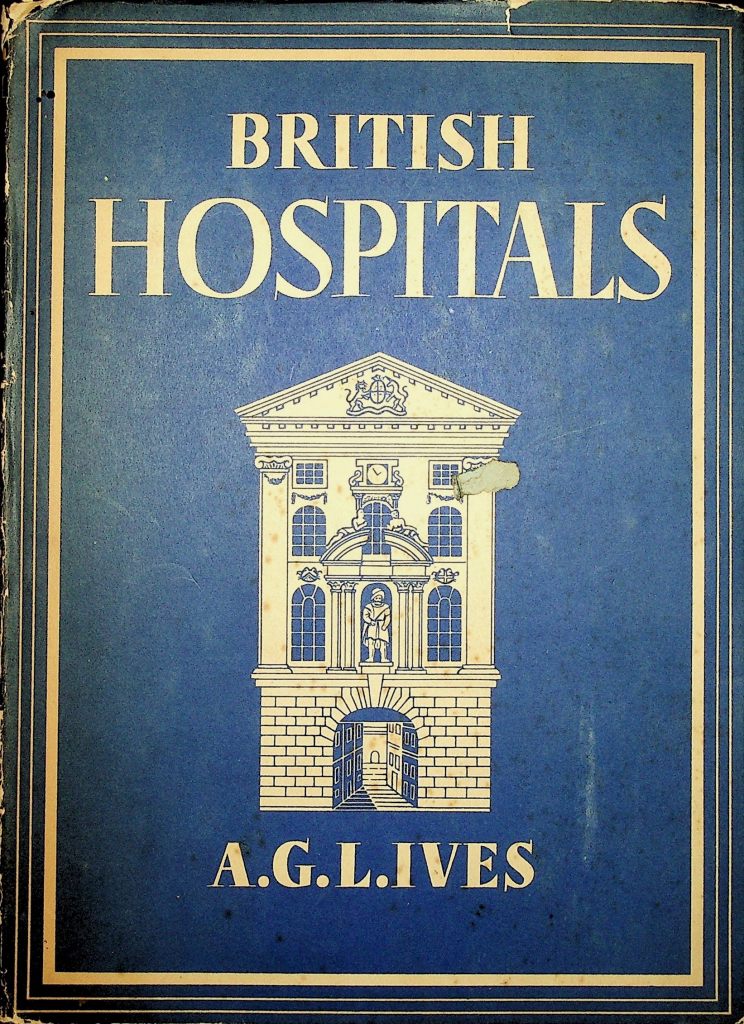


Above – books on politics – we used to have lots more of them around in the olden days! Note The Case for Federal Union (a world federal government) was published in 1939 and was a fairly prominent political issue in the very early post-war years.
“What would neighbourhood social planning be like?”
At its simplest, it would involve some community workshops where everyone taking part discusses:
- what they would like their local area to be like in five years time
- what they see as the barriers/obstacles to achieving that vision
- what they see as the shared resources to use in achieving that vision
- what they are prepared to do individually to help achieve that vision
- what they think is needed from whom outside of the neighbourhood (eg public service institutions, voluntary groups, private sector etc)
…and then having annual or six-monthly progress updates.
It really does not need to be much more than that. If anywhere wanted to go for something more ambitious and get local people and local institutions to sign up to specific commitments, the Neighbourhood Agreements concept piloted by Max Moar is one tried and tested – and successful route. (The Home Office took it up and ran a further pilot in the early 2010s – you can read the evaluation here). It’s something I’ve wanted in Cambridge ever since I stumbled across this in my civil service days on a visit to Oldham in Greater Manchester.
Sadly everything fell upon a concrete block as ministers slashed local council budgets. Successive ministers time and again have failed to appreciate the importance of local councils as anchor institutions for community activities. That for me was one of the reasons why we did not see many community celebrations of the Coronation of Charles III.
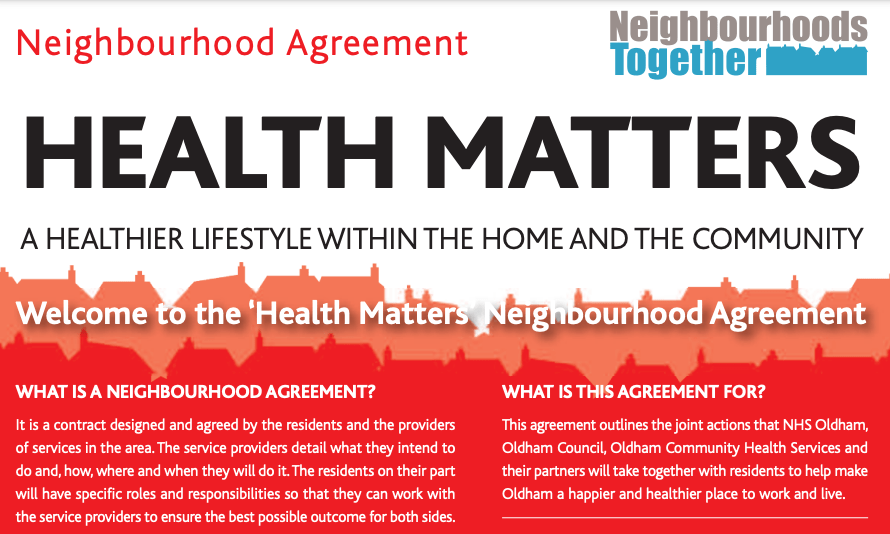
Above – snapshot from the Health Matters Neighbourhood Agreement in Oldham (Link – scroll to the end of this page). What might neighbourhoods in Cambridge sign up to with their community health service providers?
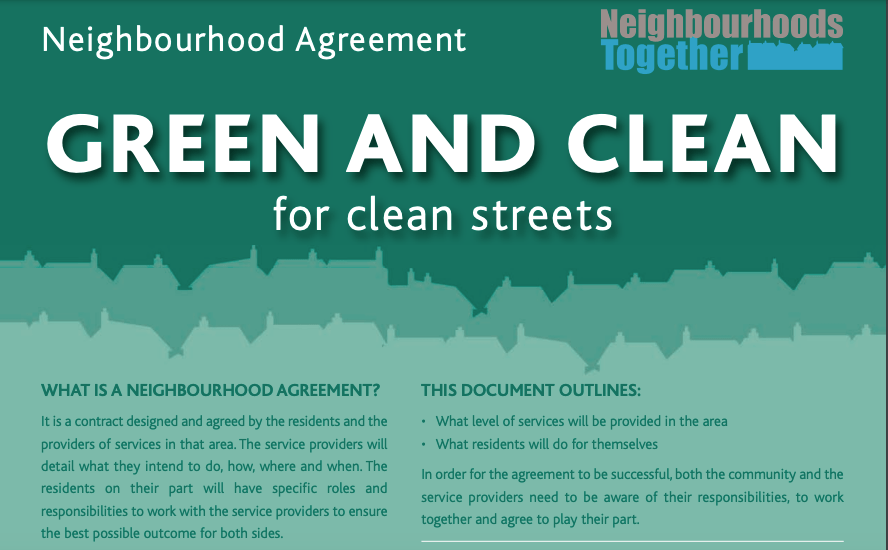
Above – snapshot from the Green and Clean Neighbourhood Agreement in Oldham (Link – scroll to the end of this page). What might neighbourhoods (including small businesses that inevitably generate litter, such as fast food outlets) in Cambridge sign up to with their local service providers?
One of the reasons why these showed signs of success was as Max stated, the communities themselves were starting to take ownership of their own neighbourhoods rather than relying on ‘the council’ to do everything – or rather having to clear up the aftermath of antisocial behaviour from a minority of people. Think of your stereotypical local news reports of fly-tipping and vandalism – and in Cambridge’s case, people using motor vehicles with unlawfully loud engines. Part of me has wondered what the police would do if some local residents armed with camcorders and a sound meter recorders (such as these here) presented evidence of their findings.
Part of me wants to say to ministers:
“You won’t be very good in your War on Woke if you can’t stop those boy racers zipping up and down the road like that!!!”
Noting the Conservatives have held the office of the Police and Crime Commissioner for Cambridgeshire & Peterborough ever since it was invented – not that many people will be able to name the slightest difference the post, let alone the post-holders have made since the creation over a decade ago. Oh, and it’s their party’s Home Secretaries too – the less of which said the better!
It’s not just stopping the bad stuff – it’s also about the positives: Not just the one off community lunches that coincide with a national event but shared experiences over an extended period of time, getting to a point where neighbourhoods and communities are functioning at a level where collectively they are greater than the sum of their parts
This is why the mapping of community facilities is ever so important: People need to know what is there, what is accessible, how and when. (See my earlier blogpost)
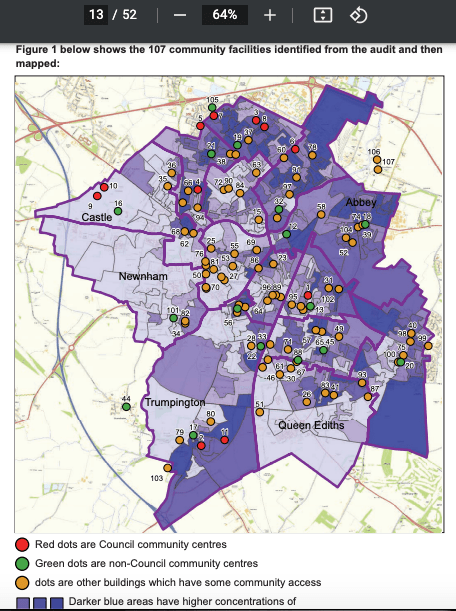
Above – from Cambridge City Council – Community Centres Strategy 2019
Do each of the community centres have old-school notice boards that the public can pin things up on? I wonder what screenshots of them would look like. Or what sorts of events and notices are being put up on them by centre users?
And finally…
Despite the ‘5 year’ label and the historical baggage such things can carry, it’s more about having some end points to focus minds. Otherwise nothing gets done. Furthermore, it’s all very well having a vision or a dream of something wonderful for the future – whether concert halls, trams, civic museums, sports centres and the like. But in order to get things built, a huge amount of grassroots community activities need to take place first. For a start, people need to feel that their communities are worth their time and effort investing in. That won’t happen if existing structures, systems, and processes always seem to be working against them. (See the town planning system – stacked in favour of those with the most resources and benefiting those most able to extract the most wealth from the commonweal).
So part of any neighbourhood social planning has to involve democracy education and learning about the principles of civic society & citizenship. Because once those essentials have been learnt, people have more of a chance of understanding for themselves not just what is going wrong (they can see the potholes), but why things are going wrong and what practical things they can do to put things right. And that’s a far better outcome than having someone like me stood at the front of a classroom saying ***you need to do this, this and this!***. Right?
Food for thought…
If you are interested in the longer term future of Cambridge, and on what happens at the local democracy meetings where decisions are made, feel free to:
- Follow me on Twitter
- Like my Facebook page
- Consider a small donation to help fund my continued research and reporting on local democracy in and around Cambridge.
 The Cambridge Town Owl