
A rallying call from former UK diplomat Alexandra Hall Hall (she has an interesting family tale about the origins of her double-surname) matches those coming from the communities and local government sectors about overhauling our internal institutions, how we are governed, and how we hold accountable those who do the governing.
The context is national government – which as you may recall was lampooned by The Juice Media in Australia here (hence the screengrab image)
Different ways of going after the same institution – and same problem?
You can read Alexandra Hall Hall’s article here to see how she dealt with it.
“Until we can speak the truth about Brexit, we will not be able to speak the truth about anything – let alone come up with any realistic solutions.”
Alexandra Hall Hall in Byline Times, 2 June 2023
She goes on to say:
“I bitterly regret that in 2019 our party chose to go along with Boris Johnson’s Brexit deal, even though we knew its flaws, because we also were afraid to tell the truth to voters. This was not political leadership, but political cowardice. This ends here and it ends now. “
That final line sounds familiar to me – but with a more positive slant on involving people in our local democracy.
“I say not another generation failed. The overhaul of our city starts here, it starts now, and it involves all of you!”
Antony Carpen (me!) to Queen Edith’s Hustings, Cambridge 28 April 2023
Given the nature of my candidacy in Queen Edith’s ward, I didn’t campaign for votes – or as a party candidate. I treated the hustings as a cross between a local history talk and a public policy event. Therefore rather than say: “Elect me and I will get the potholes fixed”, on more than one occasion at the hustings I responded:
“Cambridge City Council does not have the legal powers to do it”
Queen Edith’s Hustings, 28 April 2023
I also showed large print outs of graphs showing the cuts to council budgets from central government – thus helping educate local residents about the legal powers, the information, and the data sources that influence decision-making. We saw precious little of this in the run up to the EU Referendum.
Any attempt to have another referendum on all things EU therefore needs to have a massive democracy education programme for adults in the run up to it – on the scale of some of the massive public health education programmes of decades gone by. That programme cannot be based on what individual politicians or parties would like, but rather how specific institutions and public services function, and underpinned by which pieces of legislation. Or put more simply by the late Tony Benn MP in 2001:
- “What power have you got?
- Where did you get it from?
- In whose interest do you exercise it?
- To whom are you accountable?
- How can we [the people] get rid of you?”
This is one of the reasons why I keep returning to the issues of citizenship & democracy education for adults, and lifelong learning generally. The opening foreword to this guide to Canadian Democracy published in 1945 (very similar to the UK’s at a national/federal level in that it has a House of Commons, a Prime Minister accountable to Parliament, and legislation signed off in the name of the monarch in Canada’s case by the Governor General).
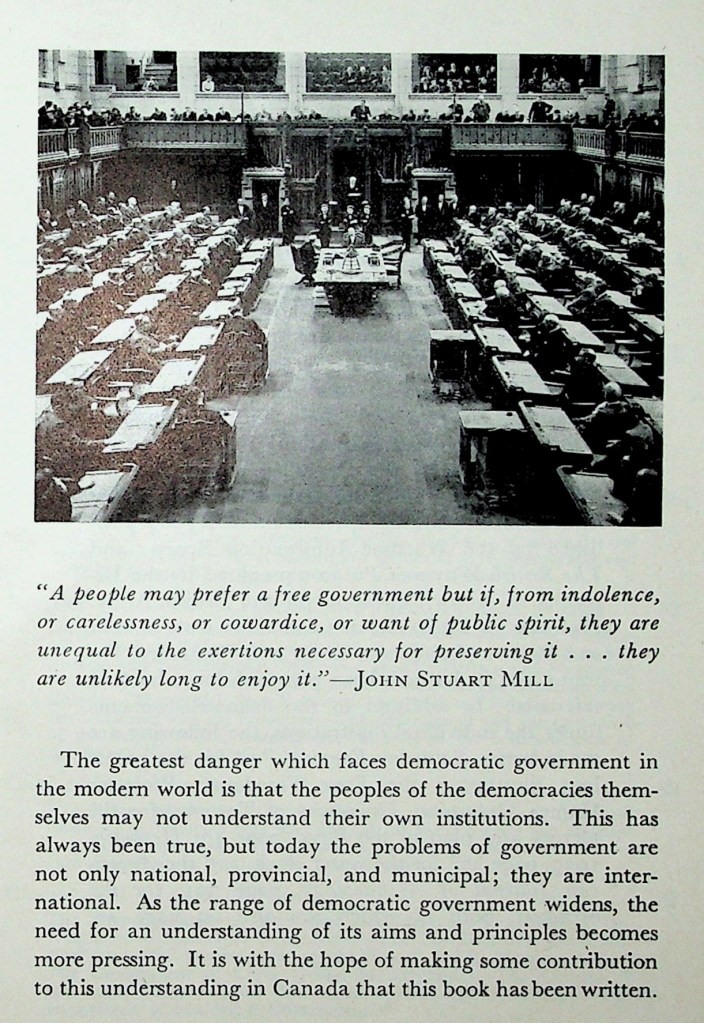
“The greatest danger which faces democratic government in the modern world is that the peoples of the democracies themselves may not understand their own institutions”
“As the range of democratic government widens, the need for an understanding of its aims and principles becomes more pressing.”
Canadian Democracy in Action, by the Ontario Dept of Education, 1945
The political, media, and publishing establishment seemed to understand this in the mid-20th Century if the number of publications educating the public about our institutions is anything to go by. The books published before, during, and just after WWII are listed here and are still available second hand.
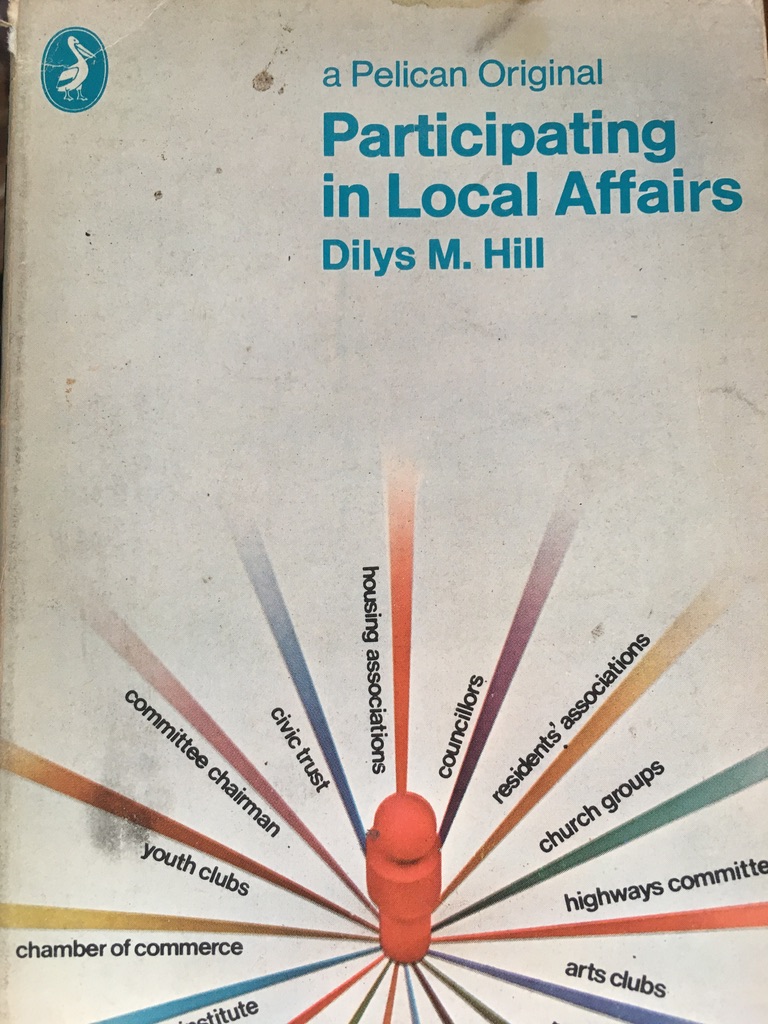


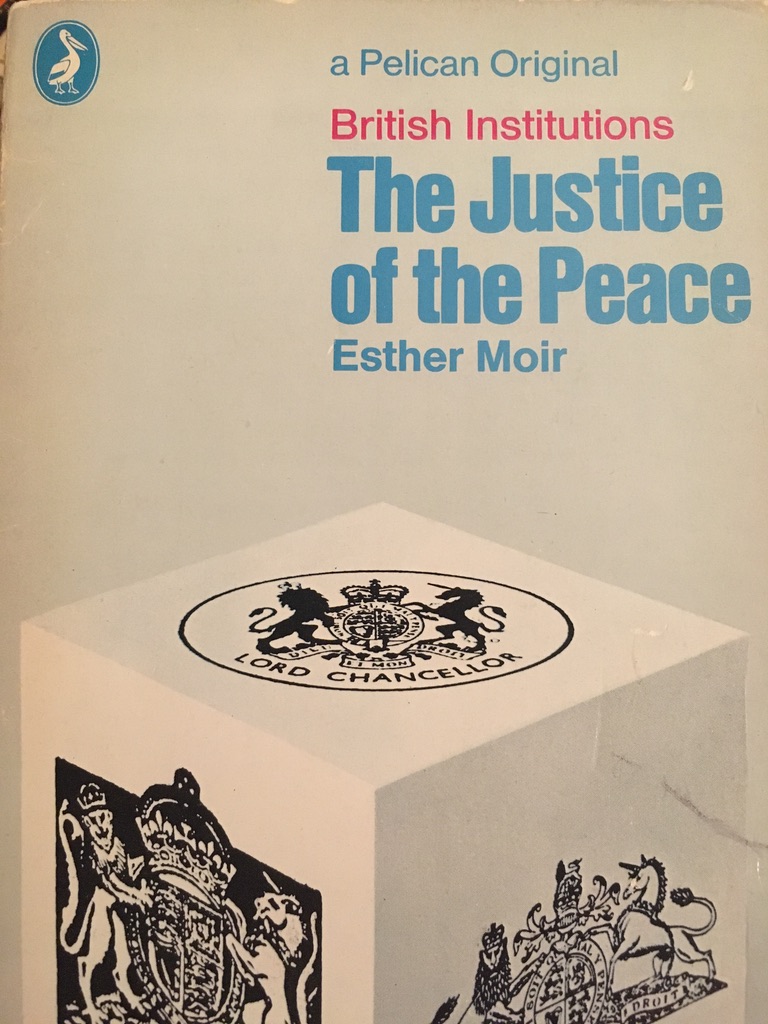

For whatever reason, we seem to have lost that tradition of democracy learning – the consequences of which we are still living with as people struggle to hold not only governments, but multinational corporations and tech giants to account for their actions that have huge impacts on society.
Failing that, go for books aimed at younger audiences.


“Tell the people the truth”
This is a theme that runs through Alexandra Hall Hall’s piece – not surprising for someone who like me was a former civil servant, though in her case far more senior and experienced than me. The Civil Service Code’s values for more than a few of us stay with us long after we’ve moved on. Those values? They are:
- ‘integrity’ is putting the obligations of public service above your own personal interests
- ‘honesty’ is being truthful and open
- ‘objectivity’ is basing your advice and decisions on rigorous analysis of the evidence
- ‘impartiality’ is acting solely according to the merits of the case and serving equally well governments of different political persuasions
Which is why when Ministers of the Crown routinely lie, blur the line between fact and fiction, make things up on the spot, and are generally casual with regards to accuracy in their public statements and media appearances, it makes it impossible for civil servants to do their jobs. And when the culmination of all of those finally comes together as a huge tidal wave, there is little that civil servants can do to support ministers. Especially when civil servants themselves are routinely disparaged by the very ministers who they are employed to serve.
Historical examples from wartime in the 20th Century
The history of Britain in the 20th Century tells us of previous occasions where public opinion and society changed through the experience of the catastrophes of war. During and in the aftermath of both world wars you can find examples of where movements were scathing of the actions of the governments of the day – whether the Union of Democratic Control during the First World War, through to the removal of Prime Minister Neville Chamberlain in May 1940. This was despite Chamberlain inheriting Stanley Baldwin’s massive parliamentary majority from the 1935 general election. If you want to see how scathing the MPs were of Neville Chamberlain before his fall from power, read the transcripts of “The Norway Debate”
- 07 May 1940 – Conduct of the War, Part 1
- 08 May 1940 – Conduct of the War, Part 2
“Members have ever taken part, and to-day, in my opinion, we must throw away all respect for friendships, party loyalties and personal affection, and pay attention only to two questions—the absolute truth and the welfare of the country.”
“[MPs should not allow Churchill – then Chamberlain’s First Lord of the Admiralty] to persuade them that all is well, that they can go away happily for a somewhat increased Whitsun holiday, because if they do so, they will be untrue and unrepresentative of the mood of their constituents and unworthy to represent their fellow countrymen.“
Duff Cooper MP, Hansard, Col 1300, 08 May 1940
“I would ask hon. Members opposite, is it not the case that the Norwegian episode—inadequately and, if I may say so, unconvincingly explained to the House by the Prime Minister—has profoundly shocked the people in every constituency in Great Britain? They have been misled by optimistic speeches.”
Arthur Greenwood (Lab) Hansard 1171 08 May 1940
“What the right hon. Gentleman has said, and what is constantly said, is that you must not attack the Government because it will endanger the country. There are times when the only safety of the country is attack upon the Government, and it will be a grave dereliction of duty on the part of the Members of this House if, being honestly convinced that it is necessary to challenge the issue, they take no steps to do it. That is why I regard the Debate that we are having to-day as the most momentous that has ever taken place in the history of Parliament.”
Sir Stafford Crips (Lab) Hansard Col 1291 08 May 1940
“I am saying that it is our duty, as responsible representatives of the people, to tell our own supporters unpleasant truths, and we are not doing it.”
Earl Winterton, Hansard Col 1169, 07 May 1940
“People are saying that those mainly responsible for the conduct of affairs are men who have had an almost uninterrupted career of failure.”
Clement Attlee Hansard Col 1093, 07 May 1940
“In recent years the normal weakness of our political life has been accentuated by a coalition based upon no clear political principles… …Somehow or other we must get into the Government men who can match our enemies in fighting spirit, in daring, in resolution and in thirst for victory”
Leo Amery Col Hansard Col 1150, 07 May 1940
The last quotation ends with Mr Amery quoting the former MP for Cambridge (Oliver Cromwell) which was a devastating blow for Chamberlain.
Yet it’s the keyword searches that are also striking. “Fail” comes up 42 times on the first day of the Norway debate. “True” comes up 35 times (as to whether the public was being told the truth or not by ministers).
Darkest Hour – May 1940 dramatised:
Above – a clip from Darkest Hour dramatised – The King and Winston Churchill. (Gary Oldman as the latter – followed by this dramatised scene on The Tube)
Fast forward to Question Time on 01 June 2023 (last night) and former Conservative Party Chairman Chris Patten (also a former Environment Secretary, & EU Commissioner) finished with a plea to the two main parties about being truthful to the electorate about the state of the UK economy and on high level public policies such as housing, the NHS, and social care.
Whether we’ll get such an election campaign remains to be seen. But I’m not hopeful. Not without a big grassroots push.
Food for thought?
If you are interested in the longer term future of Cambridge, and on what happens at the local democracy meetings where decisions are made, feel free to:
- Follow me on Twitter
- Like my Facebook page
- Consider a small donation to help fund my continued research and reporting on local democracy in and around Cambridge.

 The Cambridge Town Owl