Something for you to try at home! Watch the video of the City Council’s West-Central Area Committee and identify the root problems of all of the issues raised. Then ask whether the public authorities concerned have the necessary funding, powers, structures, systems and processes – and even calibre of staff, to deal with them.
You can watch the video from here – it took about half an hour to get going for some reason. The papers are here.
Issues announced in advance were:
- E-bikes and e-mopeds
- Engine idling
- CCTV: An update on progress on East Road/Burleigh Street.
- Rouse Ball pavilion toilets on Jesus Green.
- Drug taking and street begging in the city centre.
…followed by Qs on the Barton Road Greenway (featured in the Cambridge Independent here, with both Cllr Jean Glasberg (Greens – Newnham) and CamCycle complaining about the poor design from the Greater Cambridge Partnership.
My question at the end was about the one-too-many delays on the buses caused by motorists trying to jump the lights in peak periods of traffic, resulting in the junction being blocked, and buses becoming out of sync.
Councillors recommended emailing the GCP about whether their proposals for improving Hills Road could incorporate reinstating the yellow box junctions that used to be there many years ago. (I have no idea why they were removed).
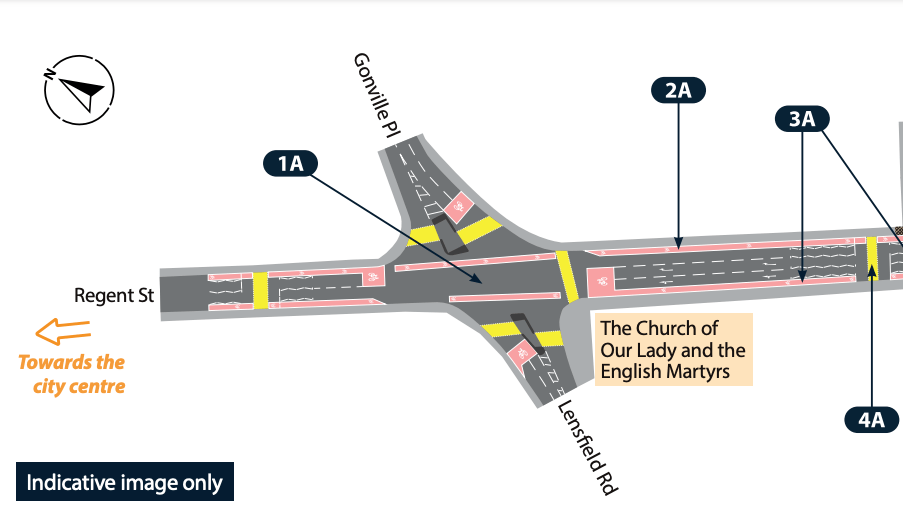
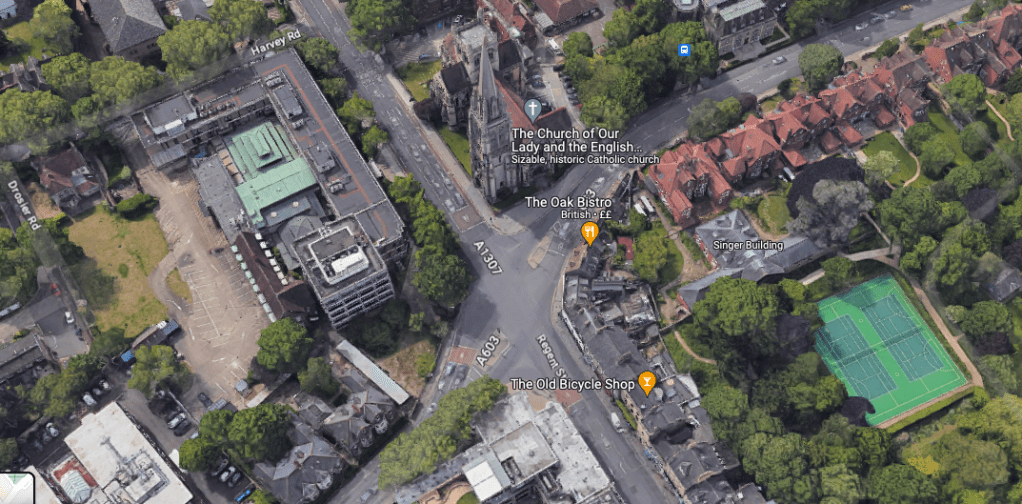
Above: the proposed design from option A, and a G-Maps snap
You can see the consultation documents here or alternatively simply drop the GCP consultation team an email at consultations [at] greatercambridge.org.uk
Central Government policy failures on e-scooters
Note the exchanges about e-scooters between Joel Carre of Cambridge City Council and Sgt Kevin Misik.
Now ask yourselves whether:
- the police and the city council have the sufficient revenue-raising powers as well as the legal competencies to deal with the issue raised;
- the existing systems they use are having an impact on the problems they have raised
- there is anything locally that elected councillors can do, or if this is something that Members of Parliament have to raise with ministers
- this is an issue that can be dealt with locally or is so important that it requires central government to intervene on a routine basis
The same goes for one of the final items on drug taking and street begging – in particular one case raised by Sgt Misik [The Cambridge City Centre police team is here,] where as he got to the end of the explanation he identified the root cause, but did not go further on what a public health approach might involve vs a criminal justice approach. If a public health approach, do local public service organisations have the funding, resources, legal powers, structures, and services available (along with the staff to run them) in order to deal with the root causes? If not, why not? Where does the buck stop?
“How do we hold the police accountable again?”
Through the Police and Crime Commissioner – who has his AGM on 19th July 2023 in Peterborough. You can email your public questions to that meeting – noting the Police and Crime Plan 2021-24 that he is accountable for. Some of you may want to make the case about magistrates courts backlogs noting ministers are likely to miss their targets again according to the Law Society.
Again, which of these things can be dealt with locally through different structures and new funding powers for local government enabling them to raise revenues directly without being dependent on ministers for lady-bountiful-style grants?
Some of you will be familiar with the huge administrative burden of applying for grants where there is huge competition for too little funding. I noticed this again when the Culture Secretary – the MP For South East Cambridge was in Parliament today. Ministers mentioned the Youth Investment Fund and the competitive funding programme – and criteria for that.
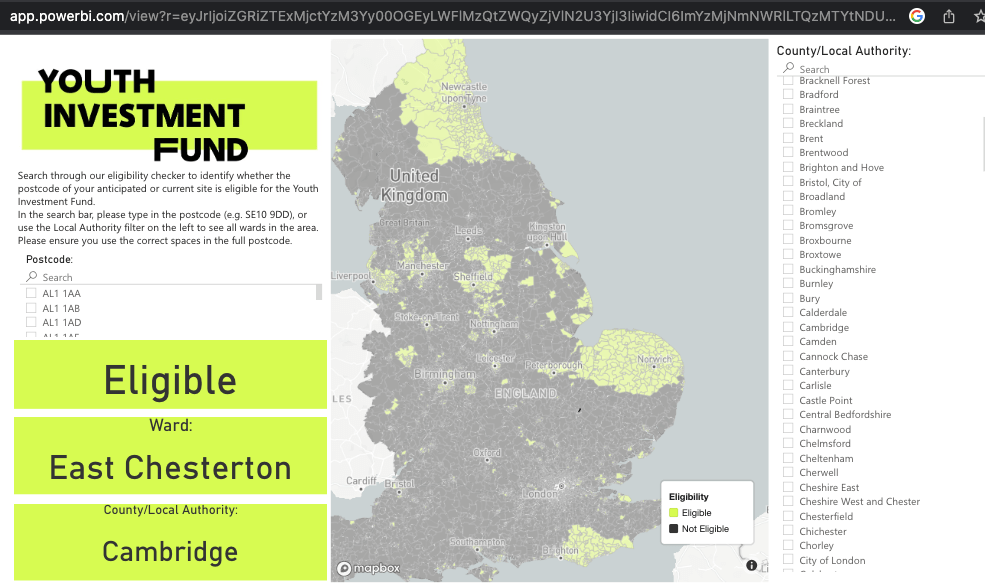
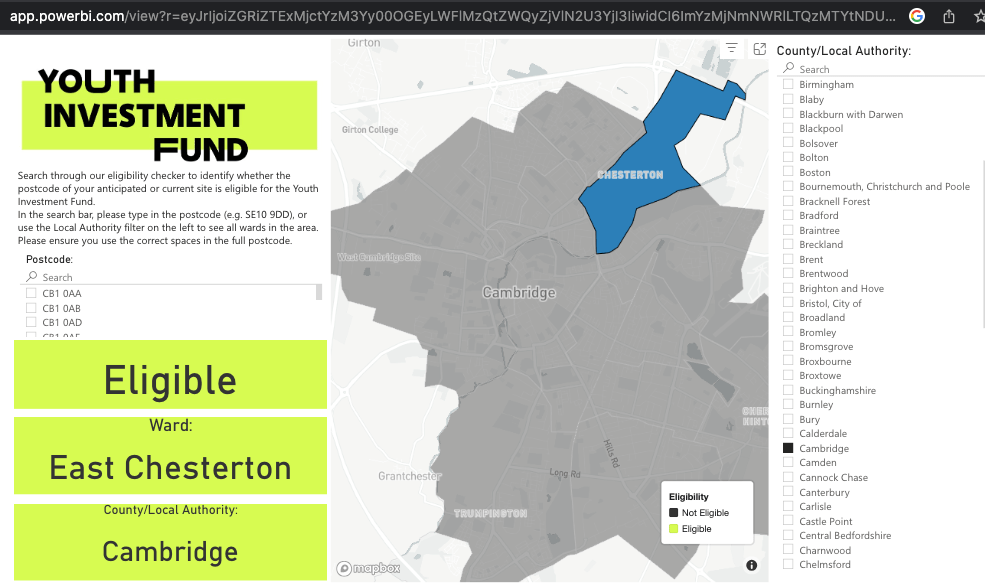
Above – the areas shaded in green were the only places eligible, which fortunately narrowed down the areas that would have applied, but even then it still required a whole set of things to be in place prior to submitting an application. The only eligible ward in Cambridge that could have applied for funding was East Chesterton. But how would people and councillors have known that such funding was available?
Hence the growing sense that any new form of local governance in England is one that has to get rid of these types of funding pots except in very exceptional circumstances, and deal with the much harder problem of constitutional reform. This is something that Labour’s former Transport Secretary Lord Adonis spoke at length on in the House of Lords earlier [15 June 2023] which you can watch here.
Hopefully any new system we get is one that reduces the amount of work that central government feels it needs to do, and get on with devolving real powers to local councils. Alongside this must come proper systems of overview and scrutiny from empowered elected councillors and assemblies that can break out of institutional silos. By this I mean senior backbench councillors having powers similar. to House of Commons Select Committees who can send for pretty much whoever they like so long as it is relevant to their policy area. A similar system could apply but geographically for councils. Is the action/issue within our patch? Then our local powers of scrutiny apply. See Ed Hammond’s briefing for the Centre for Governance and Scrutiny here. Something to consider as a means of improving local governance.
Food for thought?
If you are interested in the longer term future of Cambridge, and on what happens at the local democracy meetings where decisions are made, feel free to:
- Follow me on Twitter
- Like my Facebook page
- Consider a small donation to help fund my continued research and reporting on local democracy in and around Cambridge.

 The Cambridge Town Owl