
Or is it ‘Audit Commission Mark II?
TL/DR: Ministers are establishing a new performance reporting organisation for local councils. Unlike its predecessor, the Audit Commission, there won’t be any performance management framework where civil servants go around assessing things on behalf of ministers. Instead, a huge responsibility rests on the shoulders of ordinary residents.
You can read the ministerial statement here – one that really should have been an oral statement in Parliament rather than a Michael Gove giving an exclusive to the LGA Annual Conference. That or the two should have been timed to match each other.
My civil service history bounces off the Audit Commission as I worked in a couple of teams during my London years that involved working with the Commission. Hence I got the shock of my working life finding out in Channel 4 News that the recently-appointed Secretary of State for DCLG (Mr Pickles) was going to abolish the Commission.
Whatever the then Secretary of State had in mind as a replacement did not seem to stop the recent occurrences of local councils effectively going bankrupt – and avoidably so.
“In recent years we have had to intervene in an increasing number of local authorities, which comes at a cost to local people and taxpayers across the country. Due to the impact these have and the fact that they are often avoidable, we cannot simply stand by without doing something to address them.”
Gov UK 04 July 2023
To what extent the Public Works Loan Board should have been more robust in scrutinising loans issued to councils, and to what extent the reductions in grant funding from central government caused these issues is up for debate. But ministers cannot ignore the fact that in 2021, the Levelling Up Select Committee concluded that local government finances are unsustainable without radical reform. A year later the Public Administration Committee concluded the entire system of local government in England needed a major overhaul.
“Will OfLog deliver the overhauls?”
No.
In the grand scheme of things the announcement is about the consolidation and standardisation of data collection and presentation to make finding and comparing how well a council area is doing. There won’t be any additional performance reporting requirements or additional burdens according to ministers.
“Oflog will improve the transparency of local government performance through the publication of carefully selected data on the new Local Authority Data Explorer. Through this data and associated analysis, it will enable understanding and interpretation by its three main audiences – citizens, local government, and central government – of local government performance.”
GovUK 04 July 2023
“Spot the big assumptions”
Of which the system will work or fail on:
- That there are enough people who are interested in the data and information being published
- That of those people interested, they have the intellect to be able to process and analyse that data, and come to informed conclusions
- That those people who are interested, and have the intellect also have the free time to do that analysis
- That those people who are interested, have the intellect, and also the time to analyse the data also have the motivation to follow through on their work and publicise by whatever means (writing to councillors/MPs/media organisations/producing blogs/vlogs/social media posts) to raise whatever issues need raising.
Put all of those together and you probably have about half a dozen people across the country who tick all of those boxes. If you’re lucky.
“Assuming you wanted to make that system work, what else could ministers do?”
Apart from implementing the recommendations of the select committees mentioned above? There are a couple of things:
- Overhaul the adult education system so it incorporates new courses, classes, and workshops for those generations including mine that did not get taught about democracy, politics, government and the law;
- Overhaul the materials used in basic skills courses including Maths and English so that they make use of real life case studies from local government – ideally local councils where the courses are being delivered. That the data sets are being standardised makes it possible for publishers to create templates that enable course providers to use drop-down menus for their local area and produce bespoke working materials at the touch of a button.
- Ensure the Local Democracy Reporter service funded by the BBC has competencies about data journalism (and that there are CPD or learning modules to enable reporters to gain the necessary skills) so that reporters can pick up on important things the data reveals on their patch.
- Examine how the OfLog system can be used as part of wider approaches to strengthen local democracy and local accountability through future policy improvements. One really interesting example of how to do this is with public health here.
There are a couple of interesting case studies from the 2001 NIACE publication linking lifelong learning with Neighbourhood Renewal in the early years of Tony Blair’s Labour Government. I hope that one of the lessons from the King’s Hedges By-election in Cambridge today is the importance of people not just having the ability in principle to influence (for the better) the decisions taken about the future of their neighbourhoods, districts, towns and cities, but also having the capacity and desire to as well. The number of people in higher places than me who have told me privately that they also think the governance structures for Cambridge & Cambridgeshire are completely broken is striking. If only they could all grab the ears of ministers and tell them that now rather than waiting for the next GCP Gateway Review which is in less than two years time.
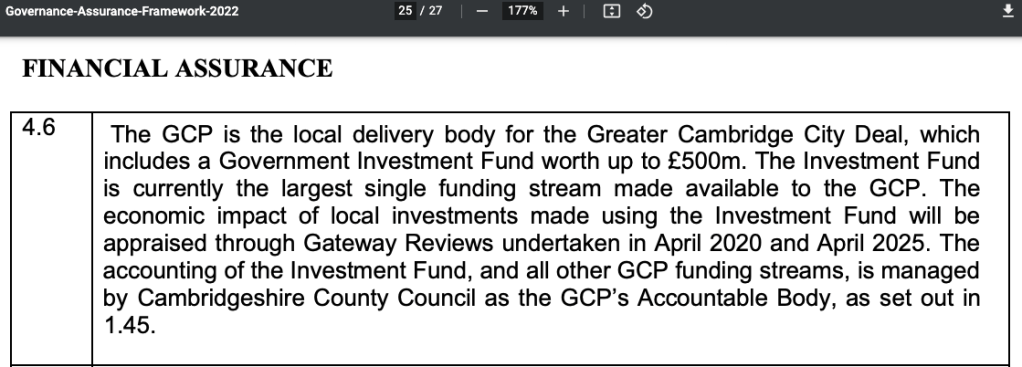
You can look at what was written in 2019 here – mindful that the CAM Metro was scrapped as a result of the unexpected victory of Dr Nik Johnson in the Mayoral Election. Whether it was possible for any partnership to cope with both the major changes in Government policy (establishing the Combined Authority taking away transport strategic planning away from county councils), to the unexpected electoral results in 2021 is also something worth thinking about – noting that ministers created the structures from which the chaos emerged despite warnings.
“So…what happens now?”
Everyone sleeps on it over the summer and we see where we are after party conference season in the autumn. By which time we’ll have. abetter idea of whether the Prime Minister wants to call a snap election, wait till normal election time in May, or drag his miserable administration out to the bitter end in the autumn of 2024.
Either way, I expect things to get worse before they get better. A depressing prospect.
Food for thought.
If you are interested in the longer term future of Cambridge, and on what happens at the local democracy meetings where decisions are made, feel free to:
- Follow me on Twitter
- Like my Facebook page
- Consider a small donation to help fund my continued research and reporting on local democracy in and around Cambridge

 The Cambridge Town Owl