
Listening to a local primary school teacher earlier today – someone who has known me since I was a toddler, I found out that Cambridgeshire is doing great things on all things citizenship and PSHE at primary school level. Yet this hasn’t fed through into GCSE citizenship entries. What’s missing?
In 2022 only 145 entries were recorded for GCSE Citizenship. <<– This blogpost discusses some of the shortcomings of the existing approach and also the benefits of making the subject more available to teenagers at GCSE level.
“Learning through citizenship studies should open doors to a range of choices for further study *and* equip students for the real challenges they may face in the outside [of school/college] world.”
CTO 13 Aug 2023
By this I mean that the activities students undertake as part of the GCSEs matter far more than the final exam result – recalling the Education Secretary’s controversial comments about how long exam results matter for in later years. I need not go into detail about performance in exams ‘on the day,’ teaching-to-the-test, or learning styles. What matters here is that the activities get the students outside of the classroom.
“Taking citizenship action may be defined as a planned course of informed action to address a citizenship issue or question of concern and aimed at delivering a benefit or change for a particular community or wider society. Taking citizenship action in a real out-of-classroom context allows students to apply citizenship knowledge, understanding and skills, and to gain different citizenship insights and appreciate different perspectives on how we live together and make decisions in society.”
Active Citizenship – AQA Exam Board
Which are the things that adults are most positive about in their time at school, or have the best memories of? Chances are it’s not exams or exam preparation drills. Chances are it involves the performing arts, field trips, sports, or outward-bound things. See also this piece on adults reflecting on their times at after-school clubs between 1990-2010.
You could say that the difference between what is taught in citizenship vs what is taught about trigonometry in maths is that with the former, the vast majority of learners will be in a position to apply what they’ve learnt to real life scenarios, whereas that is less likely to be the case with some parts of the GCSE maths curriculum. That’s not to put down maths as a subject – in reality maths is everywhere. Yet when filtered through a highly politicised education and examination system that is loaded with historical inertia, all to often the fun, passion, and real life examples of using it can be lost. Especially when institutions and teachers are measured on arbitrary criteria such as grade boundaries.
Out of all of the GCSEs out there, GCSE in Citizenship Studies might be one of the most useful that students with lower academic capabilities could take.
You could say the same about media studies and sociology – which along with Citizenship Studies encourages students to examine the role of the media with a critical eye. And you wonder why the print press and their commentators criticise those subjects as being ‘lesser’ than more traditional subjects.
I’m not going to pretend that children living in economically deprived parts of our county are bursting to get into our public libraries. Yet having browsed through some of my local public libraries (such as Rock Road Library in South Cambridge), there are very few books there on the theme of citizenship, democracy, and contemporary social issues. In these politically cash-strapped times, how do we persuade or help our public libraries to stock suitable titles?
How to support Cambridgeshire’s Public Libraries
Details are here from Cambridgeshire Libraries Service
They’ve got their booklists here where they earn a commission from books sold, but the lists are limited and, for example don’t cover things such as local history. Which is a shame.
There are the standard money donations and the book donations, but it’s not clear to the donors on what the money is spent on. It inevitably creates the tension between the donor and recipient organisation. How much influence should the former have over the latter? This is particularly challenging on a sensitive issue such as citizenship and democracy because someone rocking up with a crate of books published by their political party and supporting organisations would be stopped in their tracks – and rightly so.
A better alternative might be for the Libraries service to get in touch with specialist institutions such as the Association for Teaching Citizenship and ask them for reading lists of suitable books. That way, qualified library staff (i.e. ones registered with the Chartered Institute of Library and Information Professionals – CILIP) can use their professional judgement on what is and is not suitable to go on library shelves, whether for children or adult readers. Far better than someone like me coming along with my own reading list irrespective of my motives.
With a general election coming up, libraries could – and perhaps should be a source of impartial information about how our democracy functions.
Hence if we can persuade county councillors and council officers to ensure our public libraries are properly resources to undertake such a task, it might make things easier for them when the election is declared.
Persuading your county councillors requires more than me giving my county councillor a hard time. If you think libraries could have more books that help educate local communities about how our democracy and society functions, feel free to email your county councillor via https://www.writetothem.com/ – you just need your postcode. (Cambridgeshire County Council is responsible for libraries). Alternatively, pop into your local library and ask your librarian how you can support them. For they’ll know their communities far better than me saying “Here’s some books!” (for example below, from the distant and more recent past).
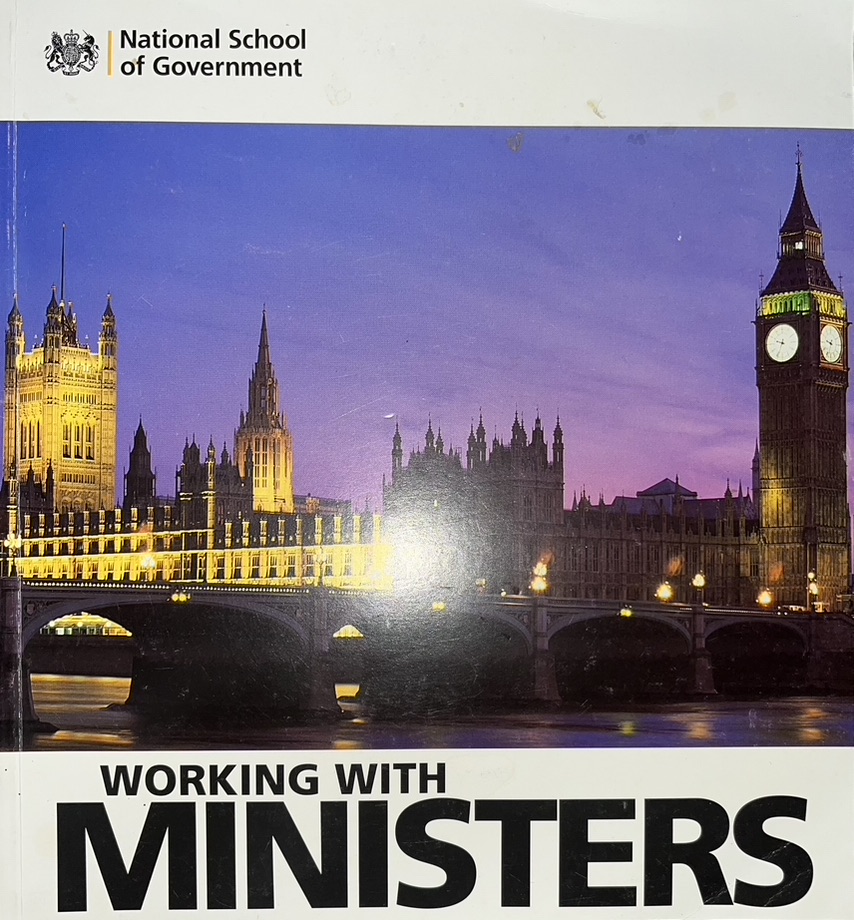


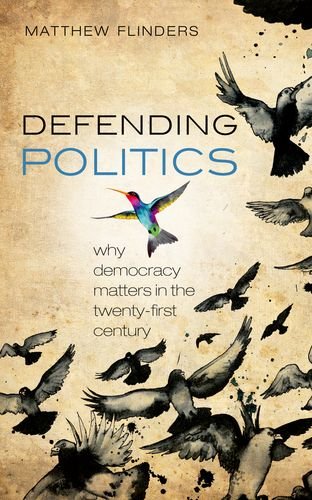
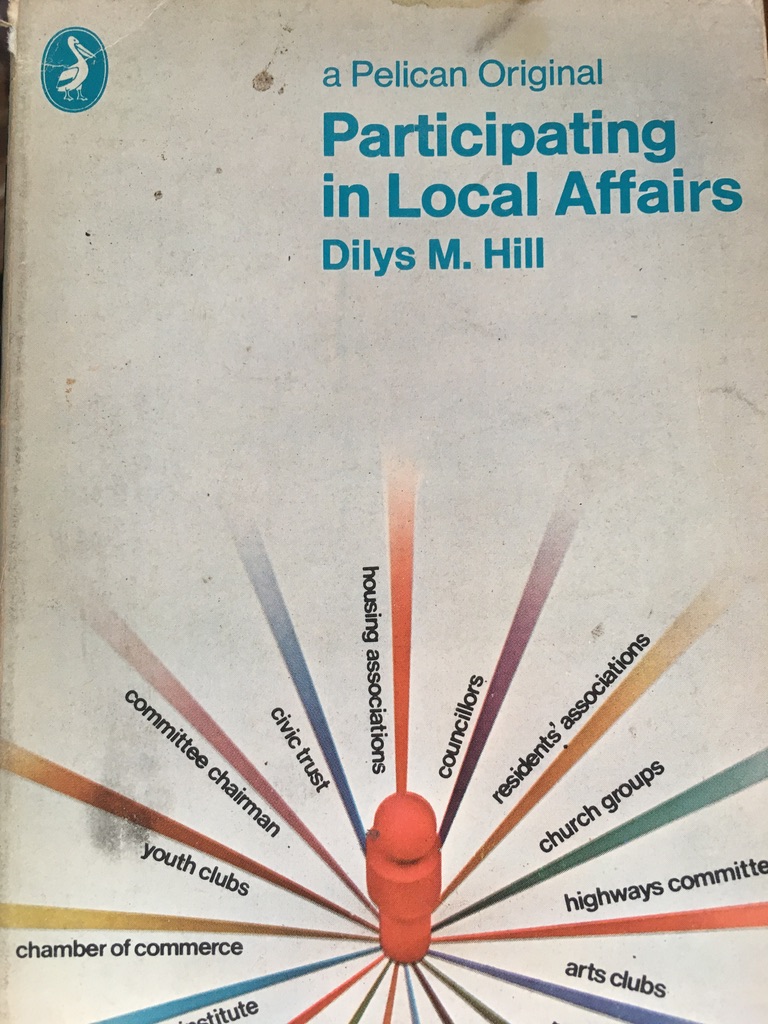
Then again…
….the local community might not ‘do politics’ Like this cartoon chap from nearly 20 years ago.
Above – from the Electoral Commission early 2000s.
In which case, feel free to ignore this blogpost!
If you are interested in the longer term future of Cambridge, and on what happens at the local democracy meetings where decisions are made, feel free to:
- Follow me on Twitter
- Like my Facebook page
- Consider a small donation to help fund my continued research and reporting on local democracy in and around Cambridge.
 The Cambridge Town Owl