
I’ve got to the stage where I’m just going to go for it, see who turns up, see what they say, and see what the feedback is.
If you browse through my blog and the entries of the past few months you’ll have seen a lot of talk about citizenship and democracy learning. This next phase is less about me and more about shared learning from multiple discussions. From this I hope we can generate some proposals on how we can learn how our city functions and come up with ideas for improving it. This isn’t about my set of ideas. I’ve gone as far as I can.
I browsed through some books on A-level sociology and also on politics…and it made my head want to explode
More a sign of the state of my health than anything else, but also a realisation that I’ve gone beyond my capacity of getting into the detail of things that I don’t have the heart for. Such as complex political theory over the past 300 years. Furthermore, that’s not where many fellow residents are at – and also events with one person speaking at length to a panel puts people off.
“You? Complaining about blokes who speak like they love the sound of their own voices?!?! A bit rich isn’t it?”
Yep. Which is one of the reasons I like the UnConference model I discovered through UKGovCamp (Cambridgeshire public sector people – please please please sign up to this!!!) and also the way the early Extinction Rebellion local workshops were run in the late 2010s. I’m like: “Do what they did, but with the subject being how to improve our city”.
“What did they do?”
Organised and advertised a series of neighbourhood-based workshops all over the city, advertised locally, and repeated until there was a critical mass of people from a variety of different backgrounds involved. In September 2019 on my old blog I summarised the things that had been happening in Cambridge and elsewhere.
“What’s changed?”
Everything.
Which is why I want to get something up and running now – especially given the trouble the Greater Cambridge Partnership seems to be in, so that more people can make positive contributions on their own terms and in their own voices rather than through someone like me.
Furthermore, the next general election and the period after will see some very big constitutional changes given how broken everything is. Far better to do the early work now so that more people are prepared to respond, than trying to rush it all at the same time. Also far better to invite people to think about which area/theme/subject they are most interested in so that we end up with all bases being covered by someone. Finally, it helps the elected politicians of all colours by having a more informed electorate to engage with – and even get new ideas from in light of their life experiences.
Workshop outlines:
- Based at local public libraries or locally-recognised community centres (affordable, accessible, and income for local communities)
- 90 minutes along the lines of short intro, group discussions, feedback, additional points from facilitator, and repeat for the next section
- From the start we’ll make clear this is not the time or place for grand party-political statements or getting people to join a specific group
- Ditto controversialist/provocateur-type statements either – I don’t want everyone else feeling awkward because of an attempt to hijack what is a community learning event.
- This is not the place to find personal responses to public service failures or dealing with individual pieces of constituency casework. That’s for elected politicians. (I’ll have some https://www.writetothem.com/ templates out for people to use as personal reminders of who to contact for what!)
- Combination of free and paid (around £10) for tickets so that no one who really wants to take part is prevented from doing so by financial constraints – adding the option of ‘solidarity’ tickets from those who can afford to meet the costs of those that cannot. (And not as an act of ‘charity’ but one that says ‘you are part of our community, we want you participating, we’ll help you overcome that barrier’. (Also DWP/JCP told me that I needed to charge a fee for putting on such workshops given my status).
- Take one book away of their choice from the selection of second-hand ones I’m accumulating (I plan on bringing a couple of crates of them – these are ones that are hard to find in bookshops) that cover a huge range of topics as a ‘thank you’ for taking part, with the challenge to:
- Read one chapter/section of the book in detail
- Have a conversation with a friend/relative/acquaintance about the workshop and the book
- Pass the book onto said individual (or someone else) *or* donate to a local charity shop. The more general/accessible the book, go for a neighbourhood or village charity shop. If the topic is more specialised/heavy reading, donate it to the bookshops run by Amnesty, RSPCA or Oxfam – self-selecting audiences!
- Challenge each other to commit to one small action or one small behaviour change as a result of participating. Ideally something that makes you *a little uncomfortable*/out of your comfort zone.

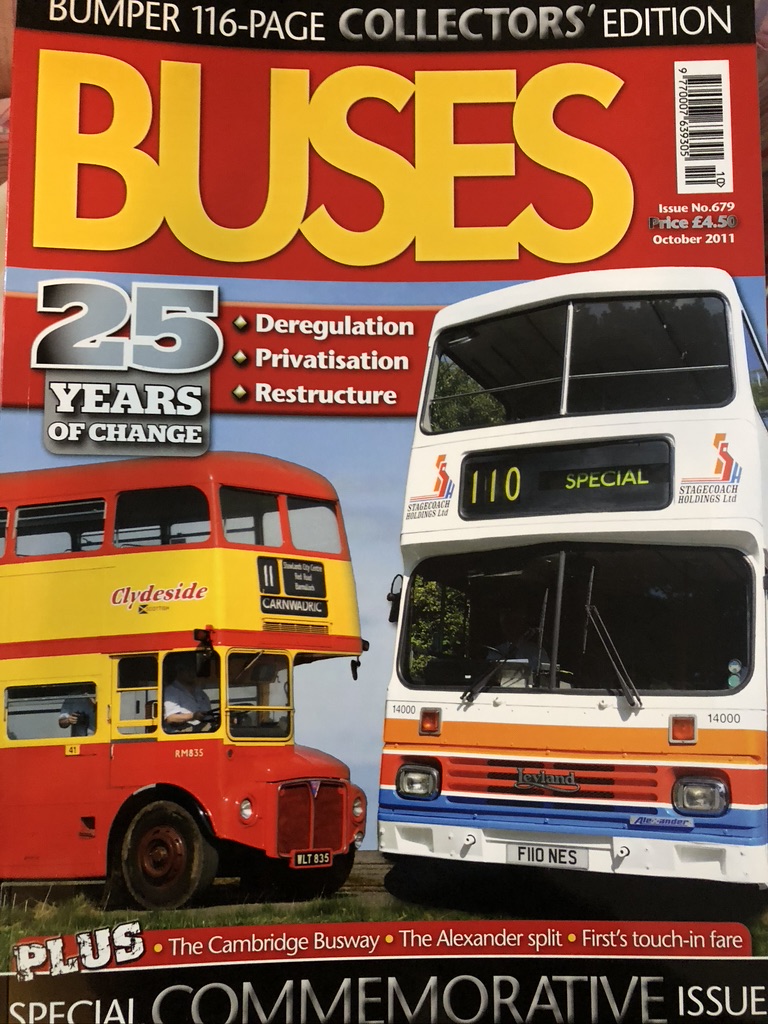

Above – some examples of things I’m acquiring – from specialist magazines through to children’s books that actually explain things ***really clearly*** to the sort of GCSE-level course that might inspire some residents to lobby the Combined Authority to commission GCSE Citizenship Studies for lifelong learners.
“Isn’t this an opportunity to have a stack full of books about Labour or The Greens or The Lib Dems and indoctrinate voters?”
Why would I want to do that in an environment where trust in politics and politicians is at such a low point when what we need is not only for it to be the opposite, but for the politicians *to have earned that trust and respect*. That also means we’ve got to try and meet them at least some of the way.
Anyway, part of the workshop content will involve showing participants where they can get in touch with all of the locally active political parties represented on Cambridge City Council – after which the conversations they have are none of my business.
“Sounds a bit like the thinking behind the Climate Majority Project“
See https://climatemajorityproject.com/ which one of the main spokespeople is former Green Party candidate in the 2015 general election in Cambridge, Dr Rupert Read. But it goes far beyond that and is cross-party. Because the climate catastrophe that scientists spent the past 40 years warning us about is now here. It doesn’t just affect the people who are campaigning about it.
I intend to have these as scoping workshops rather than ones that get into the detail and try to find comprehensive answers to complex questions.
That means I won’t bore people with local government finance. Rather, I want to get a feel from each group as to what topics they would like to see future workshops cover – and for those invite the interested and knowledgeable campaign groups to take that on, selecting a competent and knowledgable speaker to introduce the topic. For example, as I set out in a previous blogpost:

Above – thinking and writing out loud
Chances are someone will identify a hospital as an essential building which provides essential services for our city and county. Therefore one workshop might explore how a hospital, or how local healthcare services are provided. That’s a very complex area of public service delivery and I would not know where to begin for something like that. But there are campaign groups and organisations that do.
“Anything more about the books?”
Nearly all of them will be second hand, and as a result many will be a little bit dated so will come with the warning/challenge: “What has happened since this book was published in [insert date]?”. For example some of the books introducing town planning are very useful at explaining a host of concepts, but they can never be completely up-to-date given legislative and policy changes. The same goes for pre-post-EURef. Interestingly, the pre-2016 books give more substantial explanations of the EU and also the ECHR – the sorts of things that the wider public have inevitably been taught little about and/or misinformed by various media sources. Some will be relevant to where people live in Cambridge, or on the stage of life they are at.


Some may want to look at how universities engage with residential communities (David Watson’s book covering the University of Cambridge in his 2007 study which is still relevant to today) and use that knowledge to challenge local institutions. Some may want to look at previous examples of restructuring local government to see what lessons can be applied to today. In this case, Lord Redcliffe-Maud whose 1969 report was rejected by Sir Edward Health’s Government critiqued the latter in English Local Government Reformed from 1974. Finally for those of you with children at school or might be in the near future, The School I’d Like from 2003 examined what the children from the 2001 Observer/Guardian competition submitted (all 15,000 of them!) as their ideal school for the future. Again, *lots* of ideas that ministers should have a look at given the recent catastrophic headlines of late about school buildings.
Given their dates, the books above are inevitably second hand, but the knowledge within them is still more than useful for us today. Rather than letting them gather dust in a warehouse, why not create the conversational spaces where new generations can rediscover this knowledge and put it to good use, and bring them back into local circulation via charity shops?
Food for thought?
If you are interested in the longer term future of Cambridge, and on what happens at the local democracy meetings where decisions are made, feel free to:
- Follow me on Twitter
- Like my Facebook page
- Consider a small donation to help fund my continued research and reporting on local democracy in and around Cambridge.
 The Cambridge Town Owl