
The Care Quality Commission graded maternity services as requiring improvement in the face of understaffing – but ministers are preventing the hospitals and local government from dealing with those problems by maintaining restrictions on local taxation and a broken structure of governance
See the headlines here. You’ll have seen the headlines in the national news about the recruitment by Australia of UK health professionals too. This is no different to the NHS recruiting from abroad. Some of you may be interested in the Cambridge Global Health Partnerships report.

Above – Addenbrooke’s Abroad to CGHP 2007-2017
As I’ve mentioned in previous blogposts, if you want the best healthcare in the world you need talent from all over the world. At the same time too many resources are being wasted by hospitals and countries competing with each other when they would be better off working with each other to come to an international agreement and put in place an international framework that they can all benefit from.
The problems as with other sectors are structural. Furthermore we’ve seen the headlines of students struggling to find accommodation because universities have expanded place numbers far too quickly for local housing markets to match. Furthermore the financial incentives to recruit international students ahead of home-based students inevitably creates tensions – in the same way that students being told that their allocated accommodation has been requisitioned by the Home Office for asylum seekers feels like classic ‘divide and rule’ from the Conservatives. The roots of the issues on the latter are with the Home Office’s chronic failures in pretty much everything, along with the UK’s long term foreign policy failures. These are not just limited to its military intervention but also on things like foreign aid, terms of trade negotiation, and partnership working with the EU and other countries.
Housing and transport failures are not the fault of the hospitals
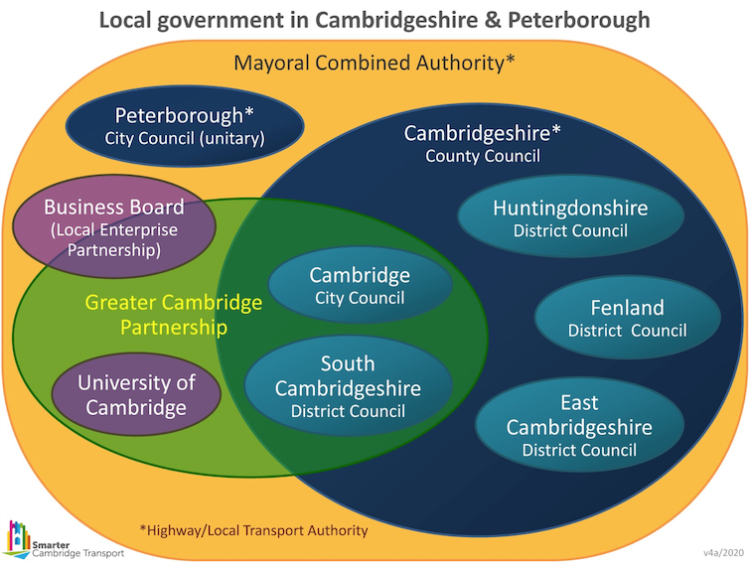
Neither is the broken structure of local government in Cambridgeshire. Ministers could have created a unitary council for Cambridge and surrounding areas, but have persistently refused to do so – instead creating the mess that we have today.
Ministers could have funded the re-opening of the Cambridge-Haverhill rail line whether as part of Cambridge Connect Light Rail (going since 2016) or as a suburban rail line as Rail Haverhill had originally called for. In 2021 the Department for Transport turned down their funding request for feasibility studies. A rail/light rail service on that line would take a significant amount of traffic off of the roads leading out of Cambridge south east of the city. The fragmented nature of governance and the inevitable weak political leadership that comes with such structures meant that there was no one willing or able in local elected public office to drive through the improvements needed – despite a critical mass of local support.
The broken housing policies – for example the sale of homes located in/around Cambridge to overseas buyers, or the development of accommodation that does not meet the needs of those working in essential public service jobs and the communities they live in again comes back to failures of government policies – and of ministers. Not helped by the frequent – beyond annual turnover of housing ministers.
The abolition of grants and bursaries to student nurses and trainee medical professionals is not the fault of the hospitals.
“Back in 2015, then chancellor George Osborne announced that the nursing bursary, which offered student Nurses at least £10,000 a year in funding, would be scrapped from 2016. It was controversial to say the least, and is widely attributed as the cause of a 40% drop in student applications over the ensuing years.”
https://www.nurses.co.uk/blog/how-the-new-nursing-bursary-works/
When ministers had to climb down, what they later brought as the above article mentions was not what the old deal had been – and is nowhere near enough to deal with the shortfall of nurses.
The problems facing our hospitals are the result of a succession of long term government policy failures. Something residents in and around Cambridge may want to consider when it comes to scrutinising the party election candidates in the run up to the next general election – of which there are three constituencies surrounding the city of Cambridge, not two.
Food for thought?
If you are interested in the longer term future of Cambridge, and on what happens at the local democracy meetings where decisions are made, feel free to:
- Follow me on Twitter
- Like my Facebook page
- Consider a small donation to help fund my continued research and reporting on local democracy in and around Cambridge.
 The Cambridge Town Owl