
The writing was on the wall when senior Liberal Democrats’ MP-candidates spoke out against the plans – now Cambridge Labour has confirmed it won’t support the plans either. Cambridge University and the business community involved in the GCP’s plans also have some serious questions to ask of themselves
See the Cambridge Independent here. This will make tomorrow’s GCP Assembly meeting particularly tense.
You can read the statement from Cambridge Labour here. It felt inevitable given the nature of the city council election campaigns with the number of candidates from both parties distancing themselves from the GCP’s proposals.
“I urge the GCP to go back to the drawing board and rethink the solutions; with funding secured from multiple, alternative sources for the bus improvements. People need to see with their own eyes that they can trust public transport to be reliable, frequent and affordable.”
Pippa Heylings, MP-Candidate for the Liberal Democrats for South Cambridgeshire
If I was in the same position as Ms Heylings, I’d have said the same thing. Furthermore, her party leader the former Energy Secretary Ed Davey hinted at a party policy change on a visit to Ely, Cambridgeshire back in April. South Cambridgeshire is one of his party’s top target seats in the up-and-coming general election. Given the choice between trying to keep the GCP going and winning the parliamentary seat, it’s not hard to see why they opted with the latter.
The incumbent MP for South Cambridgeshire calls for the GCP to be abolished.
The next six weeks will be particularly interesting – I wouldn’t be surprised to see the GCP being wound-up and either incorporated into the Combined Authority, a new development corporation that has closer ministerial control, or just abolished completely and the funds returned to The Treasury.
“Isn’t it just wonderful being right about all of this?”
No.
“Oh come on! Enough with the false modesty! You should be dancing around the room celebrating at being right and pointing at how the Tories were wrong to set it up and all that!”
No because CFS/ME in a heatwave says no.
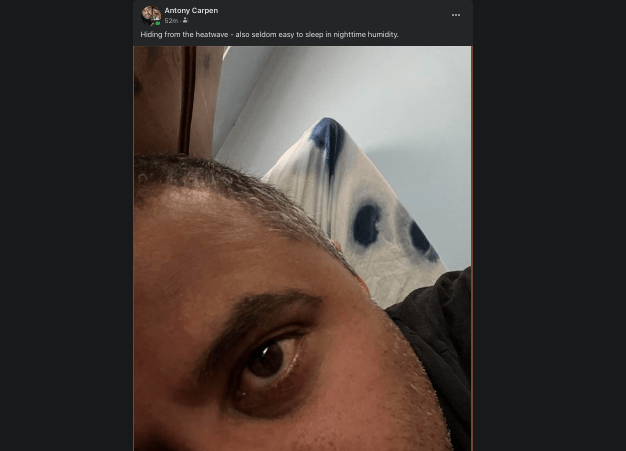
Above – hiding from the 30-degrees-plus temperatures and traffic outside.
Instead I’d rather a few more people got involved with Rail Future East in order to lobby for support for the Cambridge Connect Light Rail proposals. If anything I’m more frustrated that we had to go through all of this collectively in order to get the GCP to back down.
Now is the time to have the big debate on the future governance structures of Cambridge and Cambridgeshire
– including how local democratic institutions can rein in the huge financial interests such as the University of Cambridge, the colleges, and the large wealthy firms inflating the property bubbles / investing in the local economy [delete as appropriate].
Hence trying to create some conversation space with this workshop. (That no one has signed up to. Yet – but there’s still time. Also, I think offline publicity will be more effective than online given recent experiences from other groups).
“Isn’t there an alternative to congestion charging?”
There is – a workplace parking levy.
“Start with a workplace parking levy (WPL). This is the quickest option to implement because it requires no cameras; administrative overheads are minimal; and it’s easy to customise. It would incentivise businesses to assist their staff in finding alternative ways to get to work, and would help fund those alternatives.”
Smarter Cambridge Transport in Cambridge Independent 07 Dec 2021
“Why was it ruled out?”
Smarter Cambridge Transport explains:
“Cambridge seems to have ruled it out, faced with strong opposition from Cambridge Ahead. The business group’s membership includes both city universities, Arm, AstraZeneca, and other major employers, land owners and developers.”
Smarter Cambridge Transport 12 December 2019
For me, what this shows is that the GCP as an institution, and the sectors mentioned by Smarter Cambridge Transport above, all took the political approval of GCP proposals as a given. Or rather they underestimated the risks that electors in Cambridge and South Cambridgeshire might turn against the political parties on the GCP Board because of its proposals.
“Public and stakeholder consultation is essential to ensure that the various aspirations of the general public and key stakeholders are taken into account throughout development and delivery of the project and to manage the communication and flow of information relating to the project.”
Cambourne to Cambridge – C2C Independent Audit May 2021, p105
The collapse of the STZ/C-Charge plans also puts at risk the Cambourne-Cambridge busway.

Above – C2C Independent Audit, May 2021 – p20
Increased reliability of bus journey times was in part dependent on the STZ.
“Faster and more reliable services would be possible due to reductions in traffic from the implementation of the STZ.”
Making Connections 2022 – Consultation Report May 2023, p37 para 6.1.2.
“So…what are they left with?”
Either a hefty workplace parking levy to dissuade firms from providing private parking spaces and in order to raise revenue to fund bus services, or going back to ministers and telling them what MPs have already told them.
“Which is?”
- Local Government Finances are unsustainable (Commons LUHC 2021)
- System of Government in England (incl local government) in need of a serious overhaul (Commons Public Administration Cttee 2022)
In both cases, ministers ignored the main recommendations. The result being Birmingham – the latest council to issue a Section 114 notice saying it cannot balance the books under the existing system of local government finance.
Which means it’s a perfect opportunity for the governance of Cambridge & Cambridgeshire to be reviewed and overhauled along with the rest of England similar to when Lord Redcliffe Maud carried out his in-depth study. You can read:
Both are from 1969.
Furthermore in 1974 he co-authored an assessment of the reforms the Conservatives brought in under Sir Edward Health’s Government – which we broadly still have today. I’ve screen-grabbed the contents pages of my copy.

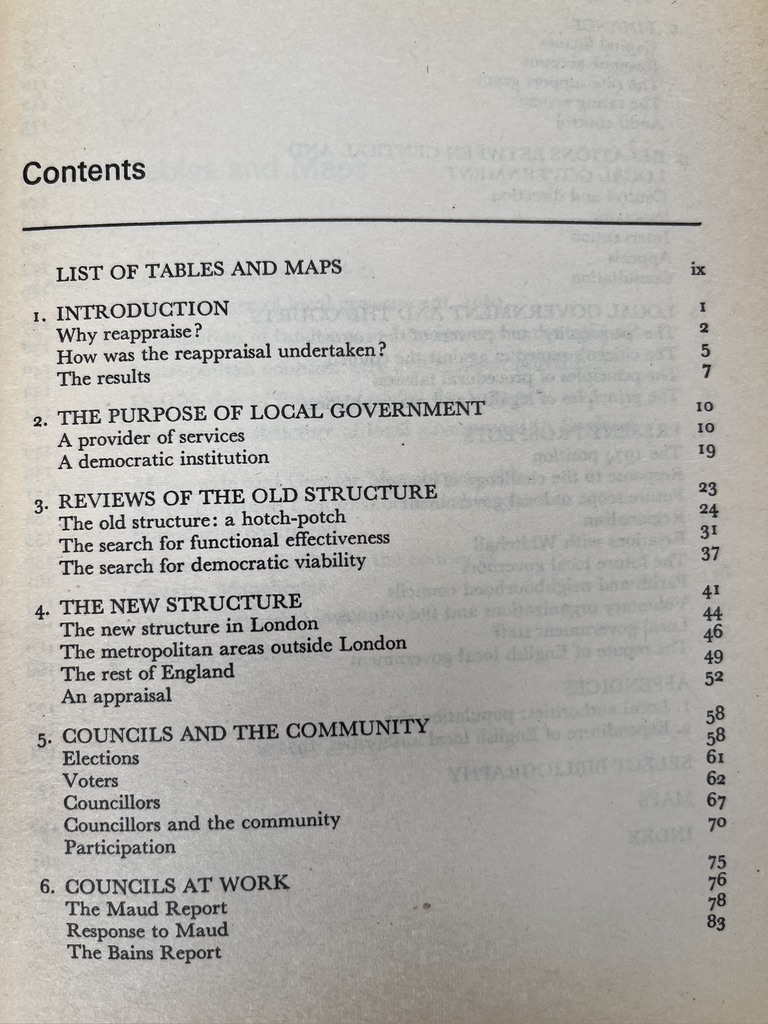
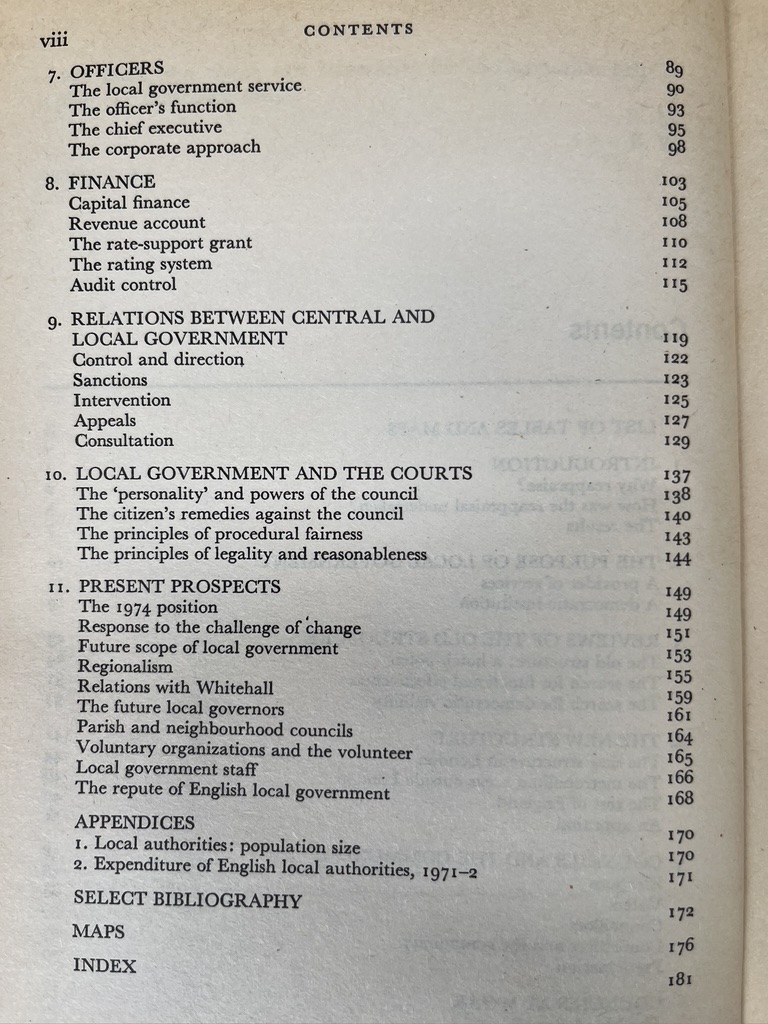
Above: English Local Government Reformed (1974) by Wood and Redcliffe-Maud (you can buy cheapo second hand copies here)
If you are a member of a political party, you can make the case for such a review to be included in your party’s election manifesto. You can also make the case to your local MP and local councillors. (See https://www.writetothem.com/)
Otherwise we’ll go round in circles stuck inside a broken system.
Which helps no one.
Food for thought?
If you are interested in the longer term future of Cambridge, and on what happens at the local democracy meetings where decisions are made, feel free to:
- Follow me on Twitter
- Like my Facebook page
- Consider a small donation to help fund my continued research and reporting on local democracy in and around Cambridge.

 The Cambridge Town Owl