
TL/DR? The thing that replaced the OxCamArc is having a public meeting on 29 Sept. You can table public questions. Click here and then click on the drop-down tab for the papers. And feel free to table any public questions too!
You should see something that looks like the ‘text as an image file’ below.

“I didn’t know we were in a pan-regional partnership!”
Well you do now!
“Well I didn’t vote for it!”
You don’t vote for partnerships!
“Well who invented it then?”
Ministers. Gove. When they decided the OxCamArc frightened the voters in England’s Economic Heartland.
“I didn’t know we were in England’s Economic Heartland. I thought we were in East Anglia!”
We still are. They wanted to come up with a descriptor that would get Cambridge looking westwards towards ‘the other place’ (as Cambridge University types here call Oxford).
“But Cambridge’s big-wigs look southwards towards London!”
Which explains why Tories outside of the city use that myth to bash the city with – even though city and county were once A) Tory fortresses and B) are interdependent despite over-complicated governance structures.
“These regional structures are a big mess! Didn’t Eric Pickles do away with it all in 2010/11?”
Yes – until ministers realised the sort of information that went into their briefing from civil servants that was sourced from regional offices happened to be quite useful on more than one occasion. So one-by-one some of the old offices such as the one in Cambridge started growing again after being reduced to a just a handful of people. For those of you interested in the neighbourhood of where I used to work nearly 20 years ago, see Cambridge City Council’s conservation appraisal here.
“So what is ‘England’s Economic Heartland’?”
It’s an artificially-created (in fact, all of our institutions of government are artificial creations – it’s just some, such as the old counties, are older than others) tier of government that’s the western bit of the old Eastern Region, and the north-western bit of the South Eastern Region.
“England’s Economic Heartland is the sub-national transport body for the region stretching from Swindon across to Cambridgeshire and from Northamptonshire down to Hertfordshire.”
https://www.englandseconomicheartland.com/about/about-us/
You could say it’s a bit of the Department for Transport that has local council representatives and ‘business representatives’ bolted on.
“What’s so special about ‘business representatives'”.
It depends who you ask. Some say they are glorious wealth creators who give big sums to charity and can do no wrong (until caught doing wrong) while others say they are evil capitalists that extract all of the commonweal created by the working classes and who should have that wealth expropriated and handed back to the people who made it.
“Sounds like complicated political philosophical conversations had between the Young Conservatives and Marxist Students back in the 1980s.”
Something like that. The point is that critics of the structures say (and with good reason) that not-for-profit enterprises are not covered, and neither is the charitable, voluntary, and community sector. Furthermore, who represents the residents?
“The councillors?”
This is where it gets messy – because as we’ve found with the Greater Cambridge Partnership, the responsibilities that councillors have involve having to represent and account for more than just the residents. Given the county’s experience with the business-led local enterprise partnership.
“We also put on record our displeasure at the conduct of the former Chair of GCGP LEP when giving evidence. He failed to appreciate the importance of good governance, showed a lack of remorse about the outcome for GCGP LEP, and was evasive when questioned about his potential conflict of interest.”
Governance and departmental oversight of the Greater Cambridge Greater Peterborough Local Enterprise Partnership, Report by the House of Commons Public Accounts Committee, 16 March 2018, p3
“Crikey that is brutal!”
If you want to read the gory details, see the report by the National Audit Office. Fast forward to 20th August 2021 and we find this report by Joel Adams from the Eastern Daily Press regarding the business activities of the former Chairman of the LEP. His profile remains on the CSAP website – although the web page looks a little dated.
Ultimately the buck stops with ministers because they established and signed off the framework. This should be one of the case studies for any major review or commission that examines the case for overhauling how England is governed. All too often the temptation for ministers and senior civil servants is to appoint people on the basis of position within an organisation rather than whether an individual has the competence, the skills sets, and most importantly the desire not only to represent their sector, but the ability and willingness to compromise for the common good. We’re no longer in the world of Milton Friedman who was famously/infamously quoted as saying the social responsibility of a business is to make a profit. The climate emergency and the ecological emergency have told us otherwise.
“So, heartland meets partnership. What’s that all about?”
The head of one quango having a meeting with another? The Heartland’s Board (or rather: “The Strategic Transport Leadership Board of England’s Economic Heartland” ) will be meeting the new head of the OxCamRegPShip (or rather: “The Oxford to Cambridge pan-Regional Partnership”)
“When is a partnership not an arc?”
When ministers want to announce something new that won’t be as easily remembered by active opponents who easily recalled the OxCamArc.
“Our Mission is to secure a future in which our communities prosper from the very best in environmentally sustainable ways of living and working. We collaborate to accelerate economic opportunities created through the region’s innovation strengths to achieve significant environmental enhancements and to unlock investment for inclusive, high quality sustainable development.”
https://www.oxford-cambridge-partnership.info/
“How’s that different to the OxCamArc?”
Read what the Government said about that a few years ago.
“There is an opportunity, recognised by government and local partners, to build a better economic, social and environmental future for the area. With high-quality, well-connected and sustainable communities making the Arc an even more beautiful place to live, work and visit.”
OxCamArc Policy Paper GovUK 18 Feb 2021
That word ‘sustainable is doing ***a lot of heavy lifting***
During my mental-ill-health-filled years at university, I remember having to write an essay that read:
“The term ‘sustainable development’ is so generalised as to be meaningless. Discuss”
That was in the year 2000. I came to the conclusion that it was – on the grounds that there were too many examples of things labeled as sustainable development that did the exact opposite, and involved too many examples of corporate greenwashing. This was at the time of the anti-capitalist protests, adbusters, and the anti-GATT anti-IMF/WorldBank/WTO protests by collectives of students, environmentalists, old skool and new skool left-wingers, and various other groups concerned about the absence of anything to hold corporate power to account. The term ‘anti-globalisation’ was used to describe the disposition of such protests. Fast forward 20 years and the ‘anti-globalism’ protests we hear about are from a very different part of the political matrix. That’s not to say at various points the two don’t cross-over or intersect. How people respond to the things they read about in the media alongside their experiences of day-to-day living are far more complex to explain – and can be hard to understand for those who spend their lives in political or public policy circles.
“So, what’s on the agenda?”
See the screengrab at the top, or the drop-down link via this page for the meeting on 29 Sept 2023. Do note the minutes because it was through that I found out about the bus summit in Luton.
“Bus summit? Did any passenger groups go?”
You’ll have to read the papers here. Also, the final item of the board paper:
“Board members are also invited and encouraged to attend our EEH Annual Conference on 1 November 2023 at the Guildhall, Cambridge”
Turns out the registration is open and its free.
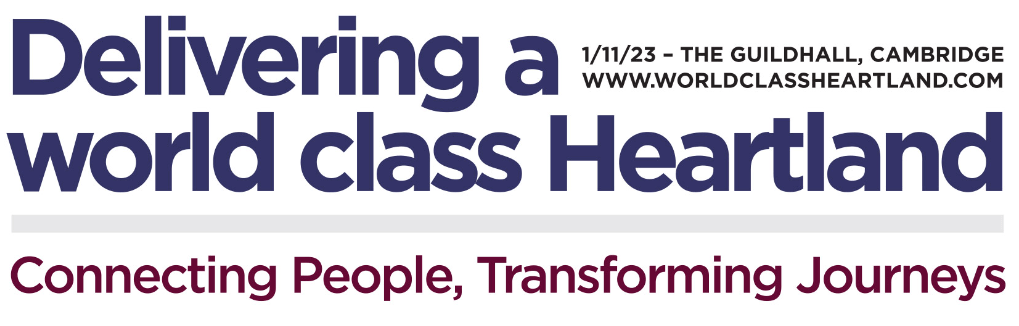
Above – any takers?
“Hear from expert speakers and meet high-level delegates including MPs, local authority leaders and their chief executives, transport sector operators and experts, business and university leaders, and senior government officials.”
https://www.englandseconomicheartland.com/eeh-conference-2023/
There needs to be some representation from residents and wider civic society to keep the corporates on their toes! Otherwise the role might be left to this one.

Above: Please don’t make me bring Puffles the Dragon Fairy back to the Guildhall!
It would be great to get some new and younger people at the event given that they are the ones who will inherit any results that come from the work the EEH does. (Looking at you, Cambridge Land Justice activists!)
Actually, I think there’s a role for students from further education and higher education attending, even if for only part of the event. Furthermore, I think that we as a city should help prepare them for what such an event involves, rather than dropping them in the deep end and expecting them to swim.
I’ll leave that to councillors to sort out. But it would be good to see some hard-hitting questions coming from people new to such events. Especially given what Cllr Anna Smith, (Labour – Coleridge) said at East Area Committee recently (see previous blogpost here)
Food for thought?
If you are interested in the longer term future of Cambridge, and on what happens at the local democracy meetings where decisions are made, feel free to:
- Follow me on Twitter
- Like my Facebook page
- Consider a small donation to help fund my continued research and reporting on local democracy in and around Cambridge.
 The Cambridge Town Owl
One thought on “Oxford-Cambridge Pan-Regional Partnership meets England’s Economic Heartland”