
Professor Deborah Prentice, the recently-appointed Vice-Chancellor missed the opportunity to set out her vision for how she hopes the ancient institution that she is responsible for will engage with the town whose borough charter pre-dates the arrival of the scholars from ‘the other place’
Cover image from Civic and Community Engagement by David Watson (2007) The Open University Press – which analyses what universities are and could be doing to support the towns and cities they are located in. Cambridge University is a case study.
The VC’s speech on the opening of a new academic year
It’s not the end of the world, nor is it a scandalous outrage. Just…disappointed but not surprised. Which happens to be the title musician Gabby Rivers’ new EP. (Cambridge local music fans will be familiar with Ms Rivers who has been firing up the local and regional music scene since her mid-teens – she’s brilliant live!)
Why disappointed but not surprised? The long history of town-gown relations where the University has all-too-often not considered the needs of the town in which gives it its name is why. (Notable exceptions include the then Vice Chancellor Sir Ivor Jennings QC – especially given his speech on the future of our city on 31 May 1962)
The Vice Chancellor’s speech
You can:
“I’m convinced that Cambridge cannot be a great global university without being a great national and a great regional university too. Our impact on the world starts at home. I want to learn more about Cambridge’s opportunities and obligations in the East of England and the United Kingdom.”
Cambridge University Press Release 02 Oct 2023
The easiest thing now would be to turn this blogpost into a hatchet-job article. So I’m not going to do that. I’m going to do something else.
One of the things I learnt (the easy and the hard way) in the civil service was how to respond when the proverbial hits the fan. So for those of you either unfamiliar with public policy or who are looking to go into that field, this one’s for you.
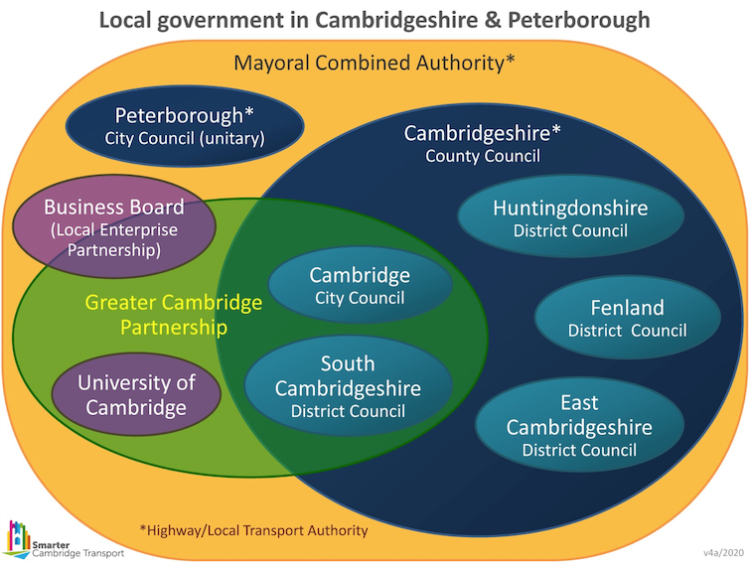
“Imagine you are the Vice-Chancellor’s chief policy adviser. She has just delivered a big speech, and she has not mentioned the people of the city once. Accordingly, a critical mass of residents and local politicians are outraged – not least because of the University’s role in the Greater Cambridge Partnership. She has asked you for some urgent advice. What do you do?”
“Are hundreds of residents marching up and down King’s Parade with torches and pitchforks?”
No, but they might have done back in 1381. So play along.
“What should she do?”
This is about you the adviser coming up with suggestions. The first thing is do nothing. Because anything that is ‘doing something’ inevitably risks being a knee-jerk reaction that could make things worse.
For major incidents, there will be contingency plans in place. Something like this doesn’t really count as a major contingency, but if you’re the chief policy adviser to the head of a major institution, knowing that contingency plans a) exist, b) you know where they are, and c) you’ve got a vague idea of what they involve, is helpful. (I’ve heard examples where a major incident happened and the panic was quickly dealt with when one relatively junior officer reminded everyone that they had detailed contingencies for such things, and thus they went from there).
Possible responses include
Do nothing and assume everyone will have forgotten about it by the weekend
After all, the Vice-Chancellor makes speeches all the time. Why should this one be any different? Forget about it and move on.
Put out a press release defending the speech
You could do that, but this would attract even more attention – the risk of things snowballing and picking up more potentially negative media attention.
Put out a press release apologising for the oversight
You could do that, but then you might be accused of ‘pandering to the mob.’
Arrange for a speech at a later date about the future of town-gown relations
You could do that, but that might set some expectations about a major policy statement from the University that might cause issues with some of the land-owning colleges who may dissent from the content. The joys of a collegiate institution where the person at the top does not have ‘command-and-control’ powers.
Arrange for the creation of a future event with the people who make up the city
Something that includes town, gown, surrounding villages (including commuting workers and further education students, and regular visitors) can participate in dealing with what Professor Sarah Sharples of the University of Nottingham were ‘wicked problems’. Prof Sharples – also the Chief Scientific Adviser to the Department for Transport gave a masterclass on such issues in the context of sustainable transport, in Cambridge recently.
There are many others I’m sure you can think of as well.
Personally I’d go for the last two – a future speech, and convening a forum
“Why?”
Why not?
“Why not shut the issue down or ignore it and hope it’ll go away?”
Because the long term plans for however you define ‘Cambridge’ inevitably involve the University of Cambridge, its colleges, and other member organisations. Thus issues over the corporate policy of, and lines of accountability within it are not going to go away. If the student-led Cambridge Land Justice Campaign have anything to do with it, they are going to get bigger. Even more so because they are linked into an ecosystem of campaigning organisations (Cambridge Resilience Web) in and around Cambridge which have huge concerns about our city being the most unequal in the country.
“Although I find people at Cambridge to be on the same page about many topics, the devolved nature of the University makes that common ground difficult to recognise, much less to realise. Those of us in a position to recognise alignment or potential alignment, need to seize on it, cultivate, nurture, and support it, and repair it when it goes awry. That is what constitutes leadership at a university like Cambridge.”
Vice Chancellor Prentice, 02 Oct 2023
I found the above-quotation particularly interesting because it reflects how over-complicated the structures of the University of Cambridge are. This means it is very difficult for anyone to work out where the real decision-making power of the institution resides. Alumni and present faculty over the years – and even some holders of elected public office past and present, have told me that even in those roles they still had not worked out where that power resided; i.e. the ability to commit the institution to a policy. The Cambridge Climate Justice Campaign – one that has spanned many cohorts of undergraduates, is still going on that one.
I’m not talking about the theoretical or what’s written in extended documents. I could go on about how Parliament is Sovereign and can legislate for whatever it likes, but for anyone who has worked in a civil service policy team or for a politician, watched Parliament TV for as long as I have (which is far longer than is sensible!) or even having been elected to public office themselves, we know that what’s on paper doesn’t always reflect ‘real life’. (Also a Gabby Rivers number).
“If the Vice Chancellor was to make a speech about town-gown relations, what should she say?”
Ultimately that would be up to her, but my main recommendation would be to consult widely with the people who make up the institution she is responsible for. These include but are not limited to:
- those students and researchers who work with or volunteer to support those in & around our city who have the least. i.e. those who have frontline experience.
- the alumni who live in and around our city who, although might not have a close relationship with either university or college, may have insights that decision-makers may not be aware of. For example teachers that have graduated from the Faculty of Education and who teach in schools in Cambridge but have to commute in because they cannot afford a house inside the city – along with other public service professionals for example those in healthcare services
- the university members on the science parks – because it is in their name (and/or their industry’s name) that so much of the development is happening
- the university officers that have represented and continue to represent the institution to external-facing organisations or on partnership boards such as the GCP
What the collective message from all of them will be I do not know.
Chances are there may not be a single collective message because of the diversity of views, opinions, life experiences and individual dispositions on life. If anything, any speech needs to reflect that complexity – and any speech needs to get that over to a wider public, quite possibly in the form of a set piece speech to Cambridge City Council’s full council under the invitation and sponsorship of the Mayor of Cambridge. After all, both Mayor and Vice Chancellor have worked together before for the benefit of town and gown – the Cambridge University and Corporation Act 1894 being one example that got rid of some of the appalling abuses of power committed by Proctors and Constables against the townswomen.

Above – one of the debates in Hansard during the progress of the Bill
“Ever since the Bill of 1892 there had been a Joint Committee composed of the Council of the Senate of the University of Cambridge and a Committee of the Corporation of the borough, and they had sat frequently and at great length, and had threshed out all these matters”
Sir Robert Penrose Fitzgerald MP (Cons – Cambridge Borough) 04 May 1894, Hansard
This was in relation to the Spinning House case – something that the University still hasn’t apologised for! But the point is that there is a relatively modern precedent of the municipal council (today’s Cambridge City Council) negotiating with the University of Cambridge for the purposes of improving our city. Something for the Cambs Unitaries Campaign to consider? (Noting there are a number of alumni supporting that campaign).
“What about the forum idea?”
I’d be interested to see a series of events over an extended period of time. One of the things I’ve learnt from the first workshop of the Great Cambridge Crash Course is there is a desire from the people of our city to learn about how decisions are made. Cambridge students have organised workshops in the past to learn how their own institutions (Colleges and the University) make decisions – not least in order to put pressure on finance committees and the sectors that are invested in their names.
What those series of events could be like? …that’s one for the students to lead on.
Food for thought?
If you are interested in the longer term future of Cambridge, and on what happens at the local democracy meetings where decisions are made, feel free to:
- Follow me on Twitter
- Like my Facebook page
- Consider a small donation to help fund my continued research and reporting on local democracy in and around Cambridge.
 The Cambridge Town Owl