
Two councillors in Cambridge picked up on these issues on my behalf, and were able to inform the CPCA of the challenges that their own residents face on the provision of post-compulsory education in and around our city.
With thanks to Cllrs Sam Davies MBE (Ind – Queen Ediths Ward) and Dr Alexandra Bulat (Labour – Abbey Division) for tabling these. You can read the public questions in the papers from the Skills & Employment Committee meeting of 04 Sept 2023 – see here and scroll down to the end.
In a nutshell, I was continuing to keep up some pressure on local politicians about a new lifelong learning centre in Cambridge to serve the city and surrounding villages – a public facility connected to whatever sort of mass-transit scheme the decision makers eventually come up with.
The Education Select Committee’s report on lifelong learning – 2020
You can read their report here. The Committee was not impressed with what the Department for Education had been doing.
“Adult community learning providers are the jewel in the crown of the nation’s adult education landscape…. We are not persuaded that the Department fully grasps the value and purpose of community learning. Nor does it appear that the Department has a vision or strategic approach for boosting this vital area of lifelong learning.””
Commons Education Select Committee, report summary 19 Dec 2020
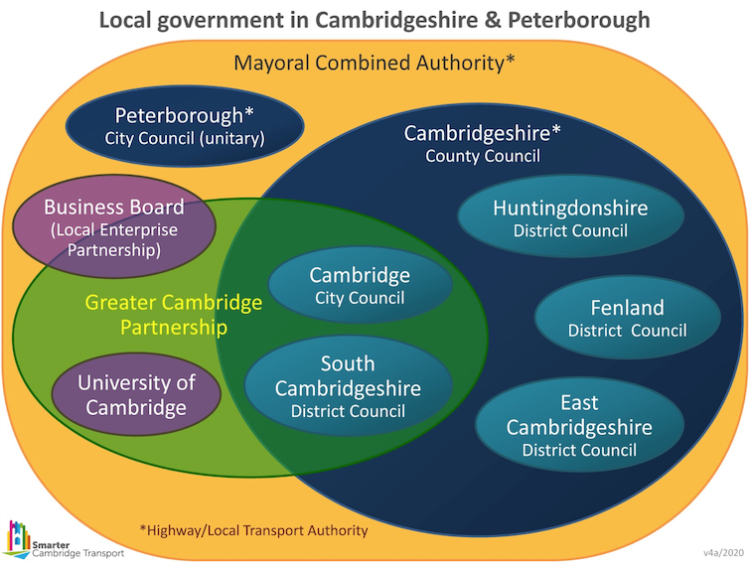
The centralised structure of the UK system of government means there is little that combined authorities can do without both initiative and funding coming from central government. This is because ministers gave them minuscule revenue-raising powers. Even when they use them – such as when Mayor Nik Johnson added a precept to cover the gap left by Stagecoach the bus monopoly provider, it kicked up a party political storm. Council tax precepts inevitably hit those on lower incomes the hardest because that’s how ministers in the early 1990s designed the system. Successive governments have refused to entertain the concept of changing how local councils can raise revenue to fund essential public services.
Therefore, the very limited response I got from the CPCA’s Skills and Employment Committee was something I had expected. Looking at the sections of the response, I note the following:
“This response is from a CPCA point of view as support for adult learning capital infrastructure mainly sits with Local Authorities and the learning providers or community groups where they are the key delivery bodies.”
CPCA Skills & Employment Cttee Public Questions & Responses – 04 Sept 2023
‘Capital infrastructure’ basically means buildings. What the CPCA is saying is that they see the building of any new lifelong learning centres as being something for Cambridgeshire County Council (or for small community venues, Cambridge City Council) to deal with. Again, understandable because the policy and funding approval to build a new venue for the purposes of adult education *must* be approved by ministers – as the now Education Secretary informed Cambridge MP Daniel Zeichner back in 2021 when he wrote to her on my behalf as my constituency MP. <– (Note this is a textbook case study of how an MP can hold a minister accountable on behalf of a constituent regarding a government policy area that directly affects a constituent. In this case the provision of accessible lifelong learning opportunities given my limited mobility).
“Does this mean the CPCA isn’t interested in building a new lifelong learning centre?”
Not necessarily. But given what they’ve got on their plate, it’s a signal that the willingness to explore building a new one is not there. It’s not great, but I can understand the reasons why they’ve responded as such. i.e. no money, no powers, and more important priorities to deal with.
“Community learning is funded via our Adult Education Budget and we provide these funds via our FE Colleges, Cambridgeshire Skills and Independent Training Providers (ITPs). Each provider seeks to deliver in many differing formats where there is need and this isn’t always from a dedicated permanent skills centre.”
This reflects the ideological change over the decades with local councils no longer being direct providers of in-house services, but rather the commissioners of services where they contract with private sector providers, or charities, not-for-profit, or community organisations providers where there is no ‘market’ at that scale.
“Investment in the infrastructure is the responsibility of the Department for Education (DfE) and/or Local Authorities.”
Again, as covered above. The debate on whether such investment should be a central government matter is a party political matter. The present Government takes the view that the current situation is either fine as it is, or nor sufficiently a high enough priority to change things. People can challenge them on this via https://www.writetothem.com/ (e.g. emailing their MP to ask the minister to justify such a structure) and they can also contact opposition political parties to ask what their policies are. In Cambridge the three main opposition parties covering England in Parliament represented on Cambridge City Council have already selected their MP-candidates. Therefore residents can contact them directly:
Above – do you know what the above-mentioned parties have to say on adult education and lifelong learning policies?
Or any other local or national issue for that matter. (Please keep correspondence polite – because there are laws against sending abusive emails (see the CPS here, and specifically Section 127 of the Communications Act 2003).
“The CPCA currently has no mandated remit over sixth form colleges or schools. Our devolved budget responsibility and target for delivery is from age 19+ and is for the delivery of learning and not investment in the infrastructure. “
“The responsibility of capacity is dependent on the type of provision as in many cases the college, academy or school are no longer run by the Local Authority and therefore the responsibility falls to individual sites. The educational establishments your question refers to are either independent, part of multi academy trusts or are self-governing”
A similar response was provided to Cllr Davies (Second paragraph above) regarding the unequal distribution of A-level places in the county and the economic sub-region that crosses county borders. This is despite the fact that the Combined Authority has identified both St Neots and Ely as ‘further education cold spots’ – i.e the opposite of what we have in South Cambridge.
Again, the decision to take schools and colleges outside of the remit of county councils was a party political decision taken by Michael Gove post-2010 when he was Education Secretary.
Therefore any official response from CPCA officials is restricted to non-party political matters. i.e. they cannot criticise the current structure, rather they can only observe that this is what it is as a factual observation. The Mayor, and Individual elected councillors of member councils that sit on the committees however, can make party political comments at the public meetings. The risk with such comments at meetings however is it makes councillors from the party in government less willing to co-operate. As recent history has demonstrated under different political control.
“So…how did we get to here?”
We’d be here all night if we went down that route, but to try and summarise:
The roots of the problem date back to the policies of Margaret Thatcher’s Government
We’ve lost our collective memory of lifelong learning as both a concept and a cultural phenomenon over the past few decades. So much so that I can only imagine what it might have been like in the past.
Just before its abolition in the early 1980s, the Advisory Council for Adult and Continuing Education published a report on local learning centres (1983), which you can read here.
“The Council also believes that the approach to a full network of Local Learning Centres has to be realistically based, making maximum use of all available resources and bringing voluntary as well as statutory organisations into full partnership.“
“Centres will vary in form and structure according to local circumstances and existing capital resources. Urban and city communities would have several different forms of Centre, each relating at a particular level to the broad hierarchy of needs and offering appropriately diverse programmes. These would include high street drop-in shops, small neighbourhood centres, community centres, public libraries and larger and more complex units possibly based in schools, colleges and workplace learning centres or units set up by the MSC or industry. “
“Rural and semi-rural districts would have a different variety: for example, the village hall, the village school, the neighbourhood community college, the area college of further education or the mobile library might supplement its role.”
Continuing Education: Local Learning Centres (1983) para 3
As I wrote in Lost Cambridge, the variety of CCAT on East Road demonstrated in their 1954/55 prospectus, has been lost. This was mainly the result of the decision to create what is now Anglia Ruskin University, resulting in the moving of CCAT’s pre-undergraduate and vocational courses out to the new Cambridge Regional College in the early 1990s, and then a decision in the mid-2000s for CRC to focus on vocational qualifications only, thus getting rid of their previously wide range of GCSE and A-level courses.
The failure to provide even a medium-sized sixth form college that has a ‘beyond the basics’ range of A-levels not just in towns in Cambridgeshire, but also in Hertfordshire and Suffolk, has resulted in teenagers commuting huge distances to get to both Hills Road and Long Road Sixth Form Colleges – with the inevitable strain on local infrastructure. (And the teenagers being the first to suffer from a lack of private study spaces).
“And the root of the problem today is…?”
No one at a local government level appears to have any direct responsibility for sorting what is really a local issue, out. Instead, the only route to resolving this is via MPs through to ministers. The irony being that in voting through Michael Gove’s proposals in the early 2010s, and with the creation of Combined Authorities under George Osborne, MPs and ministers have created more work for themselves and their civil servants, and bizarrely have become the very ‘blob’ blocking progress that ministers like to complain about.
Make of that what you will.
If you are interested in the longer term future of Cambridge, and on what happens at the local democracy meetings where decisions are made, feel free to:
- Follow me on Twitter
- Like my Facebook page
- Consider a small donation to help fund my continued research and reporting on local democracy in and around Cambridge.
 The Cambridge Town Owl