Full Council meets on Thurs 19th October 2023. You can read the meeting papers here. This will be two days after Cambridgeshire County Council’s full council meets on Tues 17th October 2023. You can read the meeting papers here.
I’ve not spotted anything substantial on the meeting papers so in the grand scheme of things it’s a chance for backbench and opposition councillors to table motions for debate and (hopefully from their perspective) local media coverage.
I’ve tabled a PQ already to the county council which reads as:
“Please could the County Council make a statement on what its policy is regarding any possible overhaul of local government structures and systems for Cambridgeshire and Peterborough – in particular including what the Council understands as being the processes ministers require for prospective local areas to bid for permission/support to undertake a possible restructure.”
But because the Tories moved the county council out to Alconbury, I can’t get there. So I either get to ask the Q via video-conference, or accept that an answer will be appended to the minutes. Make of that what you will. It was a similar case with my question to the Children’s & Young People’s Committee on the low uptake of GCSE Citizenship, where once the minutes are up the public will find out what the County Council’s response is. I’m not expecting a huge splash because the Chair of the Committee took part in a debate at the City Council’s East Area Committee (part of Cherry Hinton Division encroaching into the area so Cllr Bryony Goodliffe was able to speak on behalf of the County Council – see my earlier blogpost here).
A unitary council for southern Cambridgeshire?
You can read the motion from Cllr Tim Bick (LibDems – Market) here
To summarise the text, the Leader of the LibDems Group, and former Council Leader a decade ago, is calling for:
- Discussions with partner and component councils, and a wider public debate about turning Cambridgeshire & Peterborough into a small number of unitary/single tier councils similar to what happened in Northamptonshire a couple of years ago;
- The starting of negotiations with central government to create a ‘Greater Cambridge Combined Authority’ which was originally the plan of the City Deal if I recall correctly;
- The devolution of far more powers to the unitary council including on revenue raising, and infrastructure spending
- A proportional representation system of elections
- A national constitutional convention – similar to what the Commons Public Administration and Constitutional Affairs Select Committee called for in 2022
In the grand scheme of things, I welcome the motion – if only to get the issue on the front pages of the local newspapers. Regular readers of this blog will be familiar with the option I regularly illustrate as the starting point for negotiations.


Above left – Lord Redcliffe-Maud’s recommendation of 1969 which was adopted as Labour’s national policy for the general election which they then lost, and Above-Right, Nathaniel Lichfield’s study of 1966 of the Cambridge economic sub-region.
My more detailed views on this issue are in the slides here – slides 9 and 10 showing how empowered town and parish councils could be incorporated into that system by ensuring Unitary Councillors automatically acquire seats on their parish or town councils by virtue of being elected to the Unitary Council. (Or ‘Great Cambridge Council’ as I want to call it!) Once that is established, a light rail network kind of designs itself – as the maps in this blogpost illustrate.
“Is Cambridge politically literate enough to take part in such a debate?”
I’d rephrase that: “Have ministers ensured that the general public is politically literate enough to play a meaningful part in any constitutional convention?”
To which the answer is obviously: No.
History tells us that the Conservatives have de-prioritised democracy learning and citizenship education – I went through some of the history books here, discovering that previous generations of school children got taught about democracy, but my generation of 1990s teenagers were not. Furthermore, no attempts have been made by successive governments to rectify this. Had they done so, they might not have gotten rinsed in the EU Referendum.
Therefore, in order for the public to have a reasonable chance to influence any overhaul of how we are governed, a widespread and comprehensive learning package has to be made available to everyone. i.e. something we did not have for the EU Referendum. And something we certainly did not have for the Greater Cambridge Partnership – which took for granted the democratic consent of the people. The financial cost of this has been significant as the front page of this week’s Cambridge Independent illustrated. Over £4million spent on a massive consultation exercise – how many democracy workshops would that have paid for? (Or full-time qualified teachers of citizenship and politics based in schools, colleges, and universities?)
These are controversial issues, but to get a feel of what the content was in previous generations, have a look at some of the very old books I’ve bought recently and have digitised here. For a start, you’ll get the sense of how many public services have been:
- Privatised (eg the public utilities such as gas, water, and electricity)
- Centralised (eg schools, police, and some health services, and job centres)
- Outsourced (eg leisure services such as swimming pools)
- Vanquished (eg by history – we don’t have ARP (Air Raid Precaution) wardens patrolling the place.)
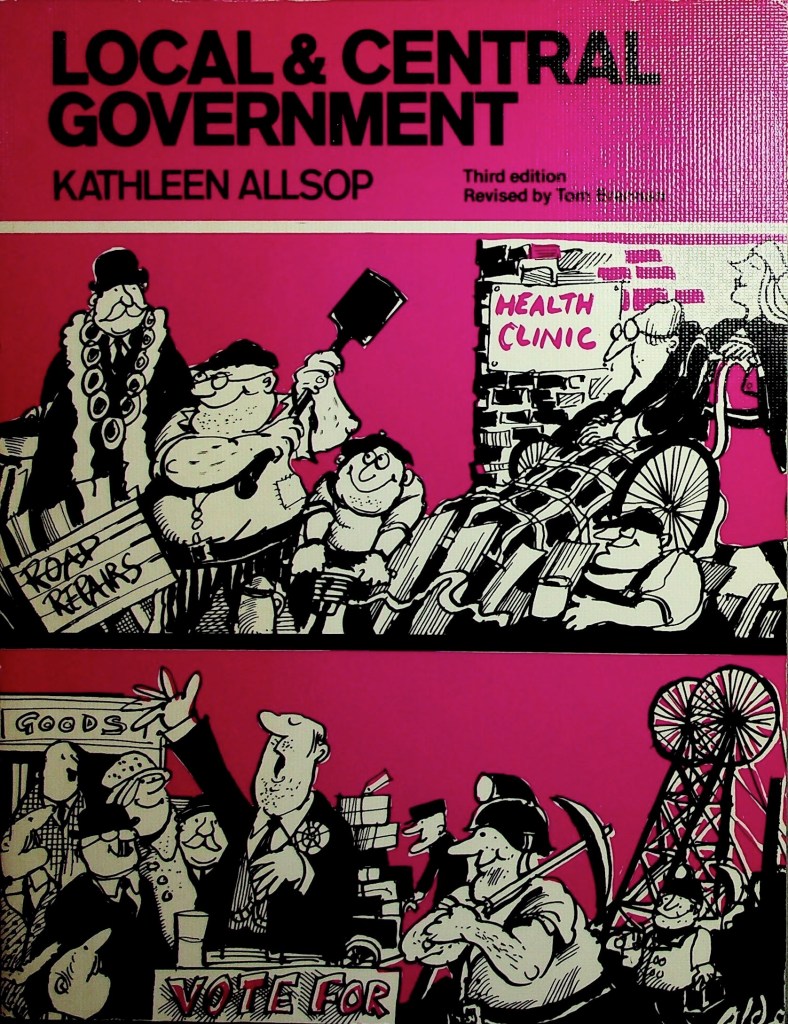
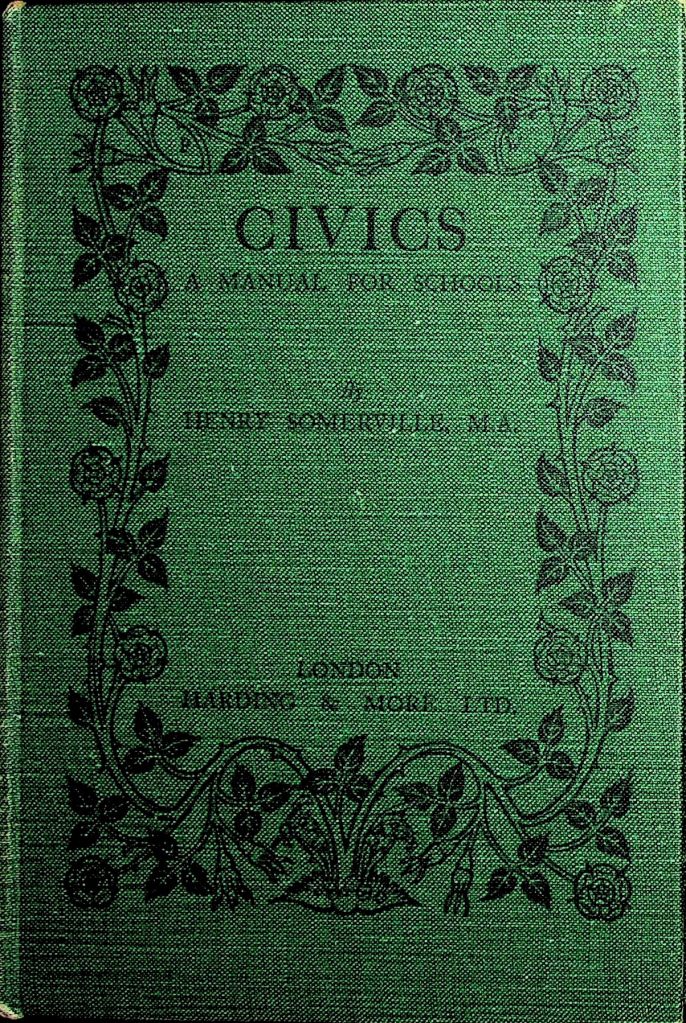
Above – Olden days: Left – Civics for teenagers in the 1980s, and right, Civics for teenagers in the 1920s/30s
So if I’m going to throw a PQ at the motion, it’s going to be along the lines of asking how we get our county educated and informed about the essentials of how politics in the UK functions (and malfunctions) before commencing with any big conversation about overhauling the system. Because even with the best will in the world, I do not have the capacity to educate an entire city. Or county for that matter.
So councillors, what’s the plan?
If you are interested in the longer term future of Cambridge, and on what happens at the local democracy meetings where decisions are made, feel free to:
- Follow me on Twitter
- Like my Facebook page
- Consider a small donation to help fund my continued research and reporting on local democracy in and around Cambridge.
 The Cambridge Town Owl