Why have the architects chosen a grey colour scheme to replace the cladding on what already is an ugly building?
TL/DR? See the Planning Portal here and type in the reference: 23/03907/FUL and feel free to comment. Alternatively go to https://www.writetothem.com/ and email your city councillor to make representations on your behalf.
I’m a former ARU student so I like to think I’ve got something of an interest in what was the Cambridge College of Art and Technology. The Cambridge School of Art’s roots go back a very long way as town institutions of education go – all the way back to the mid-1800s when Rev William Beamont fund-raised to get the institution off the ground. This was around the time when the area around East Road was expanding rapidly population-wise and became one of the most notorious slums in Cambridge – and also one of the areas with some of the most interesting folk stories of times gone by too.

Above – the Cambridge School of Art building at the time part of it formed the Cambridge County School for Girls – which later moved out to a site on Long Road and was renamed Long Road Sixth Form College in the reforms of the 1970s
“Given the red-brick history of that building, why have the architects gone for grey?”
First things first, the vision:
Hang on! They’ve lost me already with the opening walk-through!
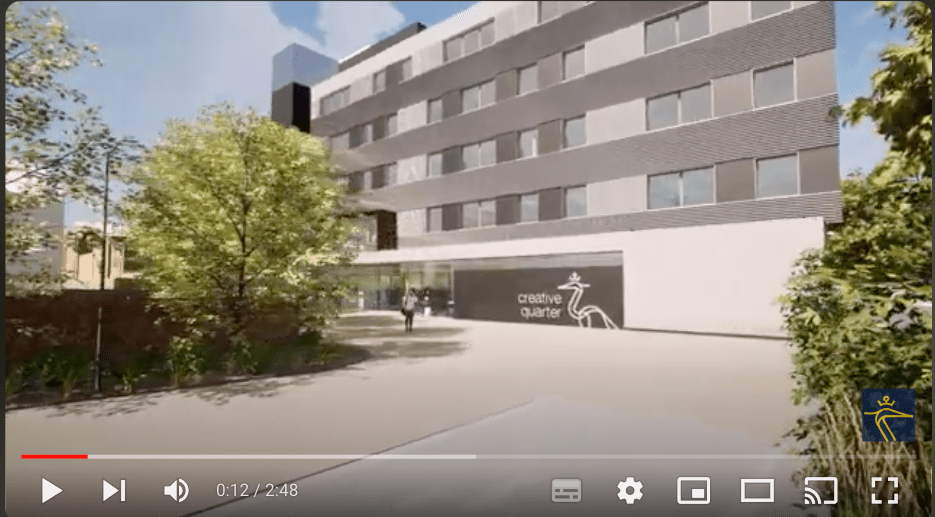
Above – a screengrab of the simulation of walking through the Mackenzie Road/Collier Road entrance by the Mill Road Cemetery

Above – the same entrance from G-Maps – prominent being that beige coloured Coslett building which is one of my least-favourite buildings in our city, one I have despised since childhood due to seeing it every time I went to swimming lessons back in the late 1980s/early 1990s at Parkside.
You can see how the build sits uneasily next to the much older building next to it. Now, the Coslett Building is going to be revamped as part of the creation of this new ‘creative quarter. There is, however, some local history that needs to be covered in this. Note the map of the site back in 2009 from the ARU Masterplan submitted to Cambridge City Council.

Above – from Cambridge City Council here. several of the names will be familiar to some of you – Sinclair (Sir Clive) to the [Clara] Rackham and [Lilian] Mellish Clark buildings
“Why did Clara and Lilian get buildings named after them?”
Because they were the councillors that persuaded a reluctant Cambridgeshire County Council (the pre-1960s boundaries one) to approve the huge funding commitment needed - mindful of the national politics.

Above – the Saffron Walden Weekly News 10 March 1950, reporting on the vote at Shire Hall, Cambridge. From the British Newspaper Archive.
It’s worth noting that all of the councillors that opposed the funding were male, while the eight women on the county council all voted to proceed.


Above left – Cllrs Lilian Mellish-Clark (West Chesterton), and Clara Rackham (Romsey) of Cambridgeshire County Council (both from the mid-1920s) from the Cambridgeshire Collection.
Buildings come and go, but the legacies of the people remain. It would be nice if the new creative quarter could re-commemorate the work of the two great women of our city and county.

Above – the old Cambridge County following the boundary changes in 1913 that extended the original Cambridge Borough Boundaries to incorporate Chesterton Urban District – the external boundaries of the ‘County of Cambridge’ remained in place until the reforms of the 1960s.
Finally, the old chapel that used to be in the middle of the Mill Road Cemetery was designed by Sir George Gilbert Scott (the elder, of St Pancras fame) – you can read more from the Mill Road Cemetery website here

Above – the chapel by Richard Harraden Bankes from Mill Road Cemetery Friends
You could say the grey of the proposed quarter matches the stone of the old cemetery – but why leave out the nice bits that make it interesting?
Vegetation being in the way should not be an excuse to hide poor design and ugly building faces
You can view the full comparisons in the document link below the video on the landing page here.

Above – can’t we have something different to both?
Making a comment on the planning application
See the Planning Portal here and type in the reference: 23/03907/FUL and feel free to comment. Alternatively go to https://www.writetothem.com/ and email your city councillor to make representations on your behalf. So far,
- Total Consulted: 69
- Comments Received: 38
- Objections: 29
- Supporting: 1
Although for the objections they have to be materially valid. Note the guidance from the Greater Cambridge Shared Planning Service, particularly:
“We can only take into account comments on certain matters. These include:
- Design, appearance, and materials
- Loss of light or overshadowing
- Parking, highway safety, traffic and public rights of way
- Noise, fumes and smell
- Effect on listed building and conservation area
- Nature conservation“
Looks like I’d better start writing!
Apart from my usual moans, I’m going to try and make the case for some positive things too – especially making more of an effort to reflect the local historical figures in their public art projects.

Above – the public art bit still to be done.
If you are interested in the longer term future of Cambridge, and on what happens at the local democracy meetings where decisions are made, feel free to:
- Follow me on Twitter
- Like my Facebook page
- Consider a small donation to help fund my continued research and reporting on local democracy in and around Cambridge.
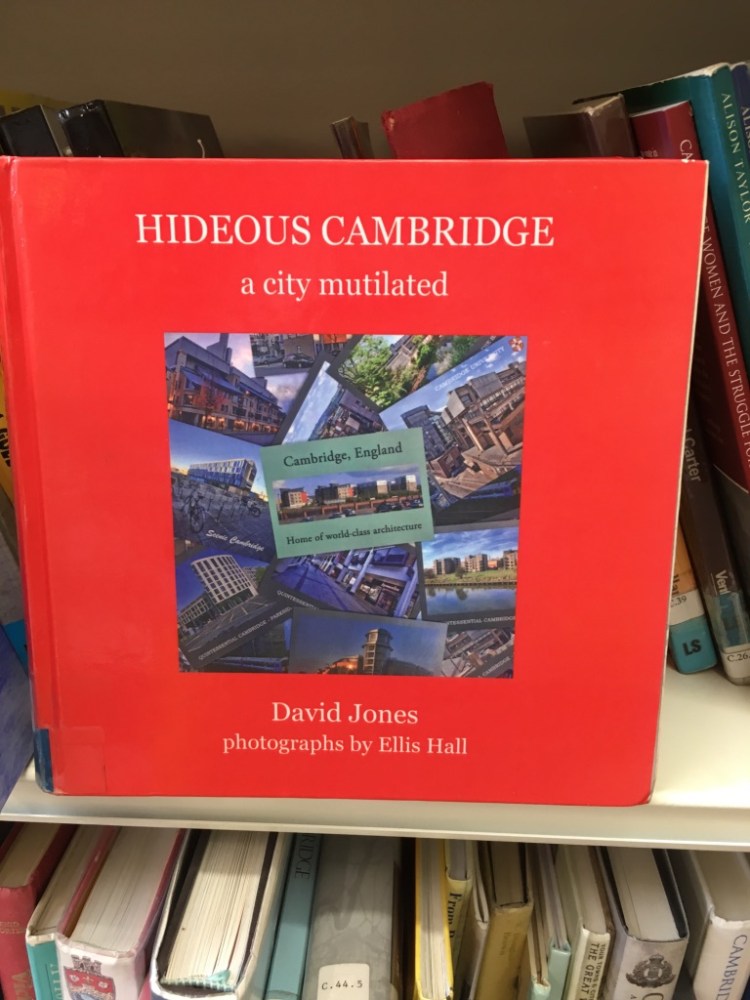
Below: Hopefully one day we’ll get some new public building designs that won’t be contenders for a second volume of Jones and Hall’s book from 2013!
 The Cambridge Town Owl