
So told the representative of the University of Cambridge to Cambridge City Councillors on 09 Sept 2015
[Updated to add – things get *even more complicated* in the subsequent post here]
Image – Cambridge Land Justice Campaign – formed by students who are interested in many of the issues that I discuss below.
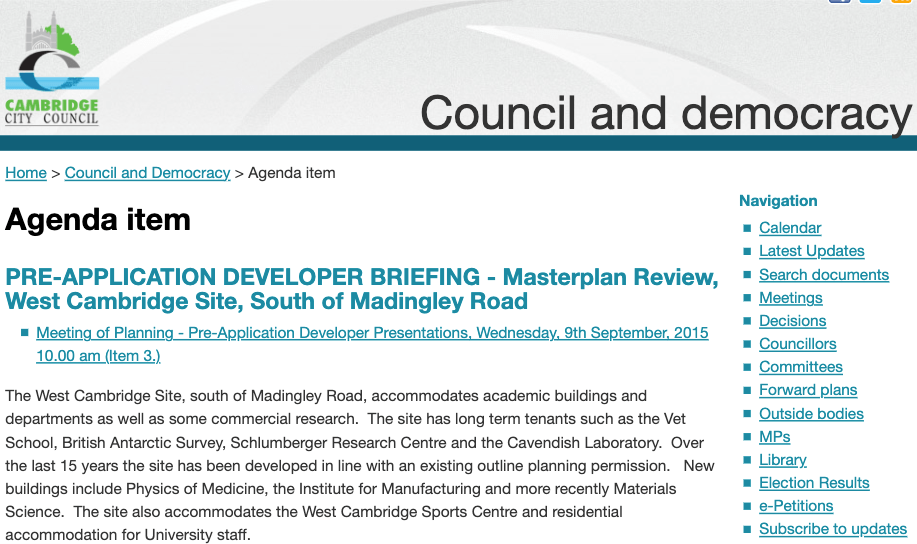
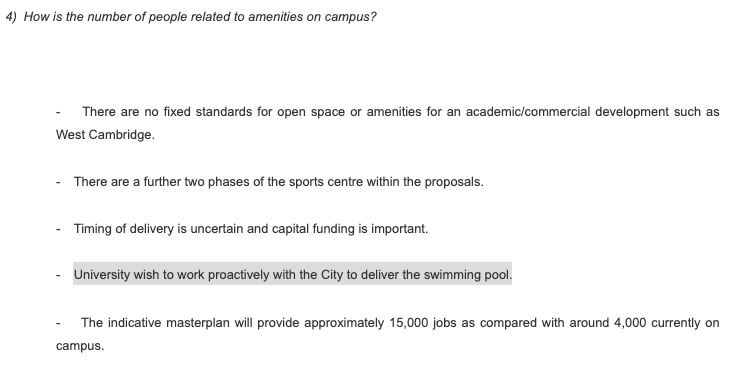
Above – from the minutes of the pre-application developer briefing with city councillors
Pre-application developer briefings are an important part of the planning process as this enables councillors to scrutinise the intentions of developers on behalf of their residents prior to formal planning applications being submitted. By that time it’s very much a ‘take it or leave it’ – with little chance of significantly amending applications.
The University of Cambridge states that it doesn’t have planning permission – let’s scrutinise that claim
“A Cambridge University spokesperson said: “The University does not currently have planning permission for a new pool, and if and when we receive planning permission we will need to take into account an ongoing council review of swimming pool demand and future provision in the wider area. In the meantime, the University Sports Centre at West Cambridge and facilities nearby on Wilberforce Road offer a variety of sport and fitness activities.”
Cait Findlay in the Cambridge News 21 Jan 2024
What’s particularly interesting is the normally prolific Reach PLC social media operation has omitted to publicise this article of theirs on both Twitter and Facebook. I’ll leave it to you to investigate and/or to judge why this might be.
“Unbuilt pool could cost the University £600,000”
Again, the same corporate line to take.
Yet ARUP who were commissioned to design the sports centre still sing its praises:
“Arup designed the 6,000m2 sports facility, which includes an eight court sports hall, multipurpose halls for dance and martial arts, squash courts, a fitness suite, weights room, and fives courts. A 50 metre swimming pool and a tennis hall are to be delivered in future stages. All internal spaces are naturally day-lit and ventilated to promote health and wellbeing. The project achieved a BREEAM “Excellent” accreditation.”
ARUP

“Does the University of Cambridge have planning permission to build a swimming pool?”
Could it commence building a swimming pool tomorrow?
No.
***Because it has not submitted a detailed planning application with splendid designs for a new swimming pool meeting the criteria it set out in numerous previous documents***
But that would put the University authorities in a bad light. Stating ‘The University does not have planning permission’ is a bit like the naughty teenager stating that they have not received their exam results because they did not enter themselves for the examination. For very large planning applications such as the ones Cambridge University has been submitting for West Cambridge requires the applications to be submitted in separate stages – starting out with the outline permissions, before progressing onto individual buildings and themes such as travel to work plans, urban designs, ecology and so on.
So to confirm again:
**The University of Cambridge does not have planning permission for a new swimming pool because they have not yet submitted a formal application**
“So why the talk of a swimming pool?”
Because it was one of the things the University of Cambridge authorities agreed to in response to campaigns by its own students from a previous generation. Now that nearly all of those students have moved on (a handful may have stuck around or boomeranged back into more senior posts), it’s easier in principle for University authorities to forget about it.
But…there is a huge issue with the non-progress of the swimming pool
What the University promises to its students and what the University promises to local councils don’t carry the same legal weight. With the latter, it involves the rule of law and legal agreements. And one of the things the University of Cambridge committed to when it got planning permission for North West Cambridge formed part of a contract.
You can wade through the North West Cambridge documents here
The contract concerned is known as a “Section 106 agreement” – i.e. made under Section 106 of the Town and Country Planning Act 1990. Because of the scale of the NW Cambridge (i.e. Eddington) site, the S106 agreement ***is a monster of a document***. It runs into 641 pages, and this is from a planning application that has 647 documents of multiple page lengths. Iron filings in haystacks anyone?
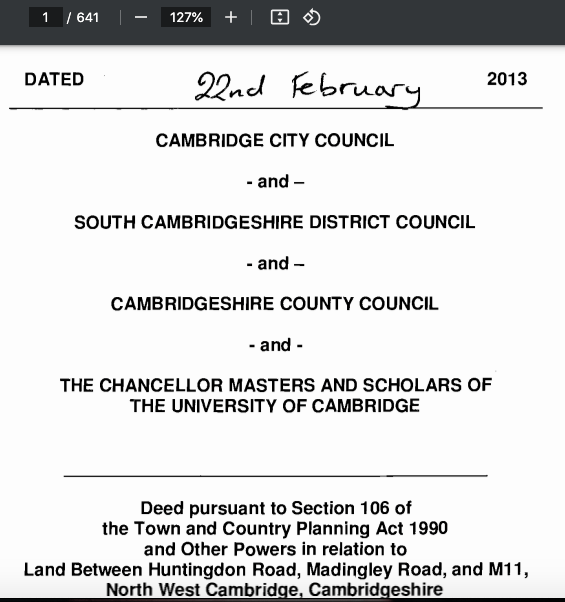
Now, I’ve gone to Schedule 8 as a separate document in the list which covers “Sports and Public Access to West Cambridge” – i.e. making accessible to the general public the sports facilities at the University of Cambridge’s Sports Centre in West Cambridge – which also functions now as the counting hall for local and general elections.

This means that the paying public can have access to the new sports facilities there as a contribution towards the general sporting and leisure amenities for the City of Cambridge. Makes sense if you want to break down the town-gown barriers. Be very aware that there are people within the University of Cambridge who very much do not want this – for whatever reason. That or the University of Cambridge and its college members are struggling to undo eight centuries of inertia.
Further down is the bit that matters for the swimming pool


This creates a number of problems for the University decision-makers – and not just the £600,000 liability that Isabel Dempsey of Varsity identified.
The University of Cambridge commissioned and took part in a fair amount of publicity for the proposed swimming pool, and furthermore spent significant sums on the planning documents and professional services to incorporate proposals for a new swimming pool. I can’t imagine the students paying tuition fees will be too pleased to see such sums of money wasted.
In the West Cambridge Masterplan Document from June 2016
You can read the Design and Access Statement for the outline planning permission here
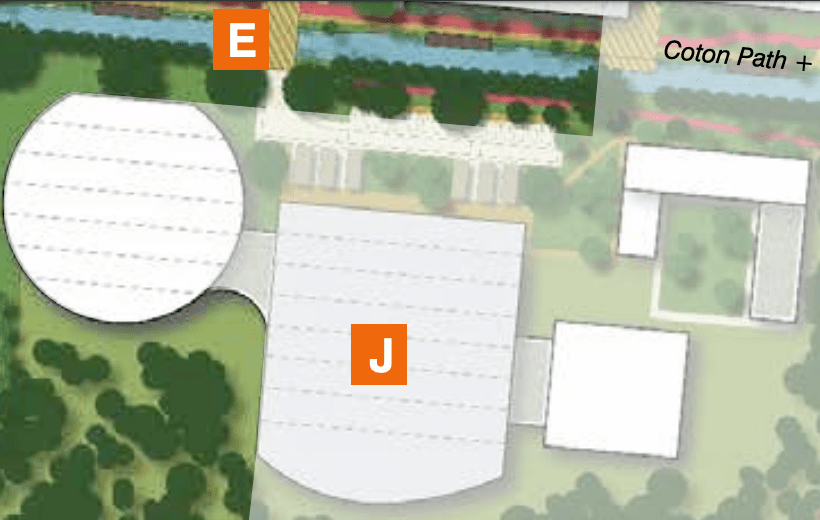

J is the Sports Centre Building.
In 2017, the University submitted an addendum that confirmed its intention to build the swimming pool.

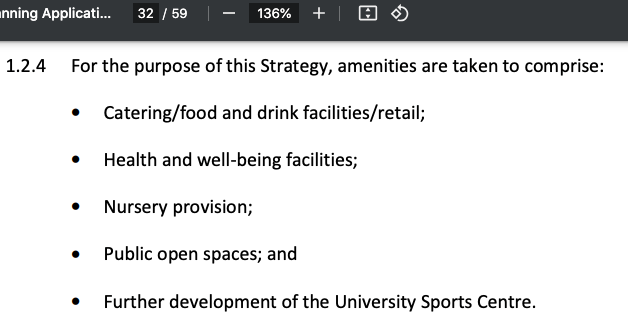
That further development is the swimming pool and the hall for indoor tennis courts.
In 2019, Nick Brooking, director of sport at Cambridge University in an interview with the Cambridge News stated:
“There’ll be consultation with the city swim club, the community, the colleges, and the students. It’s not something that’s going to happen tomorrow, but it’s about trying to respond to the need in the area.”
Cambridge News, 02 May 2019
Furthermore, Mr Brooking followed up his comments:
“One of the most exciting aspects of this development for the local community will be the plans for a swimming pool. While there are several swimming pools in Cambridge already, there is a lack of facilities out toward the west of Cambridge.
“Nick said: “If there was ample water space in the city in Cambridge, we wouldn’t entertain the idea, so it’s got to be done in collaboration with the council.””
Which corresponds with the 2015 statement about working with Cambridge City Council to get the swimming pool built.
Why would the University of Cambridge choose to renege on such commitments in the face of such high expectations?
Exactly.
Note that Eddington was already controversial in that it shut out the provision of any council housing – resulting in protests from Cambridge City Council back in 2017. This is one of the reasons why students have started protesting against their own university and colleges over the lack of housing justice in Cambridge. (Any Cambridge students wanting to learn more about Cambridge’s housing crisis see my blogpost here with the data – then ask your college leaders and deans of chapels what actions they are taking in response).
For the University’s decision makers to kick sand in the face of democratically-elected councillors not only on housing, but on much-needed leisure facilities that they committed to building, is something that makes councillors and residents understandably angry.
Yet it gets worse from the council’s perspective.
The University of Cambridge and its colleges are exempt from business rates.
Read the guidance from the Government here.
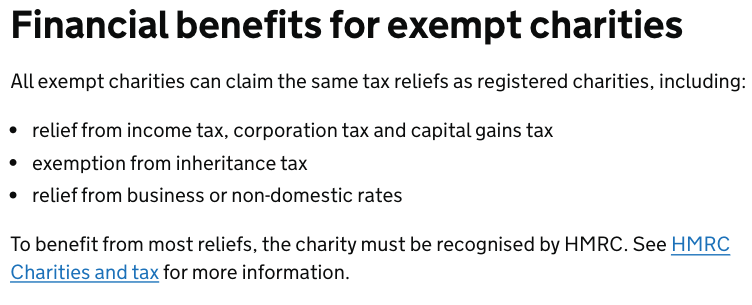

…and the list continues.
Not that business rates from the University would make much difference locally – it would simply get thrown into the national pot and redistributed, as Cllr Mike Davey explained recently. Now ministers want both City and County Councils to make further cuts – while the University of Cambridge boasts of the money it and its colleges raise from donors.

Above – note the University of Cambridge is prepared to bundle in its existence with the colleges when it suits them – such as totalling the donations, while pleads poverty and separate institutional status when the public and townfolk call on them to contribute their fair share to the infrastructure that cities need to function properly. (See my blogpost here).
“What can students do in response?”
Do what they are good at – campaigning.
I’m useless at campaigning – especially when it comes to the University as I know nothing of the culture, systems, processes or structures. I did a part-time course at Madingley Hall several years back but it turned out that I was more ill than I thought I was during the course of it – ending up in Addenbrooke’s having had a heart attack not long after completing it!
I hope they can lead a successful campaign that results in the pool being built and the University of Cambridge and its colleges stumping up the costs for it. And if any musicians are interested – there’s the unfulfilled commitment from Sir Ivor Jennings (former Vice Chancellor in the early 1960s) about a proposed new large concert hall for which he said the University of Cambridge would cover half of the costs.
But that’s for a separate progress update.
In the meantime, over to you.
If you are interested in the future of Cambridge and all things local democracy (with a bit of Westminster and Whitehall thrown in – I used to work there back in the day) feel free to:
- Follow me on Twitter
- Like my Facebook page
- Consider a small subscription or donation to help fund my continued research and reporting on local democracy in and around Cambridge.

 The Cambridge Town Owl