
Cambridge City Council’s Planning Committee to decide on the new future for the Grafton Centre on 07 Feb 2024 at The Guildhall, Cambridge
I have moaned about this one for years
Past posts have included:
- Asking if the retail site could have a new large book store to replace the void left by the defunct Debenhams shop
- Asking why the site was being marketed as a sci-tech site when it was put up for sale a few years ago
- Asking what councillors might make of it
- Complaining at the lack of community facilities in the initial proposals
Now, this part of town has got one of the most interesting of histories to it – everything that goes with the emergence of urban slums combined with various attempts at poverty alleviation that you can squish into a couple of centuries.
Several years ago I bought a copy of the proposals for the renewal of The Kite – the area of town The Grafton Centre is within. It was published in 1976 and you can read it here.
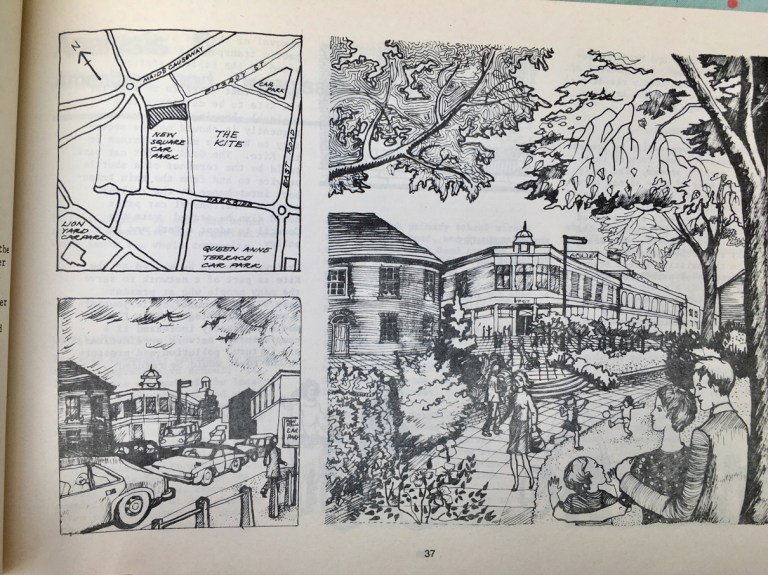
Above: ahead of their time – The Kite Community Council’s proposals for an alternative to comprehensive redevelopment. They were proved right.
The magazines tell a story of the people by the people
I also bought several copies of the old Grapevine Magazine produced by the KCC.
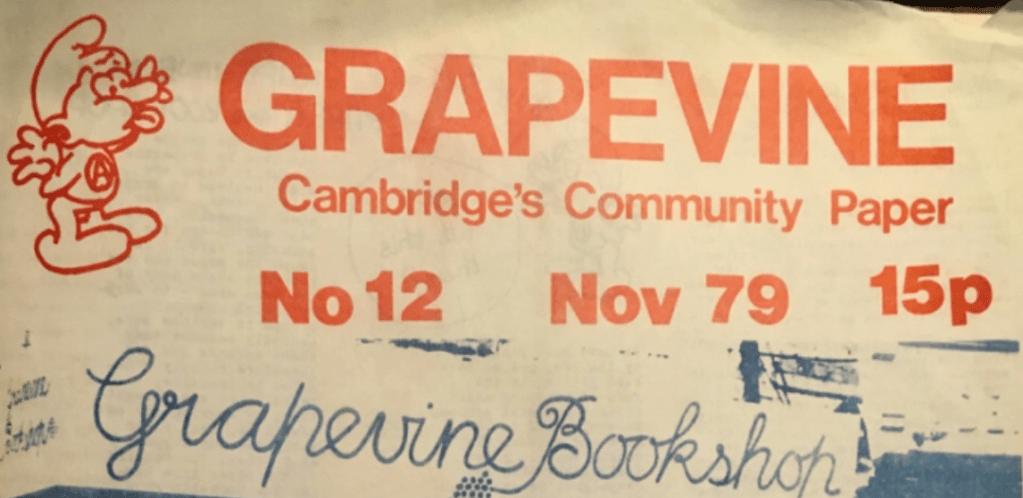
I’d love to see a regular activists’ ‘zine like this reconstituted for Cambridge – with a wide readership, contributions from the people who make up our city (including the commuters from the villages and the regular visitors) fighting for a more socially, economically, and environmentally just city.
Only that’s what the previous generations co-ordinated by rebellious don Prof Lisa Jardine were fighting for – actions curiously omitted from her Wiki-Page even though she was regularly in the Cambridge Evening News campaigning against the plans from Cambridge Conservative Leader Cllr John Powley. (See the British Newspaper Archive here). One of Cllr Powley’s staunch opponents, the late Liberal Councillor Colin Rosenstiel wrote about the impact this had on the once mighty Cambridge Conservative Association.
In that sense, I don’t feel the need to add to it or do line-by-line interpretations. You can read the four magazines yourself and come to your own conclusions:
- Grapevine No 07 – Nov-Dec 1978
- Grapevine No 10 – May-June 1979
- Grapevine No 11 – Jul-Aug 1979
- Grapevine No 12 – Nov-Dec 1979
And the postscript? The Kite is now a conservation area.
The Kite Conservation Area is a major consideration for the councillors – reflecting the objection from Historic England (a statutory consultee).
“Remind me what this is about again?”
Turning a late 20thC-style covered shopping centre that’s not making the property owners enough money into a sci-tech centre – taking advantage of the Cambridge boom. The new owners are proposing demolishing the brown shaded bits below

…and replacing it with buildings with a higher height and higher density – as shown below.
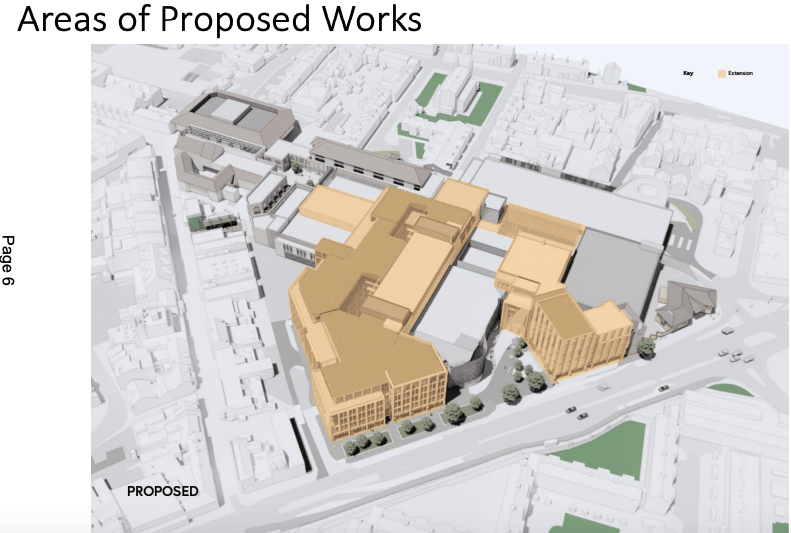
Above – from the Committee Presentation Pack
“So…replacing low-medium height bland stuff with medium-high level bland stuff?”
A sort-of “Eddington-on-East-Road – in the Cambridge vernacular style” – if I were to come up with the marketing words myself.
“Cambridge vernacular is just developer-speak for saying ‘Please let us get away with cheap and nasty cladding only we’ve got to put our profits first!”
That’s not quite the case – the much-praised Marmalade Lane was meant to set a new standard for Cambridge Vernacular – but with land prices and speculation being what it is, the entire economic system is designed to enable individuals and firms to extract as much financial value out of plots of land so that only the cheapest, blandest, and the least popular of developments seem to get approved. Note this is not the same thing as ***Don’t build anything anywhere ever!*** – or Nimbyism on sucrose.
Earlier today I was thinking about some of my favourite local buildings and why I could think of so few. One of them is this:
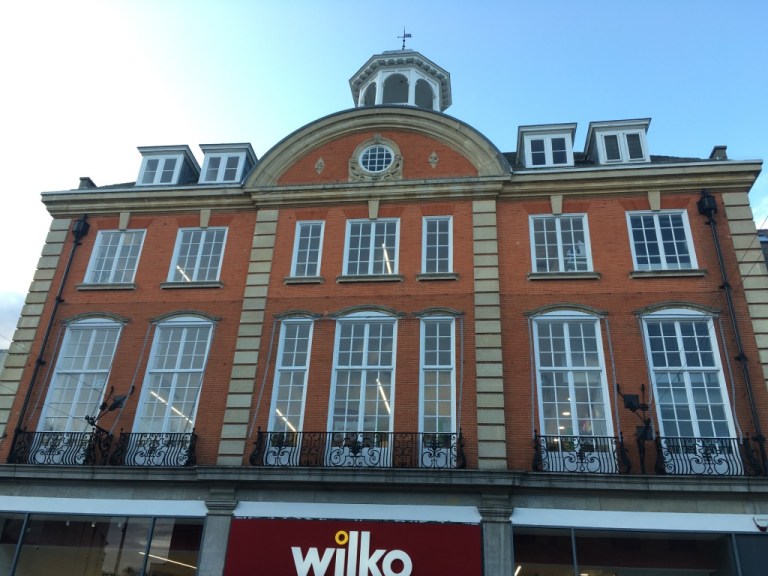
Above – the much-loved Laurie & McConnal Building on Fitzroy Street – Grade II Listed.
Fortunately this one is not part of the redevelopment.
The views from afar – that are causes of concern
The view from Castle Mound on Castle Hill has generated a significant amount of comment and objections from heritage experts.
Before: (Below)

After: (Below)

The image doesn’t really do the comparisons justice, but for me there is a comparison between the ‘before’ and ‘after’ with the Cambridge Station buildings comparing the skyline prior to Brookgate getting their hands on things. About a decade ago I took this photo from the top of Lime Kiln Hill just south of Cherry Hinton on the way to Wandlebury,

Above – I also use it as the header on my Youtube channel
That view no longer exists – Brookgate bulked out Station Road and Station Square.

Above – via G-Maps here – I’ll try to get a photo of it with a proper camera sometime soon.
Yet as I often say to people, if it wasn’t Brookgate doing what they do, it would be someone else. The problem is the system. The price of everything, the value of nothing. We may no longer have the wonderful views from the top of the hill, but look at all of that shareholder value that got created and all those executive bonuses! Yay! And when others ask about sharing the wealth they get accused of being communazguls.
Either way, both case studies reflect the wider problems not just within our own city or country, but across the world. Hence why I’ve reached the stage in life where I try not to lose too much sleep over it. Dodging the swipe of the grim reaper had a strange effect on forcing me to choose my battles and prioritise far more ruthlessly than I had ever done in the past.
The objections
Personally I don’t like the principle of it, but I also acknowledge that in the current system there’s nothing I can do about it legally. So much of it comes back to how Cambridge (how-ever you choose to define it) is governed. Creating a new sci-tech space inevitably means importing specialist staff from far outside the city – because the local labour market simply does not have the capacity to fill the vacancies. Given the existing housing crisis, that puts additional pressure on the housing market. Unless there is a decent mass-transit public transport system (which there isn’t, and won’t be for years), the road traffic problems will continue to get worse. Hence why back in July 2023 I called for a new railway station to be built at Coldham’s Lane Bridge
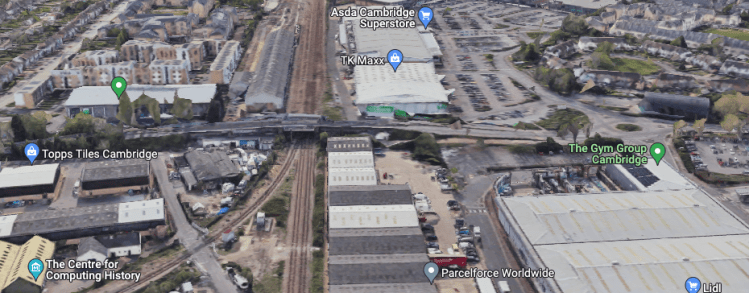
Above – from my July 2023 blogpost – Coldham’s Lane bridge looking southwards
With the RailPen group turning The Beehive Centre into a Sci-Tech site, I called on them and all of the other developers to get together and offer to contribute towards the Cambridge Connect proposals. The principle being that an X-shaped railway station over the bridge could serve The Beehive Centre, The Cambridge Retail park, the Cambridge Computing History Museum and trade businesses, and North West Romsey. That way, a footpath/cycleway can also be constructed from the bridge to The Grafton Centre, easing traffic issues.
The problem is Cambridge does not have the governance structure to make that happen
Network Rail are ‘not interested’ to put it bluntly. If only we had a Rail Minister or Transport Secretary that could compel them to reappraise their priorities. And a municipal council that could tax the wealth we’re continually told is being generated here to pay for that essential infrastructure investment. But then the Conservatives gave up on the art of governing long ago.
The importance of local planning policies
This is the only thing in the existing system that objectors can hold developers to. And even then it’s not water-tight as recent planning appeals have demonstrated. The Friends of St Matthew’s Piece – veterans of fighting awful planning applications (with a fair amount of success too) demonstrated how to object well – by tying each objection to a policy in the Cambridge Local Plan 2018, or to a policy in the National Planning Policy Framework.
“[The Development is] Contrary to Local Plan Policies 46, 55, 56, 57, 58, 60 and 61.”
Planning Officer’s Report on Grafton Centre for 07 Feb 2024
Textbook stuff
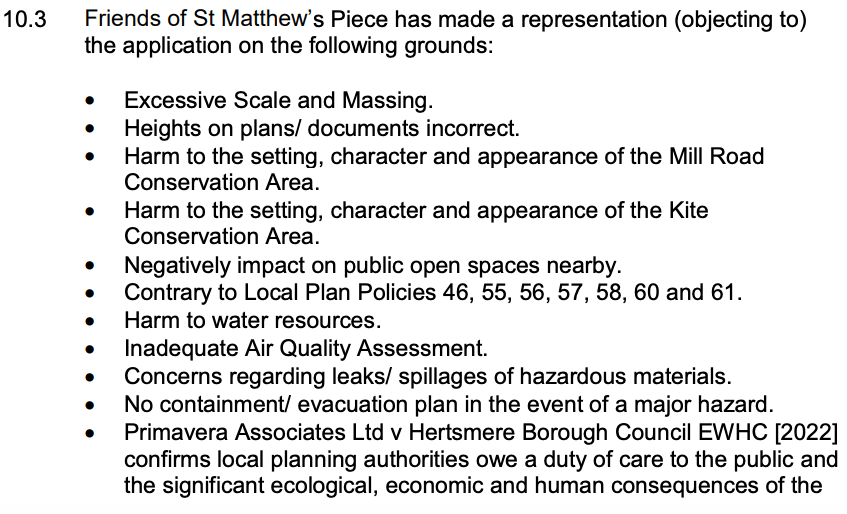
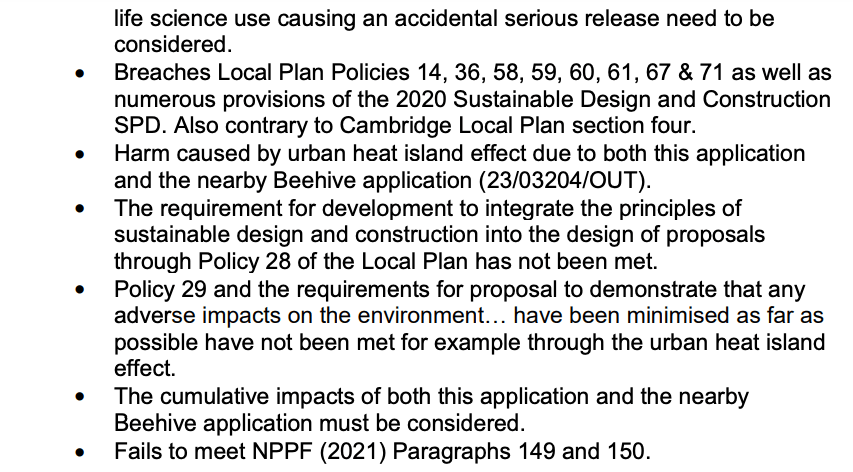
This means the developer and the planning officers have to come up with arguments refuting the claims from the objectors, **or** come up with mitigations to demonstrate what changes they can make to reduce the harm caused by whatever the issues raised are. The bigger the application, the greater the number of issues there are likely to be.
Some things are outside of the scope of planning authorities – part of my efforts to help educate local residents on the system try to highlight these things
I am arranging a new set of workshops for February & March – starting on 11 Feb 2024 if all goes well. In the meantime, have a look at how the council’s planning officers deal with the remaining objections.
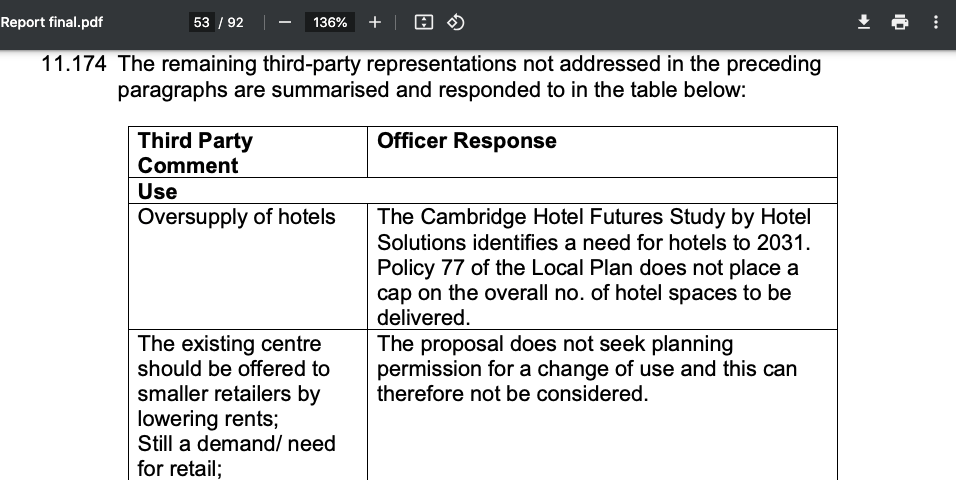
Above – from item 5 page 53 of the Officer’s Report
The supply of hotels is not something planning committees can adjudicate on in the current system. As things stand, ministers and mainstream political parties believe such things should be left to ‘the market’ rather than the state deciding what the limits should be. The debate over this – and what powers any local council should have on the numbers and types of businesses able to establish themselves in any place, is one for the general election.
For example I have views about the number and sizes of private colleges in Cambridge, and the impact that said colleges buying up houses built for residential occupation, and land that could be used for much-needed social housing has on our housing crisis. But what policies if any, should city councils have in order to balance the competing interests?
For those of you not familiar with the planning system, it’s worth going through the table starting on page 53 of Item 5 in detail. For all my issues with town planning – and both of my brothers are qualified town planners (!!!), I think the council’s planning officers have done a good job *explaining* either how each issue can be dealt with – for example a site management condition, or why they are unable to do anything about the issue. On a broader level, this needs to be incorporated into wider civics and citizenship education for adults. Especially my generation that was taught next to nothing at school or college in the 1980s and 1990s.
“Will it go through?”
I expect it will go through eventually – although not without some significant amendments and conditions attached. What those will be are ultimately down to either the planning committee or – if they refuse permission and it gets appealed, a national planning inspector.
More generally though, I’m of the view that Anglia Ruskin University or other suitable education provider should be organising and putting on some ‘introduction to town planning essentials’ evening class courses to enable residents to learn the basics. That way, it might actually reduce the workload of our council’s town planners as correspondence will be much more focused and informed from residents – and at the same time generate grass roots movements to persuade politicians to improve the system overall.
Food for thought?
If you are interested in the future of Cambridge and all things local democracy (with a bit of Westminster and Whitehall thrown in – I used to work there back in the day) feel free to:
- Follow me on Twitter
- Like my Facebook page
- Consider a small subscription or donation to help fund my continued research and reporting on local democracy in and around Cambridge.
 The Cambridge Town Owl