
What are they, how do they work, and what might they be used for? And what are their drawbacks? (Image: From Brighter Citizens, 1947)
Some of you may remember Keith Garrett from Cambridge who has stood at the last three general elections as a candidate in Cambridge for Rebooting Democracy (2015, 2017, 2019 – you can see the results here). You can see:
- this election video from the Cambridge News from 2015 here
- This talk to XR-Cambridge from summer 2019
- The Q&A with XR that followed
“What is a Citizens’ Assembly?”
See this short clip from XR nationally from March 2020
In a nutshell, it’s like using the random selection system that selects juries, but to select a group of people to discuss and debate a policy issue under expert facilitation, and having access to experts and evidence, before drawing up conclusions.
Furthermore, the Republic of Ireland tested such assemblies on debating controversial issues to get an insight into what the public thought while having had the chance to debate and discuss the evidence in properly-facilitated events. (i.e. not ones that lead people towards the answer that the organisers wanted – which defeats the purpose).
This is not the first time the UK has looked at the Republic of Ireland over domestic public policy. The smoking ban in public was first brought in by the Republic of Ireland in 2004 (See this look-back in 2014), and it was the success of this that incentivised the UK to bring in a similar ban.
“Why are citizens’ assemblies becoming a thing now?”
Because the Labour Party has announced it will be bringing them in.
“Labour could use citizens’ assemblies to propose new laws on tricky issues including assisted dying, if they win power, Wes Streeting has suggested.”
BBC Politics, 19 Feb 2024
Also:
“Labour would introduce citizens’ assemblies, Sue Gray says”
Civil Service World, 19 Feb 2024
“Sir Humphrey won’t like that.”
Exactly
“Once you create genuinely democratic local communities, it won’t stop there”
Sir Humphrey Appleby – as played by the late Nigel Hawthorne
“Who’s against it?”
Some in Whitehall – see Sue Gray earlier. There are also some risks too if everything else remains the same.
“I was going to say the same – who in the world has the time to take part in a citizens’ assembly?”
That’s one of the ‘delivery barriers’ in my opinion. But there are those who are strongly-opposed in principle.
Dr Richard Johnson refers to Prof Richard Tuck’s chapter against Citizens Assemblies. Prof Tuck gave a speech on the subject of active and passive citizens, at King’s College London in 2019. You can read the transcript of Prof Tuck’s speech here.
There’s also the experience of the Greater Cambridge Partnership’s attempt at a Citizens’ Assembly – and from my perspective the less said about that the better!
Two reasons why the GCP’s Citizens’ Assembly failed as a process:
- The organisers (Involve UK were contracted to run the process) could never have the sort of access, awareness of, or the consent of the entire population of Cambridge and South Cambridgeshire to make for a genuinely random sample of the population from which to work with.
- It felt like the GCP used the results of the process to justify proceeding with unpopular policies that as the political parties found out, did not have consent of the voters at the ballot box in 2023.
Which is why if Citizens’ Assemblies are to work both functionally and in terms of achieving outcomes, proponents need to analyse the assumptions behind the case of such assemblies very carefully. That includes the level of democratic and political literacy, and the relationships between citizens and the state. I’m reminded of what Cllr Henry Hall (Radical Liberal – Barnwell) said when making the case for a republic in 1870s Cambridge.
“But he would add that the establishment of Republican form of government in England just then would not be advantageous to its interest, because they were not prepared for it—the people of the country were not intelligent or moral enough to understand the principles of a Republic, which was government of the people by the people and for the people, and it was necessary for that high standard of government that the intellect and moral power of the people should be developed.”
Henry T Hall quoted Sat 21 Dec 1871
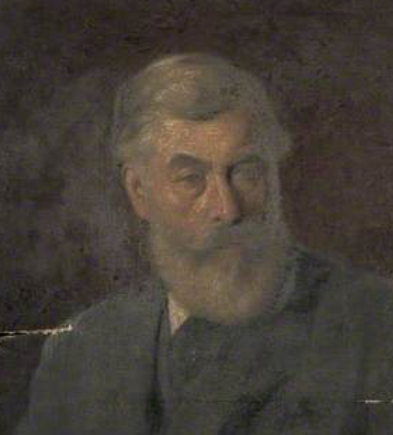
Above – Henry Thomas Hall (Radical Liberal – Barnwell) Via https://artuk.org/discover/artworks/henry-thomas-hall-18231894-48991 – this original is hidden in The Guildhall somewhere.
(As I mentioned in an earlier blogpost, the painting needs restoring and bringing back to prominence as he was the unofficial political patron of the Founding Father of Cambridge’s Municipal Libraries, John Pink. Cllr Hall was a generous benefactor of what is now the Central Library, donating many books in its early years at a time when councillors were unwilling to vote for funds for new books.)
You could say Cllr Hall was making the case for educating the public in civics at around the time when the first compulsory education for children legislation was going through Parliament. Much as I can see the benefits of citizens’ assemblies, I think any policy of bringing them in needs to be accompanied by radical policies on democracy education at schools, colleges, universities, and in the lifelong learning sector. Making democracy education/civics/ethics a compulsory module for universities? That would be a controversial move! A better alternative might be for ministers to encourage strongly for higher education institutions to come up with their own systems/programmes that induct students not just into the institution, but the wider community (eg town/city) that they live in. As for lifelong learning, I won’t repeat what I’ve said in previous blogposts.
If you are interested in the longer term future of Cambridge, and on what happens at the local democracy meetings where decisions are made, feel free to:
- Follow me on Twitter
- Like my Facebook page
- Consider a small donation to help fund my continued research and reporting on local democracy in and around Cambridge.

 The Cambridge Town Owl