
Come along to one of my Great Cambridge Crash Course events!
Some of you may recall a similarly-titled initiative from nearly a decade ago.
It was even on BBC Look East
Above – BBC Look East via Cambridge Ahead, 09 Oct 2015
Furthermore, Smarter Cambridge Transport and Rail Future East produced this piece listing the support for more, better transport infrastructure in The Case for Cambridge 2015. Although there’s an extensive summary in Cambridge Ahead’s 2015 Autumn newsletter here, the original document appears to have been deleted. You can however, watch this promotional video by Lee Evans. How does the content compare today, having been through the 2019 general election, and the lockdowns?
“Does The #CaseForCambridge remain a utopian dream?”
First of all:
Browse through The Treasury’s Budget Documents here
Scroll down and you will find three documents specifically relating to Cambridge and Cambridgeshire.

Then:
Print out a copy of The Case for Cambridge and browse through it
I printed out a copy last night and found that the gaps in the document seem much more prominent than when I read them on a screen. I now have to print it out again because I gave my copy away to someone who was far less familiar with the whole thing and felt they’d get more from it (and share it with more people too).
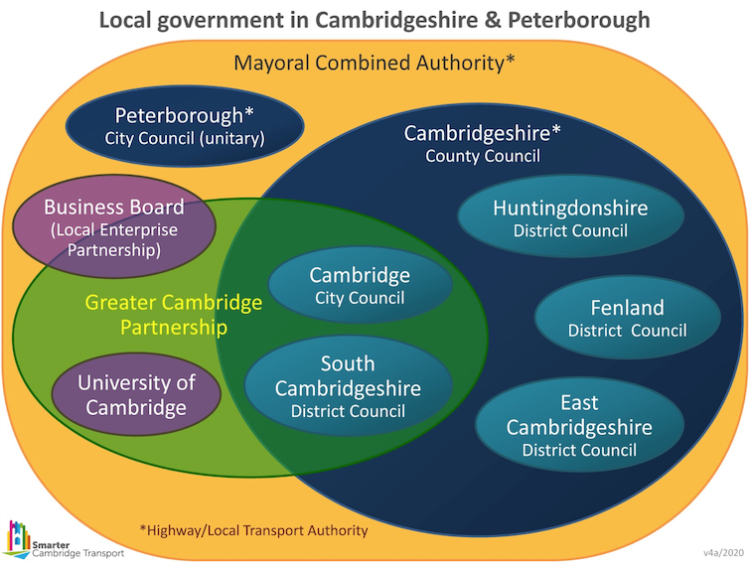
There are so many different institutions ‘doing’ housing and planning in and around Cambridge that it is almost impossible to keep track of who is doing what.
Which is why ministers missed an opportunity to consolidate the myriad of institutions each with the potential to bring the whole ambition for Cambridge’s growth tumbling down.
Governance matters – and ministers are going ahead with proposals without ensuring that the essential civic and public services are able to keep up.
I went along to another local gathering in Coleridge ward this week

Above – a reminder that Cambridge still has pockets of poverty in between the ivory towers and the glass-box sci-tech parks.
It is within our residential neighbourhoods that our local history is preserved – especially the oral histories. Hence I’m glad that the Museum of Cambridge is hosting this event to enable the photographs and the stories to be recorded and archived.
And that’s not a sentimental statement, but rather a reminder that the Greater Cambridge Partnership has struggled *because* officers chose not to undertake local historical research prior to commissioning their big projects (despite being asked repeatedly). Furthermore, the lack of grounding in local history is more than exposed in the Case for Cambridge document.
A case without a soul?
When I read through the paper version last night, I asked myself:
- Whether the document was written by someone who lives/works in the city
- How much awareness of local history (the last 100 yrs) the writers have
- Who the target audience is – have locals been overlooked?
“It is through culture that we come together, enrich our shared experiences and develop the pride in place that is at the heart of all great towns and cities. Cambridge already boasts such outstanding cultural institutions as the Cambridge Arts Theatre, founded by John Maynard Keynes, the Corn Exchange, which has hosted some of the world’s best-known artists, and the Fitzwilliam Museum, home to some of the most beautiful art from around the world.”
Case for Cambridge (HMT) p27
That paragraph above was not written for a local audience. But then maybe that was the purpose. Sadly most school children will have little idea who John Maynard Keynes was, or the huge positive impact his family had on our city – town and gown. Why? Because local history has been hollowed out and the old in-house materials production unit that the county council used to have for schools has long since been shut down. My generation never learnt about him or his civic hero of a mother, Florence Ada Keynes.
While the Corn Exchange has hosted some big-name bands over the decades (plus me in a chorus of about 100 vocalists back in 2014 & 2015), few people appreciate that the building is not fit for purpose as a bespoke concert hall because it was designed as a corn exchange. Hence the name! Furthermore, the costs of putting on productions mean that most of the musical acts are either tribute bands or older bands from previous eras (1980s/1990s) coming back around for a second go. (Browse through the listings) It’s only the stand-up comedy or spoken word acts that seem to be the big names performing at the venue. Hence my repeated call for a new very large concert hall for Cambridge.
“Michael Gove mentioned a concert hall or three, didn’t he?”
He did, but didn’t go any further. Also the department confirmed they didn’t get the idea from me. I don’t know whether that’s a good thing or a bad thing!
“There is also excellent work happening at the local level to develop the city’s cultural offering, which the government is committed to supporting and enhancing. The government will consider any future plan to help create a flourishing and diverse cultural city. From concert halls to community arts centres, we will encourage the creation of world-class centres for culture while supporting the growth and development of local institutions.”
Case for Cambridge (2024) p27
The above is a repeat of what the Levelling Up Secretary (Gove) said back in July 2023.
“Finally, we can envisage new centres for culture – perhaps a natural history museum, or a genuinely world-class concert hall – proudly taking their place alongside some of Cambridge’s existing institutions such as the Fitzwilliam and the Scott Polar. That is the kind of Cambridge that I want to see come 2040.”
Michael Gove 24 July 2023
Back in 1967, Cambridge City Council’s Architect and Chief Town Planner explored the options for a concert hall in Cambridge – which I summarised in the second half of this blogpost.
The problem, as councillors at the GCP Board explained today, is that ministers are still light on the detail.
Listening to Cllr Brian Milnes (Lib Dems – Sawston) at the Greater Cambridge Partnership Board earlier today, I agreed with his sentiment. Ministers have had more than enough time to come up with some details – especially on transport.
Ministers really should have made their choice clear on a mass transit public transport system. Instead, the Cambridge Connect proposals remain where they are and all the main political parties that have been involved in the Greater Cambridge Partnership will find their candidates having to account for all the wasted money spent on consultants over unwanted, unbuilt busways when they really should be talking about better things.
“At least we have a document to scrutinise”
It’s the final few pages that are particularly important – not least because we still don’t know who this ‘Cambridge Delivery Group’ is – and there’s no reason to keep it all so secret.
“Since its inception the CDG has engaged extensively in the Cambridge area. CDG
Case for Cambridge (2024) p33
representatives have met with local MPs, leaders of local authorities, business leaders, university representatives, utility suppliers, infrastructure providers and developers. These discussions highlight some of the concerns, core values and ambitions that coalesce around the future of Cambridge, including water scarcity, transport infrastructure and public services.”
Note the people who seem to have been engaged more than anyone are the people who stand to make the most money out of the proposals. Civic society organisations are conspicuous by their absence. Furthermore, of the three MPs in/around Cambridge, two of them are Government Ministers so are bound by the Convention of Collective Responsibility of Government (See para 1.3(a) of the Ministerial Code) so whatever Michael Gove ultimately decides, they have the choice to back the proposals in public 100% no caveats, or resign from the Government in order to oppose the proposals publicly.
Can anyone see the conflict of interest there?
(Hence my take that the UK should move to separate Parliament from Government – separate the legislature from the executive as the duty of the former to scrutinise the latter is compromised if members of the latter are also members of the former.)
“So…what happens next?”
Here’s HMT [The Treasury] again.
“The [Cambridge Delivery Group] CDG is in the process of reaching out and listening to local authorities, communities and stakeholders to understand how they would like to be involved in the government’s work on Cambridge going forward.
“This information will form an engagement strategy that will bring together insight and ability from across Greater Cambridge, harnessing a representative cross section of local voices. The CDG will also establish an advisory council to build local representation into its governance framework.
“The government will continue to take the steps to establish a development corporation to oversee the long-term work and coordination required to realise Cambridge’s full potential. The work of the CDG will form a key component of this process, helping to lay the institutional groundwork for the future of Cambridge.”
Case for Cambridge (2024) p34
The lack of public scrutiny was something I raised last autumn here, picking up on the concerns of former Cllr Sam Davies MBE, quoting an event run by the former MP for South Cambs and ex-Health Secretary who has an easy route to ministers via the House of Lords.
“We have to say to the [Cambridge Delivery Group] ‘This is what we need’” – ‘This’ being sufficient provision to meet a suggested ninefold increase in demand, evidenced by speakers from Savills and Carter Jonas.
Sam Davies MBE 01 Oct 2023
I suggested to campaigners that they send in FoI/EIR requests regarding meetings that civil servants have had with the forum run by the ex-Health Secretary. (See here, scroll down)
“That final paragraph: helping to lay the institutional groundwork for the future of Cambridge.“
It will be interesting to see if the CDG is given the remit to restructure local government for Cambridgeshire. Surely something a future government may have a view on?
We live in interesting times.
If you are interested in the longer term future of Cambridge, and on what happens at the local democracy meetings where decisions are made, feel free to:
- Follow me on Twitter
- Like my Facebook page
- Consider a small donation to help fund my continued research and reporting on local democracy in and around Cambridge.
 The Cambridge Town Owl