
Final strategy document published by Cambridge City Council. It’s worth noting that a separate Cultural Infrastructure Strategy is due to be published as part of the emerging new Greater Cambridge Local Plan
You can read the strategy at item 8 (first paper in the list)
Some of you may also want to compare Cambridge’s strategy with the guidance from the LGA publication here. Especially regarding the use of our town heritage assets.
Following the draft published in January 2024, I called on the council to make town heritage, and lifelong learning more prominent. The blogpost covers a host of other issues, including the polarisation and fragmentation of our city in the face of continued austerity and excruciatingly high inequalities.
‘Wealthy people and poor people in Cambridge live more separate lives than in comparable cities’.
It’s not just the wealth either – the data on the Corn Exchange regarding the average age of audiences is striking.
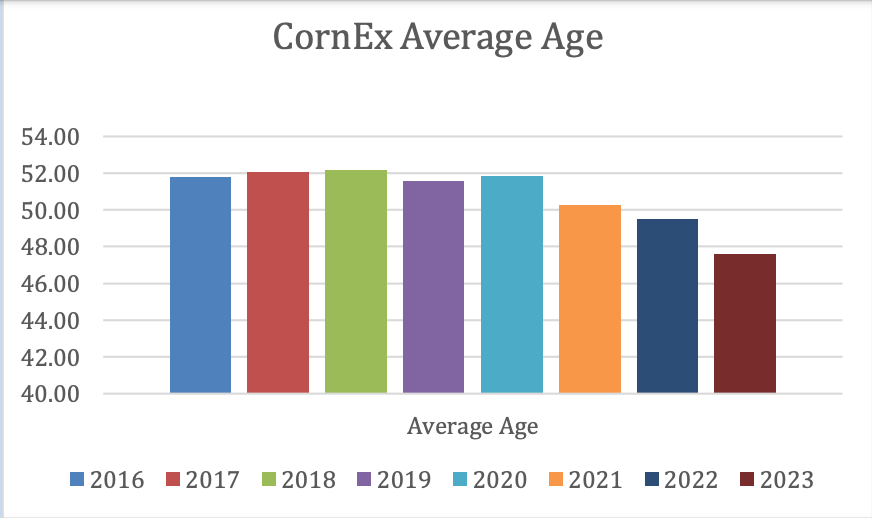
Above – Cambridge City Council E&C Item 8 Case Studies paper, p6
I wonder what the average age profile would be if the Corn Exchange hosted club nights aimed at the 18-30 audience as happened sometimes in the 1990s. Note that even with the seating removed, the open ground floor of the Corn Exchange is less than 700, That is less than the capacity of The Junction which has a standing capacity of 850.
Cambridge’s night life offer has declined compared with the 1990s even though the population of city and county has grown to such an extent we now have an additional parliamentary constituency for the south of the county
Cambridge has seldom been good for night life for as long as I can remember. More recently, the students have written about it here. But then find me a nearby town that does. The city inevitably struggled with trying to cram too much into too small a space – under a development control regime that inevitably gives the colleges the power and influence the ability of new establishments to set up shop.
It’s not so much the individual proprietors I’m interested in for this blogpost, but rather the economic and social drivers of our city that they have to work in. Thinking of a few barriers:
- Land speculation/land prices/property prices
- The planning system (no new designated urban centre for night clubs and night time entertainments)
- High running costs – including security
- High costs of living leaving young people with low disposable incomes
- Changing social trends
- Crime/fear of crime and lack of security presence
- Failure to establish a culture that does not tolerate anti-social behaviour (The much-mentioned desire for a ‘cafe culture’)
- Poor provision of safe night time public transport
The demise of the East of England Showground and Arena must have had an impact on the ability of Peterborough to host large indoor events
“Residents from a Peterborough (PE) postcode represented over 15% of [Cambridge] Corn Exchange tickets sold during 2023”
Cultural Strategy Appendices p2
The long term fate of the site still remains in the balance. Which is grim given that the site which once had the largest indoor capacity for some distance (5,000 people) along with a host of other clubs and functions outdoors, means that the largest city in the Combined Authority Area has a huge civic and social infrastructure gap just as Cambridge does.
“Cambridge City Council thus is presented with a huge opportunity; the ability to cement itself as the dominant cultural centre in the UK’s largest growth region.
Viewing our duty as restricted only to Cambridge City residents, without considering the regional strategic picture, would be notably shortsighted.”
At the same time, I wouldn’t want Cambridge’s success to be at the expense of Peterborough and Fenland. The last thing our unequal county needs is the further transfer of wealth *away* from our most economically-deprived districts to the most affluent. But that is outside of the influence and remit of a city council that for all intents and purposes has the legal powers and functions of a large market town.
The strategy appendices reflect the broken governance structure of Cambridge and Cambridgeshire
“…roughly half of the City’s functional population lies outside of [the city’s] boundaries, largely in the South Cambridgeshire district…there will be approximately 297,000 people living within 17km of the Guildhall by 2025… …This distance includes Cambourne and Northstowe, but excludes St Ives, Royston and Newmarket, all of which can be argued to possess some degree of cultural and/or economic independence from Cambridge City.”
Cultural Strategy Appendices p2
What the council is saying is that it’s focusing on the boundaries of the Greater Cambridge Partnership – Cambridge City, & South Cambridgeshire District Councils. Yet studies going back decades have looked not at administrative boundaries, but rather on how people live their lives. I’ve long thought Lichfield’s map of 1965 below-left, along with Redcliffe-Maud’s scrapped proposals from 1969 for a Great Cambridge Unitary Council below-right could and should have been underpinned by a suburban or light rail system.


Above – Lichfield (1965), and Redcliffe-Maud (1969)
The cultural strategy will fail unless Cambridgeshire’s public transport infrastructure is massively improved
And Cambridge City Council has very little influence over transport policy (despite its seat on the GCP Board) because it has no legal powers over transport beyond car parks.
Transport is only mentioned three times in the document. Understandable given the above, but it must be acknowledged as a risk outside of its control.
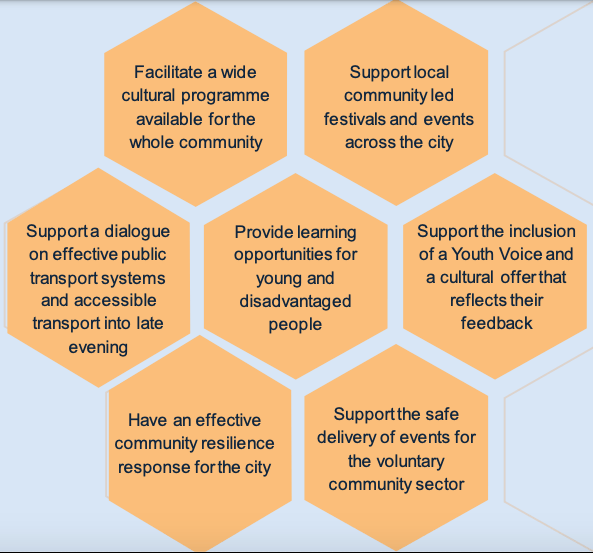
Above – the Council’s Commitments, p19
One example that’s outside the remit of the city council is the provision of public transport from Cambridge to the new Cambridge City FC ground at Sawston.
Above – the response from Cllr Anna Smith (Labour – Coleridge) who serves as Deputy Mayor of the Combined Authority, and who chairs its Transport & Infrastructure Committee
Cambridge City Council is doing what it can with what it has got. But the strategy tells me that the institution simply does not have the resources to compose and deliver a cultural strategy one would expect from a globally famous city
I feel sorry for both councillors and council staff who have to run things on a shoe string. Even more so when we continually read the headlines about the wealth Cambridge’s economy supposedly generates – precious little of which seems to go into maintaining the basic infrastructure.
When I asked a group of urban planning students from Japan at a workshop I ran, about what they thought Cambridge needed to sort out, they gave me a list.
They could see with their own eyes the under-investment in the essential public services in Cambridge. When I explained to them why this was – including a crash course on the concept of Parliamentary Sovereignty and ministerial control over local government in England, they were astonished. International students at the University of Cambridge’s Climate Society said similar when they summarised how much more freedoms local and regional governments have in their home countries.
“Is there much hope under the current government?”
There seldom is under any government so close to a general election – especially under these circumstances. Furthermore, it feels like we’ve reached the logical end of the neo-liberal model of local government. The one where almost everything is privatised, outsourced, or simply vanquished.
We were warned:
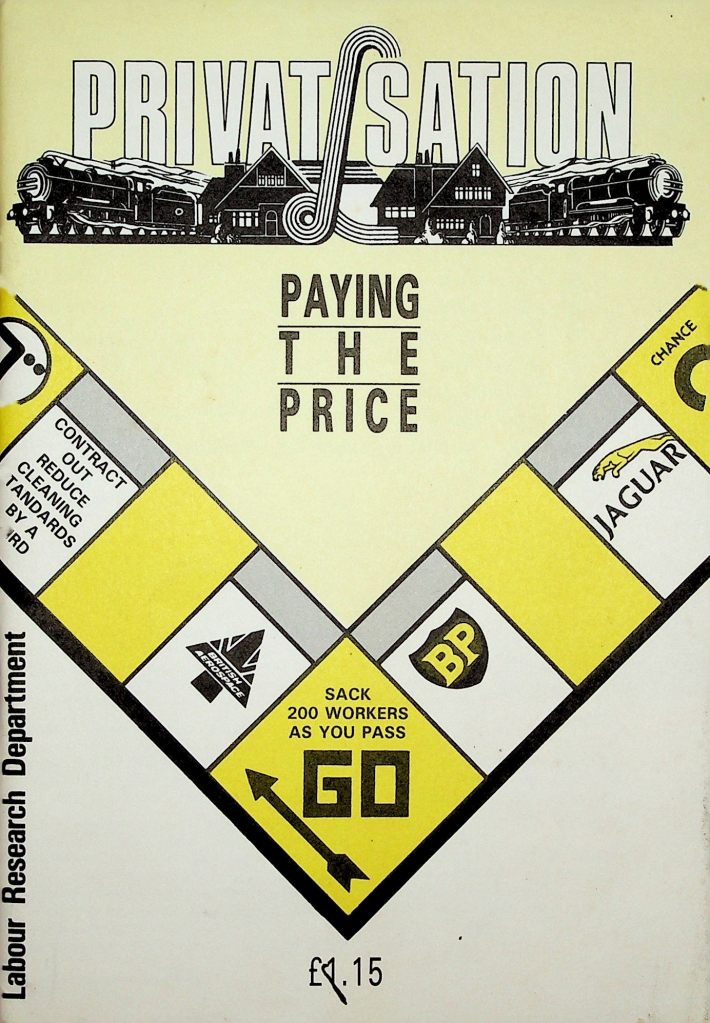
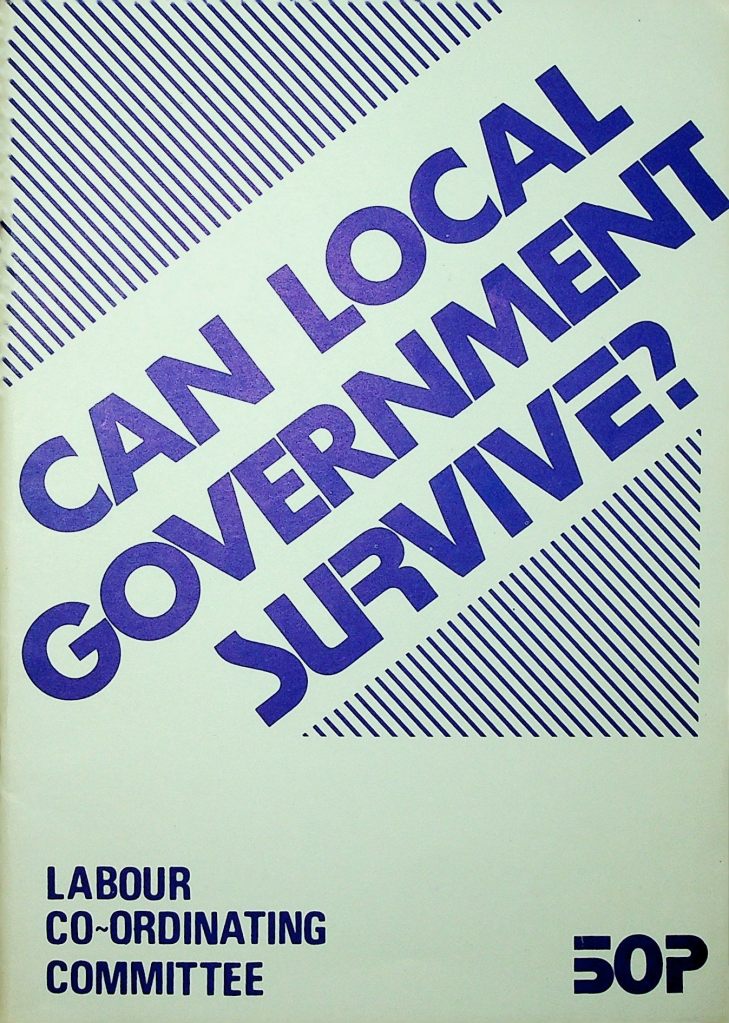
Above-left, Paying the Price of Privatisation (1987) LRD, and Above-Right, Can Local Government Survive? (LCC) 1981
Both are short pamphlets the like of which I’d like to see in mass circulation today as a means of helping introduce and educate the public about complex policy issues. Yet as I have found out, this won’t be easy in a de-politicised society where education about civics, citizenship, democracy, and politics has not been prioritised in schools let alone society by successive governments.
The document mentioned a cultural infrastructure strategy.
It did – and I hope it will include an audit of every building, open space, institution, facility, and organisation irrespective of sector and ownership, just to get a sense of what our city has and who has what access to it.
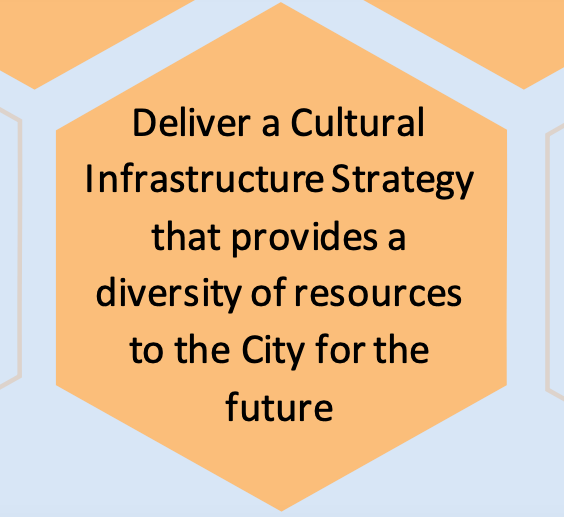
Above – this is something proposed to form part of the evidence base for the emerging Greater Cambridge Local Plan 2031-40
It’s also worth noting that one of the existing documents in the emerging new local plan also covers playing pitches and indoor sports facilities, both of which will overlap.
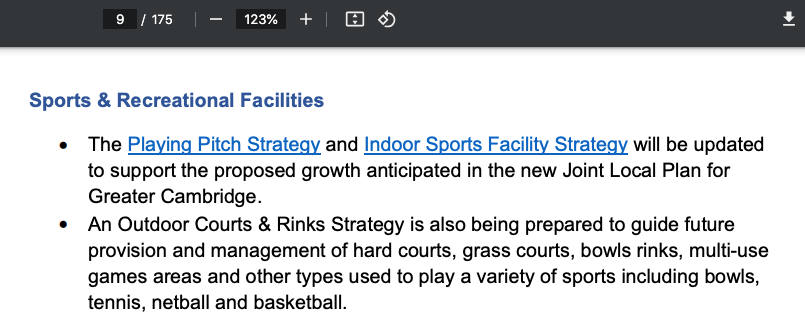
Above – Wellbeing and Social Inclusion Paper, (2021) GCSP, p9
And the overall paper may also be of interest.
…because so much of the cultural strategy highlights the statistical evidence behind how provision of arts and culture improves health and wellbeing. It’s up to you, the readers, to bring this to the attention of your general election candidates.
Food for thought?
If you are interested in the longer term future of Cambridge, and on what happens at the local democracy meetings where decisions are made, feel free to:
- Follow me on Twitter
- Like my Facebook page
- Consider a small donation to help fund my continued research and reporting on local democracy in and around Cambridge.
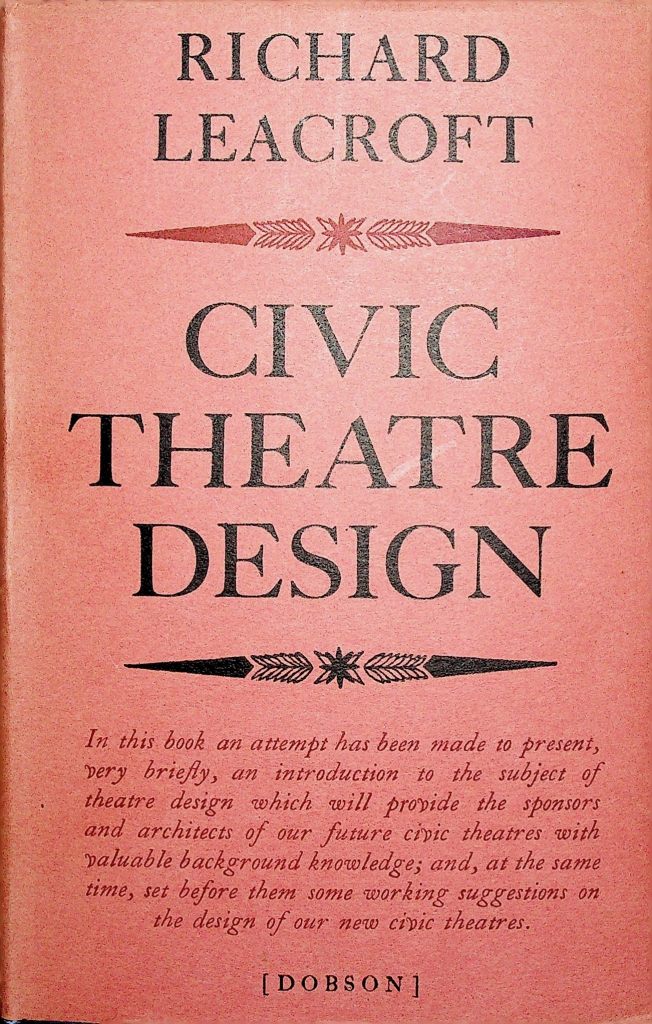
Below – Civic Theatre Design (1949) digitised here – for those of you pondering new indoor facilities.
 The Cambridge Town Owl