
We used to have ***lots of them*** in the olden days. Can we have them back again?
Back in 1922 we had a by-election after Eric “The Axeman” Geddes who decided to resign as MP for Cambridge having brought in the spending cuts that bore his name as a minister a year before. In the days before mass electricity-powered broadcast media (TV/Radio/Internet), politics involved having to meet as many people as you possibly could face-to-face. In March 1922, there were meetings organised by local political parties. Lots of them – as the Conservative-supporting local paper the Cambridge Chronicle demonstrated in this image below.

Above – Cambridge Chronicle 08 March 1922 from the Cambridgeshire Collection
Recognise any of the venues?
This stands in stark contrast with today’s stage-managed opportunities to meet senior politicians when the only time you tend to find out about any visits is *after* they have happened.
“What if you want to see a public debate in your area but, for whatever reason are unable to organise one?”
Reasonable question – there are all sorts of issues and barriers that may prevent someone from being able to organise an event. Such as cost of hiring a venue in these cash-strapped times. Or the pressure of being responsible for all of the people there – or someone rocking up and disrupting things.
Groups that could help
In Cambridge we have dozens of organisations and groups that might be interested in organising such an event in your part of town – see Cambridge Resilience Web’s directory here.
Possible venues
Cambridge City Council has their list here, along with their map of community centres across the city including those run by other institutions.
Furthermore, Cambridgeshire County Council’s libraries have a number of meeting rooms available for hire.
“Can political parties organise their own public events?”
There’s no reason why not. But what they cannot do is provide any inducements – even tea and cake – that might be seen as an inducement to vote one way or another.
“A person is guilty of treating if either before, during or after an election or referendum they directly or indirectly give or provide (or pay wholly or in part the expense of giving or providing) any food, drink, entertainment or provision in order to influence any voter to vote or refrain from voting. Corrupt practice, s114 RPA 1983.”
Electoral Commission 2016
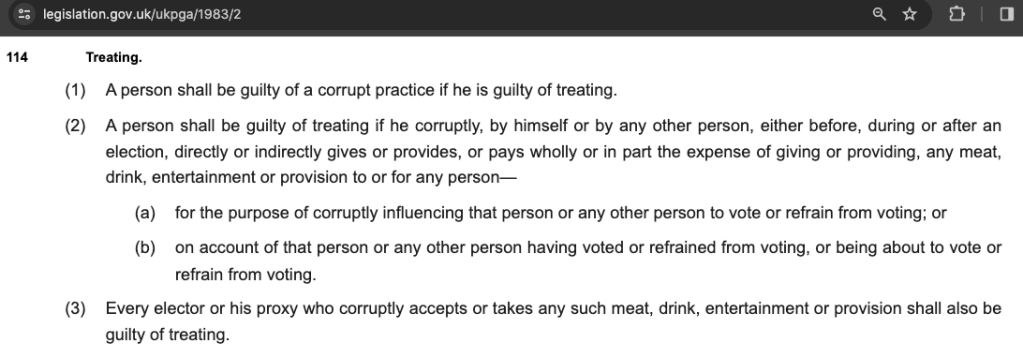
Above – the prohibition of treating in election campaigns.
Note also that the Elections Act 2022 also clarified the law on undue influence too.
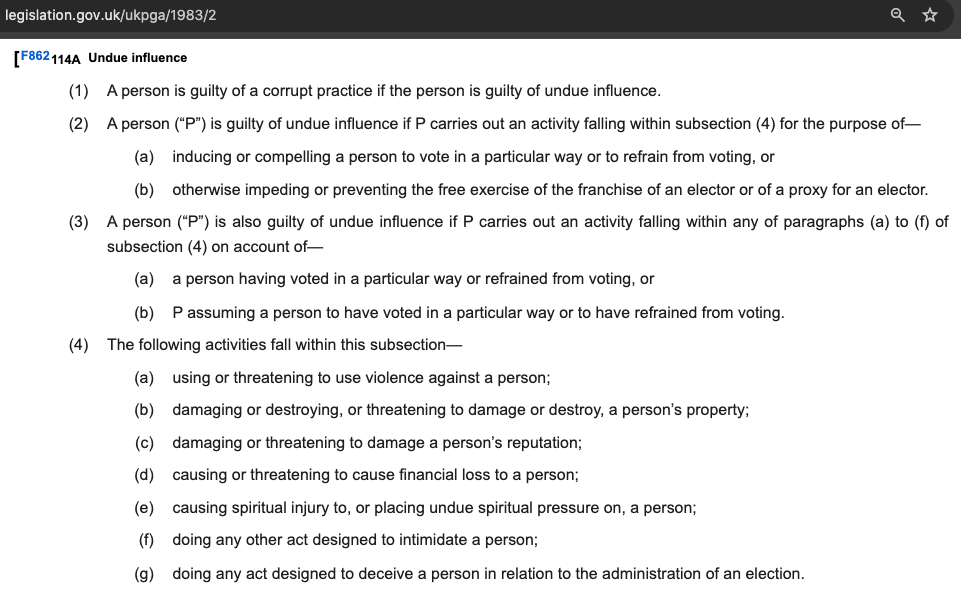
Above – RPA 1983 as amended by EA 2022 S114A
Note that until the Ballot Act 1872, the way that the small number of men with the right to vote was something of public record. Which in an era of local political violence inevitably had an impact – as the Liberals in Cambridge often found to their cost in the 19th Century.
“Liberal absentees say that they were afraid of University or other influence being exerted against them; that they have their bread to earn and that they have to earn it as much from Tories as from Liberals.”
Cambridge Independent Press, 07 May 1859 in Lost Cambridge
Past public meet-and-greet events in recent elections
In Queen Edith’s ward (where the provisional date for the annual public hustings is on 18th April) some candidates from both Coleridge and Queen Edith’s have booked the community room at Rock Road Library (which serves both wards) for meet-and-greet sessions. I’ve also booked that room regularly for my own workshops.
Given the times we live in, organisers may want to refer to and/or publicise the Debate Not Hate campaign from the Local Government Association. It’s perfectly fine for organisers to insist on not allowing filming inside the room – note some venues may already have rules on filming anyway – even if it’s on a smartphone.
Finally, cut the candidates a little bit of slack at the local elections. Most of them won’t have the in-depth knowledge you have on the issue that you are particularly passionate about – especially if it’s an issue that is on an international scale. Don’t expect your local council candidate to be able to stop whichever war or violent conflict is currently taking place. It’s hard enough knowing which tier of local government is responsible for what without trying to unpick the issues of longstanding international conflicts.
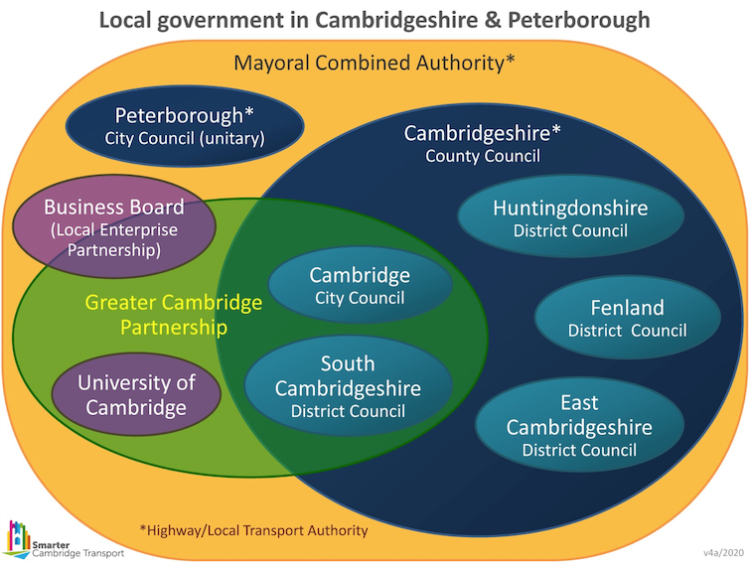
Above – Does this make sense to you? No? Me neither.
You may want to ask candidates what their views are on this, and what alternatives they might favour – such as the Cambs Unitaries proposals which I support and think could go further.
Party candidates won’t have identikit views on every single issue – and may even disagree with their party’s policies on some things. And that’s OK.
It’s not the end of civilisation if a candidate has reservations about the decision of their party leader or senior policy lead such as a minister or their shadow in opposition. Although judging by the theatrical noises in the House of Commons – especially at Prime Minister’s Questions, you could be forgiven that the country was going to implode because of a witty question or response from one side or the other.
What I tend to do these days on policy issues (i.e. not: ‘can you sort out that broken bench/lamp post/trouble spot over there? neighbourhood issues) is to ask politicians to consider something and come back later with a considered response. This is an alternative to the Yes/No ‘gotcha!’ types of questions. Because public policy is complex by its nature. Therefore, to get an informed answer, they often need the time to read up on something or take informed advice from someone in order to give a full response.
Anyway, it would be good to see some local events – even if it’s seen as something of a practice run for the general election in less than 10 months time
Food for thought?
If you are interested in the longer term future of Cambridge, and on what happens at the local democracy meetings where decisions are made, feel free to:
- Follow me on Twitter
- Like my Facebook page
- Consider a small donation to help fund my continued research and reporting on local democracy in and around Cambridge.

 The Cambridge Town Owl