
Independent Candidate Will Bannell hosted a gathering attended by both supporters and opponents of the proposed traffic filter on Mill Road Bridge. I went along to see what it was all about
The Salisbury Club near the corner of Mill Road and Coleridge Road was where the gathering took place. The club was founded in the 1890s when its foundation stone was laid by Lord Claud Hamilton.
This wasn’t the only public meeting that evening.
I was aware of Cllr Anna Smith’s meeting, but public transport to/from Trumpington in the evening…exactly. It was easier for me to wander up Coleridge Road instead. Also, as Cllr Smith is one of my local ward councillors (as well as being Labour’s candidate for the Police & Crime Commissioner for our county), I know how to get in touch with her. Hence choosing the other meeting.
I first spotted the news of Mr Bannell’s candidacy from Phil Rodgers. The main theme of his campaign is about the various controversial transport schemes proposed by the Greater Cambridge Partnership – in particular the proposals to close Mill Road to through traffic (See the report here)
I saw the meeting being filmed so as and when the video gets uploaded to his YTube channel you can judge for yourselves.
I’m not going to go through the merits or otherwise of the GCP’s proposals as I think the organisation should be abolished as part of a major national overhaul on how Cambridge, Cambridgeshire, and England generally, should be governed. The House of Commons Public Administration and Constitutional Affairs Committee came to the same conclusion in October 2022. Now it’s up to the parties to decide whether to include their recommendations in their general election manifestos.
The joys of an informal meeting with no set agenda
In the olden days, a meeting like this – and at the premises – would have had a chairman, a guest speaker, and someone to move a motion of thanks. This would have been followed up in a newspaper report in a politically friendly local newspaper with quotations from the persons involved. Local democracy before the invention of the radio and TV meant that there was interest in who said what, so shorthand-trained reporters would quote speakers word-for-word. Which is why the more boisterous events make for great drama scripts!
Having no agenda does not mean a risk-free event. There’s always the possibility that things may turn into a free-for-all. However, in this case once the main comments about the GCP’s proposals past-and-present were over with, the discussion became more fluid and free-flowing, with the 25-30 people there openly engaging with each other – and disagreeing too. It wasn’t a ‘rally’ so to speak. At least, it didn’t have that set piece feel. Not least because people were prepared to challenge Mr Bannell – in particular on the negative impacts of motor traffic including the noise, speeding, and unlawfully-modified engines. (At which point I reminded the audience that we also have the PCC elections at the same time, and these will be things everyone can put to the candidates there).
Main themes
The big one was the distrust of consultation processes and outcomes – with the feeling that consultations can all-too-easily be gamed. As Sir Humphrey explains below.
Above – ‘For and against National Service‘ – Yes, Prime Minister
Our broken system of consultations is something I’ve moaned regularly about – for example back in 2021 here. Given the number of consultations issued by the Greater Cambridge Partnership alone, inevitably there are very few organisations willing and able to scrutinise meaningfully the proposals coming from the transport officers and the private sector professional service firms that are commissioned to do the work. Because CamCycle – the Cambridge Cycling Campaign (of which I am a member) is one of those few groups willing and able to do this, the impression is that they somehow ‘control’ the transport planning that happens across the city and beyond. Which when you look at what has been happening is not the case at all.
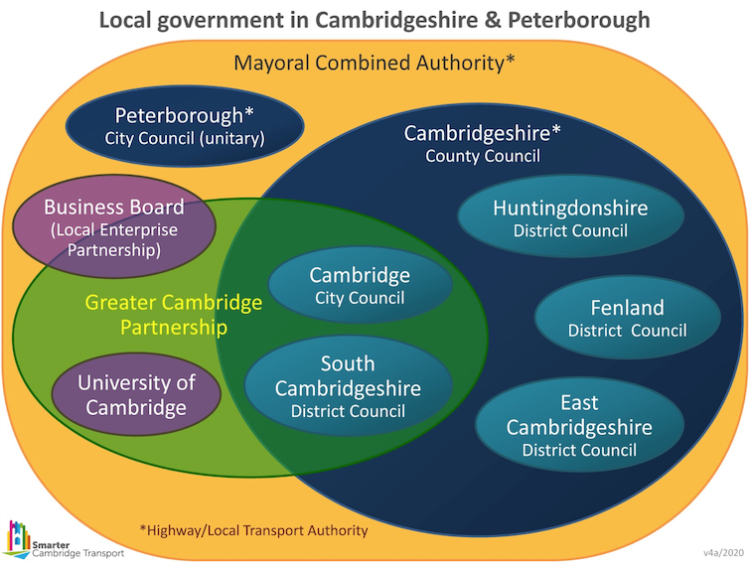
However, if you are someone who simply does not have the time do go to a decades-worth of council/GCP/CPCA meetings *and* read the meeting papers (which is the vast, vast majority of the population!) then I can see how some may come to that view if the short snippets of what they read in local newspapers regularly refer to CamCycle rather than say the much more influential transport engineering consultancies that get the contracts to design the proposals in the first place, to organisations such as the University of Cambridge that have a seat on the GCP Board as well as access to ministers. Such is the built-in complexity that comes with the outsourcing models of public service delivery that few people could expect even a local government reporter to have the in-depth knowledge of the details of public sector commissioning – especially in an environment with a very high turnover for reporters who are on very low salaries anyway.
It wasn’t a meeting full of university graduates (young or old) which made me think again about *how* public service organisations should engage better with the public
The easiest thing to say is Bring back the area committees! – but these clearly were not working whether in-person or online. What do you do when the people who turn up are one-man-and-his-dragon-fairy? (Or town owl?) There’s no point in having a set of meeting papers several hundred pages thick and expecting residents to read them all in advance and make sense of them if you are in a part of town suffering from multiple deprivation. Hence the work by the New Local think tank on Community Power.
Above – What is Community Power?
You can read more about Community Power here
The second theme – one I mentioned to the audience – was about us as residents learning about how our city functions and malfunctions
I said to Mr Bannell that if anyone says they want to know more about the essentials of our political system, recommend that they buy a copy of any book on GCSE Citizenship (new or used) published over the past couple of decades. (And once done, donate to a local charity shop so someone else can read it!) I also mentioned the lack of education in civics and citizenship to the audience, stating that my generation never got the chance to cover these topics in any meaningful way at secondary school. Furthermore, there is nothing in the adult education offer from the Combined Authority on civics and citizenship for existing citizens on the lines of the GCSE Citizenship courses.
It’s not like previous generations did not cover it. See On Citizenship from 1966 here and note the chapter headings. Yes, they are of their time, but I still wonder to this day what impact it would have had if we had studied an updated version of this textbook in say Year 10 instead of… [insert name of dull book that only made me despise the genre, subject, and teacher – hardly the outcome any education minister should want!]
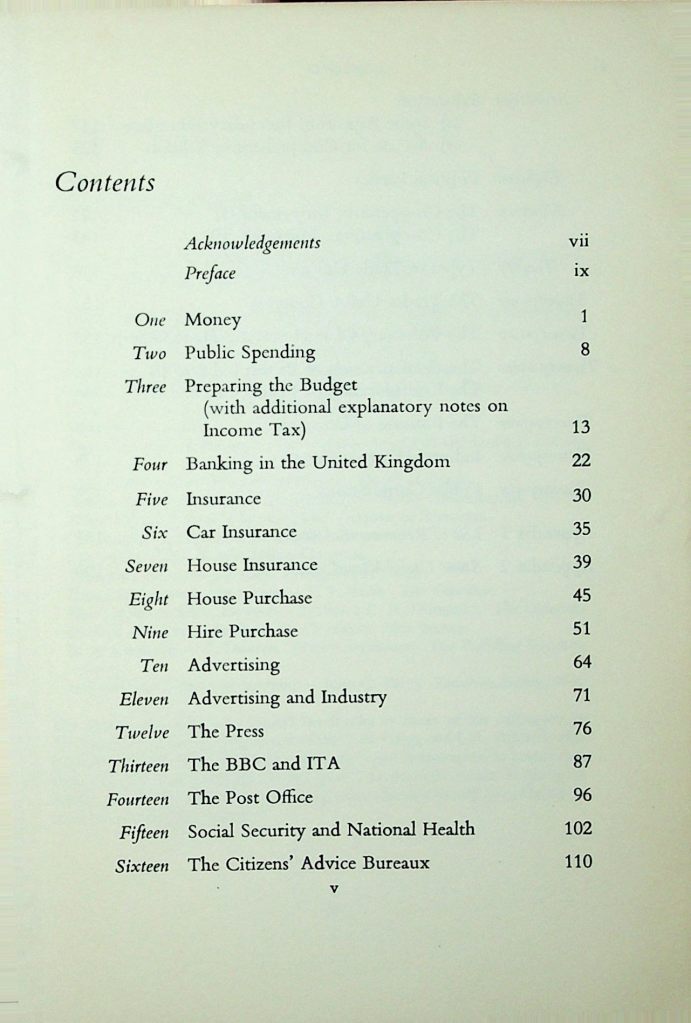

Above – On Citizenship – part of the English and Social Studies course, 1966
Political parties don’t need to be so defensive – especially at a local level
In the political game that is played in Westminster, I can understand why institutions are so defensive. You only have to watch/listen to how politicians and journalists spar for the ‘gotcha!’ moment as the latter tries to get the former to concede the point that in the political briefing says “Do not concede on this point whatsoever”
We’ve see it in the meetings on the GCP transport schemes – which is why Smarter Cambridge Transport ultimately gave up, and why this time last year in Queen Edith’s Ward I called for the abolition of the Greater Cambridge Partnership. In the case of busways, it was clear to me and others years ago that the GCP’s transport officers had decided they wanted to proceed with busways irrespective of other options and evidence.
It remains to be seen whether the GCP survives as an institution either under Michael Gove’s plan for a new development corporation, or after the looming general election, where a government if of a different political party may take a different view to the current one.
Food for thought?
If you are interested in the longer term future of Cambridge, and on what happens at the local democracy meetings where decisions are made, feel free to:
- Follow me on Twitter
- Like my Facebook page
- Consider a small subscription to help fund my continued research and reporting on local democracy in and around Cambridge.
 The Cambridge Town Owl