
It can seem overwhelming with all that is happening in and around our city, but we’ve faced similar challenges in decades gone by – eras that saw huge social, political, cultural, and technological changes that were not easy to predict
ICYMI you can:
- Read the press release from the Cambridge Biomedical Campus
- Read the statement to Parliament by Michael Gove
My previous two blogposts refer to both of these.
If your first response is of huge concern to the proposals from Michael Gove for 150,000 new homes in/around Cambridge by what now is 2050, see the blogpost from Cambridge Past, Present, and Future here. Originally formed as the Cambridge Preservation Society in the interwar era, in part to prevent the unplanned growth of ribbon development and urban sprawl, some of you may want to join the organisation in the face of a new era of growth and all of the issues it raises given our climate and ecological emergency.
Together Culture and the concept of citizenship
We discussed this at an event recently at Together Culture – which may be a more suitable organisation for some of you. With their own premises opposite Waitrose near The Grafton Centre, the ability to drop in during the day and take part in daytime and evening events (especially if you are new to the city and/or don’t have much of a network or social circle but would like to expand it) is particularly handy. Especially if you’re something of a lone ranger like me.
“How do we go beyond the ‘talking shop’ response?”
Or ‘the usual responses’ that seldom seem to have an impact? See also A-to-B marches, and ‘Resolutionary Motionism” – the latter sometimes seen at local full council meetings especially when debating issues in the international arena.
“Well I was going to continue with my violent bloody war but because Warmington-on-Sea Parish Council passed a motion condemning my actions…I’ve had to think again!”
Said no tinpot dictator ever.
(In the meantime another motorcyclist with an unlawfully loud engine has shot past again and nothing seems to be done about it despite complaints to the usual channels…)
The two issues that have become clear with the Case for Cambridge are:
- The lack of transparency and openness from ministers – and other institutions (public and private sector) is shocking given the direct impact the proposals will have on hundreds of thousands of people in/around Cambridge
- The lack of collective knowledge on how our structures of governance (and institutions within them) function and malfunction – very few of us know where or how to engage to make our concerns known.
Hence the calls from campaigns such as the Cambs Unitaries Campaign to improve, simplify, condense and consolidate our existing set up.
That’s part of, but not the whole solution. As I said to Cllr Mike Davy (Labour – Petersfield) at the Together Culture event, I read through the manifestos of the four parties standing candidates across our city for the local elections and none of them mentioned citizenship education.
Want to know the basics?
- Want a light, easy, child’s level read? Politics for Beginners (Usborne)
- Want a read that’s very cheap, easy, concise, but not aimed at ten year olds? GCSE Citizenship Studies Revision Guide
- Want one that has more detail than the above, and is also up-to-date? GCSE Citizenship Today by Jenny Wales
- Want something academic, dense, and contemporary? Browse through publications by the University of Manchester Press, or Policy Press at Bristol, Alternatively, browse through the Institute for Local Government Studies at the University of Birmingham
Lack of Transparency – the Cambs Development Forum
I’m having a lot of fun with this forum – many of you will be familiar with who runs it, along with their member institutions.
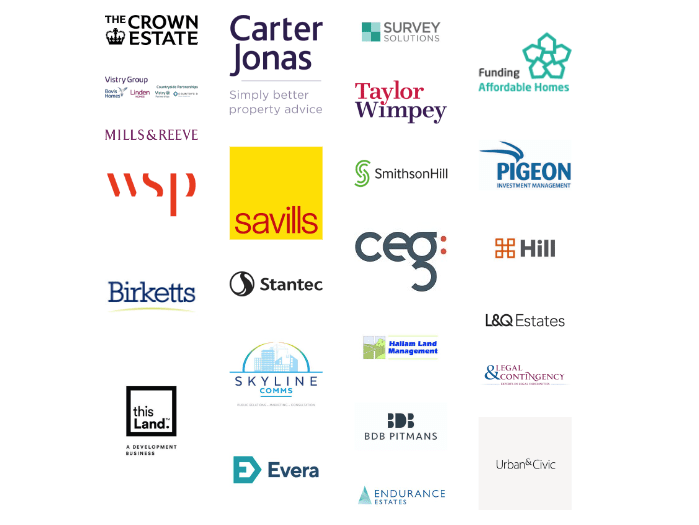
Above – the members of the CDF
Some of you may want to cross-reference them with Cambridge Ahead here.
In the olden days, the stereotype of centralisation was beautifully explained by Sir Humphrey and Sir Bernard.
Above: This is a British Democracy Bernard!
Only this time it’s the Secretary of State that’s driving it – and he’s decided what the Government’s policy is for Cambridge’s future (‘Advisers advise, ministers decide etc), and has formulated what he sees as ‘key stakeholders’ (with both a large interest *and* a large influence on the success or failure of the policy) to advise and support him. Individual residents may have a large interest, but they (we) don’t have a large influence. Even district level councils lack institutional capacity to have any real influence on the direction of travel. All they can do is to try and work with it, nudging it here and there to get the best for the areas they represent. Because Parliament is Sovereign and it has legislated to restrict what councils can do. (While doing the opposite in empowering ministers to create development corporations).
What I’ve been trying to do is to get an idea of the conversations that ministers have been having with private sector organisations – for example the property industry which stands to make a fortune from the policy.
Hence this Freedom of Information request
They’ve asked me to narrow the scope of my request down because so many ‘hits’ are coming back in their file searches.

Above – the request to clarify further
Nearly 20 years ago I was a Freedom of Information Officer in the Cambridge regional office of the very same government department (albeit under a different name). So if 240 hits come back, normally that means: “Dig here”. In reality many of those hits will be administrative-level email correspondence such as arranging meetings.
I’m not looking for a ‘Gotcha!’ document. In the grand scheme of things all I am really interested in is who the minister met with, what interests did said persons/institutions have, when, and what issues were discussed.
Because if it appears that private and commercial interests are getting preferential access over local government, then there is clearly something wrong both in the actions of ministers, and also with the system of policy-making that enables this.
One of the other barriers we have is that the two MPs in the constituencies surrounding the City of Cambridge – South Cambs and South East Cambs, are both Ministers of the Crown. Accordingly they are bound by the convention of Collective Responsibility of Government (Paragraph 1.3(a) of the Ministerial Code). Therefore the areas affected do not have an active campaigning backbench MP who is willing and able to hold ministers to account on this. The MP for Cambridge, Daniel Zeichner (Labour) is the Shadow Food & Farming Minister, so a similar convention applies to him regarding Labour’s policies. Should he get re-elected and appointed to ministerial office in a potential Labour Government, the same conventions will apply to him should Gove’s successor in such a case carry on with these policies. One of the few parliamentarians who is looking into the rapid growth of Cambridge and the impact on the environment is Green Party Peer Baroness Jenny Jones – you can see her visiting Coton Orchard in this video.
Which is why it is ever so important that a critical mass of residents in/around Cambridge familiarise themselves with the essentials of politics, government, and democracy
That way, more people will be able to call out such things far earlier rather than relying on a handful of activists, most of whom do it unpaid and/or in their free time. Hence the need to get organised. (And people like me suggesting constitutional changes such as separating Executive from Legislature would make sense to more people!)
Food for thought?
If you are interested in the longer term future of Cambridge, and on what happens at the local democracy meetings where decisions are made, feel free to:
- Follow me on Twitter
- Like my Facebook page
- Consider a small donation to help fund my continued research and reporting on local democracy in and around Cambridge. (Chronic illness means I am on Universal Credit)
Below – one option to improve governance and accountability is to move to a unitary structure of local government. The Cambs Unitaries Campaign was formed to secure such better local government arrangements. See https://www.cambsunitaries.org.uk/our-objective/

 The Cambridge Town Owl