Better late than never, you might say – but how will the other political parties respond given the county council and mayoral combined authority elections take place in ten months time?
You can see the short video clip from Conservative MP-candidate for Cambridge, Shane Manning here.
Long-term readers of this blog and my previous blog may be aware that I’ve been jumping up and down about suburban/light rail for Cambridge for nearly a decade.
- January 2015: Q to the GCP Board about working with Suffolk councils on Rail Haverhill
- Nov 2016: Giving evidence to the GCP Assembly making the case for a rail link from Cambridge to Haverhill
- March 2017: Asking the GCP why it did not commission an assessment for the full length of the Haverhill-Cambridge route
In those days, the Conservatives had party-political control of the GCP, but for whatever reason did not direct the senior GCP officers to investigate rail-based alternatives, sticking instead to the controversial busway proposals for the four years they were in control – proposals that the party now opposes.
As I mentioned earlier, Mr Manning said that in his opinion establishing the GCP was a mistake at the Future of Cambridge hustings. Furthermore, It’s normal for a political party to change its policies after election defeats – which is what happened in 2018 with South Cambridgeshire District Council, and in 2021 on Cambridgeshire County Council. Elsewhere in local party politics, both Labour and the Liberal Democrats chose to continue with the GCP’s schemes even though the electorate had given them a mandate for a change of direction. Not surprisingly, the Liberal Democrats are coming under political fire over their position on the Coton Orchard which to put it mildly appears to be inconsistent with their earlier opposition.
Note the C2C Busway split the Conservatives in the mid-2010s, with former MP Heidi Allen speaking out strongly against it while still a Conservative MP. You can watch her speech in full from 13 Oct 2016 here – one that the Federation of Cambridge Residents’ Associations commissioned me to film.
“I’m afraid the current Cambourne to Cambridge proposals are piecemeal, short term and in my, residents and business opinion, way off the mark; driven by spending deadlines rather than strategic vision.”
Heidi Allen MP in the Cambridge News, 14 Oct 2016
Her party’s councillors on the GCP however, ignored her pleas and voted through measures to continue work on the scheme.
We’ve not had much detailed policy debate on major transport infrastructure in/around Cambridge in the run-up to the general elections.
This has got to change for the county council and mayoral combined authority elections in May 2025 – so civic society organisations need to start organising soon!
It has been all too easy for candidates of all parties to overlook the detail, sticking with high level ‘vision’ type statements without having to deal with things like how to pay for it all, and what structure of local governance is needed to ensure it is well designed and functions properly.
Hence these are things that voters can follow up with their candidates – simple questions such as ‘What is your party’s policy on a light rail for Cambridge?’ Or, ‘What do you think of the ideas put forward by Cambridge Connect?’ Or ‘What structure of governance should Cambridge & Cambridgeshire have?’

Above https://whocanivotefor.co.uk/ – ask your candidates some questions about their party’s policies
Preparing the ground in Autumn 2024
Given that these will be county-wide, I think there is a case for having single-themed debates that cut across district boundaries. For example I think there is a case for having a series of events in the style of https://imagine2027.org.uk/ in the late 2010s in Cambridge – but hosted across the county. These can be theme or subject-specific. For example East-West-Rail’s proposed route between St Neots and Cambridge – which affects residents in South Cambridgeshire District and Huntingdonshire District alike.
For me, such events also have to have big display boards of who has proposed what, and also clear timelines of who made what decisions, under what legal authority, and when. For example there have been numerous ministerial statements, and ditto three separate county transport strategies in the past decade. One group of people who need to be informed about who made what decisions and when, are the more recently-elected councillors – possibly alongside some of the MPs who could be very new faces to local politics come this time next week. (05 July 2024).
Part of that preparation also has to involve local democracy education that enables the public to find out the essentials of how the state functions and malfunctions in the context of decisions taken in their area. That does not mean standalone workshops only. These could be incorporated into larger events and exhibitions, alongside the provision of printed and/or online materials that provide a co-ordinated and comprehensive offer to residents.
One possible exercise: Working backwards through a completed light rail network.
Imagine the year is 2040 and the light rail network below has been completed. Working backwards from there to the mid-2020s, who would have had to have taken what decisions and when, to have ensured the completion of said network by 2040?

Above – the latest iteration from Cambridge Connect and Rail Future East
And if you have not read the detailed submission to the Combined Authority, see the report embedded here. Only the mayoral candidates will have to answer questions as to why light rail has not been progressed by the politicians, as well as making a judgement call on whether they will lobby ministers either for the direct funding, &/or the tax-raising powers to enable its planning and construction. Because under the existing legal framework and powers, the Combined Authority Mayors were never provided with sufficient funding or powers for anything of real substance by the then Chancellor George Osborne when he created CPCA.
“Isn’t it a bit too easy for the Tories to call for light rail just as they are heading out of power?”
Terry Macalister had similar views:
Long as it takes to build light rail, it’s easy to forget that the infrastructure that underpins the petrol & Diesel-fuelled motor vehicles did not appear overnight (as The Motor Car and Politics 1896-1970 by Plowden explains.
At what point will we see the major step change in transport infrastructure – and the very visible reduction of motor traffic on our roads? Actually – don’t answer that question!
If you are interested in the longer term future of Cambridge, and on what happens at the local democracy meetings where decisions are made, feel free to:
- Follow me on Twitter
- Like my Facebook page
- Consider a small donation to help fund my continued research and reporting on local democracy in and around Cambridge.
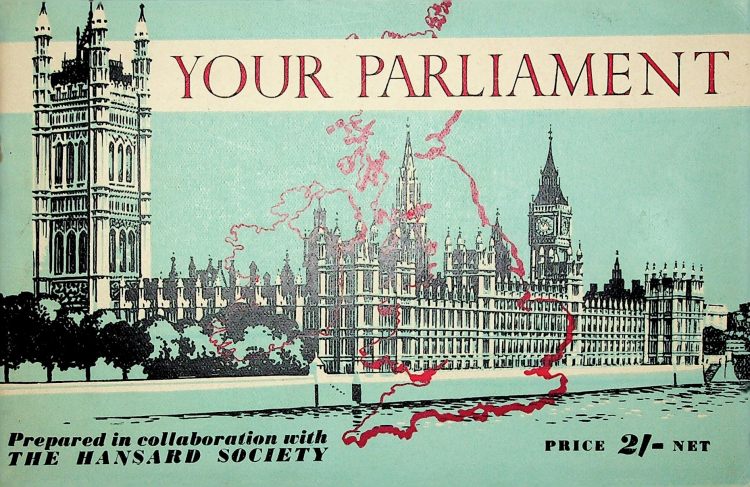
Below – Your Parliament from the early 1950s – one of several vintage books I’ve scanned and uploaded to the Internet Archive for you to browse through – See what we used to be taught about citizenship, civics, and democracy in the olden days
 The Cambridge Town Owl