He was interviewed on BBC Radio Cambridgeshire by Louise Hulland about what the Prime Minister had said to them – Sir Keir Starmer mentioning growth strategies in his remarks to the media. In the meantime, one of the political allies of Cambridge MP Daniel Zeichner has just been appointed a minister at the Department for Transport.
You can listen in from 2h22m here until 08 Aug 2024 – and you can read the CPCA Growth Strategy 2022 here.
The Combined Authority Mayors all met at Downing Street earlier.
Above – the Mayor of West Yorkshire Tracy Brabin’s selfie with her Cambs & Peterborough Counterpart Dr Nik Johnson just behind Sadiq Khan, the Mayor of London.
On his Political Twitter account the Prime Minister Sir Keir Starmer (above) very much continued with the message of ‘hitting the ground running and running very fast’ – which I described my own early days on the Civil Service Fast Stream when I transferred down to London in December 2006 with only two weeks notice of receiving the assessment centre results. And when you’re working with a high calibre team and working at pace, you know about it. You can also see that from the ministerial appointments and the publicity that has gone out not just from the PM’s own social media accounts but from the early visits abroad from the Foreign Secretary David Lammy starting in Germany, and the Defence Secretary abroad too.
While we won’t know what the details of the discussions were at that short morning meeting, the fact that they were there sent a message out to the rest of local government. In a very centralised system that the UK has, ministers and departments have the ability to invite pretty much anyone they like for meetings on whatever issues. Which you could say contrasts greatly with Michael Gove’s throwaway comment about having had enough of experts. The new PM has brought back politicians that have previous ministerial experience in the last two Labour Governments (Blair and Brown) while appointing non-party-political operational/delivery specialists to ministerial office in the House of Lords.
“What was the message to the Mayors?”
The BBC summarised it here – essentially this will be the start of possibly quarterly meetings around the country with different mayoralties hosting the meetings. Which means one is likely to be in Cambridgeshire/Peterborough in the next couple of years. Much as I would like to make the case for Cambridge, I think Peterborough would be a better place for it – if only to showcase the cathedral and provide a mini-publicity boost having the Prime Minister standing in front of it. Only Peterborough Cathedral’s western entrance is ***Huge*** – even though it is less well known than Cambridge’s King’s College Chapel – often mistaken for a cathedral itself when it isn’t because no bishop’s throne is there. (The Church of England bishop that oversees Cambridge is the Bishop of Ely).
The video clip of the Prime Minister addressing the Combined Authority Mayors includes quotations about devolution and taking powers and functions out of Whitehall. You can read the Institute for Government’s explainer on Devolution in England here. Personally I think the whole thing is still too muddled and that ministers would be far better off having a Redcliffe-Maud-style Royal Commission on the governance of England before overhauling the lot – structures, boundaries, powers, responsibilities, budgets, lines of democratic accountability, relationship with Westminster & Whitehall, the lot. And then legislate to implement the recommendations. Start that process now and the conclusions can be incorporated into manifestos for the next general election.
What Nik told us about support from other mayors
The most interesting part of the clip from a policy point of view was hearing how more experienced officers from Liverpool and Manchester – whose combined authorities had been constituted several years earlier, had helped their counterparts in Cambridgeshire and Peterborough with developing the bus franchising proposals. One of the things that perhaps the previous mayor James Palmer was missing was having that network of combined authority mayors who could provide that advice or lend officer support for particularly tricky pieces of policy development. In Nik Johnson’s case he benefits from having the former Health Secretary Andy Burnham – the Mayor of Greater Manchester – as being a former student at the University of Cambridge, as the latter mentioned in this video from summer 2021.
Spreading the wealth beyond Cambridge
One of the things that seems apparent is the ditching of Michael Gove’s Case for Cambridge – with Nik Johnson saying that his vision is for growth to be county-wide – starting with getting the long-delayed improvements to the Ely railway junction completed – along with getting the Fenland town of Wisbech reconnected to the rail network. This was something I picked up when the long delayed Bus Strategy was published in 2022 – writing about reconnecting Wisbech via March and Chatteris by rail/light rail here.
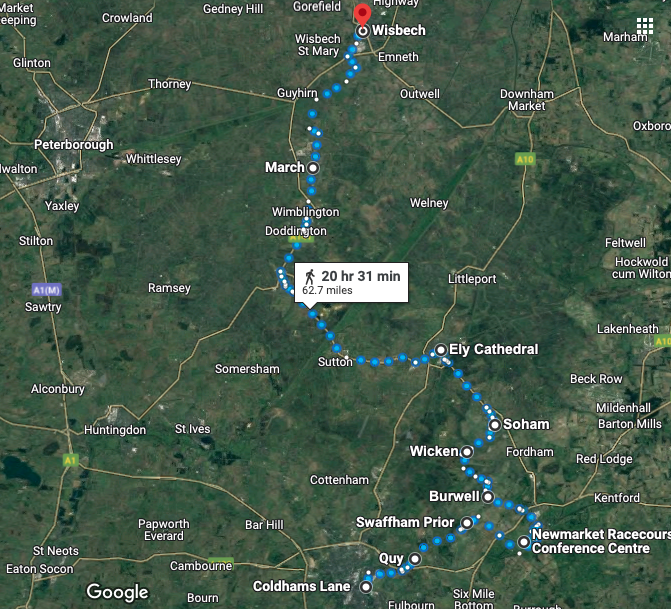
Above – the option of a rail link via Chatteris becomes more feasible with the go-ahead of the Chatteris Reservoir – with the above option showing a light rail spur to serve the East Cambridgeshire villages as an addition to the existing proposal to reconnect the Newmarket Chord enabling services from Cambridge-Ely via Newmarket and Soham.
“Will we get any of that?”
Not before the Mayoral elections of 2025 – which relies on Angela Rayner – the new Deputy Prime Minister and Secretary of State for Housing, Communities and Local Government, tabling the necessary legislation in Parliament to reverse the changes made by the Tories on the voting systems.
Nik Johnson will need to discuss rail improvements with the new transport ministers
Some of the heavy lifting on this has already been done by Rail Future East here. In the run up to the Combined Authority Elections, I hope that political parties and mayoral candidates include substantive policies about improving rail infrastructure across the CPCA area. Which is why Labour’s county councillors and transport policy specialists locally need to start their background reading now, and find out informally from Whitehall about what is and is not feasible for a manifesto. With all four political parties represented on Cambridge City Council having at least four MPs in the House of Commons, they all have access to the specialist policy networks that can advise on these things formally and informally.
“Will we get Cambridge Connect Light Rail?”
That depends on what the mayoral candidates decide to put in their manifestos – but the detailed proposals submitted to the Combined Authority are still available.

The only candidates at the general election locally who raised light rail were the Conservative candidates. Frustratingly the party only warmed to the concept just as they were about to be turfed out of office. With the former MP for South Cambs, Anthony Browne having been rejected by the voters of St Neots and Mid Cambs, the former Transport Minister is now out of the Commons along with his former ministerial colleague, the ex-Culture Secretary Lucy Frazer KC. Therefore party politically there is no one on the Conservative side who can make the case for it in the meantime.
New transport ministers
I was particularly pleased to see longstanding Labour MP Lilian Greenwood MP, who chaired the Transport Select Committee for a number of years, appointed to ministerial office. Having endured years scrutinising flawed transport policies alongside significant budget cuts imposed by George Osborne and successors to transport budgets, it must be hugely satisfying not only to see the Tories banished to opposition by the British People, but to have policy responsibility in her chosen specialist policy area.
Below – Lilian Greenwood MP visiting Cambridge (she studied at St Catherine’s) back in autumn 2012 when Puffles was on Twitter – we met up for coffee after she posted a tweet about heavy traffic in Cambridge accompanied by a photo of The Cam full of punts.
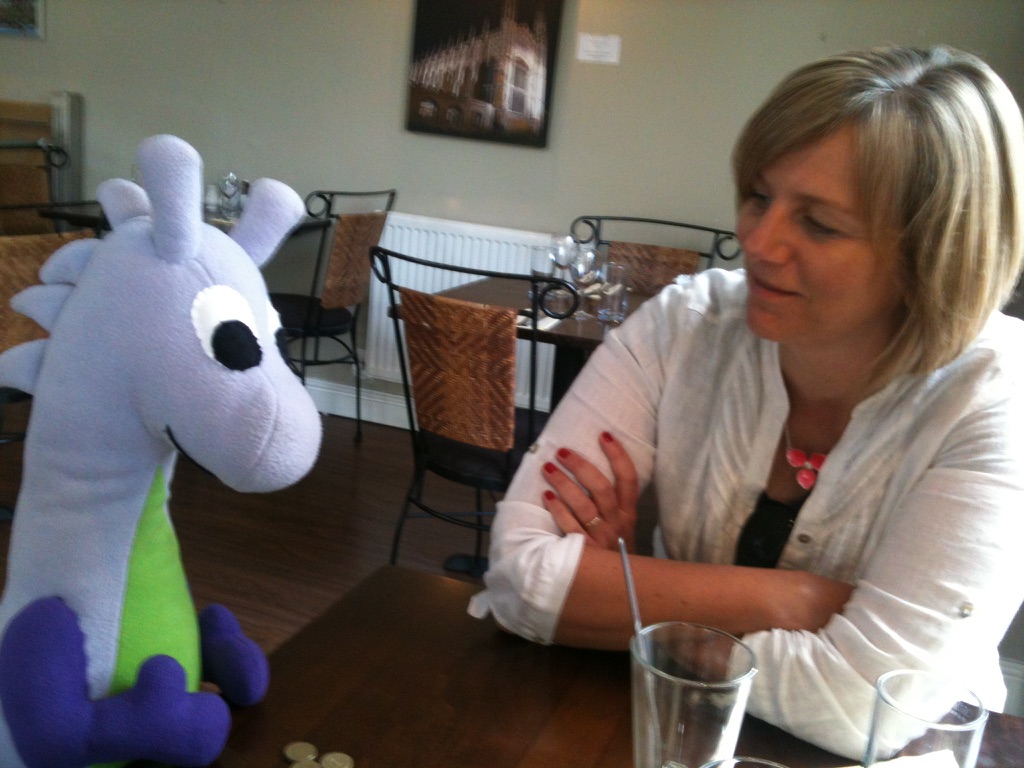
Again, Sir Keir Starmer has made a point about appointing ministers that have had extensive experience shadowing the same portfolios – as we saw with Ms Greenwood’s longstanding party colleague and ally Daniel Zeichner, who she visited in the run up to the 2015 general election. I briefly interviewed her at that visit.
I’m particularly interested to see which transport policy portfolio she is allocated. It’s unlikely to be aviation and maritime as the new Transport Secretary Lou Haigh has hinted that one of the other ministers specialises in that area. Going by Ms Haigh’s post welcoming Ms Greenwood, it could well be bus transport alongside supporting the former Chairman of Network Rail and TfL, Lord Hendy, on rail policy. This will be a very heavy workload and more than likely will involve a new Transport Bill being introduced into Parliament – one of the most intellectually testing pieces of work ministers and civil servants undertake in Parliament.
The existing Local Transport & Connectivity Plan – what is says on rail
It’s actually much more encompassing to the extent that, light rail aside, improvements to existing and pre-Beeching lines already fall under the scope of the long-delayed plan. Recall it was stalled repeatedly by the Conservatives in Peterborough until both the local electorate and an internal party revolt turfed out the politicians blocking the sign off.
You can read the current LTCP for the CPCA here
The important bits are the final two paragraphs on p31 which I’m quoting in full below – bold bits are by me.
“Rail has a critical role in supporting planned housing and employment growth and
there are significant opportunities to develop and enhance the rail network. We will
therefore promote new railway stations in the region, including Alconbury station, the
construction of which would provide much needed additional capacity. Where new
stations are required to facilitate new development, we will also support Local Planning
Authorities in ensuring these are delivered in line with local and central government
policies.”
“We champion and support the delivery of new rail links, such as East West Rail that
will transform public transport connectivity along the Oxford to Cambridge corridor. It
is important that this route is electrified from Day One of operation. In addition,
improving accessibility between March and Wisbech to its rural hinterlands through
the provision of a link between the two towns is vital for levelling up our region and
addressing social inequalities. This scheme would bring greater employment,
educational, retail and health opportunities and housing growth. As this scheme is
developed, we will examine the use of innovative technologies to deliver the most
appropriate solution.“
In the grand scheme of things, any amendments to the LTCP should be relatively minor. Obviously the Cambridge Connect Light Rail would need significant ministerial intervention. It remains to be seen whether Central Government would be willing to sanction new revenue raising powers for local government in the CPCA area such as a land value tax and/or levies on the sci/tech/property sectors to pay for that much-needed infrastructure – the rail-based ones being the sort that should cross county boundaries to serve the economic sub-region.
Food for thought?
If you are interested in the longer term future of Cambridge, and on what happens at the local democracy meetings where decisions are made, feel free to:
- Follow me on Twitter
- Like my Facebook page
- Consider a small donation to help fund my continued research and reporting on local democracy in and around Cambridge.

 The Cambridge Town Owl