
At the formal opening of the new Parliament, The King read out a list of proposed new laws that the Ministers will ask Parliament to approve
That doesn’t mean these are the only things that the Government proposes – rather that of the things that it wants to do, the ones that require changes in the law have been identified, and these are the ones that take priority.
You can read the summary here, and also the press release here.
For those of you who want more detail, you can read the background notes to each of the proposed new pieces of legislation here.
Devolution for England
In one sense this is unfinished business from the Blair/Brown years. With Scotland, Wales, and Northern Ireland having their own devolved parliaments, England has stood out like a sore thumb. When you look at the population of England compared to the rest of the UK, the differences are striking.
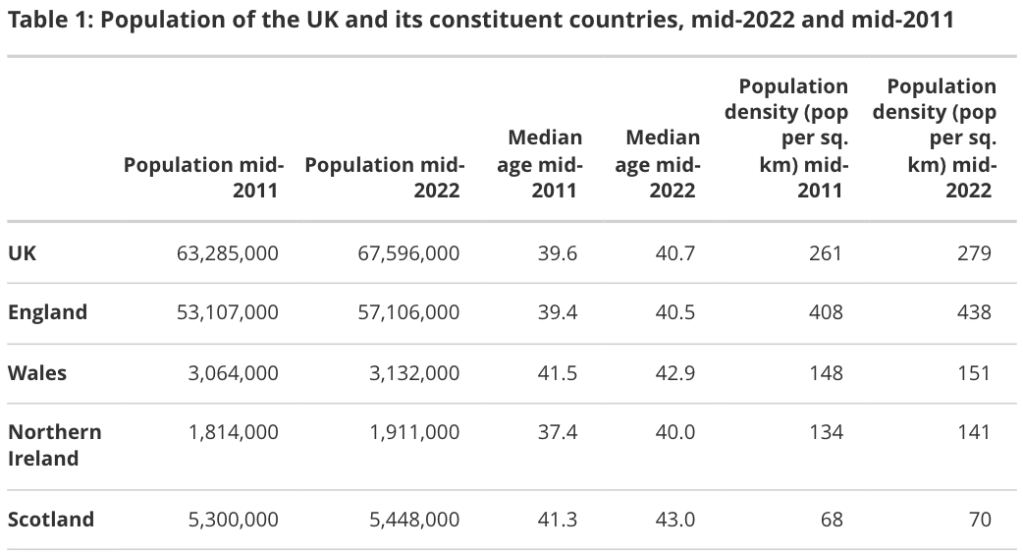
Above – from the Office for National Statistics
The population of Greater London in 2021 was greater than that of Wales and Scotland combined. The old Government Office Network for the English Regions was an attempt by Michael Heseltine to create something of a coherent regional structure for England that sort of mirrored the population of Scotland – and also aligned with the Regional Development Agencies being developed by/for the European Union. Post-Brexit it turned out that the old RDAs in economically-deprived areas of the UK were much more successful at getting EU grants – and greater sums of, than in the post-Brexit setup that the Conservatives established.
The current system of combined authorities is something I’ve been highly critical of over the years – not least because of a lack of directly-elected assembly to hold the metro mayors accountable for the funding allocated to them – the means of which has been highly bureaucratic and inefficient. Something the new Cabinet Office Minister Georgia Gould MP is looking to take on.
The paragraph on English Devolutions policy that is of interest is on p24.
“…improving and unblocking local decision making through more effective governance arrangements, ensuring mayors and Combined Authorities can get on and deliver for their areas”
King’s speech briefing notes 17 July 2024, p24
The messy structure of governance for Cambridgeshire and Peterborough has long been an issue for local politics watchers – hence the Cambs Unitaries Campaign. I’m particularly interested to see if this statement will provide for overhauling our current structures, systems, and processes – and if so on what timescale.
Mayor Dr Nik Johnson welcomes the measures in The King’s Speech
You can see the press release here. He also featured in a clip from the re-named Ministry of Housing, Communities and Local Government – introduced by the Deputy Prime Minister Angela Rayner.
Above – a short video clip from the MHCLG
Browse through the meetings being held by the Combined Authority in the rest of July to get a sense of whats coming up – as I expect there will be a few questions from committee and board members about what the proposals from ministers and the general direction of travel will be.
Another consultation – this time on the Police & Crime Commissioner’s new plan
You can read about it here
“Hang on – isn’t the CPCA already consulting on something?”
“And the city council on the future governance?”
Yes – and on several more via https://engage.cambridge.gov.uk/en-GB/
“And that’s not including planning applications, right?”
…and any other planning applications that come up in the planning portal
“None of that covers healthcare, right?”
Nope – but Healthwatch Cambs & Pboro have a meeting coming up for Cambridge & South Cambs on 07 August 2024 here. And that’s before we even look at the proposals coming up from the Cambridge Biomedical Campus – a meeting of which I went to earlier in the week.
The system of public consultations is broken
How is *anyone* meant to keep on top of all of the consultations happening, let alone provide informed feedback so as to improve both policies and outcomes? (i.e. what we end up with once all is said and done). Hence my complaints here.
Public participation is not free. It costs time and resources – and requires the accumulation of a huge amount of knowledge (formal and informal – the latter being things like lived experiences of using public services). This is why senior political leaders need to consider things like:
- How can they help broaden and deepen the civic knowledge of the public *before* they are called upon to provide their feedback?
- How can they improve the likelihood that the public can find out about, and become positively disposed towards providing informed feedback?
- How can institutions work together to ensure that they are co-ordinating and sequencing when their consultations are taking place?
- How can institutions work together to combine consultation activities so that community meetings are covering more than one issue at a time, and thus sharing resources for hosting and publicising such events?
- What are the short-medium term actions institutions can take that require few resources but that might have an impact on all of the above?
Because at the moment it’s hardly surprising that people feel both overwhelmed and also put off by ‘politics’ in the current environment. The first comment on the Police & Crime Commissioner’s FB page advertising his consultation speaks volumes.

Above – from PCCCambs’ FB page.
‘Capacity building’ – a buzz-phrase from the 2000s but with the current deluge of consultations, how do we ensure our city and county can cope with what our institutions are asking of it? Or is the onus on the institutions to come up collectively with more efficient, more effective, and more collaborative/co-operative ways of finding out what the public thinks about its proposals? Ones that has the institutions working together, putting on shared events, putting publicity materials in places where people are most likely to read them (eg bus stops, waiting rooms etc) and also doesn’t continually ask repeated questions without taking account of previous studies?
If you are interested in the longer term future of Cambridge, and on what happens at the local democracy meetings where decisions are made, feel free to:
- Follow me on Twitter
- Like my Facebook page
- Consider a small donation to help fund my continued research and reporting on local democracy in and around Cambridge.
Below – a recap on what the New Local Think Tank found out about local democratic engagement in Cambridge in their recent report
 The Cambridge Town Owl