In December 2023, the Labour Party (the in opposition) commissioned an independent review of rail and urban transport policy – due to report in time for an autumn general election. But events.
You can read the report here and scrolling down after the quotations. (Alternatively, click here until the direct weblink changes)
In one sense this provides the ‘Political’ cover that ministers sometimes feel the need for when proposing controversial policies. And transport is inherently Political. All too often this means that ministers end up appealing to the ‘higher authority’ of independent reviews rather than making the ‘Political’ case for whatever it is they are proposing. The press release headlines the five themes from which the recommendations fall under as:
- A Bold Long-term Vision and Ambition for Transport Infrastructure
- Accelerating Delivery of Transport Infrastructure Across the Nation
- Harnessing the Benefits of Public-Private Partnerships
- Getting the Structure Right for Delivery Now and in the Future
- The Voice of Britain’s Transport Users and Workforce at the Heart of Transport Plans
The big thing I’m interested on is 4 – and maybe a bit of five. In particular, governance structures for England that the House of Commons Public Administration and Constitutional Affairs Committee said was in need of a major overhaul back in late 2022.
“Providing greater support for local authorities to deliver: Building on the progress of devolution in England, government should further decentralise and give clear and mandated roles to sub-national transport bodies and Combined Authorities in setting ambitious local transport plans and delivering strategic outcomes.”
Rail and Urban Transport Review (2024) p70 / p36-pdf
Regional Government
Under the previous Labour Government, most of the regional tiers for England were consistent across Whitehall departments via the Government Offices for the Regions network. While each team had a parent Whitehall department depending on what policy area you worked on, we all sat in the same building. That meant the regional housing team sat next to the regional transport planning team. Which was fine in principle, but the inevitable territorial battles between departments meant that Whitehall turf wars broke out far too often, and a restructure in the mid-2000s was the result – with (certainly in Cambridge covering the East of England) more staff with London experience joining the organisation at senior levels – along with several of the younger junior admin-grade staff that were also university graduates (thus hopelessly over-qualified for their jobs) taking the chance to move down to London. Of which I was one of them. It was only when I got down to London did I appreciate the difference between working in a regional economic centre vs working in an international capital city.
The challenge today is that regional boundaries are not consistent across the public sector.
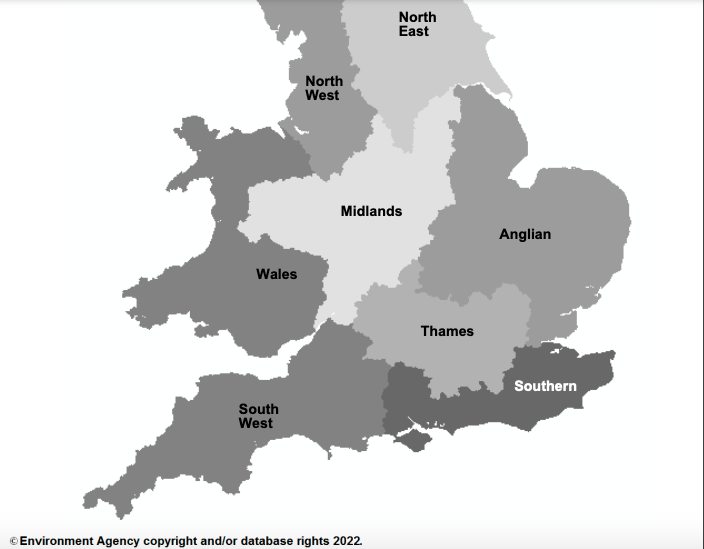

Above – compare The Environment Agency’s regional offices above-left with the sub-national transport bodies of the Department for Transport above-right.
“How will ministers resolve the regional boundaries problem?”
Good question – one for MPs to put to ministers in the Commons. The report states the following:
“A key part of this success will be further devolution of powers. Sub-national strategies for transport will then be established by regional bodies, consistent with the TSE [National Transport Strategy for England] but at a geographical level more appropriate to consider the interaction between transport and land use planning.
“To ensure this interaction is effective, an economic and spatial plan should be produced in advance of the transport strategy. This will set out where economic and housing growth is needed, to ensure the investments set out in the subsequent transport strategy are able to drive this growth.
“This reflects the successful model in London, where the Transport Strategy acts as the enabler to the wider London Plan. These local plans should align to regional and local economic strategies encompassing skills, land use and housing.“
Rail and Urban Transport Review (2024) p70 / p36-pdf
The problem is transport planning is done by combined authorities or county councils, while development planning is done by district-level councils for those parts of England that do not have unitary councils or combined authorities. And the processes for forming more of the latter are both ongoing and are still messy.
“Ironically, one of the few sceptical takes on Combined Authorities – one that picks up on the weaknesses of policies on the governance of England, is former Secretary of State John Denham, along with Janice Morphet in this recently-published paper.“
Above – the Morphet-Denham paper here, which I quoted in an earlier blogpost.
This is a reminder that the review is only one of many policy papers written by a range of people and institutions with a view to influencing government policy. Here’s another one from Ed Balls and co.
“Didn’t we used to have a Cambridgeshire & Peterborough Structure Plan for both housing and transport?”
We did – you can browse through it here.
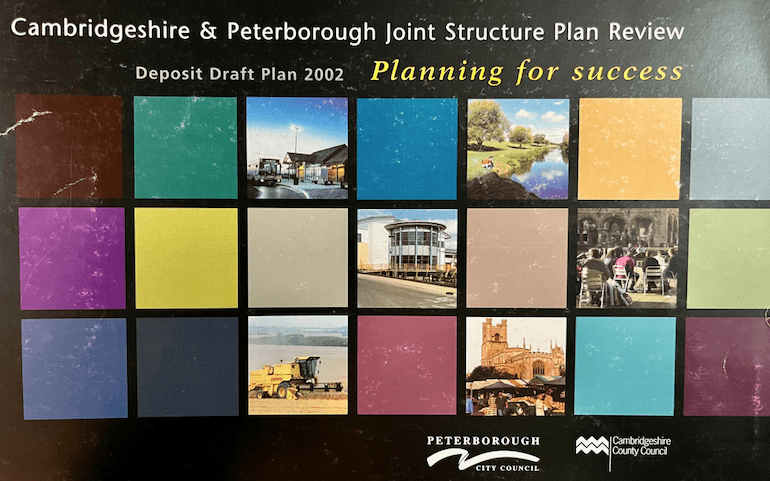
Above – the old Cambs & Peterboro’ Structure Plan covering transport and housing/development
One big issue I have with the Cambridge/Cambridgeshire plans over the past decade or so is the lack of continuity with the predecessor plans. There doesn’t appear to be much in the way of a high profile evaluation that informs everyone involved of what was proposed for the previous plan, why, and to what extent the plans were delivered/successful. It’s particularly challenging on transport because over the past decade or so we’ve had three county-level transport plans:
- 2014 – Cambridgeshire County Council
- 2020 – Combined Authority – James Palmer
- 2023 – Combined Authority – Dr Nik Johnson
It’s almost inevitable that the present plan will need to be refreshed whoever wins the Mayoral Election for Cambridgeshire & Peterborough in May 2025 – just over eight months away, because of the change of party in power in Westminster. It’s not just because Labour are now in power, it’s also because they confirmed in the King’s Speech that they will be introducing major pieces of legislation on housing, transport, and devolution/governance in the coming Parliament. Therefore the powers and responsibilities for local councils, combined authorities, and regional bodies will change. How, we don’t know – it’ll be up to the Government to table the major policy papers (‘White Papers’) and the draft legislation that will underpin those policies.
“Does the Rail & Urban Transport Review look at local government finance?
Sort of.
“To inform the devolution process, central government should consider the appropriate levels of local governance to develop and implement transport infrastructure. To help build local authorities’ capabilities, government should support socially and financially sustainable models of spending and raising funds“
Rail and Urban Transport Review (2024) p71 / p36-pdf
The Housing, Communities, and Local Government Select Committee has already stated that local government finances are unsustainable without reform – it remains to be seen how The Chancellor will respond to the issues raised in this report, because they have not gone away.
My preferred model for what I call ‘Great Cambridge’ is to enable an empowered unitary tier as proposed by Redcliffe-Maud’s report of 1969 to have much wider taxation powers than councils currently have. The big one is a land value uplift levy alongside replacing existing business rates and council taxes with a land value tax. Furthermore a range of wealth taxes and levies on specific sectors that serve the affluent (such as those I listed here) could be brought in both to raise revenue and to rebalance the economy in favour of the common good of the city.
Voices of the people vs broken consultation systems
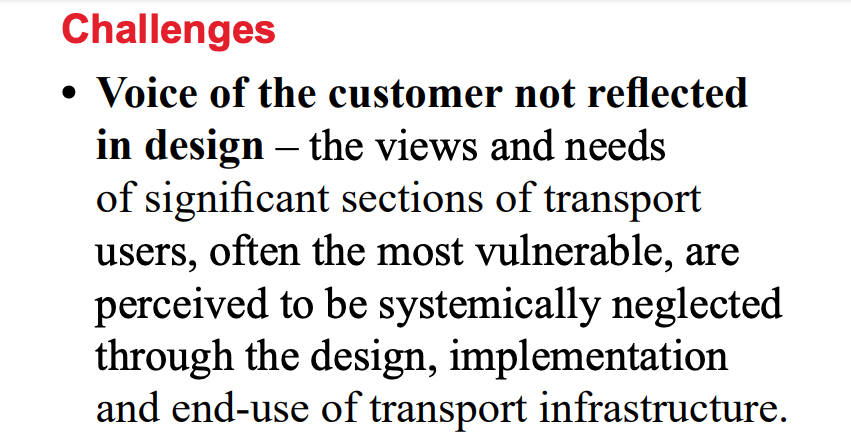
Moving onto the final part of the report, I’m glad this has been raised.
Rail and Urban Transport Review (2024) p76 / p39-pdf
That should come as no surprise – especially for bus services given that a large proportion of regular users cannot afford to drive, or are unable due to things like health or age (under -17s). And when consultations are put on, all too often it feels like the decision has already been made.
“Improving consultation and engagement processes to better reflect user views“
In developing and implementing policies and regulations, government could ensure that there is greater engagement to ensure greater diversity of views, particularly from groups that have been historically under-represented.“The UK Government Office for Science has endorsed the EU’s recommendation for wider public engagement with future transport issues to better understand the socio-cultural and structural determinants of future transport demand. They, added that all future mobility landscapes should be subject to a full social impact and equity assessment to understand how mobility interventions will differently impact social groups and geographic locations”
Rail and Urban Transport Review (2024) p76-77 / p39-pdf
The absence of lifelong learning and adult education
The main omission for me in the bits I’ve looked at is the failure to deal with the longterm decline of adult education. The report states:
“The panel recognises that there has been a significant drain and competition for skills and knowledge from other markets and countries. During the evidence sessions we heard about skills being redirected from areas like rail electrification to electricity utilities and similar examples to other sectors.
“A more predictable, longer-term plan as laid out in Section 1 of this report will help retain such skills, but we need a sustainable long-term approach to tackling the skills shortage and this needs to be across key infrastructure industries not just in transport.“
Rail and Urban Transport Review (2024) p77 / p39-pdf
It was this section where the report’s writers needed to state clearly that the Government’s plans must include policies to enable adults to switch careers and retrain in those high-skilled sectors that have chronic shortages – and get paid or receive grants (similar to post-graduate scholarships) for doing so. Otherwise people’s existing financial commitments and existing debts – whether consumer debts, mortgages, or student loans/fees will mean that they simply won’t make the move.
Given the scale of the challenge, it’s disappointing that the report stuck to the ‘safe’ policy recommendations of more apprenticeships rather than going for something much more radical that could have a greater impact over a shorter period of time. It remains to be seen whether the Transport Secretary can influence her colleagues at The Treasury and at the Department for Education to get what should be a major policy foundation on which to build her proposals on. Because otherwise newly-trained people will – like with council town planners, be poached by other organisations that can pay more. And the problems will remain.
Food for thought?
If you are interested in the longer term future of Cambridge, and on what happens at the local democracy meetings where decisions are made, feel free to:
- Follow me on Twitter
- Like my Facebook page
- Consider a small donation to help fund my continued research and reporting on local democracy in and around Cambridge.
Below – Cambridge Connect Light Rail – can we have it please?
 The Cambridge Town Owl