
I hope September is a better month than August because emotionally this has been a rotten one for my mental health, constantly plagued by ‘what ifs?’ from the 1990s
The image comes from the title of this short online paper by Chris Murray, which is part of a series of pieces by the Humanise project by the Heatherwick Studio. And their work from a short browse through seems to reflect issues that community activist circles have discussed for year.

Above – the now Deputy PM Angela Rayner on Humanise’s Insta page 21 May 2024

Above: ***Preach!*** By https://humanise.org/
So many of those boring buildings were built in Cambridge that in 2013 messrs Hall and Jones wrote and photographed a critically-acclaimed book about them – Hideous Cambridge (2013) Thirteen Eight-One
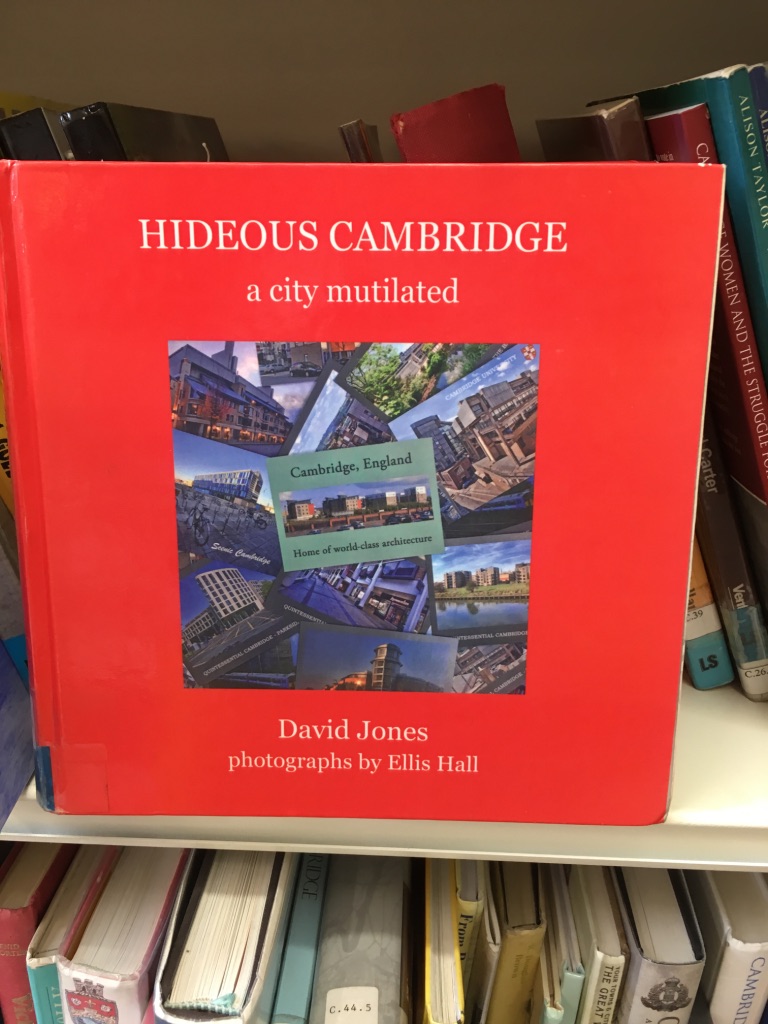
Above – you can find this book in your local public library in/around Cambridge (have a search of the Cambs Library Service’s online catalogue)
As I’ve mentioned on numerous occasions, the financial incentives for firms are so great that the drive to build profit-maximising short-term-financial-gain buildings is out of control – so much so that the authors of the above book could easily produce a second edition. And if Donald Insall gets its way with Hobson Street’s Art Deco cinema, the authors may as well plan for a third.
I’ve read a lot of people talking a lot about Cambridge, but few of those comments are coming from:
- having had the lived experience of living/working in our city (remember this?);
- having some understanding of which institutions make what decisions or provide which services;
- having some awareness of the contemporary local history of how we got to here.
…which is one of the reasons why I go on and on about civics/citizenship education in the adult education/lifelong learning sectors because where are the opportunities for adults to learn about and talk about how our city functions/malfunctions, or about the story of our city? (Oh, if you want to deal with the epidemic of loneliness, telling someone to read a book, browse a webpage or watch a video isn’t the magic wand answer that some in politics look for all too easily)
To get some idea of the corporate framing of the future of our city, have a look at the video from EG Magazine here from 36m40s in, where Samantha McClary interviews representatives from amongst other places St John’s Innovation Centre and Birkett’s the estate agents. It’s worth listening to the responses to her questions because it reflects the mindsets of the institutions and industries – ones that inevitably will have greater access to ministers than people living in social/council housing in one of Cambridge’s most economically-deprived wards.

Above – A snapshot featuring narrator Samantha McClary at Cambridge North Station from around 37mins in
I’m glad the video included this snapshot because for me this image of the built environment represents so much that is wrong with the construction industry, with Westminster politics, and urban/city design.
- The hotel in the background by Brookgate represented by Bidwells who came up with a design that was only “acceptable” according to their representative at the planning committee.
- The ageing rolling stock – a symptom of John Major’s botched privatisation of the railways that created almost a licence to print money for the privatised rolling stock companies for the past 30 years.
- The ‘controversial’ design of Cambridge North Station. Some people love the grey dull stuff. I hate it. I despise it with a passion – even more so because the designers of the station created a crime hotspot for cycle thefts – the worst station in the country for it.
It’s not like the construction industry doesn’t know about how to design out crime – it has been a high profile theme for decades.
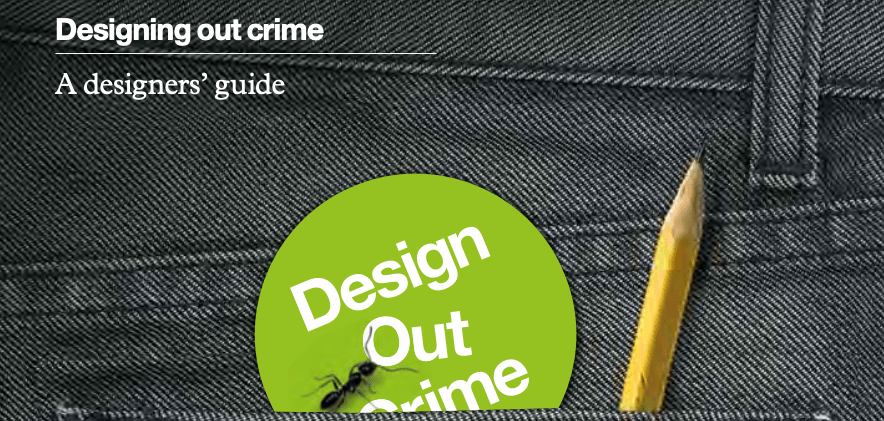
Above – designing out crime by the Design Council (2011)
The looming visit by the Minister for Housing
I wrote about this earlier and I’m glad that the Minister Mr Pennycook has highlighted the problems we face – and that as the people of the city (residents, commuters, students), Cambridge is more than an economic asset to be rinsed by developers and financiers – although the record of the latter and the time it takes for any policies/laws to pass mean
little change in the near future.
No one spotted that I made an almost identical call on involving communities nearly a fortnight ago
My blogpost about the Minister’s visit covered who he and his civil servants should meet, and 12 days before that I wrote about how councillors should invite not just the minister but civil servants of all grades (even the junior ones) working on the future of Cambridge to visit and go on tours far beyond the ivory towers and sci-tech parks. So either everyone’s on holiday still, or my existing social media channels have been all-but-shadow-banned, or no one wants to engage anymore. And some people who were huge figures both in my own life and in civic life generally have done that.
- The Smarter Cambridge Transport campaign
- Former councillor Sam Davies MBE and also Chris Rand, the pillars of Queen Edith’s for nearly a decade.
- …and many more – have a browse through the YTube videos from the Federation of Cambridge Residents’ Associations here and have a listen to the various events from pre-2020 where the future of our city was debated by so many of us – and then ask where we are and why.
Perhaps even more disappointingly, the general election has not sparked the collective civic movement of people getting involved in the future of our city. Maybe it’s because it’s the summer holidays. Maybe because the institutions are waiting for ministers to make the first moves. But as things stand, I’m just not seeing it. (I ***really hope*** that this will change, but it’s that very hope that crushes you at the same time)
Accounting for my own barriers, limitations, and personal shortcomings
Every day I seem to be learning something new about my as yet undiagnosed ADHD. I say ‘undiagnosed’ because it needs a medically-qualified person to make the diagnosis. It took over a decade before I got diagnosed with CFE/ME. I hope this won’t take as long.
It’s mainly from those splendid individuals many of whom are half my age who are giving me an education into the symptoms and the wider understanding of what neurodiversity is – normally in the process of doom-scrolling in the early hours because I can’t sleep. Sing along!
Above – you can buy the song from TBJ here
So many of the things Mr Wild sings about I’m like: Yep, that’s me!
“Sometimes creative visions / sometimes just creeping dread
“Or re-evaluations of the stupid things I’ve said…”
***That’s me!***
One other important thing that the neurodiverse content creators have both taught and challenged me on is to go through a grieving process for the person I was never able to become. This matches what Anna Marsden told me at a conference in 2023
‘You need to forgive yourself – you were not to blame for being educated within a broken system’
The passing of time with Oasis reforming has also been hard to avoid. I was a big fan in the mid-late 1990s – I saw them at Earl’s Court in 1997. Splendid gig, yet hard to avoid being reminded of all of the big life-changing decisions of that era that I made the wrong calls on. (Eg choice of A-levels).
And it’s all the more intense being back in the city of my childhood – one that I tried to leave. Twice. And failed! As I wrote several years ago, I never found my tribe. And following my heart attacks and my chronic fatigue diagnosis, I’m reconciled to the fact that I never will. And that hurts emotionally. Worse still, the long term mental health care that I need to process all of that simply does not exist. A year after my major mental health crisis less than a year after leaving the civil service, I wrote this piece about mental health awareness campaigns. Over a decade later and there has been:
- no improvements in mental health care provision – quite the opposite said the BMA six days before the general election 2024
- no significant increase in resources – not least because spending on mental healthcare is not ringfenced as the Commons Library states
- a mental health crisis with rising need – particularly with children and young people.
It’s impossible not to second-guess *everything* when you end up in a situation that stops you from functioning to the extent you can’t do anything full time – work, study, volunteering etc. Because when you try to keep up, you burn out. Like this.
“A growing body of evidence shows how we are profoundly connected to and influenced by the built environment, internalising our relationship with place in the same way we do that of family. If that connection is weak or negative, the consequences can be devastating, impacting across our emotional and physical wellbeing, relationships, sense of community and personal identity.”
Above – Murray for Humanise p7
What really disturbs me is I don’t have that sense of belonging in Cambridge. Having to reprocess everything through a different lens, I’m now asking myself if I ever did. And whether the institutions I went through (education, religious, voluntary, employment) put their own interests ahead of the people they were either meant to help/support/occupy/employ.
And yet I have been in this strange position where people and politicians have said how essential and important the work I do for Cambridge is. The city that broke me, the city that I tried to leave permanently (twice – and failed) is that very city that also needs me to do the things that I have been doing.
When asked by one politician what I’d be doing if not ‘this’, I had no answer. Not least because my health massively restricts what options are available to the extent that you are totally dependent on the support of other people and/or the state.
“So…where now?”
I don’t know. It’s gone 3am. Yet I’ve learnt to try and ‘go with the flow’ of when my mind is productive rather than to force it into standard working hours. And I’m not the only one.
If anything, one big positive difference social media and the internet made to society was that it enable people with similar life experiences to communicate with and support each other at a scale and speed unheard of before – validating our own individual experiences and also being able to put into words things that we might not have been able to do before. Or provide new insights that lead to a greater understanding of why some things did/didn’t happen. (In my case why so many people seemed to have short, intense, passing presences in my life over the decades). I’m just gutted my generation hadn’t had this knowledge earlier.
Which reminds me – I was inspired earlier to write a blogpost on why Cambridge is *not* the greatest small city in the world – with the first reason being because the institutions of said greatest small city would not have produced a broken man like me to live within it! (I’m sure I’ll come up with a list of other things – just not now).
If you are interested in the longer term future of Cambridge, and on what happens at the local democracy meetings where decisions are made, feel free to:
- Follow me on Twitter
- Like my Facebook page
- Consider a small donation to help fund my continued research and reporting on local democracy in and around Cambridge.
Below – the old Cambridgeshire College for Arts and Technology – because I want our lifelong learning institution back in a 21st century inspirational form

 The Cambridge Town Owl