In a vote that was won by a very narrow margin (345-318), members of the Green Party voted to change its policy from one of opposition, to ‘support in principle’ for HS2. At the other end of the rail spectrum, the party has strikingly little content on light rail and trams
You can read the motion and the discussion documents here
I was first introduced to the Greens for HS2 movement by Dr Emma Garnett during her Cambridge days before she headed off to the other side of the Varsity Line – The Green Party’s Annual Conference is due to debate the electrification of the East West Rail line, the Bedford-Cambridge section proving to be far more controversial than it should be for a piece of infrastructure that should take a critical mass of motor traffic off of roads into West Cambridge. The statement by Cllr Matt Edwards (Greens – Bradford City Council) who is also the Transport Spokesman for The Green Party nationally posted the following:
It was also picked up by some of the political blogs too.
“Members of the Green Party of England and Wales have forced a reversal of their party’s position on HS2. At the party’s autumn conference in Manchester, party members endorsed a motion entitled ‘Green rail strategy for the Midlands and the North’, which explicitly called for HS2 to be funded and completed in full.”
Above – Left Foot Forward 08 Sept 2024
For those of you interested in seeing just how much old railway was lost in the North and Midlands, see the old railway map here.

Above – the greyed out bits are the lines closed by Beeching and successors in the 1960s onwards
Reading up on the public transport policy background
One of the things I mention to people when discussing the joys of Cambridge’s century-long transport mess is reading some of the publicly-available specialist magazines such as:
I started buying the former during my commuting days on the grounds that if I was going to spend £thousands per year on train tickets I wanted to know where my money was going! Other magazines in other sectors are available, but those two (along with Buses Magazine below, and sometimes Tramways and Urban Transit, are available in larger WHSmiths stores). I also pick up on members-led campaign group publications that are freely available online, from Rail Future East Anglia’s newsletters through to CamCycle’s back catalogue of cycling publications that dates back to the mid-1990s.

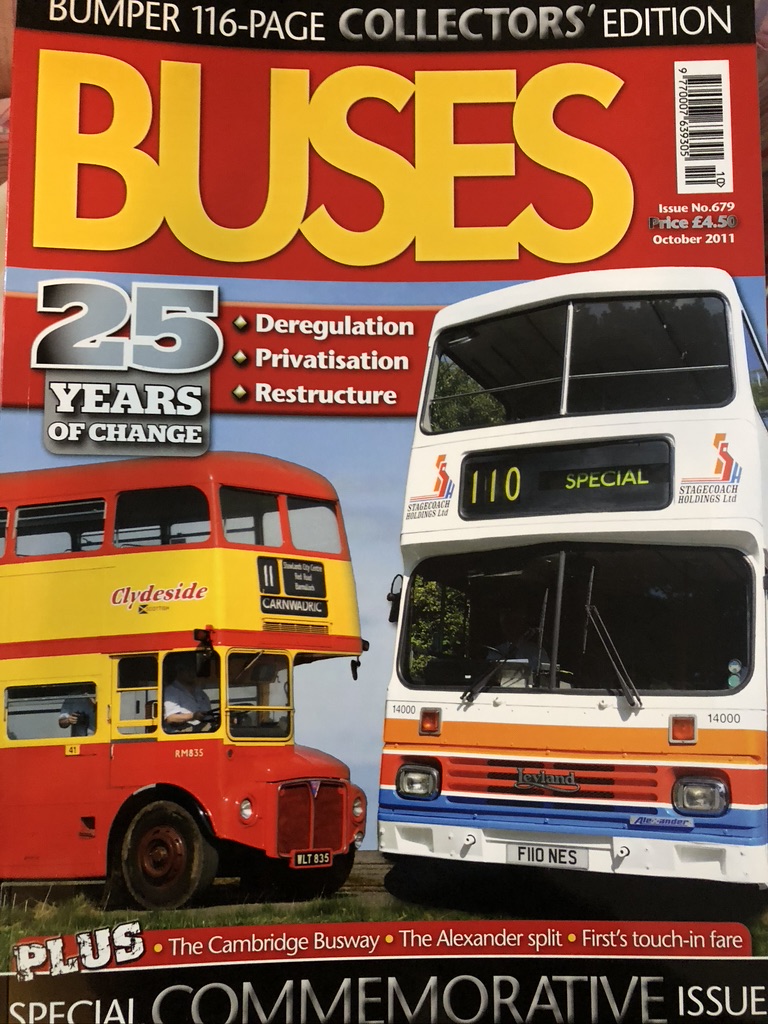

Above centre & right, examples of specialist transport magazines sometimes found in larger city centre stationers and bookshops Above-left, the challenge is bringing it together as Unite the Union in Glasgow call for.
In a nutshell, the publications cover the things that the mainstream media misses out on. In times gone by, these would have been substantial news items but in these celebrity-driven times it’s hard to make a breakthrough even on things that are day-to-day issues.
Long distance rail travel vs short haul air travel
The party already has policies on aviation including
- A frequent-flyer levy.
- A ban on domestic flights for journeys that would take less than three hours by train.
- A halt to the expansion of new airport capacity.
Are there other policies that could be looked at? One interesting take from the US is to focus on the environmental footprint of famous and wealthy people. This was picked up by the direct action collective JSO, two of whose activists were arrested after private jets were targeted on the day that one celebrity was due to land. (Reporting restrictions apply as the case is still live with legal processes ongoing) In a click-bait-heavy world, easier to link something to a celebrity than a corporate executive who shuns the media?
What does the data show on UK domestic flights?
The House of Commons Library’s report from 2021 tells us

Above – data from the Civil Aviation Authority
The Commons Library paper also picks up internal mainland flights.

The detailed tables for 2023 from the Civil Aviation Authority are here
The picture on private jet flights is grim – as exposed by Greenpeace UK here. They also found that compared with Europe:
- “Most private flights: At 90,256, a private jet took off from the UK every six minutes
- Most emissions: Private jets in the UK caused half a million tonnes of CO2 in 2022 – the highest in Europe
- Busiest route: Flights between London and Paris were the most popular route accounting for 3,357 flights. Six of the top 10 routes also included London.“
Above – from Greenpeace UK 30 March 2023
Which means any action will need to be co-ordinated with the EU. What options are available? What ideas have The Greens’ EU sister parties and partner campaigners suggested?
Integrated public transport – trams/light rail for every major railway station?
This could be something for the Green Party’s Trade Union Group given the highly unionised transport sectors. On trams and light rail, the UK used to have a wonderful heritage of them. The vision from the LRTA Campaign in 1944 makes for incredible reading even today. It’s a campaign that is still going, and one that may be of interest for people living in/around cities and large towns.
What that might look like policy-wise is up to party members. In and around Cambridge I don’t think the public debates between the candidates were really able to get beyond top-lines on public transport issues. I can’t think of a point where the public’s imagination was really captured or where they were inspired by something. I wanted all parties to have a policy on light rail and trams, but this didn’t seem forthcoming except from the Conservatives who U-turned on previous opposition/non-committal on Cambridge Connect Light Rail, to support it in the run-up to their worst ever election result since universal suffrage. Despite several candidates publicly announcing support for it, the electorate delivered a drubbing as the Tories went from having all but one of the Cambridgeshire seats to having just two left. Given the continued house-building and the demographic changes that go with it, it may be a long time before the Tories return.
And finally…lining up essential supporting policies for public transport infrastructure
It’s one thing to say ‘Build tramways outside every station’ but it’s quite another to do it. This is where sequenced supply chains combined with comprehensive upskilling and training plans have to be developed. Given that woeful industrial strategies of the past have all but destroyed the large old industrial capacity to produce the rails, rolling stock, and components needed, what is the plan to rebuild these to standards that can both compete with the EU (so as not to rely on imports all the time – with the additional transport emissions associated with them) to new developments in decarbonising steel? (See this EU briefing from 2020). Alongside this also means taking on the recommendations from the Education Select Committee on lifelong learning centres if the workforce is to be upskilled and reskilled to build the new green infrastructure.
Food for thought?
I normally blog about the longer term future of Cambridge, and on what happens at the local democracy meetings where decisions are made. However I often stumble back to my old policy turf from my civil service days as well. Found this interesting? Feel free to:
- Follow me on BSky <- A critical mass of public policy people seem to have moved here
- Like my Facebook page
- Consider a small donation to help fund my continued research and reporting on local democracy in and around Cambridge.

 The Cambridge Town Owl