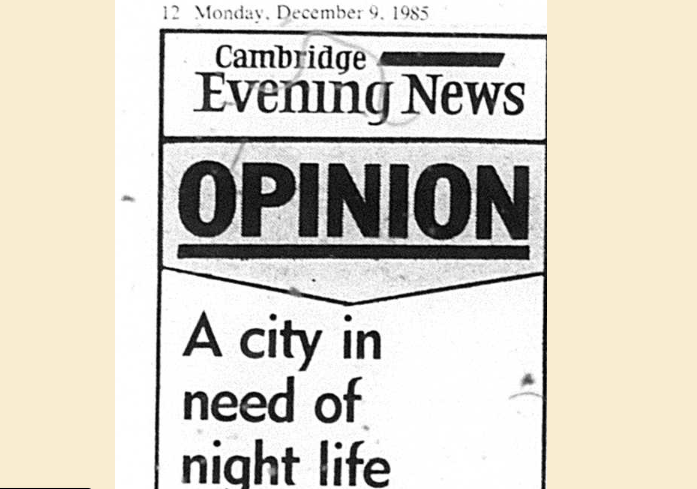
The failure of central government to enable local councils not only to designate sites for essential city functions, but also to provide them with the means and resources to turn plans into reality is excruciatingly visible in Cambridge’s limited nightlife
I still find it astonishing that Cambridge has fewer night clubs today than in the 1990s when I was in my teens. And that amongst other things reflects a widespread political and economic failure that goes with letting a combination of unaccountable institutions (the University and its member land-owning colleges) and speculative financial interests take priority over the wider needs of our city.
As I’ve stated repeatedly, Cambridge has been prevented by successive governments from tapping into the wealth supposedly created by its local economy to pay for the things that not only enable cities to function, but also make them places worth living in from a quality of life perspective. Local history can tell us the story of how successive generations of teenagers have been failed by decision-makers of their times.
The decline of dance halls, night clubs, and entertainment centres in Cambridge
As I stated in Lost Cambridge here: “Cambridge was losing venues hand over fist in the post war era. At various points, we lost:
- The Dorothy Cafe and Ballroom
- The YMCA/Alexandra Hall
- The Victoria Cinema
- The Kinema on Mill Road
- The Playhouse on Mill Road
- The bowling alley on Mill Road
- Beaconsfield Hall, Romsey
- Romsey Labour Club
- The Carioca”
In the discussions that followed, the imaginative call for the upside-down flying saucer night club on Elizabeth Way was thrown out by the County Council, meaning that The Junction on the Cattle Market Site was the only alternative available.
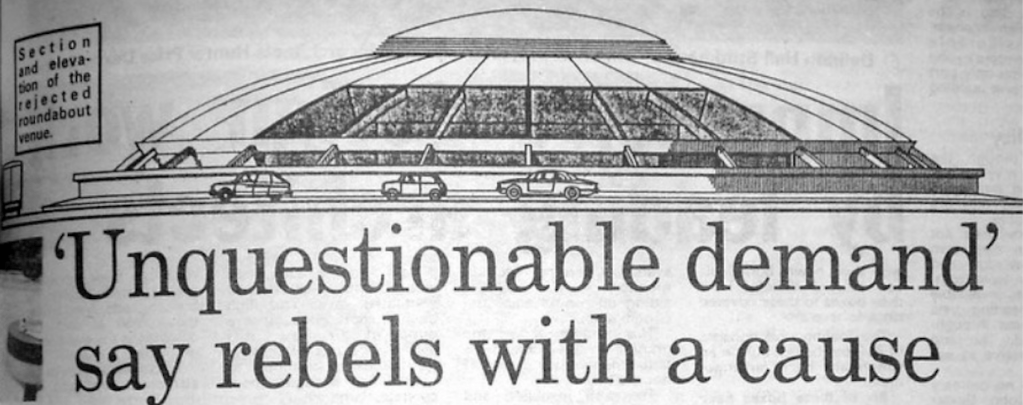
****Give us our upside down flying saucer you scoundrels!!!!**** Cambridge Evening News 09 July 1986 quoted in Lost Cambridge
When you look at The Junction today, there are far fewer club events compared with previous eras – especially for teenagers and young adults. As I mentioned early talking to younger members of my family and their friends, they told me that The Junction is seen by their generation as a place for older people – and that few arts and leisure organisations actually ask them what sort of music-based entertainment they want put on for them. It’s easy to blame The Junction, but the crisis in the arts has far deeper roots that extend all the way up to central government. The Junction always has been run on a shoestring budget and it shames our city that it does not have much more substantial backing from the so-called wealth-creators in the local economy. (I’m a longstanding member of one of their schemes that helps bring in much-needed income yet it goes to show that ‘Big Society’ charity only goes so far. It cannot alleviate the structural shortcomings that create our grossly unequal society).
Cambridge needs a second urban centre where whoever the landowner is will not price out the tenants that provide the essential leisure functions
Which is why I don’t trust the University of Cambridge or its colleges because they’ve got form for closing down popular places because they don’t bring in enough money. Just ask anyone who remembers Galloway and Porter Books. (Which is also why I want ministers to table changes in the law in Parliament to compel all higher education institutions to amend their Royal Charters to include duties to consider the economic and social impact of their corporate decisions (i.e. not academic freedoms) that have an impact on the settlements/towns/cities they are based in. Furthermore, such duties should include improving the places that they are based in – as Sir Ivor Jennings said Cambridge should in 1962. The more recent generation of decision-makers have not shown the same foresight as Sir Ivor did back in the 1960s – and it shows.
“I found [Prof Neely’s] response to be ‘inconsistent’ with the press releases on the amount of money the University and its member colleges receive through alumni and philanthropic donations.”
At the moment, the best candidate site for a new urban centre is on the Airport Site – similar to what Prof John Parry Lewis recommended for Cambridge in the early 1970s. But if Cambridge’s decision-makers want it, they will have to move quickly as plans are already being made for the future of the site. (You can still drop pins in here to have your say)
“Where on the airport site could a new urban centre be located?”
By the junction of Coldham’s Lane, Barnwell Road, and the Cambridge-Newmarket Railway – and I would have this as part of a wider 25-year plan
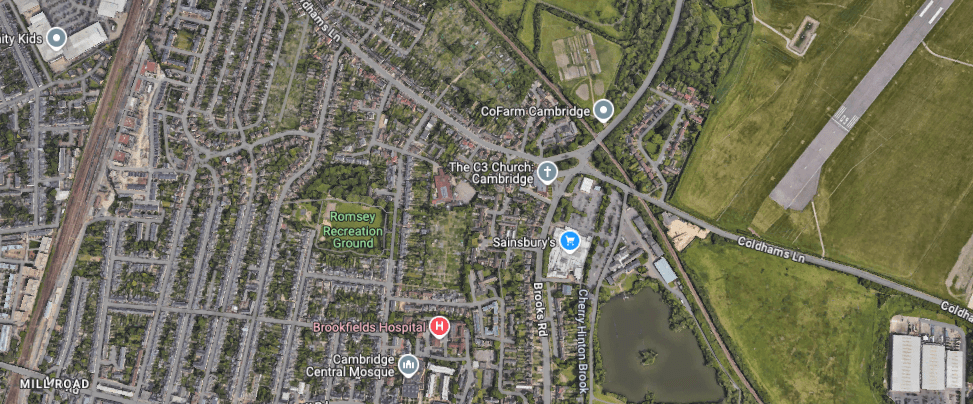
Looking at the area more closely, you can see that such a long term plan would involve buying the properties of the small Nuttings Road estate (but having it properly managed over an extended time period so people are not turfed out in a rush, and are properly compensated.
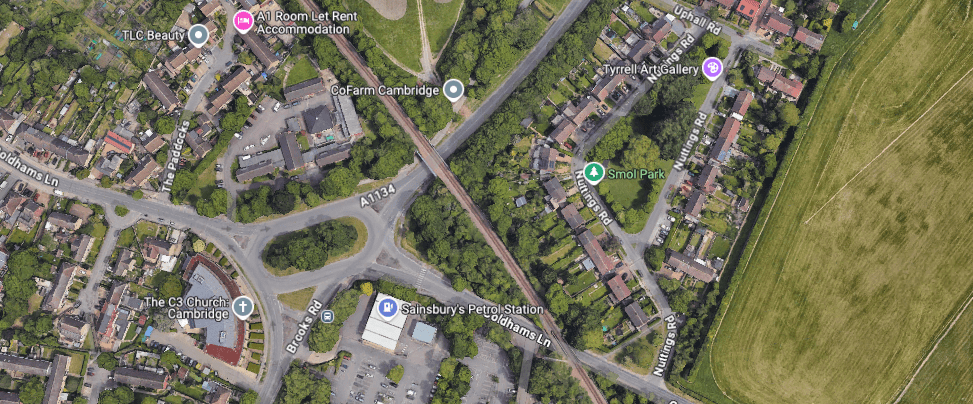
Above – this would also mean as people sold and moved on, renting out the properties until the land was needed for redevelopment – noting that such plans normally take at least a decade before spades hit the ground.

Above – the view looking sort-of north-eastwards
Barnwell Road could have a green bridge/tunnel placed over it north of Cambridge Co-Farm with an active travel route from the station to Coldham’s Common and to Cambridge United. Most of the trees could also be kept as well as an alternative to the concrete/stone slab squares often seen at large transport interchanges.
A new retail and night-life quarter south of a new civic quarter?
That’s what we could build east of the Smol Park icon where the rail/light-rail and bus interchange could be built – possibly with a regional bus station where the Sainsbury’s Petrol Station currently is.
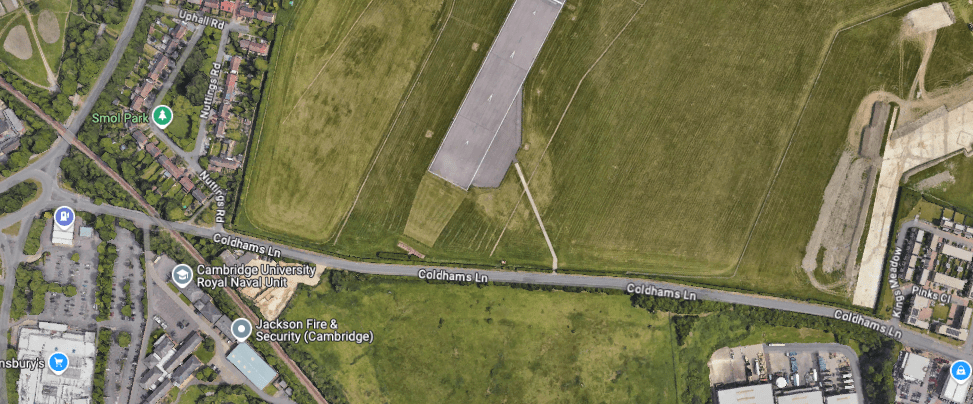
Above – from G-Maps here – the eastern section of Coldham’s Lane
South of Coldham’s Lane is the old landfill site – recently in the news with both the tragic death of the teenage boy in the nearby old quarry lake, and the controversial planning application being decided next week.
With the minimal number of residential properties nearby, there objections as to noise from nightlife should be minimal. Therefore a strip of land running east-west along the northern side of Coldham’s Lane would make for a suitable retail and night-life quarter (enabling the easy transport access into and out of the area).
“And the new civic quarter?”
Covering a patch in the southern part of the airport, the site could incorporate:
- A new City Hall for a new unitary council
- A new large concert hall and opera house (assuming the University of Cambridge won’t co-operate with the Hills Road site I have long proposed that they own)
- A new purpose-built adult education and lifelong learning centre (that doesn’t look like ‘school’!) that’s co-designed by the people going to use it. (See this example from Derby in 1968)

Above – as I mentioned in this tweet, I’d want the entrance to the railway station to look something like this in Budapest, Hungary. i.e. not Network Rail’s ‘minimum viable cost’ design
Remember that this is for ***a new urban and civic centre for Cambridge***, not a suburban rail stop. Furthermore, I want the design code to be noticeably different to the stuff going up on the sci-tech developments *and* in the new residential estates.


Above – ugly stuff submitted by the Cambridge Biomedical Campus that tourists will be overjoyed by as then head into Cambridge by train from London.
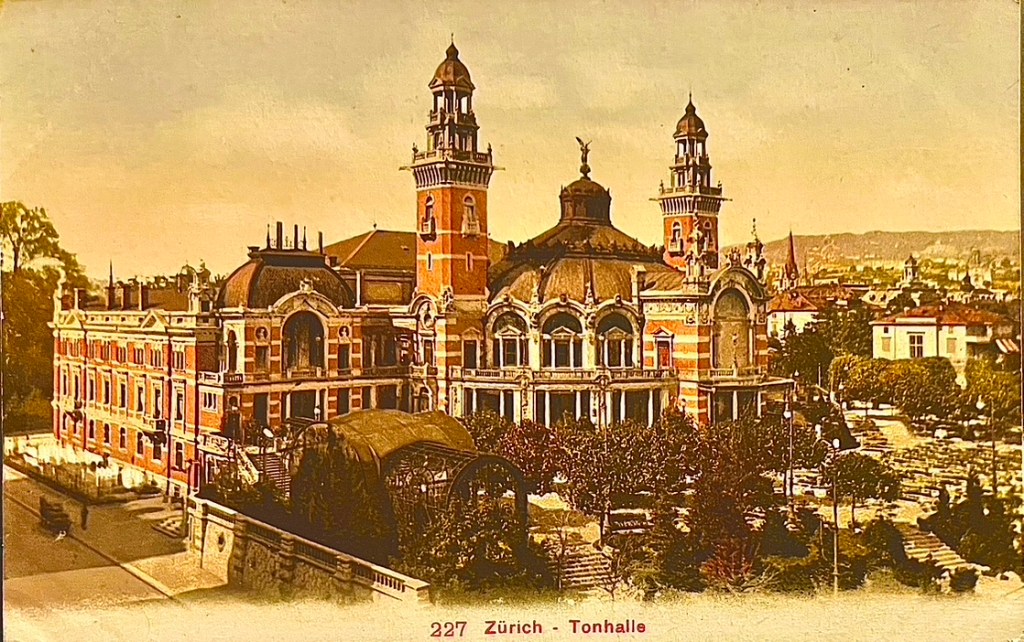
Above – the old Zurich Tonhalle as an inspiration for a new concert hall – the twin towers matching Peck and Stephens’ unbuilt Cambridge Guildhall proposal of the 1850s

Above – one of my favourite unbuilt buildings in Cambridge, by Peck & Stephens
A city hall, a concert hall, a lifelong learning college, and a railway station each with twin towers of similar heights would make for a lovely quartet of buildings – and could go someway to undoing some of the damage done to the city’s skyline by the bulky boxes of Brookgate and the Biomedical Campus – shortly to be added to by The Grafton Centre as well.
Ultimately, Cambridge needs somewhere that town can dance at
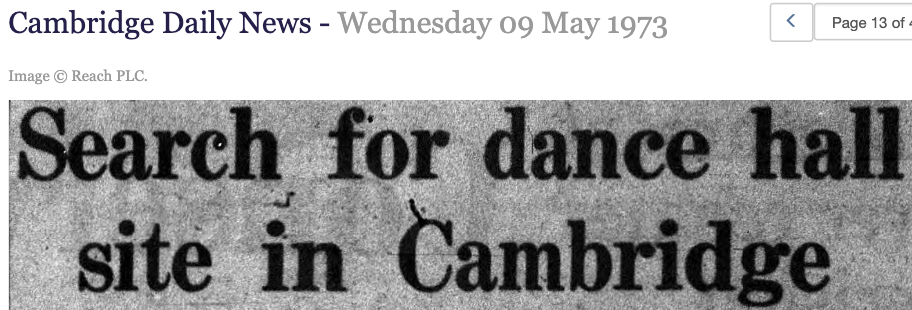
Ever since the closure of The Dorothy Ballroom (where Waterstones now is) along with The Rex/Rendez-vous, The Junction was the only medium-sized place that used to put on dance events regularly. The search for a permanent larger space in the city centre has been blocked at every turn by the colleges. A second urban centre – a new civic centre, would allow Cambridge’s non-university communities to flourish without being obstructed by the powerful and unaccountable ancient academic institution which has form when it comes to not-looking out for the interests of non-university members. Just ask Daisy Hopkins. The alternative is to make higher education institutions subordinate to local government as far as corporate decisions on expansion and city life go. Which isn’t going to happen.
“Wouldn’t such plans threaten the viability of the existing venues?”
- What existing venues? [Of a similar size]. Most of the ones that are left are small venues and given Cambridge’s already growing population, there should be enough to go round
- For places like The Arts Cinema along with The Guildhall and the Corn Exchange, that’s up to the city council and ministers. I’ve already fed in proposals on what could be done with both. If nothing comes of those, this is an alternative
- I would like to see a North Cambridge Arts Centre as a sister institute to The Junction, but whether that will happen remains to be seen.
Food for thought?
If you are interested in the longer term future of Cambridge, and on what happens at the local democracy meetings where decisions are made, feel free to:
- Follow me on BSky <- A critical mass of public policy people seem to have moved here
- Like my Facebook page
- Consider a small donation to help fund my continued research and reporting on local democracy in and around Cambridge.
Below – go and fly The Kite with Together Culture. Much more fun.

 The Cambridge Town Owl