
The results of the review have potentially huge implications for the provision of lifelong learning services in England (it’s a devolved matter remember) – but only if ministers are prepared to put serious resources into it as well
Image: From Adult Education for Democracy (1944) digitised here
You can read the call for evidence page here – and if you just want to send an email with your views, you can do so via here.
The press release starts off as below
“Young people, parents, employers and education staff, leaders and experts are being invited to take part in a ‘national conversation’ about how the curriculum and assessment system can better prepare young people for life and work, as a call for evidence is launched today (25 September).”
Note the call for evidence is about the current system, not the one in the 1980s or the 1990s that I regularly refer to as on that ‘educated me to be ignorant’ – and also had bizarre jumps in standards such as GCSE Geography going over stuff we had done in Year 8 only for the A-level to kick in with stuff that students at university were doing in their second year of university. (No, I haven’t forgiven the Tories for that either!)
Every subject teaching group will be feeding into this – so the reviewers have got their work cut out given the competition that goes into deciding what should/should not be included.
Above – from the Association for Citizenship Teachers
This is also time for the National Baccalaureate Trust to stand up as well – and call time on GCSEs

Above – see the video here. The difference between the GCSEs (and A-levels) to The Bacc is that the former stand alone as separate qualifications per subject, while the latter does not.
I’ve written about the Bacc before here – calling on teenagers to make exams an election issue
One thing I never did at school, college, or university was an in-depth extended project. All of the subjects I did were ones that were too restrictive in terms of subject choice, and furthermore the teachers did not inspire me to want to put in the effort. Finally, I was too unsure of myself to know what ‘the subject of my heart’ would be as one to follow or investigate. Hard to know when you’ve spent the previous third of your life being ‘taught to the test.’
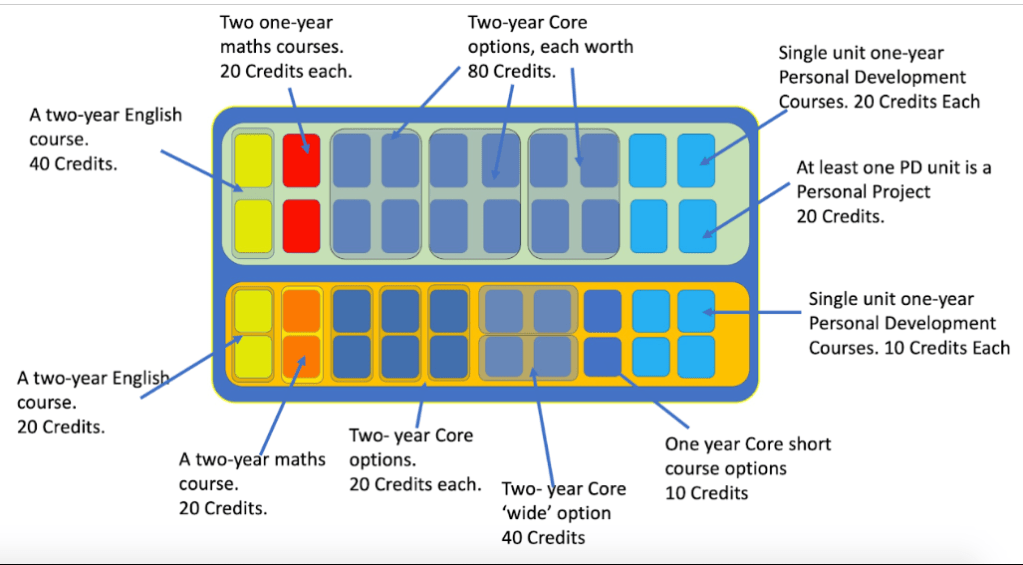
Above – an example of how the Bacc is different to the separate discrete academic subjects at GCSE. From the NBT’s proposals of March 2022, slides 9-11
It’s also not a new concept of teaching one subject through the core subjects of English and Maths.
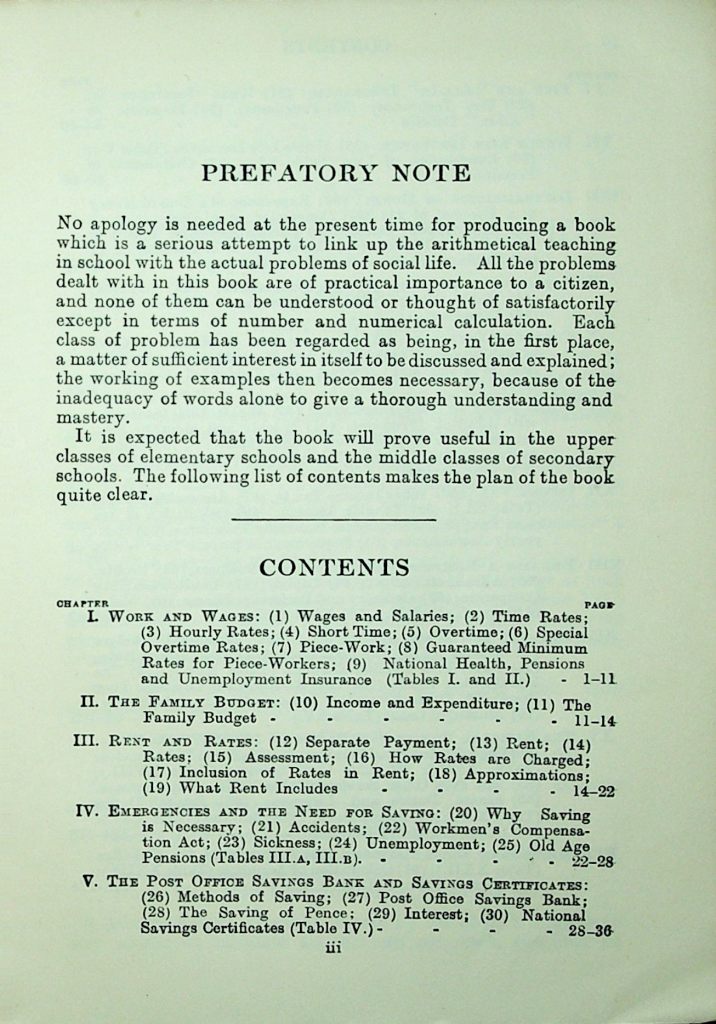
Above – An arithmetic of citizenship, 1929, digitised here – what would a revamped and refreshed version be like today that used citizenship, democracy, government and public service cases studies in mathematical content? Think statistics and the manipulation of.
At the same time, there’s only so much a classroom can teach. Especially for a practical ‘out and about’ subject.
“Active citizens usually learn their citizenship skills through trying to solve a problem or to fulfil a mission, rather than by setting out to “learn to be good citizens”. Learning, and citizenship emerge as a consequence of this primary motivation. Learning therefore has to be embedded in those processes.”
Above – on civil society strategies and active citizenship, CTO 26 Aug 2023
This is re-enforced by a very recent, if limited study from London (as the authors acknowledge) They recommend:
- Providing more civic spaces for deliberation that can feed into public policy,
- Addressing institutional preferences and policymaking processes that encourage tokenism and inhibit meaningful participation, [Looking at the Greater Cambridge Partnership!!!]
- Training relevant officials in working with children and young people as partners, [which also means having systems that account for the inevitable generational churn as young people grow up]
“Young people were keen to get involved in local environmental decision-making, and emphasised the importance of providing deliberative civic spaces as a starting point for such engagement.”
Above – How Young People can Shape Environmental Policy in Urban Spaces (2024) Sloan and Henn in Policy and Politics
Question: Does Cambridge have that deliberative civic space for young people? And if not, where should those spaces be created?
With those above points in mind, I’ll be very interested to see what recommendations finally come out of the review in what looks like being a very long process. Not least because
How the review’s results could influence lifelong learning
It’s all in the terms of reference – see here and scroll halfway down. The first paragraph of the 11 underneath the Terms of Reference subheading speaks volumes.
“It is essential that our education system enables children and young people to develop the knowledge and skills required to thrive as citizens, in work and throughout life. The Review Group is therefore invited to consider how the curriculum and assessment system can best ensure that every young person develops the requisite knowledge and skills at each stage of compulsory education.”
Above – Curriculum and Assessment Review, p3
Therefore the vast majority of children leaving school should have ‘enough of the knowledge and skills they need to thrive as citizens…throughout life.’ And if they haven’t, then the system will have failed them.
At the same time, whatever those levels of knowledge range of skills are that school leavers should ideally possess should also be part of the content that an adult education and lifelong learning service should make provision for. That means accounting for the existing knowledge gaps that current generations of adults have.
A lifelong learning centre in every town – recommendation from the House of Commons Education Select Committee 18 December 2020
The date tells you that we were about to head into the second lockdown of the pandemic so inevitably the recommendation got buried in the catastrophe. I wrote about the report in January 2021 here and have been going on about Cambridge building one ever since. (My latest blogpost being here – saying that the redevelopment of Cambridge Airport could provide for a new urban centre in which a lifelong learning college could be one of the civic anchor institutions)
Ensuring the people can accumulate the collective knowledge and wisdom needed to shape the future of where they live
The Quality of Life Foundation’s research
Note the sense of control regarding shaping local futures – something that came out of the Quality of Life Foundation’s recent report
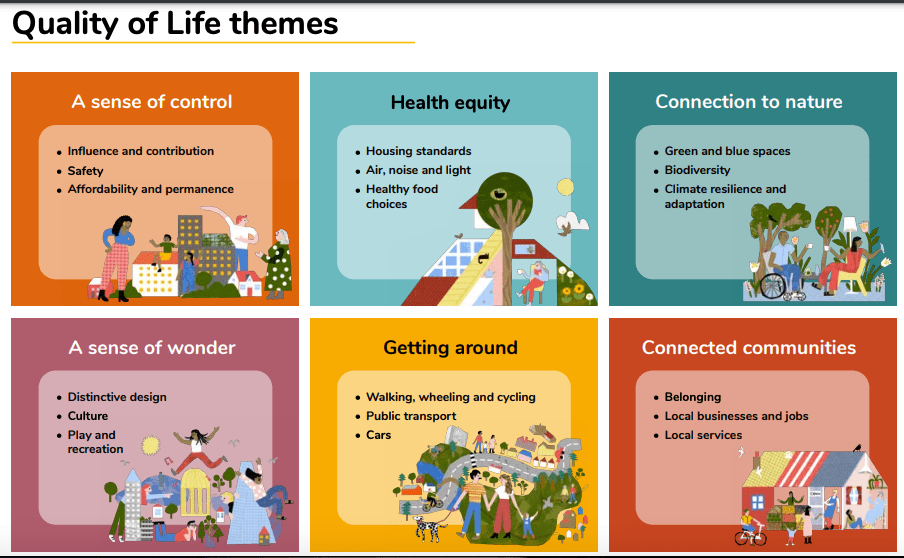
Above – Quality of Life Framework p5
Interestingly, they also feature three Cambridgeshire case studies in a separate document
Yet going back to the 1990s in Cambridge, I struggle to remember us teenagers being engaged meaningfully in any conversation about the future of our city. There was the odd consultation event – for example on the future of Parkside Pool in the early 1990s, but nothing that was embedded in the curriculum. And if it was, the materials were hopelessly out of date. (For example a maths case study involving building a supermarket on Homerton College!)
One of the things my generation missed out on was democracy education. At school, at college, and at university
It’s beyond frustrating that the work by Yvonne Murphy and colleagues did not pick up nearly enough momentum in the run up to the general election
The Democracy Box
You can read their Beyond the Ballot Box project here

Above – links to the final reports
“It cannot and must not be the responsibility of one freelance creative to take this work forward. The research has been done. Thousands of people have all told me that basic democratic public information and education is needed on a large scale and how, where and by whom it should be created.”
So, which politicians are going to do it?
Part of the problem is the fragmentation of public services and the creation of the academies programme that MPs voted for – bizarrely creating more work for themselves because centralisation took away the constitutional responsibility away from local councillors (who could have dealt with casework) and moving it to already over-stretched MPs’ constituency offices.
As a result, there is only so much local government can do. As I found out via my own public questions to local councils.
- Cambridge City Council 28 Sept 2023 (on town planning)
- Combined Authority 04 Sept 2023 (scroll to end for public questions)
Re the CPCA meeting above on 04 Sept 2023, I wrote a blogpost in advance on a host of issues relating to lifelong learning. I was pleased that Cllr Alexandra Bulat was able to put my question to the committee on my behalf.
On learning modules
There’s an interesting case study from South Africa here which provides some idea of what a module might look like within a broader civics-related programme. This relates to my earlier blogpost on a civics discussion series here. The point that Yvonne Murphy remains though: all of this needs to be taken forward by institutions rather than individuals. There is only so far individual pioneers can go.
Food for thought?
If you are interested in the longer term future of Cambridge, and on what happens at the local democracy meetings where decisions are made, feel free to:
- Follow me on BSky <- A critical mass of public policy people seem to have moved here
- Like my Facebook page
- Consider a small donation to help fund my continued research and reporting on local democracy in and around Cambridge.

 The Cambridge Town Owl