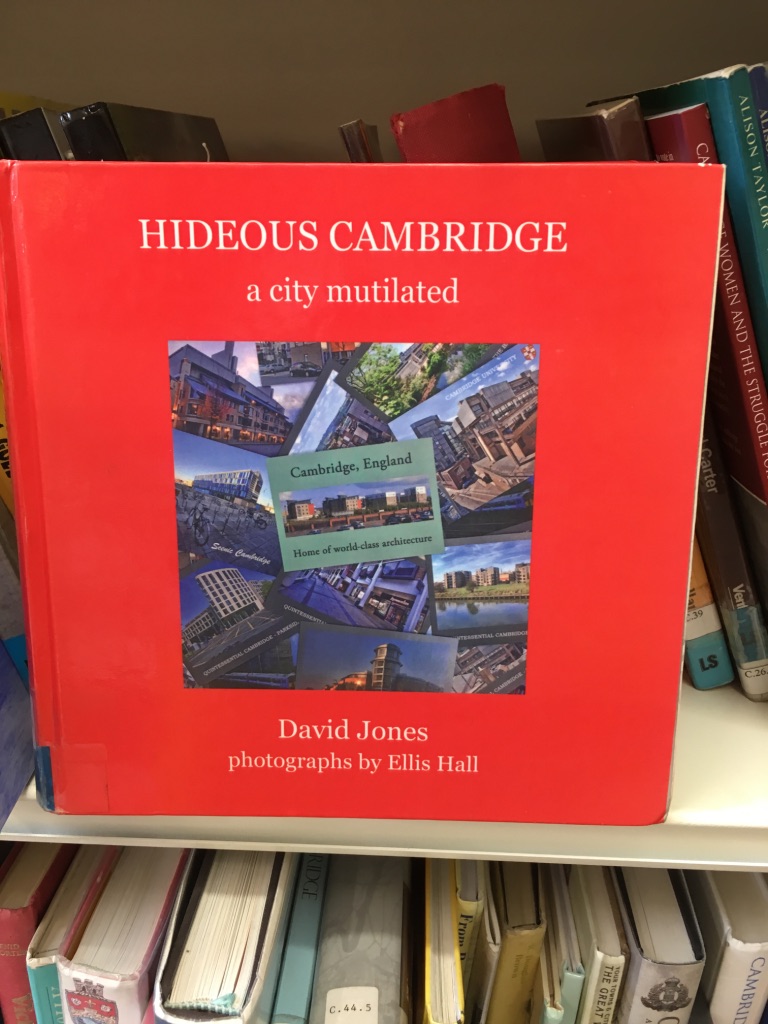
The public art proposal for Cambridge South Station doesn’t inspire me. You can comment on the planning application with your opinions – support/object/neutral
I can’t pretend I like it. I don’t.
You can view the application via the planning portal here and typing in the reference: 21/02957/COND20A
The decoration of the stairs bridge is something that particularly jars – the wall of text on an orange background

With The Gogs and Wandlebury in the neighbourhood, and with Addenbrooke’s originally envisaged as a ‘Hospital in the park’, the commissioned artist missed an opportunity to come up with something more calming than the orange and grey scheme the photos show.
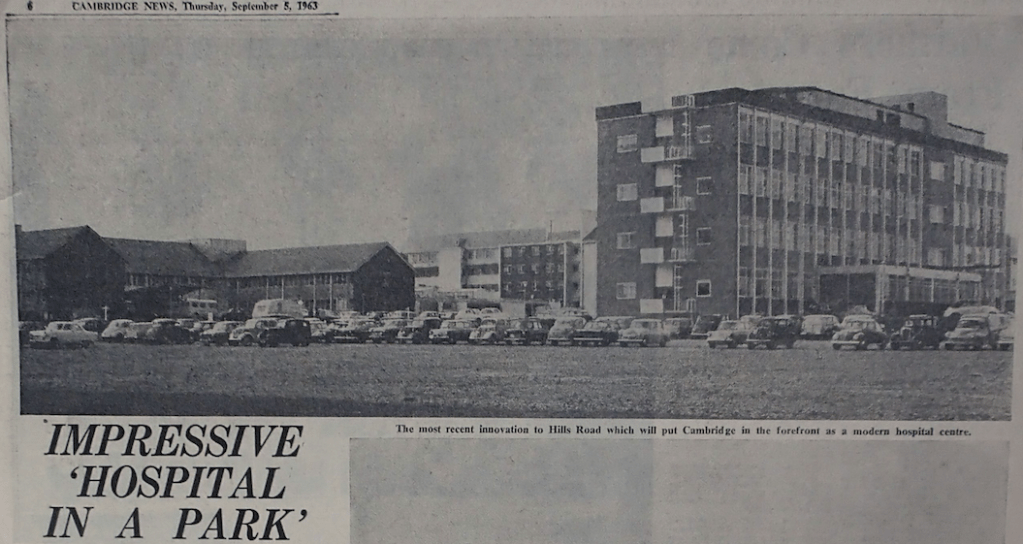
Above – ‘Hospital in a park’ was how the then New Addenbrooke’s was described in the Cambridge Evening News 05 Sept 1963 (p6) via Mike Petty/Cambs Collection
Addenbrooke’s is long overdue an overhaul anyway
If you want to get involved/have your say,
Join [Greater Cambridge Shared Planning] for a Planning Update on the Cambridge Biomedical Campus
It’s on Wed 23 Oct 2024 from 6pm either at 1000 Discovery Drive, or online via Teams where amongst other things you can put your Qs to the speakers on Cambridge South Station and their public art proposals.
Cambridge’s public art strategy
You can read it here along with the city council’s public art supplementary planning document from 2010 (is it due a refresh?)
Looking at the SPD, I note:
“A critical requirement is that the commissioned work should be original, of high quality, designed for the community and produced or facilitated by an artist or craftsperson. In terms of delivery, projects may focus on the process as much as the product and be community based.”
Above – Para 5.7 SPD (2010)
This feels like a case where the background work and research has not resulted in a high quality piece of work designed for the community. I’ve seen numerous examples of where very good research and analysis has led to appalling recommendations – Holford and Wright’s inner spine roads for Cambridge in 1950 being but one example despite their in-depth surveying of motor traffic, cycling traffic, and working lifestyles of the era.
“[The artist] searched ‘the writings of William Harvey’ looking for all the instances of the word ‘together’”
Public Art Delivery Plan, p3
William Harvey was selected as both a former Cambridge student from centuries ago, and because he was the first western physician to describe the blood circulation system and the role of the heart. Understandable for a railway station serving a hospital site?
I’m not sure why the proposal showcases a piece of work that is a riot of colour before saying Cambridge South can have rust.
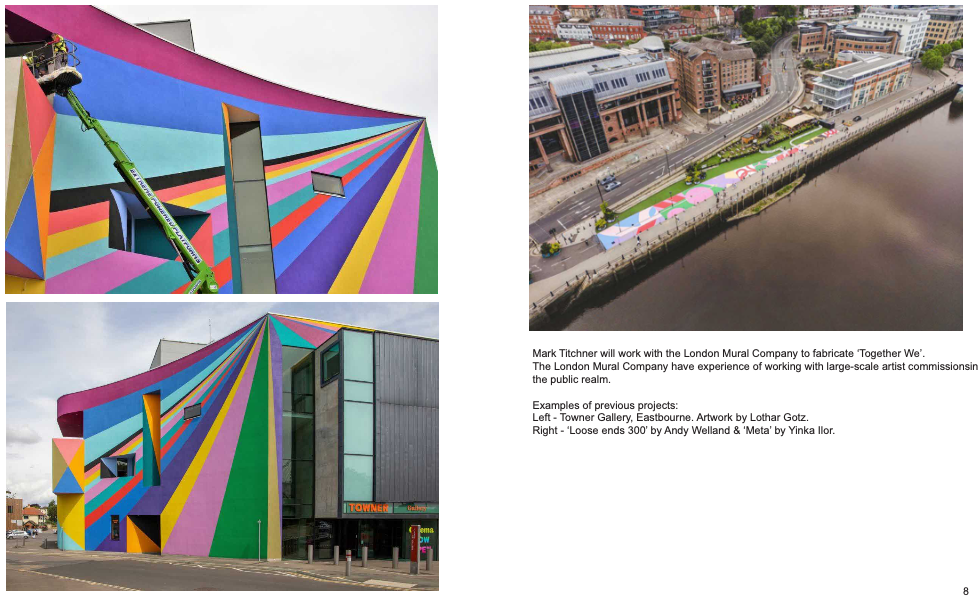
Public Art Delivery Plan, p8
Above – riot of colour vs rust and grey for Cambridge South. ***Why?!?***
Turns out part of the inspiration was this wall of rust – one that has also polarised opinions. Note we’ve been here before
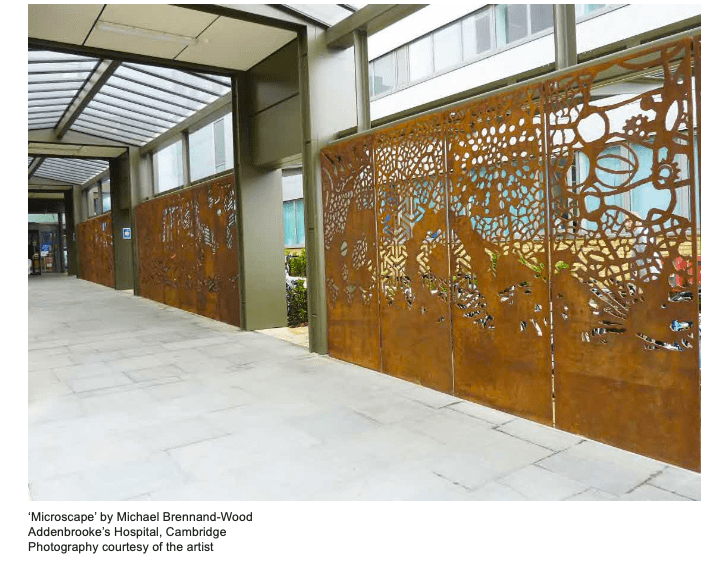
Public Art Delivery Plan, p20
That piece is similar to another piece of rust-based public art that I complained about at the time – the student flats on Newmarket Road from back in 2018
“Can we do better than random lumps of metal looking abstract?”
Above – ‘On Public Art’ from A Dragon’s Best Friend 21 March 2018
Sadly all too often that is what passes for public art in Cambridge: Abstract sculpture in front of a minimalist value-engineered box.

Above – from GMaps – River Lane student flats. A lump of abstract metal in front of an identikit design of boxes
People complained at the time – including former ward councillor Richard Johnson who described it in the Cambridge News as “Ghastly”. Quite!
It’s not helped by including more grey in the document.
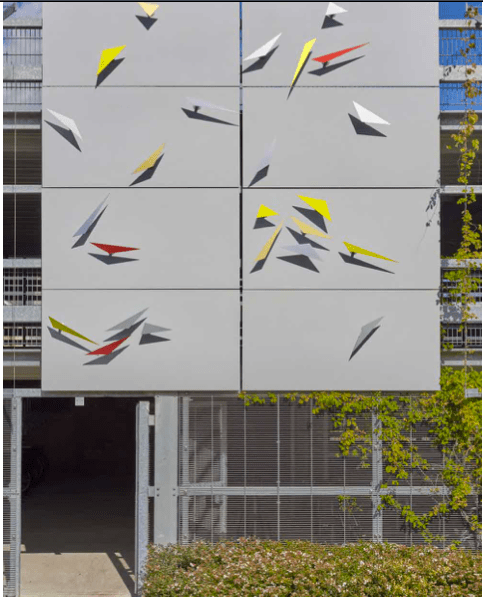
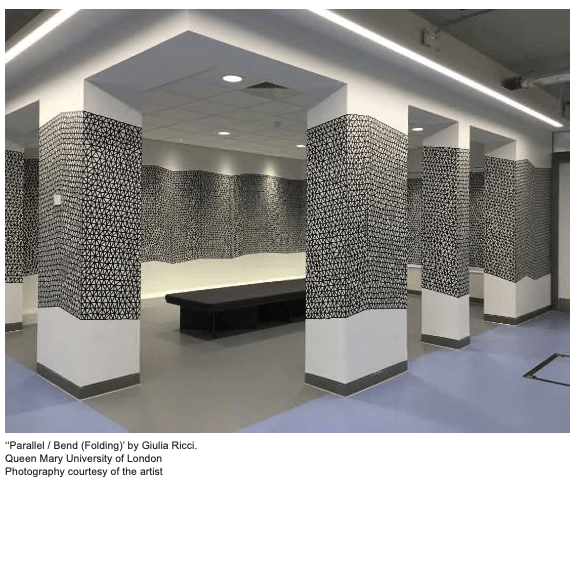
Above – examples from Alison Turnbull on Peterhouse Tech Park and Giulia Ricci in London, pages 21 & 25
The problem is that when public artists use bland grey stuff as their ‘inspiration’ for further works of public art, they risk doubling down more of the city in such forms. Cambridge North Station has more than enough dull grey stuff on it without Cambridge South needing to add to it. And the hotel at Cambridge North – a not too dissimilar colour to the stair barrier, was so bland even its own planning consultant could only describe its design as ‘acceptable’ at Planning Committee back in 2017.
Architecture, town planning, urban design, and public art are inherently controversial – and Political by their nature
They have to be – they involve people living together and sharing things. In this case a railway station which will be used by possibly millions of people per year. Therefore everyone who passes whatever design is installed, will pass judgement on whatever is put up there, however subconsciously. Cambridge’s built environment has been controversial ever since …probably after the first settlements were built – although few went to the extremes of Sweyn Forkbeard who sacked the town, although I don’t think architectural taste was his motive. Journalist Kenneth Robinson’s taken on Cambridge’s architecture in his documentary of 1964 is almost as brutal, if only in the spoken word!
I just happen to be of the opinion that words on a garish orange background (irrespective of what those words are) isn’t particularly imaginative or of a high enough artistic quality that we should be demanding for Cambridge.
Hence I’ll be objecting to it.
You can view the application via the planning portal here and typing in the reference: 21/02957/COND20A and register to submit your own comments.
…only if such things get approved it’s only a matter of time before someone calls for it to be removed – a much harder task.

Above – the Cambridge Independent here
If you are interested in the longer term future of Cambridge, and on what happens at the local democracy meetings where decisions are made, feel free to:
- Follow me on BSky <- A critical mass of public policy people seem to have moved here (and we could do with more local Cambridge/Cambs people on there!)
- Like my Facebook page
- Consider a small donation to help fund my continued research and reporting on local democracy in and around Cambridge.
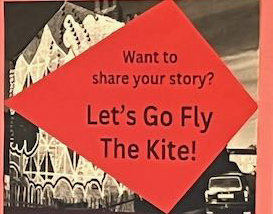
Below – For those of you interested in local history, get involved with Together Culture’s project on the history of The Kite
 The Cambridge Town Owl