
Coming up on 28th November – likely to coincide with the Devolution White Paper, these two major policy announcements will have a huge influence on the future of Cambridge & Cambridgeshire.
The Transport Secretary Lou Haigh posted this on Sunday morning

Above – Lou Haigh on Birdsite 24 Nov 2024
If trams become a big thing as I hope, then Tramways Magazine becomes essential reading!
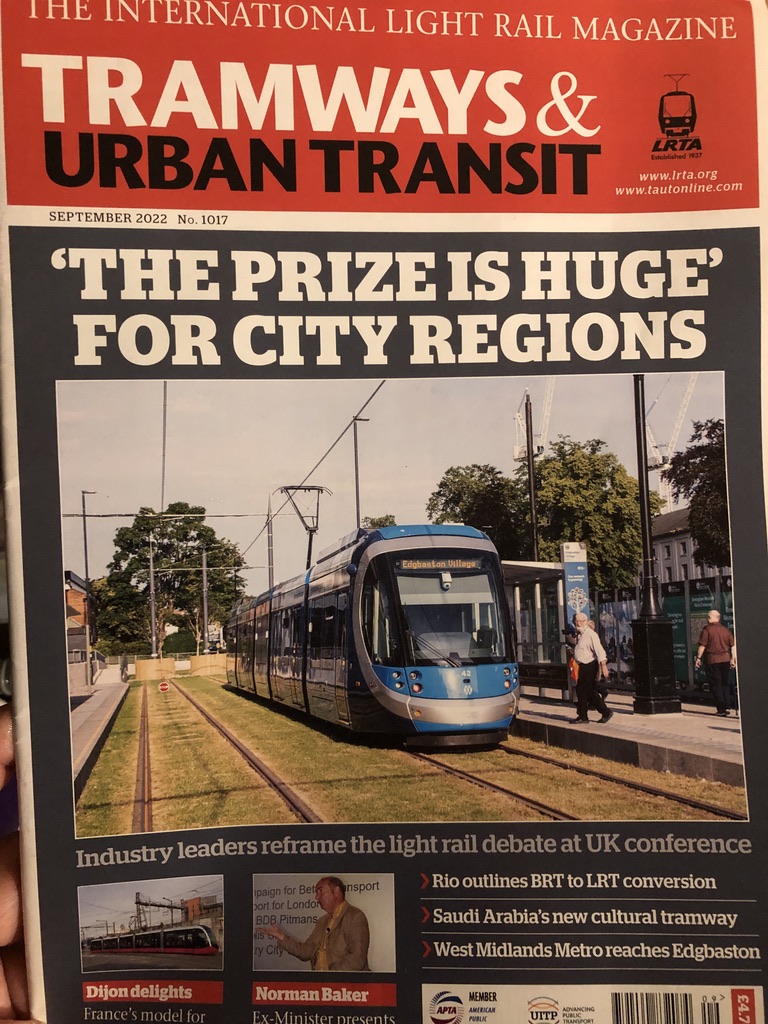

Above – LRTA Magazine (also available in WH Smiths)
Also, if anyone wants to talk light rail in Cambridge, see Rail Future’s Cambridge Meeting on 07 December from 2.30pm here
Above – Rail Future East Anglia
Learning from the French
If you want to look at Dijon in France, see their tourism transport site in English here. See also their public transport and active travel site here.

Above – Dijon Metropolitan Area Mobility
The essential stats for Dijon show its population is similar to that of Cambridge – with that population growth being far more gradual. They have an old but not ancient university that dates back to the 16th Century. Furthermore it has a series of urban extensions which feel similar to what’s proposed for Cambridge. Start looking at where Dijon sits within wider regional government and you’ll fall down an internet wormhole – mindful that France had a major overhaul of internal government in the 2010s – mindful of the presence of historic regions and counties similar to England. Such restructures are inevitably messy affairs!
“Who pays?”
France has a very different system to the UK so one thing to watch out for is the financing mechanisms proposed.
“In France, the Versement Transport is a 0.9% to 2.85% payroll tax which is charged to companies with eleven or more employees. The tax raises 45% of local transit authorities budgets.”

Above – Back on Track (2024) by Create Streets / Britain Remade, p20 / 11(pdf)
“Integrated public transport system? Didn’t John Prescott promise similar back in 1997?”
He did – and I’m surprised more academic studies on why the late Deputy PM failed to deliver what he set out to do in the 1990s.
“It was billed as the biggest ever cash injection to modernise Britain’s crumbling network of roads and railways. But John Prescott’s £180bn 10-year plan to create an “integrated” transport infrastructure was yesterday consigned to the dustbin.”
Andrew Clark, The Guardian, 21 July 2004 (over 2 decades ago)
This was around the time the structures of Whitehall were in a state of flux – the policy areas of transport, housing, and local government going through various name-changes from the late 1990s-mid 2000s.
“The transport secretary, Alistair Darling, abandoned targets set at the high point of New Labour’s optimism of achieving carefully measured increases in travel by rail, bus and bicycle by 2010.”
(Clark 2004)
“What were Prescott’s aims?”
Clark summarises them as:
- Reduce road congestion by 5%
- Increase rail use by 50%
- Raise bus patronage by 10%
- Double the use of light rail
- Triple the number of cycle trips
- Road congestion targets scrapped
- Work towards national road pricing as early as 2014
- Use the proceeds of urban congestion charges to pay for more buses
- Encourage more walking and cycling over the next 20 to 30 years
You can read the full strategy by following the links from the Railways Archive here.
Light rail and rapid transit lines
Page 6 of the White Paper (Prescott/HMGovUK 2000) stated that the Government would fund the construction of “up to 25 new rapid transit lines in major cities and conurbations, more than doubling light rail use”
That caveat of ‘rapid transit line’ was how Cambridge ended up with the guided busway – something opposed by campaigners who wanted to re-open the old Cambridge-St Ives railway.
The promise of light rail
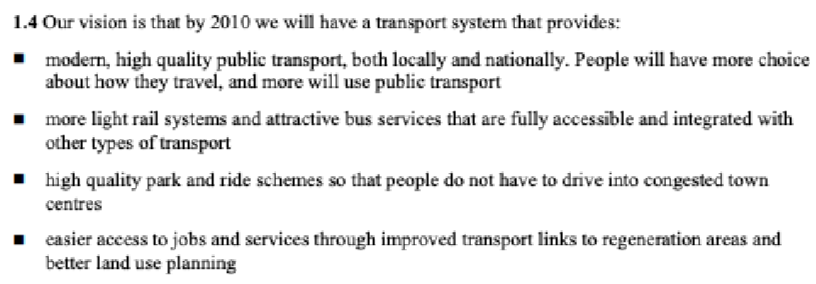
Above – para 1.4 Prescott (2000) – note the commitment for more light rail systems.
However, Cambridge was a very different place to what it is today. For a start its population in the 2001 census was just over 108,000 – a rise from 101,000 in 1991. Today it’s closer to 150,000. That sort of growth must have been hard for policy-makers to imagine. Today, we are a noticeably different city compared to the one I was a teenager in back in the 1990s. It remains to be seen whether policy-makers have learnt the lessons from previous generations.
“Has the guided busway been a success?”
Depends how you define ‘success.’
- Some say it is because of the number of passengers it carries
- Others say it isn’t because of the cost and budget overruns
It’s worth having a browse through this thread. As with the Greater Cambridge Partnership’s now defunct City Access project, it failed to deal with city centre/last mile congestion – something that Cambridge Connect’s proposed tunnel below the city centre would avoid.
There is no one single scheme/transport type that will solve Cambridge’s congestion problems. Furthermore, what’s left of the Greater Cambridge Partnership will not deliver the complete solution that Cambridge needs.
The proposals from the different government departments must demonstrate ‘on the ground co-ordination’ – which is easier said than done
What the Transport Secretary has proposed has to be consistent with what the Minister for Housing and Planning has set out in his ambitions for Cambridge. One of the other challenges is for the Combined Authority because within its existing boundaries, the City of Cambridge only makes up a minority of the population of the county and of the Combined Authority Area. Peterborough is the larger city with a population of over 215,000. Having been through that major expansion throughout the 1970s & 1980s, the lessons learnt from Peterborough are essential ones for Cambridge to learn. Fortunately in 1988 the old Peterborough Development Corporation published a book that did just that – covering the history of the corporation’s work from the 1960s to the end of the 1980s. Have a browse through it here. There are also sixteen copies spread across Cambridgeshire Libraries which you can borrow.
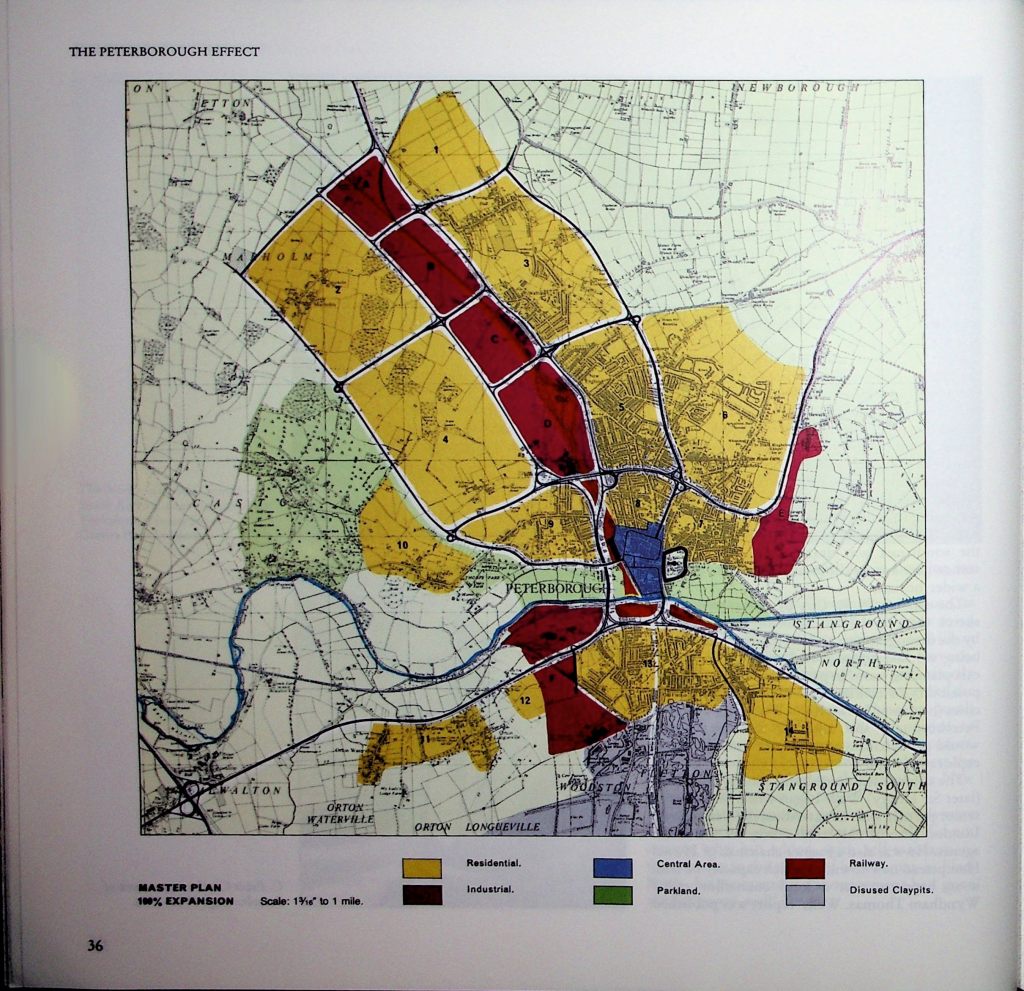
Above – pre-development Peterborough in the 1960s (from Peterborough (1988) p36) how does the 1960s masterplan for Peterborough compare with Peterborough today (below)?
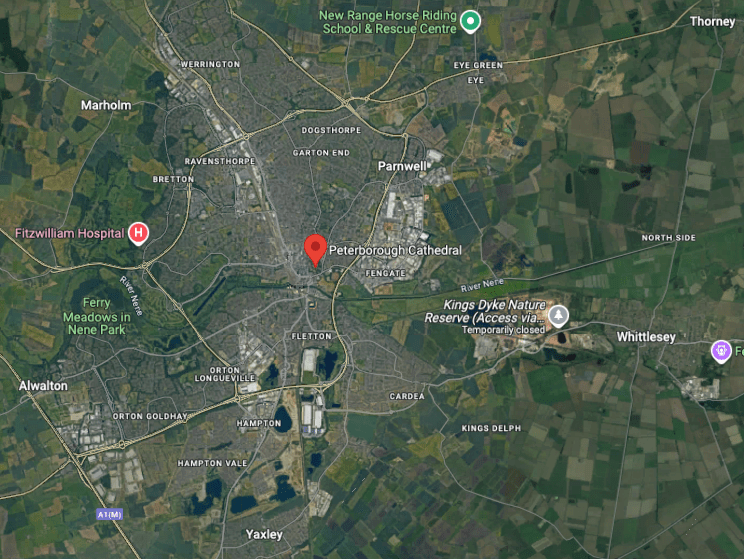
Above – Peterborough from G-Maps here
All of this makes things interesting for looming public questions over the next few weeks – although the Combined Authority’s transport committee and board are not scheduled to meet until mid-January 2025. That said, Thursday’s Full Council of Cambridge City Council could be taking place in a very different policy context compared to the time of blogging this piece.
If you are interested in the longer term future of Cambridge, and on what happens at the local democracy meetings where decisions are made, feel free to:
- Follow me on BSky <- A critical mass of public policy people seem to have moved here (and we could do with more local Cambridge/Cambs people on there!)
- Like my Facebook page
- Consider a small donation to help fund my continued research and reporting on local democracy in and around Cambridge.
Below – The Trials of Democracy workshops continue with a final workshop at the Mill Road Community Centre (Sat 30th Nov) – Both sessions are free.

 The Cambridge Town Owl