
…and have it based on non-fiction books about the world around us that are found in the children’s and young adults sections of bookshops
The idea of a ‘general studies’ course for adults, or a series of informal talks on contemporary local issues was one I got from the old Adult School Union’s annual schemes of work published in the early-mid 20th Century. I’ve pulled out the various civics, democracy, urban planning, and education-related topics and put them into a single document for you to browse here.
Talking to a number of people about all things citizenship education, several people said that the past course books for GCSE Citizenship Studies (feel free to get a cheap second hand one via ABE books – esp the ones that pre-date the EU referendum and tell you about the rights the last Tory government took away from us) were too intense and heavy reading for them. A few have said similar with all things sci-tech – their feeling being that compulsory science and maths to 16 was something to be endured and then forgotten about.
For people who had a horrible time at school and/or who were taught by particularly uninspiring teachers (there may have been very good reasons – such as lack of support and few resources), I can perfectly understand why forgetting anything that reminds them of school is their disposition. Which is one of the reasons why any new lifelong learning college or facility built in an expanding Cambridge has to be a place that does not look like ‘school’ – especially a crumbling one built in the 20th Century! (Or one that has utterly uninspiring architecture and poor design).
It’ll be at least a decade before such a lifelong learning college is built, so what do we do in the meantime? Because Time waits for no one.
I heard it in a children’s story tape during my childhood so it must be true.
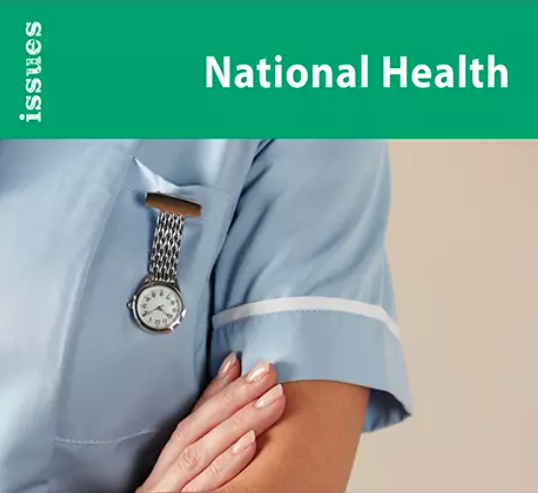
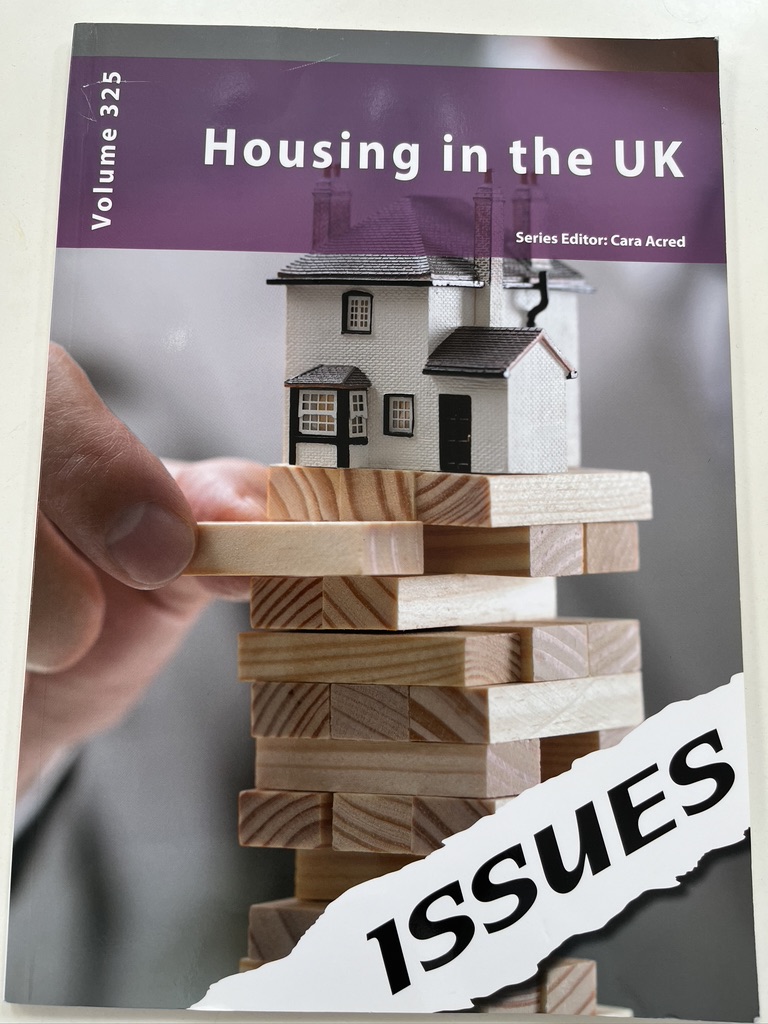

Above – two examples from the Great Shelford-based Independence Educational Publications aimed at discussion groups for young people/teenagers, and a GCSE Citizenship Studies text book
…one reflecting Michael Gove’s changes to the curriculum – one that the new Labour Government is now reviewing and overhauling. (There is a more recent one out from 2021, but it will be interesting to see what the first post-Conservative Citizenship courses aimed at 14-16 and 16-19 year olds contain).
It’s not just the heavy/dry academic stuff though.
Part of the challenge – especially in a city like Cambridge is finding books that inform you about something in a not-heavy-reading way that also don’t have an examination at the end. Or worse, are written with the reader being an examination candidate in mind.


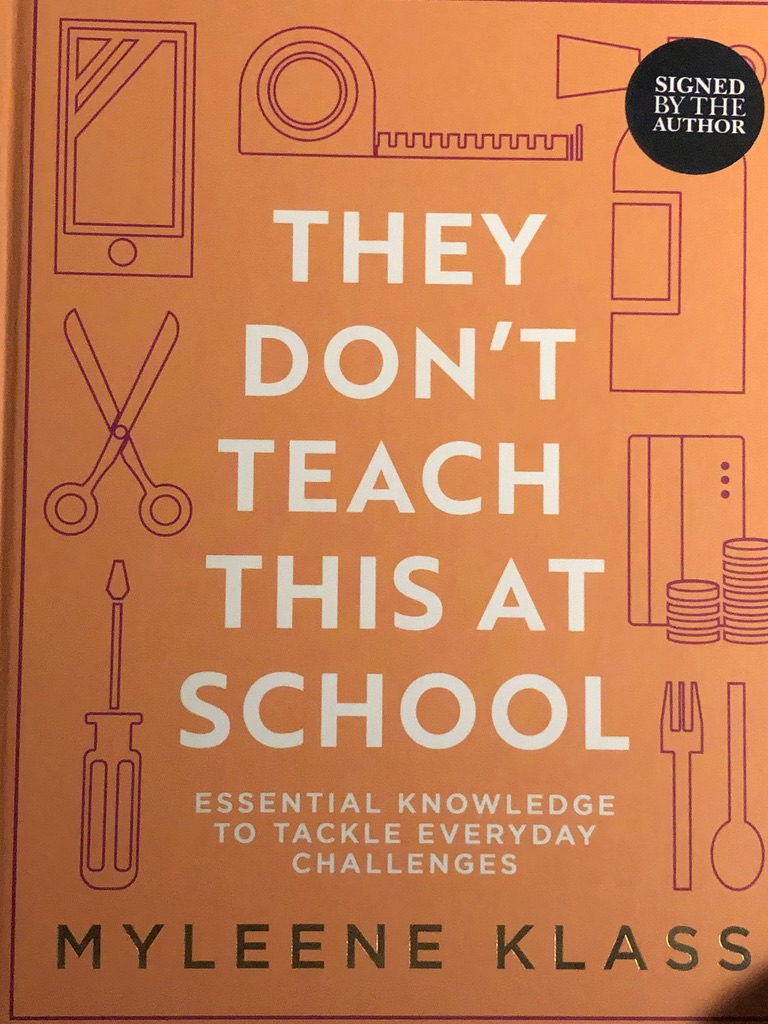
Above – two titles from the excellent Usborne For Beginners series, and Myleene Klass’s book that covers the various essentials that today we’d call ‘Adulting’ (do browse the contents in the ‘read sample’ bit) that most of us 90s kids probably missed out on.


Above – How Everything Works (DK) – very much in the tradition of David Macaulay’s The Way Things Work from the 20th Century. (There is one from the 2020s). Engineering in Plain Sight I spotted in Heffers in Cambridge – think of it as ‘Civil Engineering for beginners’, and Chris Haughton’s History of Information from cave paintings to Artificial Intelligence
It’s the above-three that I think are of particular interest. For a start it takes the party politics and public policy context out of it. We know that the Minister for Housing has big plans, and we know that traffic and public transport is a mess, and that we have a water crisis. But how can a critical mass of residents provide informed and useful feedback to decision-makers when most of us haven’t been taught the first thing about:
- The built environment around us
- The huge changes in communications technologies in the past generation
- Where our ‘stuff’ comes from, and where it goes to
Which makes me wonder whether future public engagement events should be titled:
“Potholes!!!!”
“Now that we’ve got your attention….”
One textbook example of understanding some of the background comes with the installation of communications masts – the locations of which have proved controversial in more than a few areas. (See former councillor Sam Davies in 2021 here). Think of the various metal boxes of assorted colours that seem to be installed in not the most convenient of places that enable things such as live bus times, to traffic lights, to communications infrastructure to function. The same goes for the infrastructure beneath our feet. For example I had no idea that county councils and highways authorities had to pay the full costs that utilities companies incurred when carrying out major road works. It was why the locally famous ‘Dutch Roundabout’ ended up costing *lots more* – because one of the utilities companies late in the day said that the additional work required would cost nearly £1m. Which is why seemingly minor road repairs end up costing lots – because previous governments tabled legislation approved by Parliament to allow this to be the case.
Re-visiting the principle of starting from where people are
‘It begins at home but doesn’t stop there…’ I’ve heard myself say on more than one occasion over the decades.
And maybe that’s the challenge of any sort of outreach or consultation – mindful that we have consultation overload at the moment.
- Consultations on the council’s budget, off-street parking charges, and public toilets
- Cambridgeshire County Council’s budget
- Cambs & Peterboro’ Combined Authority Consultation
- The various large planning applications – locally to me, The Paddocks has returned
…and that’s before we’ve looked at central government’s consultations, the top two being the Integrated Transport Strategy, and the looming Devolution White Paper – at the time of typing there are nearly 200 open consultations or calls for evidence. Note Parliament’s select committees have their own calls for evidence too.
***No one can respond to all of them!***
No one is meant to. What I hope the Devolution White Paper will bring in are far more effective ways of consulting the public so that more people are able to identify the policies that are of interest to them and that directly affect them, and help shape future policy accordingly. Especially at a local level where they have to live with the consequences.
One of the biggest barriers to overcome is the negative impact the Greater Cambridge Partnership has had on civic engagement. More eloquently put by Smarter Cambridge Transport back in 2021, any future organisation post-2030 carrying out major planning and transport consultations will have to deal with a population that will remember how senior transport officers dismissed (repeatedly) the honest attempts at engagement not just from myself but from people far more qualified and competent in various specialist fields (this is Cambridge after all) to build something far better than the inadequate vision that the GCP has found itself with.
It will be interesting to see if improving systems of consultation will be in the Devolution White Paper – which I”m expecting early next week.
Food for thought?
If you are interested in the longer term future of Cambridge, and on what happens at the local democracy meetings where decisions are made, feel free to:
- Follow me on BSky <- A critical mass of public policy people seem to have moved here (and we could do with more local Cambridge/Cambs people on there!)
- Like my Facebook page
- Consider a small donation to help fund my continued research and reporting on local democracy in and around Cambridge.

 The Cambridge Town Owl