
Some of you may have seen the glowing headlines about Cambridge Station’s redevelopment in the headlines today. But behind the headlines is a controversial story that still stirs up strong emotions in some residential communities – and those stories are part of our city’s history just as much as they provide lessons learnt for the future governors, administrators, and custodians of our collective and civic futures (which you can discuss in The Trials of Democracy project coming up in the next month or so)
You can read the Centre for Cities Report here
“This is Brookgate-Bashing again, isn’t it?”
How did you guess?
“It involves Cambridge Station”
Actually, so much has happened since then that this is as much contemporary local history as it is local politics. One of the first lessons for policy makers and decision-makers (Looking at Mr Freeman in particular!) is to gain a strong grounding and understanding in the local history of any area designated as a site for major redevelopment and growth. The reason being that we’ve made too many mistakes collectively in the past, and the world of public policy is absolutely awful in learning from those past mistakes – because so few projects and programmes undertake proper closedown and evaluation processes.
Two of the most controversial redevelopment programmes in Cambridge over the past half-century have involved:
- The Kite / Grafton Centre
- Cambridge Railway Station
The Kite
Only now are we beginning to hear more about the history of The Kite in part through Together Culture’s Let’s Go Fly The Kite programme. In a nutshell, a vibrant community in an economically deprived part of Cambridge that had emerged as a slum (much to the shame of Jesus College who owned the land and allowed the slum to grow!) was removed to make way for what became a large American-style indoor shopping mall served by a large multi-storey car park.
Understandably the local residents that lived there had issues with this, and some of them came up with their own proposals which they published in 1976 – I wrote about them here. The proposals were ignored by the then ruling Conservative group on the council led by the late John Powley, who drove through the proposals for what is now the Grafton Centre. One of his opponents at the time, the late Colin Rosenstiel summarised what happened in 2001 here. The party political result was a catastrophe for the once mighty Cambridge Conservative Party, going from ruling the city council in the late 1970s to having only one city councillor by the late 1990s. To date they have yet to recover anything more than a token presence at The Guildhall.
Cambridge Station
Olly Wainwright covered this in a comprehensive piece in 2017 when the development had significant crime-related problems.
“In 2005 the plans [for the Cambridge Station area redevelopment] were unveiled to breathless coverage in the local paper, with a double-page spread featuring the promised bounty of a “proper transport interchange”, affordable housing, healthcare facilities and a new heritage centre, which was planned to be housed in a majestic old grain silo next to the station.”
Olly Wainwright in The Guardian 13 June 2017
Mr Wainwright goes onto describe what happened next and links to this extended blogpost at the time from prolific blogger and local meeting attender Richard Taylor. Mr Taylor also links to:
- 09 Oct 2008 – Redevelopment of the Cambridge Station Area
- 03 Sep 2008 – Cambridge City Council Development Control Forum minutes
In a nutshell, the firm Ashwells was put into administration during the banking crisis, re-emerging as Brookgate, and was able to negotiate away many of the civic benefits including the new home of the county archive – something county council archivists were seething with rage over in the years that followed.
“In addition, the world famous Cambridgeshire Collection – currently housed within Cambridge Central Library – is also expected to move into the same building and office accommodation for staff who work in the archives, arts, museums and archaeology services of the County Council will also be provided.”
BBC Cambridgeshire 18 Nov 2005
“That’s all ancient history now, isn’t it?”
Two things to note:
On public services and civic functions of the City of Cambridge
The Cambridgeshire County Archives that used to be at Shire Hall and were due to move to the Cambridge Station area are now in Ely. These include all of the records of Cambridge City Council. Therefore, Cambridge, this ‘perfect small city’ as some in the property industry might think it is, is so enfeebled that it cannot afford to hold its own archives within its municipal boundaries.
It’s no good complaining about one firm if the economic and political system would allow any other consortium to do exactly the same thing
Brookgate were named as the preferred bidder for Shire Hall back in 2019 (which went down like an iron brick in heritage and local democracy circles) only to withdraw in 2023 because of the poor outlook in market conditions, so at the moment the site sits in limbo despite my pleas over the years for it to be turned into a proper heritage site and function.
Brookgate successfully appealed to Ministers to build their proposal described as the Great North East Wall of Cambridge by Cambridge Past, Present, and Future on land near Cambridge North Station. You can read the judgement signed off by ministers here that involved overturning the Environment Agency’s concerns over water supply – something that still has not been resolved by the new ministers in the incoming Labour Government, or the water companies.
There’s nothing to suggest any other profit-making property firm would have done anything significantly different given the same set of financial incentives in the present system
Furthermore, when the controversy of Wilton Terrace arose, the failure of an earlier generation of councillors and officers to insist on protecting that building when negotiating the outline planning permission meant that when it came to the reserved matter of that specific part of the site, any refusal by the city council planning committee (despite officer recommendation to approve) was going to be overturned by a planning inspector. Which is what happened. At a cost of a quarter of a million pounds in legal fees. That was the point I realised the lack of education in citizenship, civics, and democracy was a huge barrier in grassroots attempts at improving our city. It still is.
The economic success of the Cambridge Station Area
I’d be a fool to deny the financial success of the station area going by the numbers. If I were an investor living on the other side of the world, I’d be utterly delighted with such returns.

“The redevelopment has shifted the economic geography of the city. Whereas the area
around the station accounted for around 8 per cent of output in Cambridge before
the redevelopment programme, the area now accounts for more than a quarter. Today
nearly 16,000 people work in the area, most of them in the highly productive IT and
professional, scientific, and technical services activities.”
Above – Centre for Cities (2025) p21
Note the big statistical caveat with Cambridge is that the data covers the municipal boundaries last extended in the mid-1930s. That gives some really strange-looking figures such as Oxford and Cambridge having the lowest and third lowest private-to-public sector jobs ratios, at 0.9 and 1.4 respectively. Crawley, being a Surrey town next door to Gatwick Airport has the highest, at 6.5 private sector jobs for every public sector job. (Stats from CfoC (2025) p30).
The creation of a new Greater Cambridge Unitary Authority provides an opportunity to repair some of the damage done to the local heritage sector
Because let’s face it, a county archive centre at Cambridge Railway Station would have been absolutely wonderful. See also the unrealised public art programme by David Cottrell from 2008 which is worth a read.
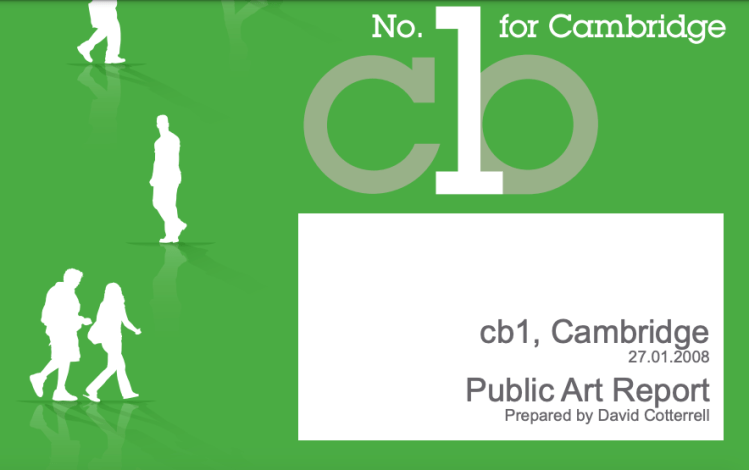
“cb1 will take an unusual stance. As well as funding the delivery of architecture, transport, infrastructure, public realm and artwork, cb1 will function as a centre for the investigation and testing of the issues confronted by the development community. If artists are to be complicit in development, they must also be critical.”
There’s merit for future developers to re-purpose some of the themes in Mr Cottrell’s report and see if they can be applied to new large developments in/around Cambridge.
The CB1 estate is obviously making a lot of money for the investors – and as I have reflected, at a loss to the wider public when the original proposals are compared with what has since been built. The politically-convenient response would be to demand that a special levy be imposed on CB1 because of what happened and because of the money that they are making. But that would never get past central government or parliament, not least because it would set a precedent in allowing ministers of any party to pick and choose who to target.
Instead, the more basic problem of how to fund local government properly so that its civic functions are thriving not struggling, and its arts and culture sectors are blossoming not wilting, and that our sports and leisure sectors are active and not moribund, needs resolving. In particular enabling municipal governments to retain far more of the revenues that they generate while enabling central government to target more precisely and effectively the financial support less affluent parts of the country need. At present, the grants being handed over to Cambridge look awful from the viewpoint of struggling high streets across the rest of the UK. But few people understand what happens to business rates receipts – and in Cambridge’s case, the tiny fraction that the city retains vs the vast majority that is handed over to the Treasury to be redistributed.

Above – Cllr Mike Davey at Cambridge Guildhall, 06 Dec 2023
What would a more socially-just system of business rates look like for a Greater Cambridge Unitary Council, and over how wide a geographical area should that cover?
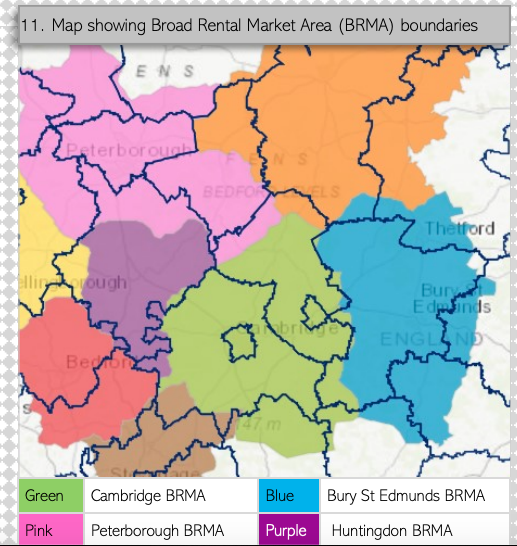

Above – my preference has been for a unitary council that incorporates the surrounding market towns so that locally-raised revenues can be used to help pay for new public transport infrastructure into Cambridge such as Cambridge Connect Light Rail. Furthermore such locally-raised revenues could support the construction of a new heritage centre for Cambridge (ie on the Shire Hall site) as well as new arts and leisure facilities in those surrounding market towns close to new rail/light rail stops so that Cambridge residents have incentives to visit the surrounding towns and villages and prevent them from becoming dormitory settlements for Cambridge’s sci-tech parks. Having the boundaries similar to rental markets and travel-to-work areas also supports that consistency with how people live their lives as well.
Something to think about as and when Ministers publish policy updates on devolution?
If you are interested in the longer term future of Cambridge, and on what happens at the local democracy meetings where decisions are made, feel free to:
- Follow me on BSky <- A critical mass of public policy people seem to have moved here (and we could do with more local Cambridge/Cambs people on there!)
- Like my Facebook page
- Consider a small donation to help fund my continued research and reporting on local democracy in and around Cambridge.

 The Cambridge Town Owl