
A public question coming to a Combined Authority near me?
Probably – if only because Prof Diana Coyle of the Bennett Institute has been writing a lot about it, Andy Haldane of the RSA (formerly of the Bank of England) has been talking a lot about it, and because Rob Fry of the North of the Tyne Combined Authority wrote about it
“What is the role of a Combined Authority in nurturing social capital?”
You can read Mr Fry’s article here. That gives CPCA officers in my part of the country just under a couple of weeks to come up with a response for Mayor Nik Johnson when he chairs the Cambridgeshire & Peterborough Combined Authority Board on 06 Feb 2025 (although I expect they’ll have more substantive issues to discuss). At the same time, it reminds CPCA officers and local councillors about Andy Haldane’s event in Cambridge with the Cambridgeshire Chambers of Commerce on 18 Feb 2025. Given that the CEO of the RSA made such a big splash on declining social capital in a recent speech (I wrote about it here on how it applies to Cambridge) I hope that a greater number of more influential and more important people than me go along to ask him questions. Because otherwise it’s just the crazy bloke who used to turn up to the opening of an envelope who ends up asking questions about how such things apply to the people and communities in the neighbourhood/city of the venue where such events happen.
And one of my big frustrations with Cambridge is that perilously little of the research that happens here is applied to the day-to-day challenges that so many of our city’s and county’s residents face. Which doesn’t seem fair. It’s like the nightmare scenario penned by Prof Jeremy Sanders back in 2014 is coming true.
“At every level, from undergraduate via graduate student, postdoc and sabbatical professor to top executive and world leader, Cambridge will be one of the key venues to come and be seen, and to rub shoulders with the global intellectual elite. If it sounds like an exclusive conference venue, then that may be about right.”
Sanders, J (2014) in Cambridge 2065, p48
That’s not my vision of Cambridge in 2065 and I really hope it’s not one of the majority of our city either! Because what is the price, or what value does the social capital of the people who ensure city actually functions? (And how different is it to the academic bubble?) The reason why I ask is because of two webinars on social capital on the same day:
- The International Social Capital Association
- The UCL / University of Sydney study on placing social connection at the heart of social policy
On the first one, the end of the event description states: “This presentation will share key findings from the pilot study and situate them within broader research on collaborative work in academia.” which is all very well given that the research is on social capital in academia – and that Cambridge isn’t the case study. But in a city so polarised not just on town-gown, but on wealth and on so many other lines, our institutions have to go beyond academic boundaries. Especially for a city-based university (despite the best efforts of Eddington).
It’s also worth noting that Cambridge Ahead’s Young Advisers’ Committee produced their own report on social capital in a workplace context. This too is worth a read because it describes the sort of activities that people working in well-paid and/or secure office environments might be familiar with. Now ask yourselves if those sorts of training sessions and corporate learning activities are available for those working in minimum wage jobs and/or on zero hour contracts? Or for those who can only find work via agencies and thus who lack the basic legal protections that come with a permanent contract. What price their social capital?
The paper for the UCL / Sydney study is here
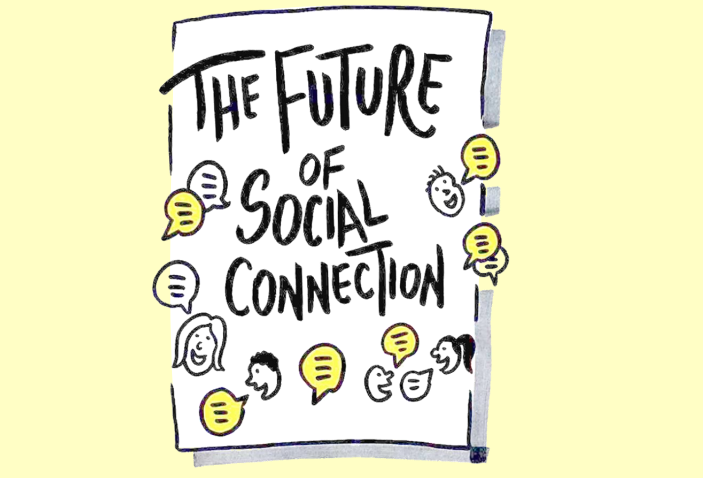
Above – Placing Social Connection at the Heart of Public Policy in the United Kingdom and Australia (2024) UCL/Sydney
And to credit all of the authors: Bower, Marlee; Smout, Scarlett; Johnson, Sonia; Costello, anthony; Andres, Lauren; Donohoe-Bales, Amarina; Leach, Matt; Pellicano, Liz; Hiller, Rachel; Fonagy, Peter; Ypsilanti, Antonia; Kumar, Sarabajaya; Scott, Lauren; Pearson, Sarah; Hobson, Harry; Barclay, David; Harding, Sarah; Teesson, Lily; Baggaley, James; Stears, Marc; Teesson, Maree;
Because public policy by its very nature is a complex thing and the concept of having one big name credited with the work doesn’t seem to fit in what could become a more collaborative age assuming the bad guys don’t win. (It’s one of the reasons as a historian I like browsing through old documents from the past where people, at the end of a cataclysm in humanity’s history have set out their visions for the future – such as in the Labour Speakers Handbook of 1923).
Loneliness and social capital
The reason why I’m so interested in this emerging era of academic and public policy research is because my personal struggle against loneliness has, in hindsight been the story of my life. I’ve even said to myself that if I ever achieved anything in life the title of my ghost-written autobiography should be titled: “Loneliness in hindsight: reflections of a broken dreamer”. I only came up with that one after an acquaintance from the Queen Edith’s Food Hub spotted that I might have ADHD / be ND+. (Having *really intense* daydreams being one of many symptoms – sometimes comparing myself to Walter Mitty crossed with Henry’s Cat – only with less courage than either of them.
That loneliness became stark during my later civil service years when I found I was doing nothing else but working – spending weekends catching up on sleep, only to find that on Sunday evening I had daily 3 hour plus round trips to do on public transport. This was not living. It was one of the reasons why I left the civil service, and is also one of the reasons why I think central government and large London-based institutions can be so dysfunctional: the very long commutes people have to do are extremely unhealthy as I found out the hard way.
“What did the research say?”
“Together they reflected on the best available academic and community evidence, and collaboratively charted innovative, impactful and sustainable strategies to combat loneliness strengthen social connection into the future.”
Which could be interesting.
Having cited the context and summarised their six policy interventions, the authors state:
“More than any single policy solution, the discussion highlighted the need to recongise
loneliness and social connection as a serious political and health priority in both our
countries national discourse.”
Social Connection Report (2024) p7
If it’s not a serious political or health priority, little will get done about it. So, who is the senior political/policy-making champion, and who is the senior management champion?
To list those six points:
- “Build and invest in the physical, social and cultural infrastructure necessary to
foster social connection in communities.” – This is a town planning issue - “Improve the evidence-based for understanding loneliness and social isolation.” What are the evidence bases and data sets you collect? Which are the ones you should be collecting but are not? (This came up in the adult education context within the CPCA recently)
- “The local neighbourhood is the most impactful level at which to intervene on entrenched issues” – Which means you cannot manage it from Whitehall, or the Huntingdon HQ of the Combined Authority either.
- “Tackling loneliness requires thinking outside of the box”. Even though our education system is all about building boxes to put people into! Actually, it means taking risks and being prepared to deal with failure – of those policies and actions not delivering the outcomes you’d hoped. That requires significant and strong political leadership.
- “Significant investment from governments and non-government sectors in
programmes that facilitate social cohesion…” That also means taking on those policy areas with very strong vested interests that do the opposite. The highest profile being faith schools and private education. - “Target loneliness and social connection through individual and collective
solutions.” That means working with people to come up not just with their own solutions for themselves, but also contributing towards the wider set of shared solutions precisely because they have the insights that policy-makers may not have.
What do I mean by that last point?
One thing I found working in Whitehall and in a public policy environment in my 20s was that the environment was incredibly sociable.
Superficially.
And if you went to the right schools and the right universities, your network was all but set up for you. Furthermore on the civil service fast stream – which I got onto via the in-service route, we were encouraged to network. It was only later that I realised how alienating this was not just for me but for anyone coming to it from a background unfamiliar with that lifestyle.
Now look at that in the context of research published a few years in The Lancet on lonelygenic environments which I wrote about here.
Ironically I found my public sector niche in what became the UKGovCamp collective (https://www.ukgovcamp.com/) not least because their values were about the collective good of improving public services rather than this graduate programme that was a ‘fast stream’ for hand-picked individuals to go into the senior civil service. Inevitably that caused huge resentment for rank-and-file civil servants to the extent that their union the PCS Union (of which I remained a member throughout my civil service years) voted in favour of abolishing that graduate stream – the only part protected from George Osborne’s austerity.
A research project: UKGovCamp vs the Civil Service Fast Stream
If there are any public policy / MPA researchers out there, a comparative study of the UKGovCamp collective vs the Civil Service Fast Stream Network would be a really interesting piece of research – not least on the values of the two different groups and to what extent the two overlap. Because in my experience, the values of the two groups were noticeably difference back in 2010. How do things look in 2025?
At a Combined Authority level
Mr Fry’s article inevitably mentioned the various buzzwords and phrases of opportunities, capacity-building, and participation. He had to because of the audience he was speaking to. The problem is outside of it, it can be meaningless. Not least because at a personal level I’m not seeing the opportunities for people who don’t normally ‘do politics’. I’ve spent the last decade and a half watching the opposite of capacity building, and as I found out with the most recent planning application for a sci-tech site in my neighbourhood, participation counted for absolutely f–k all. Not just ‘turning up for an event’ participation, but extended research and follow-through participation. That’s why former Councillor Sam Davies MBE left Cambridge altogether. If you think that driving out people of the calibre of Sam Davies is a price worth paying for Cambridge growth and you think that growth will be successful in the long term, I’ve got some very expensive magic beans to sell you.
A high level of cynicism and the lack of trust in institutions is where we’re starting from
And if somewhere like Cambridge is going to be successful in reversing its declining social capital, it’s going to mean some very uncomfortable conversations and some very difficult changes to make – for the most influential, wealthiest, and most affluent in our city. And they won’t like it – and may well resist it. Because the financial incentives for a number of institutions to trade on and market the exclusivity of Cambridge are far greater than the softer social capital benefits gained from alternative approaches.
Which is also why the handbook Mr Fry linked to in his blog makes for interesting browsing

Above – the Bridge Builders’ Handbook
One thing that has troubled me ever since I found out the civil service was a thing via the adverts section of the Big Issue Magazine in the Year 2000 somewhere in Brighton, was how excluded from policy-making conversations the general public were.
For example:
***Bernard, what happens when we have to decide what goes where having decided that Cambridge must expand?***
Above – Yes Prime Minister vs Regional Government
I saw in my civil service days how a select few of the public might be involved in one-off events, but not throughout the processes where they were provided with the means of learning about and understanding the processes (and were paid for their time and local knowledge), and certainly not involved all of the way through.
What would the results be if all of those discussion workshops and policy-solution-storming events involved people predominantly from less-affluent backgrounds, and where the academics, researchers and consultants who normally facilitate these things were actually active participants with a stake in the final outcomes?
This is something we really should try in Cambridge because the geographical distances between the most and the least affluent communities are not huge. It’s a different set of barriers that mean we live separate/parallel lives in the same city. I should know because I lived it and grew up with it in my childhood. I could not find the words to describe my emotions when one of my friends from school took me into the Cambridge College that he had become a member of. The scenes walking across the courtyards and rooftop passages at night are ones I’ll never forget.
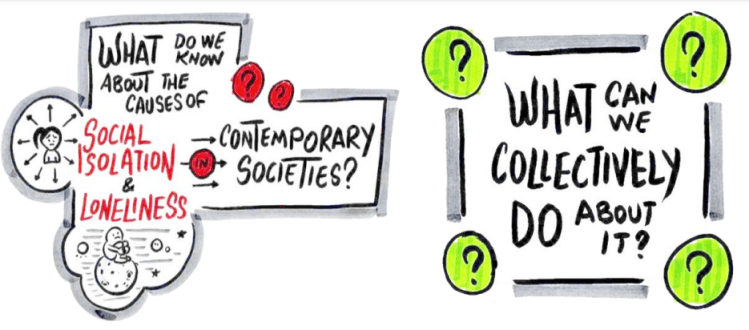
Above – Social Connections (2024) p10
Now let’s go back to the Cambridgeshire and Peterborough Combined Authority’s Skills and Employment Committee of Monday 20th Jan 2025
Have a listen to my public question here, and the response from officers that followed.
The text of my question:
“What conversations has the CPCA had with the large sci-tech developers and land owners regarding establishing lifelong learning facilities on their sites? Most recently I raised this with the Cambridge Biomedical Campus at one of their public meetings in 2024 following the changes to their 2050 strategy. I find it astonishing that there is no community or lifelong learning facility open and accessible to adults looking to switch careers into sectors where Cambridge Science Park and CBC firms regularly complain about skills shortages.”
Above – CPCA 20 Jan 2025 S&E Cttee, item 4
This question was primarily about two things:
- Getting more employers to fund the cost of retraining adults to fill the skills gaps they they have been complaining about for longer than I can remember
- Creating new institutions that Cambridge does not have that can provide for non-vocational, leisure and general interest courses/workshops within easy access of employees and residents – thus generating and building social capital
Was there anything in the officer’s response that hinted at the two, or did they, to use the phrase, ‘stay inside the box’ and focus on what funding the Combined Authority had been allocated by minsters, the conditions of that funding, and the policies & strategies that had been voted through by the committee?
That for me was a textbook example of an institution staying within the safety of the box, of not wanting to engage with the substance of the issue let alone the content of the question.
I have taken this as far as I reasonably can – it’s up to others to step up and take this further
Given that:
- The Housing Minister has said he wants Cambridge to expand in at least one direction
- The Combined Authority and local councils in Cambridgeshire have stated they support the building of a new Cambridge East Station as part of the East West Rail project
- That Cambridgeshire continues to have a chronic skills problem combined with declining social capital following 15 years of austerity
- Cambridge’s historic centre is beyond its capacity to fulfil its historic functions of
- City, district, and regional centre for commerce (established when we got our first Borough Charter over 800 years ago)
- A centre for learning for people from all over the world
- A major tourist attraction
- A home that at the last count over 145,000 of us live in
- We have an growing and an ageing population whose needs cannot be met by our existing infrastructure…
Note that the airport redevelopment plans are starting from scratch as well.
As I’ve repeatedly called for, a new urban centre could be built around a new civic square (“New Parker’s Piece” if you like – or would that confuse people? Call it Sir Michael’s Piece after Sir Mike Marshall?) and have the new station built to a very different architectural vernacular – like nothing that’s been built in the past 100 years in Cambridge. (Which means they have to build something that is beautiful and has a ***Wow!*** factor!) where the passengers exit the station to see:
- A new grand city hall in front of them, bathed in sunshine, for a new unitary council and a centre of local and regional government
- A new lifelong learning centre to the left of them (one that can spill over a covered Barnwell Road and onto Coldham’s Common – large green open space behind
- A new large concert hall to the right – which extends back into a new retail and entertainments quarter away from residential properties.
Below: Can we have a new city hall like this?
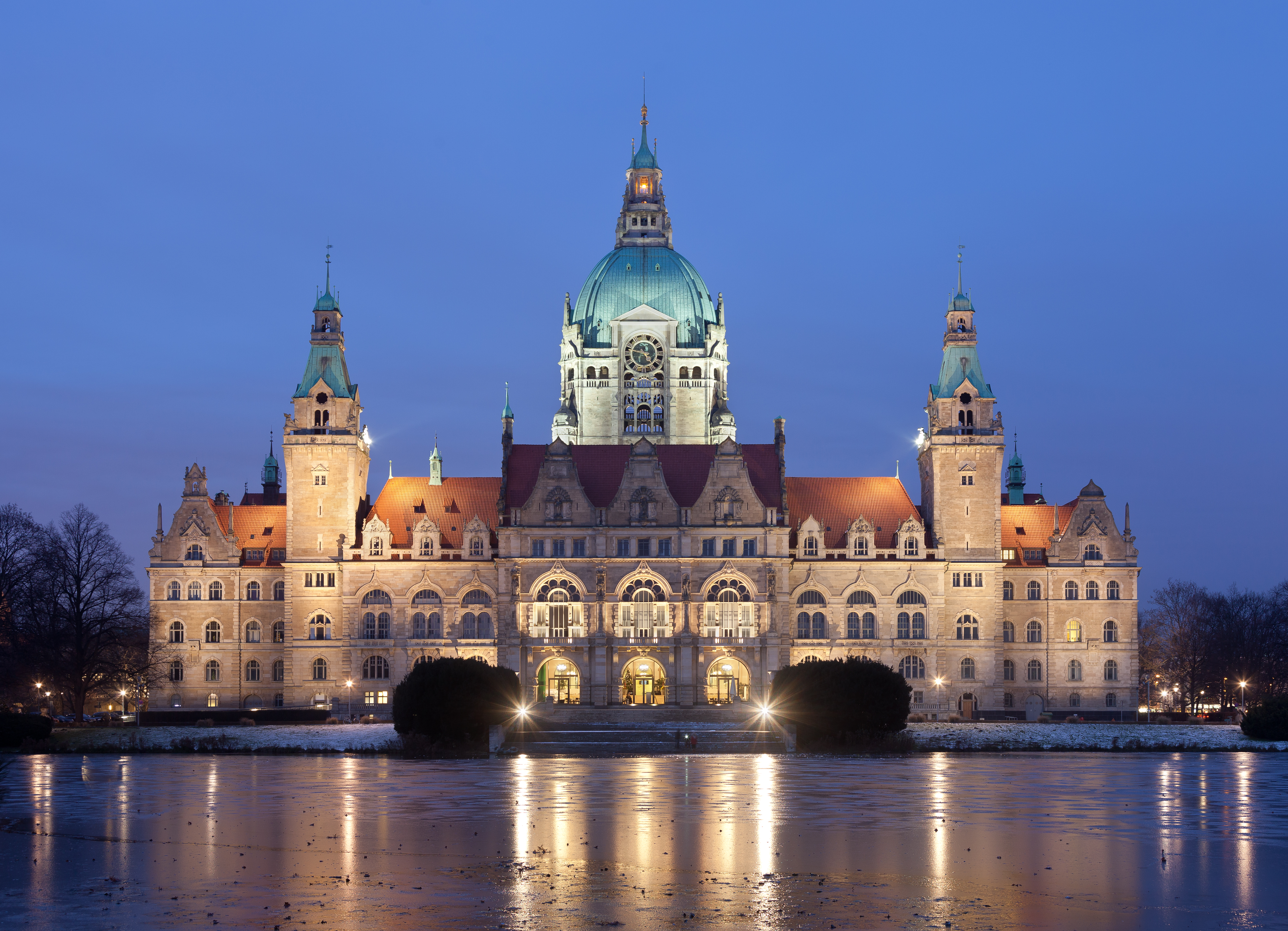
Above – Hanover New Town Hall (circa 1913) – something similar to this would work for me – imagine stepping out of a railway station onto the equivalent of Parker’s Piece with a building like this on the opposite side, and with a lifelong learning college on the left side and a new large concert hall on the right hand side.
History tells us there’s no pleasing everyone.

Had we got Peck and Stephens’ design built in full (Commissioned by the Father of Modern Cambridge, Charles Henry Cooper – who wrote the history of our town up to his death in the 1850s), we might not be concerned about designs!

Above – Peck and Stephens – Cambridge Guildhall in The Builder, 14 Jan 1860
The additional concept I’d bring in for each of the four civic buildings is a theme of ornate twin towers at the front for each of them. Ones tall enough so that passengers on public transport and the roads can see them from a distance Addenbrooke’s Chimney style (which has its own twin sets of three chimney pots). Why?
Because the developments in the 21st Century have created a series of bland, dull, boring bulky masses to the skyline that were not there before – with the exception of Marshall’s big airport hangar and Addenbrooke’s Hospital – both of which were central government decisions. Therefore let’s break up that bulk and remind people of what pioneering town planner Thomas Sharp called the dreaming spires and teeming towers of Cambridge back in 1963 – but with a nicer update.
If you are interested in the longer term future of Cambridge, and on what happens at the local democracy meetings where decisions are made, feel free to:
- Follow me on BSky <- A critical mass of public policy people seem to have moved here (and we could do with more local Cambridge/Cambs people on there!)
- Like my Facebook page
- Consider a small donation to help fund my continued research and reporting on local democracy in and around Cambridge.
On tackling loneliness? Opening a new city orchestra and community music school for adults like the Mary Ward Centre in London could go a long way – especially if it was located close to a major public transport interchange.
 The Cambridge Town Owl