
Treasury Ministers should have learnt by now that this issue is not going away. So who are the individuals who make the final call?
Image – The Trials of Democracy is back this Saturday outside The Guildhall on 08 Feb
Their Lordships returned to the issue of Local Government Finance and replacing council tax with something more progressive – have a watch of the video here and ask yourself if it sounds like the Minister is reading out a series of ‘lines to take’ in response, or whether she really believes in what she is stating as Government policy on local government funding.
“Local government finance? That old chestnut…”
It’s something that pops up every now and again

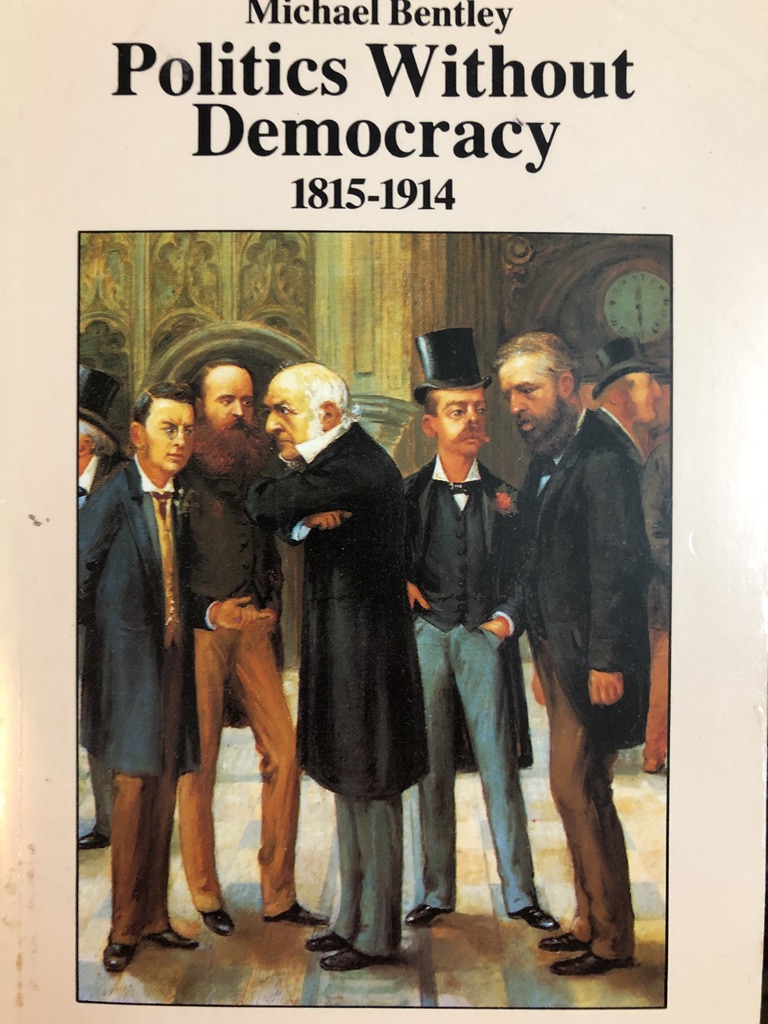
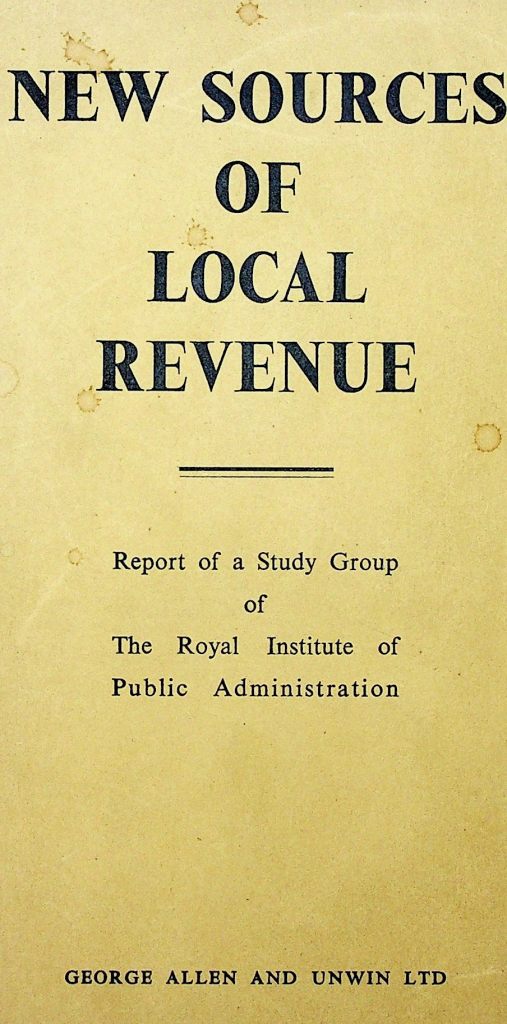
…and its related to the devolution of power – which also comes back every so often. The problem being trying to identify suitable revenue streams that councils can tap into that The Treasury won’t veto. In terms of specific options, a local income tax was examined by the IFS in 1991 here, and examined by the Joseph Rowntree Foundation in 1992 here.
The Treasury as ‘The Blob’
It’s as if HMT is this big vacuum where all interesting ideas in politics go to die. The result is some really perverse incentives leading to catastrophic consequences to get round a problem that could easily be solved if there was the Political will to do so. The tone of voice from the Minister Baroness Taylor of Stevenage speaks volumes. It feels like she is reading the text off of a script rather than speaking from the heart with the exceptions of the party-political jabs to Tory peers who had 14 years in government to sort this out. And as we saw with Pickles and the Audit Commission, they only made things worse, compounding the errors of austerity.
As a result, local councils have compensated for all of this by a series of destructive policies including:
- Selling off much-needed community assets that have destroyed social capital – something that the former Chief Economist of the Bank of England has said was a devastating move to try and balance the books
- Borrowing huge sums at low rates from the Public Works Loan Board to invest in property – something the sector has little experience of in terms of investing to generate a commercial return, in order to gain revenue streams independent of The Treasury. Hence Thurrock getting into trouble over a solar farm. £1.5bn of trouble
- Cutting back on essential facilities to adding what seem like small costs to community services, but ones which can be the difference between participation and non-participation
“Part of me wonders whether the Cambridge& people should include a story about meaningful devolution of taxation and spending powers to a democratically empowered municipal council that governs Cambridge.”
Looks like the Minister’s response to my query in this recent blogpost was negative
Devolving tax and spend powers were also an issue for the previous Local Government Secretary
Have a listen to Michael Gove to the Institute for Government here.
Furthermore, the Mayor of Tees Valley also identified the continued reluctance of The Treasury to devolve tax and spend powers to Combined Authority Mayors here.
Cambridge Ahead’s Dan Thorp also mentioned the need for such devolved powers at last week’s event with the Bennett Institute that I wrote about here. And that followed on from an earlier publication about productivity, devolution, and democracy by the Productivity Institute here.
Interestingly, few have mentioned how utterly draining the process is of having to go through central government to get the most minuscule of support to get much done at a local level. Few have spotted how much of a process inefficiency such convoluted systems are. What would be the impact of removing many of those systems that currently require the involvement of civil servants and ministers, only for The Treasury to say: “No!”?
This is something that the House of Commons Treasury Committee should examine – the role of The Treasury as a blocker and as a structural barrier and generator of inefficient processes within local decision-making functions. What would the impact have been for Thurrock if it were able to generate more of its revenue from wider revenue bases? (What would it look like if a proportion of vehicle excise duty and fuel-related duties were automatically devolved to highways authorities on the basis of things like number of cars registered to addresses in a local authority area, or sales of motor fuel again within a geographical area? (The only restriction being that the revenues had to be spent either on maintenance of roads and associated infrastructure, or on public transport infrastructure and services that *reduced* the dependency on the motor car and encouraged alternatives – such as constructing new generations of cyclepaths and active travelways without waiting for a Whitehall grant/funding pot to become available.
Imagine the future of your city. What things stop this from happening? What changes to the law are needed to remove existing barriers?
Such was the title of the blogpost here
It’s hard to do so having seen the vice-like grip the Treasury has on Cambridge. At what point do we realise that doing the same thing over and over again is not going to solve chronic problems that have been with us for decades?

Progress update half a century later?
Dr David Cleevely CBE wrote this post referring back to previous growth policies and initiatives from a previous generation, against which 55 responses have been posted. What are the lessons from last time around? Note at the same time that his is but one of many visions of the future of Cambridge – and was included in the 2014 publication imagining Cambridge in 2065 with visions ranging from minimal growth to ‘nothing in the way’ growth to ‘turning Cambridge into a ‘Monaco of the Fens’ where rich and beautiful people rubbed shoulders and made small talk with the global intellectual elite. No, that’s not my vision of the future either, and I think the former Chief Economist at the Bank of England, now CEO of the RSA, might have something to say with his social capital hat on.
Maybe that’s one of the lines of pressure to put onto the Treasury – that their insistence on holding a tight grip on tax and spend policies is having a devastating impact on levels of social capital. Not least because the easiest things to cut back on from the perspective of a Whitehall spreadsheet are the ones that can have the most devastating impacts on people and communities. From outsourcing to a corporate provider on worse terms and conditions for workers through to increasing fees on a service that makes it unaffordable for the very people it’s meant to help.
In terms of the future of Cambridge and dealing with our chronic inequalities, I was talking to a longstanding acquaintance who I used to work with at the local supermarket back in the 1990s. She was only recently married then, and is a grandmother now. She told me how so many of the freely-provided facilities are now being charged for, creating added expenses for people on low incomes, or additional tasks (registering for things – extra bureaucracy – and for what benefit?), through to the pricing out of economic functions that support working class communities in our city. Again, who wants Cambridge to become Monaco-by-Fens where people on low incomes have to be shuttled in from outside to ‘service’ the rich in the city? That doesn’t sound like a city to me at all.
“People should be able to improve their life outcomes, participate in local action and become more socially mobile whilst remaining working class.”
Above – quoting Steph Riches from New Local back in 2021 here
Furthermore, Cambridge has been losing free events and community events hand-over-fist of late. And Treasury’s vice-like grip on local council finances won’t allow the city to tax the wealth we are continually told is generated here. If so little of what’s generated her gets spent here to improve the livelihoods of those that live here, what’s the point on hosting the economic functions here?
Food for thought?
If you are interested in the longer term future of Cambridge, and on what happens at the local democracy meetings where decisions are made, feel free to:
- Follow me on BSky <- A critical mass of public policy people seem to have moved here
- Like my Facebook page
- Consider a small donation to help fund my continued research and reporting on local democracy in and around Cambridge.
 The Cambridge Town Owl