
“Party funding and foreign interference in UK elections be examined by Housing, Communities and Local Government Committee”
You can see the details and watch the meeting back here.
Above – opening the debate the former Lib Dem MP Duncan Hames, now of Transparency International UK, set out how compromised the UK’s democratic structures, systems, and processes were.
If you’re really interested in strengthening the UK’s democracy it’s worth listening to the whole of the select committee hearing, and then challenging yourself to:
- Undertaking one small one-off action as a result of listening to what the witnesses giving evidence said
- Committing to one small behaviour change.
In my case on the latter, I’m keeping it *very simple* – saying to people that every fortnight on a Sunday afternoon I’ll be in the same place at the same time for anyone who wants to talk about the future of where they live. The next gatherings coming up:
- Sunday 09 Feb 2025 at The Rock Pub, Cherry Hinton Road, Cambridge, from 2.30pm – 4.00pm
- Sunday 23 Feb 2025 – as above
And for those of you who can only make evenings:
We’ve had a few already, and so far, so good. One of them might even result in a hustings for the up-coming county council and mayoral elections we have here. But my premise is to start small – hence the initial capacity is only six people. The idea being the concept is simple enough for other people to copy in their neighbourhood without having to involve me. I’m not trying to be a saviour or a leader. Just creating the space and atmosphere where people in close residential proximity can find each other, talk to each other, learn something from each other, and see what happens afterwards without feeling the need to feel somehow ‘responsible’ for it. In anycase, what I’m doing is not new. Rather, it follows a long historical tradition:
“It should be easy to identify what a coffeehouse was at the dawn of the eighteenth century: a place where people gathered together to drink coffee, learn about the news of the day, and perhaps to meet with other local residents and discuss matters of mutual concern.”
Brian Cowan (2005) in The Social Life of Coffee, Yale, p92
Only in 1700s Cambridge we didn’t have the distractions of television or the internet. Furthermore, local cafes, bars, and restaurants are still recovering from the impact of the lockdowns. Combine that with the loneliness epidemic and the decline in social capital along with the implosion of so many online communities following the policy changes within big social media companies, sometimes you have to go back to tried and tested ways, even though you know it’s way out of your comfort zone.
Wealth inequality risks triggering ‘societal collapse’ within next decade, report [from King’s College London] finds
If there’s any city on the planet that should be concerned about this, it’s Cambridge the Mothership. See the link to the report here.
“Peter Turchin collates historical evidence to argue that growing poverty, combined with wealth inequality and “elite overproduction” – where too many people compete for too few top jobs or positions in society º tends to result in societal collapse in the absence of determined action to avert it.”
Identifying and mitigating the risks of wealth inequality in the UK (2025) KCL
The structures and systems that create and sustain the inequalities we experience today reflect why I find so many of the academic reports on this subject so frustrating. Ditto the pilot schemes or one-off projects – such as the rightly-praised Marmalade Lane in Cambridge, which benefited in part from some unique circumstances that the existence of, and activities of huge land speculation in and around cities like Cambridge make it impossible for the public to live in affordable housing whether owner-occupied via a mortgage or long term private rent. The changing of land ownership all too often increases the per-unit/area price so that by the time a developer who wants to build on the land, the cost of acquisition is so high that the cost inevitably gets passed onto the end buyer.
What also stokes further anger are the social media memes and adverts depicting wealthy property owners living lives of luxury and talking about other people paying the loan repayments secured on the property via rental payments, resulting in someone else owning the asset, and leaving the renter with nothing. As we have seen with various riots and civil disturbances all over the place in recent decades, that thin blue line can look very, very fragile indeed.
If we are to make our communities stronger and more resilient, we have to look at some of the big economic and financial structures underpinning the existing relationships. Note that these won’t be easy to undo at all. Look what happened to the previous Labour leader when he and his supporters tried doing that. It’s easy to forget that back in 2017, had the campaign (one of the worst I had experienced as I wrote at the time), lasted for another two weeks, history could have taken a very different turn.
“Yet the nature of the campaigns and hustings in both South Cambridgeshire and South East Cambridgeshire show that there is a demand from residents to be more involved in politics.”
A dragon’s best friend, 12 June 2017
Above – if someone had said to me at that time that the next but one general election would turn out the way it did…exactly!
Yet such are the changes that are needed – and across so many different policy areas, that it is very difficult to keep up with it all. Hence at a local level I’m coming round to the viewpoint that rather than trying to be all things to all people, the Resilience Web model enabling individuals to find out about, and focus on what they’ are good at and/or want to do, while knowing the other issues are all covered, is a better direction of travel. Otherwise you end up like me – dealing with activist burnout and all sorts of other burnouts too.
Reading up on things that won’t frighten the [select avian creature of your choice]
I managed to give away more second-hand books on citizenship and democracy – I find the older books more interesting than the newer ones because for older generations, mass democratic politics under universal equal suffrage was still a relatively new phenomenon – here I’m referring to books published in the early-mid 20th Century. I.e. where there was a critical mass of the public who could remember what it was like not having the vote.

Above – The Struggle for Democracy (1944) p35
How many people could name the five giants, the report that they were identified in, and what progress has been made against them since? At the same time, how do you share that story of The Beveridge Report in a manner that does not involve the learners learning to resent it? I.e in the very special way that revising for an examination you don’t want to sit, having been taught it by a dull and boring teacher over an extended period of time seems to do for generations of us at school? No, I still have not forgiven my English literature teachers at school in the 1990s! (One of the things I’m finding as I learn more about ADHD and all things being ND+ is what things can trigger explosions of internal rage that sends me from 0-90mph in a flash).
Had we been compelled to study some of the books on democracy, I can imagine how frustrated some people might have become when compared to the more visually-engaging books on citizenship in the early 21st Century, a number of which you can browse here for a short period for free. Compare those glossy numbers to:
- Adult education for democracy (1944)
- Is Britain a democracy? (1945)
- Democracy in the dock (1945)
- You and the state (1949) ft Ralph Miliband – David and Ed’s dad
To strengthen democracy, you don’t have to resort to sitting people in front of a teacher and have them talk politics at you
You only have to look at the recent high profile public inquiries and the subject specialists that were both hauled before it and also doing the cross-examining. Many of those were not politicians or even active in party politics, but what they were doing was carrying out some of the essential functions of a democratic society of holding power to account.
Let’s take one of the most important yet most loathed of subjects: Maths
Given that the education system has been long overhauled since I left school in the 1990s (and is about to be overhauled again – and not before time), I bought a cheapo second-hand copy of AQA’s Level 3 Maths’ textbook, sample pages of which you can browse here
When I was doing A-level maths, hardly any of the case studies had any real world relevance to the lives that we were living. In hindsight 18 years of austerity under Thatcher and Major’s Governments had starved the system of what should have been inspiring content and also of too many inspiring teachers who quite understandably then as now did not want to work under such terms and conditions.
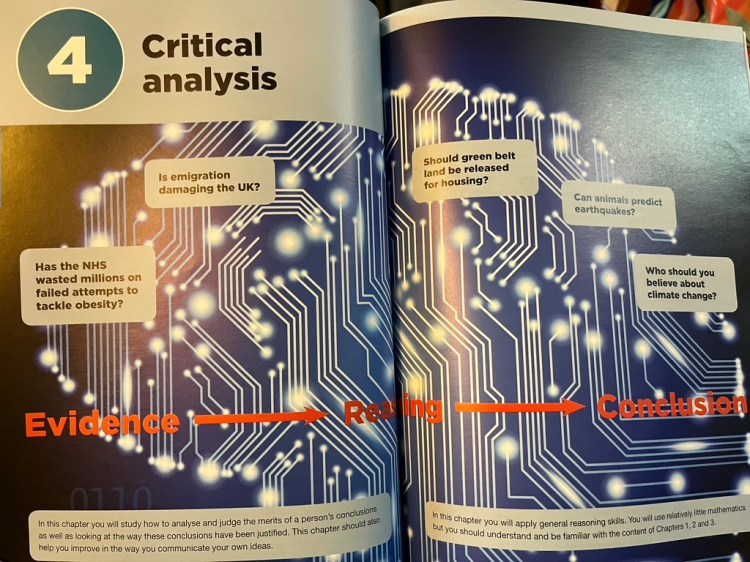
Above – questions like these would have been seen as far too Political for previous governments.
And yet when we browse through the contents of what you might call a post-GCSE / pre-A-level maths course, we find a host of things that are essential to critically analysing politics and current affairs today.
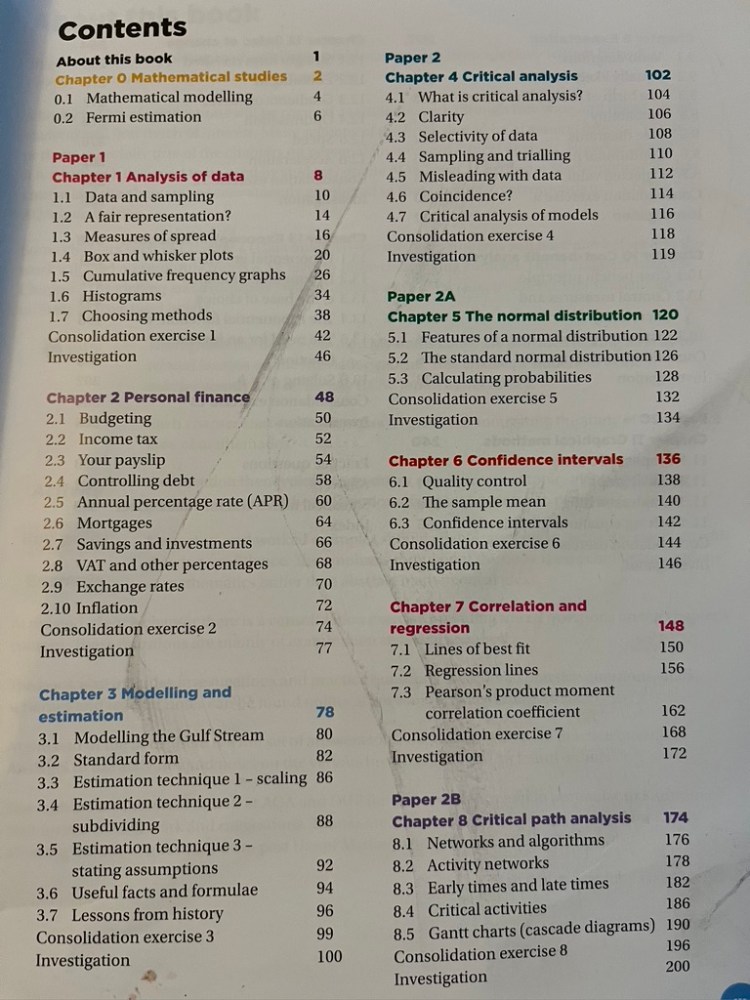
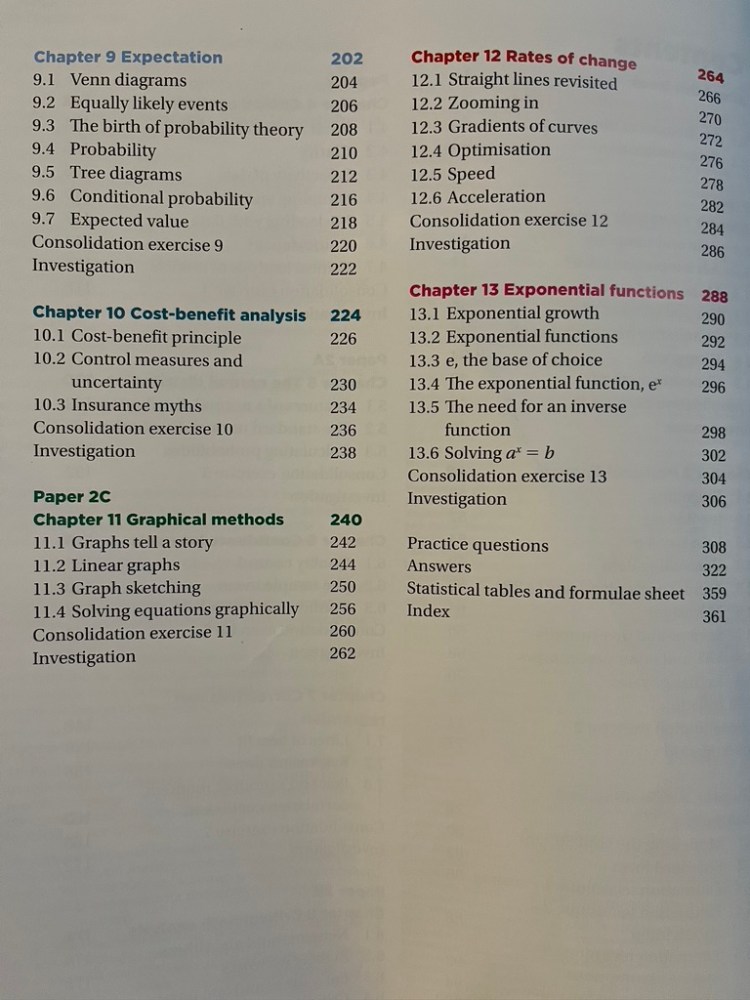
Above – you can get the textbook second hand, published in 2016, for under a fiver on ABE
“How do you make the case for something like this to a funding organisation with a narrow skills remit?”
Here’s the challenge. If we were to promote this to a combined authority with delegated budgets for adult education and skills, we could not make the case for this as a ‘Civics with numbers’ – because the remit for adult skills does not cover defending democracy. It’s a hangover from the previous Conservative Government that only paid lip-service to strengthening democracy while doing the opposite policy-wise as the select committee hearing recognised earlier on. Whether the review ordered by Education Secretary Bridget Phillipson will bring about that much-needed renaissance in lifelong learning remains to be seen, although I’m not hopeful given the narrow focus on economic growth.
Badge the course as ‘Applied Maths Level 3 – Mathematics in society’ and they might be interested. The problem is the reporting requirements would insist on teachers teaching to the test – in order to get as many people to take and then pass the exam because that’s what the funding rules from central government require. That then runs the risk of putting off the very learners you want to engage, because the real outcome should be one where the learners can enjoy learning about the concept without the big stick of the exam – effectively a condition of funding the course and without which the course does not go ahead.
What do you do? Try to get around the rules imposed by the funding organisation (and through them, ministers) or go after the ministers to get the rules changed?
Take your pick.
If you are interested in the longer term future of Cambridge, and on what happens at the local democracy meetings where decisions are made, feel free to:
- Follow me on BSky <- A critical mass of public policy people seem to have moved here
- Like my Facebook page
- Consider a small donation to help fund my continued research and reporting on local democracy in and around Cambridge.
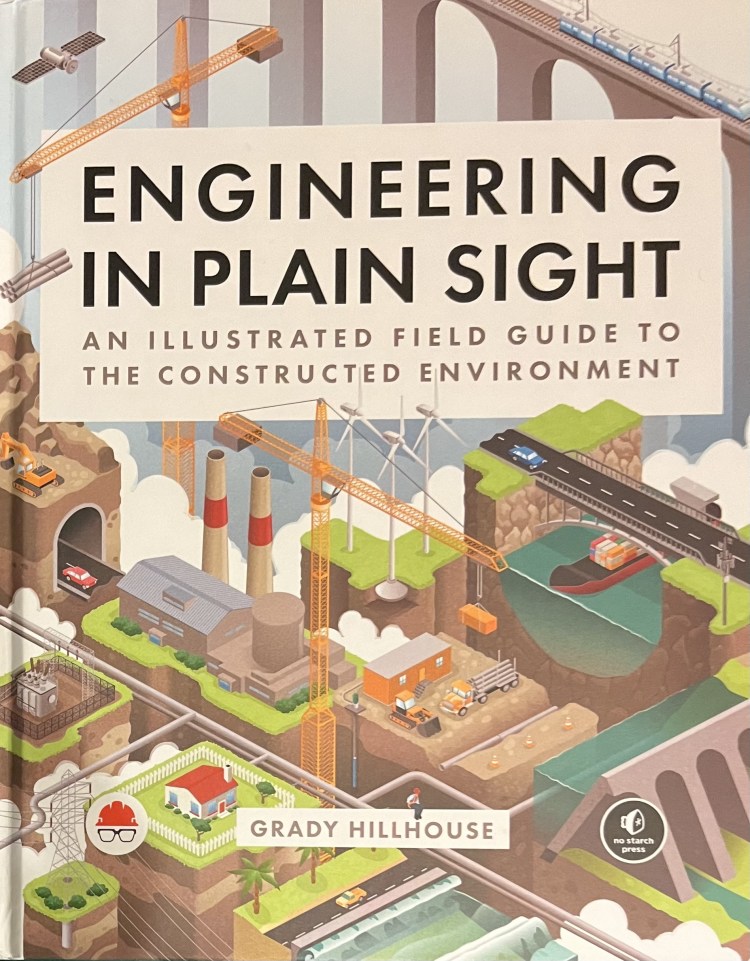
Below – another book that could be helping inform public discourse on the future of our towns and cities: Engineering in plain sight (2022) by Grady Hillhouse
‘Who is running the introduction to civil engineering courses and workshops locally?’ Exactly.
 The Cambridge Town Owl