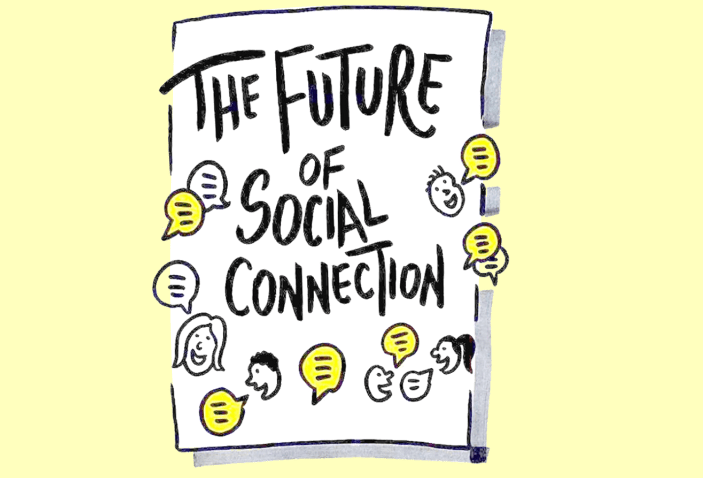
MPs on the Commons Housing, Communities and Local Government Select Committee heard about our weak democracy structures yesterday (see my blogpost here), and today the Women and Equalities Select Committee heard a similar warning,
Image – the UCL/Sydney study on the future of social connection report
Have a listen to Dame Sara Khan here
“The UK is at chronic risk of democratic decline”
Dame Sara Khan to the Commons Women & Equalities Committee, 05 Feb 2025. 14h25m
Dame Sara was the author of the Khan Review into Social Cohesion, published in March 2024 and you can read the review here.
“An examination of some cohesion indicators suggests a declining trust, confidence and participation in democracy and its institutions, declining civic engagement, and a complex picture of how tolerant we are to difference despite progress made in recent decades.”
Khan Review – Executive Summary (2024)
So, what could/should be our/your individual responses?
For myself, I’ve organised three offline neighbourhood-level gatherings for anyone who is interested in making a positive contribution on the future of our city – see the start of this blogpost for details. Don’t underestimate how difficult this is for many people – especially for those of us who might be neuro-diverse, who don’t normally organise events, and who don’t normally socialise in their immediate neighbourhoods. (E.g. their socialising might be with communities of interests (eg hobbies), of faiths (eg local church), of shared institutions (eg a university college with regular formal events) – rather than immediate geography. It happens).
Democracy and community cohesion
One of the reasons I think why democracy in the UK has weakened is because of decisions taken from the very top of politics – such as the move away from local government being the direct providers of local public services (and accountable to locally-elected councillors) to towards councils as the dispassionate commissioners of public services from third party suppliers who compete mainly on price, and whose funding (along with the contractual rules) comes from the centre. Even where some revenues may come from council tax, the rules imposed by/via Acts of Parliament mean that it isn’t automatically the interests of communities that come first.
“How do you measure cohesion?”
This is something the University of Helsinki looked at in 2024 in Towards more sustainable residential areas : indicators of neighbourhood and block sustainability – and in particular the chapter 4 on Neighbourhood Cohesion from p47. It’s worth browsing through the opening few pages to see a list of indicators that England could make use of in measuring the wellbeing and improvement of neighbourhoods and communities that go beyond crude measures such as GDP/national income.
In the Helsinki case, their look at levels of neighbourhood cohesion – a geographic tier not covered in UK statistics because that level is too small/local. For example in this paper, neighbourhood level goes down to block-of-flats by block-of-flats. In the UK unless that block is particularly large, a development containing a handful of blocks might be as local as it gets. In the case of Cambridge we simply do not have those sorts of developments – mainly because Messrs Holford and Wright prevented the construction of such things in in their development plan for Cambridge in 1950 which was approved by county councillors and ministers of the era.
Yet when I look at the list of questions the Helsinki study asks about block-by-block living, I can’t help feel a small sense of shame about my own responses to the questions.
- The city block I live in forms a community whose membership means a lot to me
- I can influence matters related to our bloc
- I actively contribute to maintaining cohesion among the residents of my block, for example by greeting them
- In our city block, it is natural to share the joys and sorrows of everyday life
- The residents of our block are close to each other in a way that allows each of them to retain their uniqueness
- The residents of our block are considerate of one another
Taking the above-six bullet points applied to the residential area I live in in South Cambridge, how does it look from my perspective?
- There are so many properties that have been bought out and used either as private student accommodation, air BnBs, or short term lets that the population turnover means that with the exception of the local council housing, we’re not ‘a community’ in the way we perhaps were when I was at primary school, when the children you went to school with lived around the corner and with whom you could play with outside of school hours
- Can I influence matters in my neighbourhood? No, because either the decision-making functions have been centralised, privatised, or cut completely
- I actively contribute…for example by greeting people. Again, with high population turnover, that’s not always straight forward.
- Do we share in the joys and sorrows of life? Again, without shared histories that are prevented from being created by high population turnovers, that’s all the more difficult – even more so as we get older and those we’ve lived with move on.
- Some of the residents are close to each other having brought up children together and grown older together, but I’m not one of them
- Persistent anti-social behaviour (speeding car drivers driving cars with loud engines, cars parking illegally / blocking pavements) to people openly smoking prohibited substances in the street are a few examples of what happens when central government cuts back on law enforcement functions to the extent that a small minority of people can make it feel like few in the area are considerate to others. When the reality might be that having a co-ordinated approach that includes strong enforcement combined with regulatory measures on manufactured products to public health-led responses to others, might make the difference needed.
Which programmes and policies, and in which order?
One of my earlier blogpost spotted: Wealth inequality risks triggering ‘societal collapse’ within next decade, report [from King’s College London] finds. Which makes the UK Government’s vote at the UN on tax avoidance all the more alarming.
“Keir Starmer’s Government Votes to Block UN Plan to Tackle Global Tax Avoidance”
Above – Byline Times 04 Feb 2025
***Why the F–k would they do that?!?!*** was my initial reaction. At least the UK was on the losing side in that vote – but if anyone wants to email their MP asking them to get ministers to explain themselves, see https://www.writetothem.com/ (Which reminds me, what happened to UKUncut?)
The point being that the international property markets and speculators need to be reined in one way or another so that their commercial activities stop undermining community cohesion. I’m not hopeful that an excessively-centralised Labour Government would be willing to do this unilaterally in the UK, or be willing to push for this in international circles. But I’d be delighted to be convinced otherwise.
The situation with a city like Cambridge – one which ministers has declared the future of is an issue for national government policy, is that the feedback loop in policy-making is inevitably diminished. What happens on the ground here seldom gets back to policy-making circles to the extent departments of state are willing, able, and nimble enough to make the policy changes needed to alleviate whatever the situation is. This is why a handful of MPs picked up the issue of English Devolution in the Deputy Prime Minister’s Statement to Parliament this afternoon – which you can watch here. As I and many others have said, without devolution of spending and taxation powers to local councils, they simply will not have the policy tools and levers to deal with problems without going back to Whitehall. Hence the barrage of questions from peers in the Lords earlier this week
Peers pick up on the lack of citizenship education teachers in England
You can watch former Home Secretary Jacqui Smith, now Education Minister in the Lords as Baroness Smith, respond to questions here. This is something that I am tempted to follow up (am pondering which interested peer of the realm to ask nicely) to see if the line of questioning can be extended to lifelong learning – which is one of Baroness Smith’s policy areas.
“A decade of austerity has resulted in adult education being severely underfunded, which it is argued has affected the most marginalized and vulnerable in society: those who need education the most as their only route to social mobility and social contact”
The above was via a blogpost I wrote about the lack of adult citizenship education back in 2023 here, and the continued reluctance of local government to support anything that involves educating the general public about how democracy works. There’s a real disconnect between the politicians wailing about how awful the lack of trust in politics actually is, versus their willingness to come up with radical policies and voting through the powers and resources to implement them to deal with it. Furthermore, it’s not as if we’ve not done this before – previous generations had citizenship, civics, and democracy at the core of lifelong learning programmes. Understandable if your generations had just spent the past half-decade or so fighting a world war to protect it.
Not surprisingly given their shoestring budgets and relatively young institutional ages, combined authorities (or at least our one here) is sticking closely to what the funding rules state, with little desire to explore further for new streams of funding – combined with the failure of high profile private sector organisations to meet them half way when you consider their executive pay, bonuses, profits, dividends, and turnover.
Anyway, a reminder of those local gatherings:
- Sunday 09 Feb 2025 at The Rock Pub, Cherry Hinton Road, Cambridge, from 2.30pm – 4.00pm
- Sunday 23 Feb 2025 – as above
And for those of you who can only make evenings:
As you can see, I’m not expecting huge numbers – half a dozen at most, with the idea that other people might be curious enough to try something similar in their neighbourhood in their own communities rather than having to cross town to get to my sessions.
If you are interested in the longer term future of Cambridge, and on what happens at the local democracy meetings where decisions are made, feel free to:
- Follow me on BSky <- A critical mass of public policy people seem to have moved here
- Like my Facebook page
- Consider a small donation to help fund my continued research and reporting on local democracy in and around Cambridge.
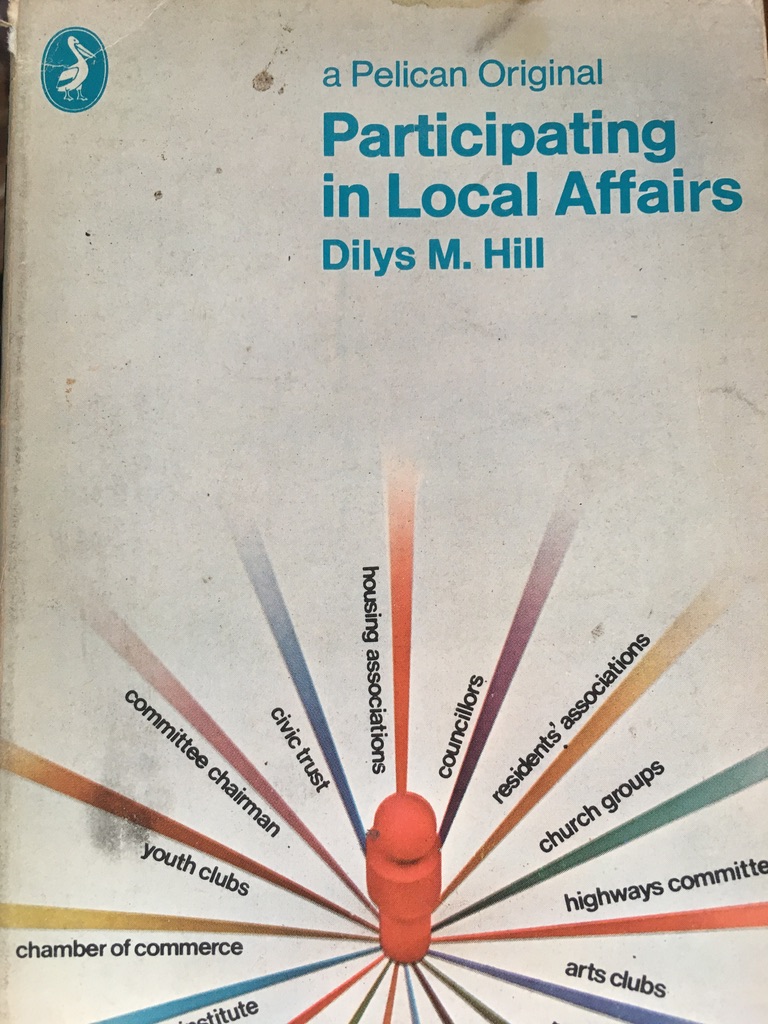
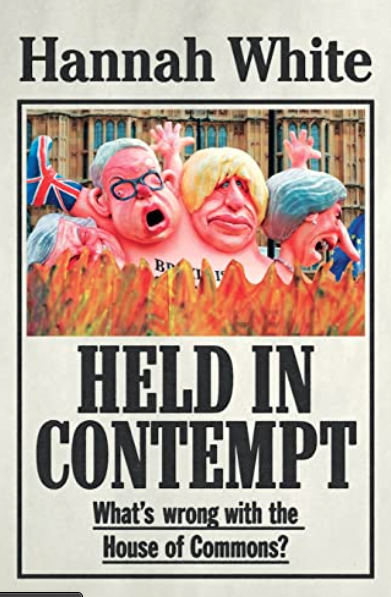
Below – some books (the very old ones I might have digitised here) on all things politics and democracy which if published more than several years ago might be going cheap second hand on ABEBooks, and if are more recent might be available on https://www.hive.co.uk/ which supports independent bookshops.








 The Cambridge Town Owl