I moaned about the lack of funding of our libraries service for Cambridgeshire last month – and despite pleas and requests, there’s still next-to-nothing that introduces politics and democracy available to borrow for local residents.
So I dropped a bag full of books including these three titles on their booksale shelf that helps raise funds for my local branch library.
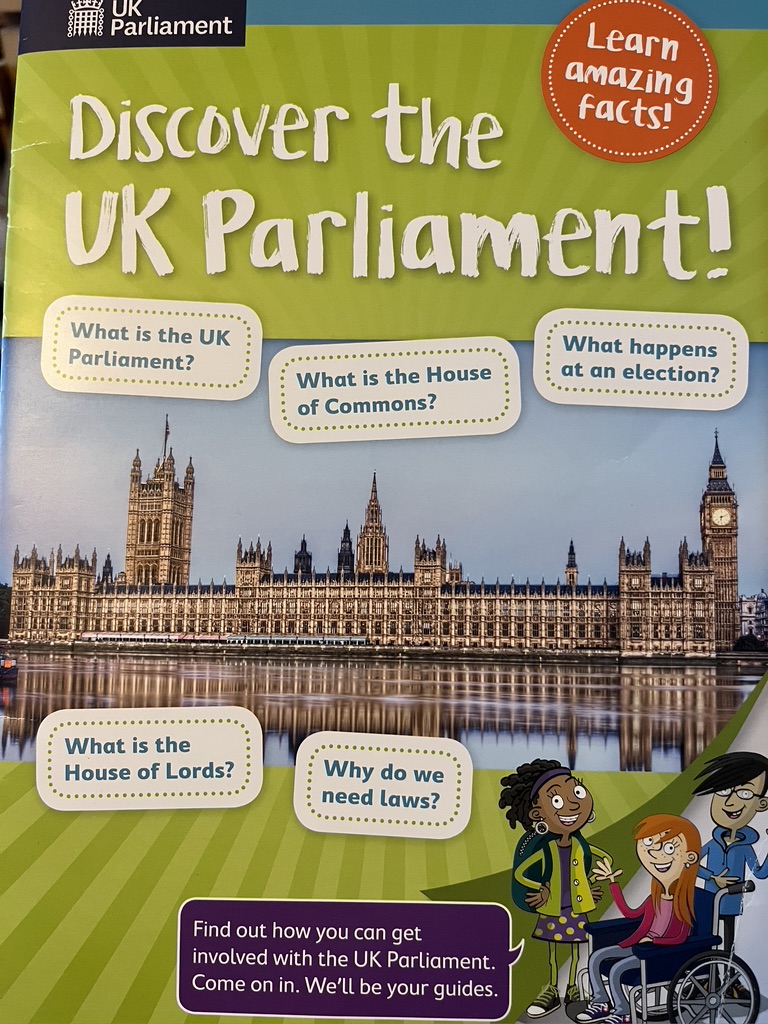
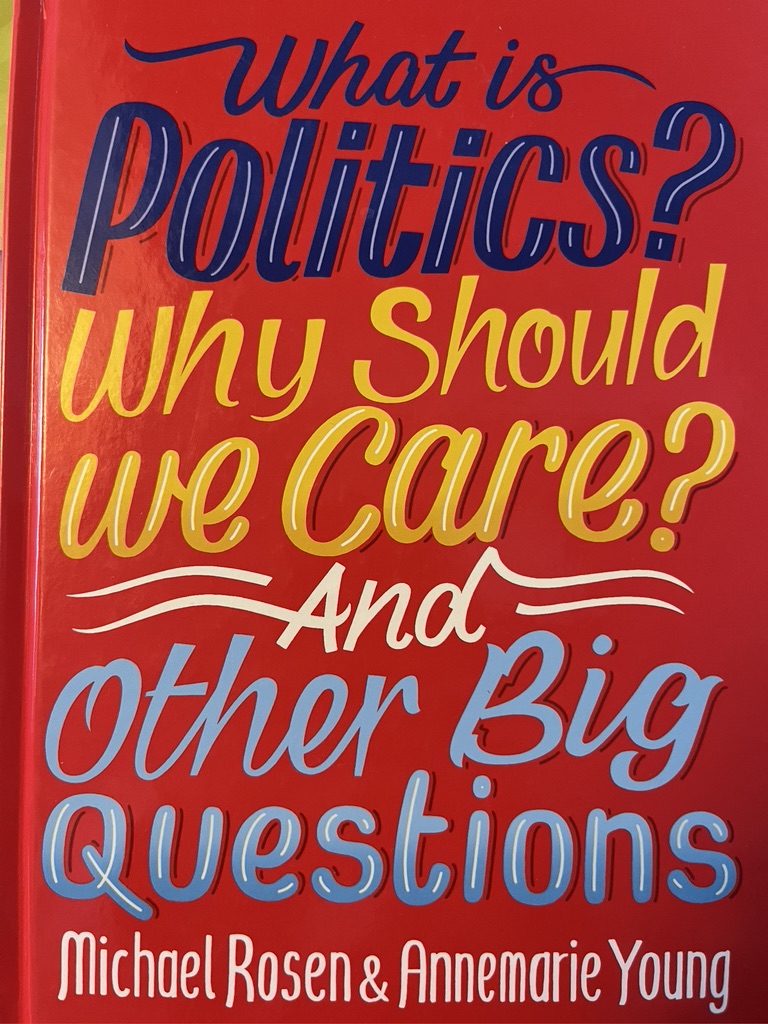

Above – titles written for children introducing politics and parliament to children. (Suitable for adults too)
- Discover the UK Parliament (2017) UK Parliament
- What is politics and why should we care? (2019) Michael Rosen and AnneMarie Young
- Politics for beginners (2018) Louie Stowell,Alex Frith,Rosie Hore,Kellan Stover
As it turns out, one of the growing industries in these austere times is that of the sale of unwanted brand new books that mainstream shops have not been able to shift. Which is part of how the World of Books functions. For example, take the book Politics for Beginners by Usborne shown in the above trio. Now see the listing here on World of Books. It’s one of the books that’s normally in their ‘four-for-the-price-of-three’ deals so every month I’ve been buying a cheap copy and dropping them off in local charity shops, branch libraries (ditto with policy-related magazines), or community book exchanges that otherwise are a mix of hardback fiction that (so charity shop staff and volunteers tell me) is difficult to shift, and ghost-written sporting/celebrity biographies.

Above – the extremely limited selection on the shelves of my local library – not a single title introducing the basics of how our country, county, or city is governed. (It’s not much better in the children’s section either)
“It’s not like libraries have got huge budgets to work with”
I mentioned this last month in a blogpost. The same library which has a half-decent local history section means that if I’m running a local history talk, in the community room there, I can always pop out and bring in one of the books that they have to refer to. For an introduction to democracy crash course, I can’t do that because there’s nothing there. It’s just as sad not to see any of the books from the Usborne beginners series on their shelves either. Law, politics, economics, climate change – and in July they’ll have an AI book too.

Yet browsing through another of the children’s books on the shelves introducing all things Artificial Intelligence – this one which I strongly recommend, although it is written for a primary school age reader, I know so little about the topic that even I found myself gaining new knowledge from it.
And that’s not the only subject where children’s books can teach adults
At various points over the past 14 or so years I’ve been blogging I’ve let rip at the shortcomings of my formal education which took place almost entirely under the governments of Margaret Thatcher and John Major. Had I been able to live a relatively normal life involving being healthy enough to undertake full time work – and staying awake and functioning properly during the day, I might have let it all go. But in my case my chronic ill health which came crashing down in my early 30s meant that I’ve never been able to have a normal working life – or a normal life since. Which means I inevitably stew/ruminate over things that happened during that era. Even today while at a meeting trying to organise an election hustings, we talked about how the education system in 1990s Cambridge seemed to cut off so many options for art, music, or anything practical that might have been useful life skills later on in life. It’s only now that I’ve started to notice some of the class prejudices of the adults and society around us as teenagers that put pressure on the very limited choices we were told we had to make.
Unlearning the bad stuff to learn the good stuff – but what do you do if the tools, facilities, and the means are not there?
Doom-scrolling recently I stumbled across James Bruton’s splendid ball-wheeled omni-directional motorbike
***I want one of those!!!***
The problem is that I can’t think of anywhere with the possible exception of Makespace Cambridge where at a community level any interested member of the public could have gone a long to somewhere, learnt about whatever it is they wanted to learn about, get to try out and learn to use the tools necessary over an extended period of time, and eventually become masters of it.
*It’s too late for me* / ‘You didn’t try hard enough’
One of the reasons why I’m ever so critical of Cambridge’s sci-tech bubble and the influential decision-makers and wealthy interests in it is their collective failures to ensure that learning, re-training, and upskilling is available to the many, not the few. It’s a common theme across Cambridge. The gulf between the elites and the rest of the city seem to be getting greater and greater, with no room for any middle ground, nor any civic space, real or virtual, for lifelong learning or starting later in life. Classical music is another example of this – University circles have world class talent within their communities and the sorts of small and medium-sized performance venues that other towns and cities can only dream of, but the economic and social structures of our city don’t seem to be able to sustain something like The Mary Ward Centre in London.
It’s going to get worse before it gets better
The further cuts to local government spending is why. Which is why I don’t think Cambridge will reach anywhere near its potential to become a vibrant city that functions greater than the sum of our parts if ministers insist on holding down the millstones of local government finance systems that have crushed towns and cities all over the country. (Minister says ‘No’ on local government finance overhaul). Instead, we face the risk of our expanding city becoming a series of exclusive ‘Eddington-style’ settlements with expensive PR campaigns glossing over the tensions that exist within it – the latest being featured in Varsity where the headline features students and researchers from China, but where the real underlying issues are far, far closer to home and make for very uncomfortable reading for those in charge of those systems and structures.
“On the other end of the spectrum, even if you fully grasp the nuances of British conversations, not sounding posh enough can create a different barrier. One international student we spoke to was told by a Music Fellow that they sounded “not English enough” in their audition.”
Joanne Yau & Vienna Kwan in Varsity, 17 Feb 2025
The cultural observations are striking – and may also sound familiar to those of you that grew up with the town/gown divide.
“Growing up in Hong Kong and Singapore, she observed the particular class culture and sense of superiority in Cambridge to be more about “not speaking in the same way as they do and going on ski holiday every winter… …On the other hand, British poshness tends to manifest in a more symbolic and embodied form, like one’s accents or going to the theatre. While language plays a role here, social and cultural capital is also a dividing factor.”
“What’s that got to do with public libraries and democracy?”
Everything. Because if you’re at the top of the financial and local social tree, chances are you’ll be either oblivious to what’s happening or you’ll simply see it as not your problem. Think of every developer in Cambridge that has tried to value-engineer away as many of the social benefits their projects could have brought to our city in return for greater financial rewards and returns. That cumulative loss of amenities and infrastructure that Dr Andy Williams spoke about to us local residents in Queen Edith’s back in early spring 2023 is now a major problem for our city. But if the life that you live doesn’t involve living those shared problems, you can become insulated from them.
And that – for me at least, is not socially sustainable
That point was also brought home by former councillor Sam Davies MBE (again) when people started looking at the results of Cambridge City Council’s budget consultation. (See item 6b Appendix B here)
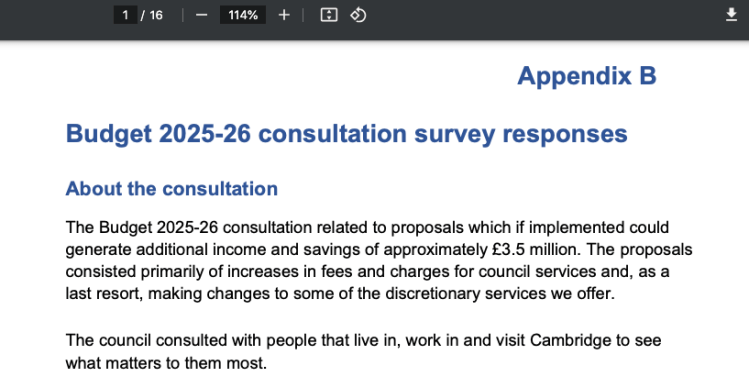
Above – savings of £3.5million means job losses and reductions in maintenance on essential services for some of the most economically deprived communities in our city.
“Who responded to the consultation?”
See the table below – and how the income deciles of those responding compares with the actual proportions in our city.

Above – Acknowledging that ***huge*** caveat of 55% of those responding not providing the data needed for the table above, from the 45% of respondents to the budget consultation, (1,095 responses according to the meeting papers from the city council) we see that out of the people who provided data on their household income, over a quarter of the responses were from households receiving over £100,000 in income, while only seven percent were receiving under £20,000. (Note the median annual pay of people living in Cambridge is just over £34,000, while that of those *working* in Cambridge is just over £32,000).
If you’re on a higher income, are you more likely:
- to know the essentials of how local and national government functions?
- to know that consultations exist and how they are used?
- to know when the consultations are and have the time & motivation to respond to them giving informed answers to the questions provided?
…vs someone on a lower income – especially someone on long hours for low pay?
That’s also why I’m under no illusions that simply getting libraries to stock books on politics and democracy will somehow make everything better. It won’t. Which perhaps is also why author George Monbiot who was on BBC Question Time recently, asked his followers on Bluesky here to suggest ideas for individual actions they could take in response to the crisis in democracy we face.
On the books side, one of the titles I suggested was Mark Thomas’s 100 acts of minor dissent


Above – I should have mentioned Mark Henderson’s excellent Geek Manifesto from 2012 which makes the case for why scientists should take a much stronger interest in politics
Because had more of them done so – especially in Cambridge in 2015, Julian Huppert might have held onto his seat back in 2015 (he lost to Daniel Zeichner by only 600 votes) and the history of the Liberal Democrats nationally might have been quite different. And given what’s happening in the USA at the moment, there’s no time like the present for Cambridge’s scientific community to learn about the joys of local government finance!
Welcome to a very niche subject everyone!
If you are interested in the longer term future of Cambridge, and on what happens at the local democracy meetings where decisions are made, feel free to:
- Follow me on BSky <- A critical mass of public policy people seem to have moved here
- Like my Facebook page
- Consider a small donation to help fund my continued research and reporting on local democracy in and around Cambridge.

 The Cambridge Town Owl