
County Councillors will meet at their final full council of this term of office before the county elections
You can see the meeting papers here, with the item Local Government Reorganisation in Cambridgeshire starting on page 28 drafted by the council’s chief executive Dr Stephen Moir. They will be discussed the day after Cambridge City Council councillors discuss the same issue which I wrote about in this brief post here.
I’m not going to make this a long blogpost (mercifully), rather only to raise two issues that for me are missing in the papers:
- Public engagement
- A local history review of what happened on previous occasions
Cambs Unitaries Campaign AGM and discussion meeting
See the second half of this blogpost on the Cambs Unitaries meeting on Saturday. One of my big takeaways from that meeting was the risk of the debates going far beyond the scope of what ministers have set out in the White Paper. Not everyone was clear what was meant by some of the jargon or even what some of the essential concepts were. Why would they? If no one ever taught them about it at school or college, what chance did they have given that there’s no provision in the adult education portfolio managed by the Combined Authority – despite my repeated pleas for them to change their mind.
I came away from that meeting wondering whether local councils should incorporate some public education and outreach work into any consultation that they will ultimately have to do. Realistically there isn’t enough time for anything to be done before their initial responses have to be in. There wasn’t even enough time for the councillors to agree on anything but the vaguest of principles that all but one of the councils (Fenland being the missing one) signed up to.
A local history review?
Which reminds me I need to write a short paper for the Cambridgeshire Association for Local History on how we got to here. (See https://www.calh.org.uk/ if you are interested in the history of Cambridge, South Cambridgeshire, and southern Fenland – the society being formed on Cambridge County’s much smaller boundaries).
Redcliffe-Maud’s abandoned grand plan
This was the proposal for unitary and regional government put forward by the committee established by Labour Prime Minister Harold Wilson.

Above – from the Cambridge Evening News 11 June 1969, via British Newspaper Archive
Cambridgeshire Labour’s Roy Upshaw wrote an opinion piece for the Cambridge Evening News dated 25 July 1969 in support of the plans which were scrapped by the incoming Conservative Government, which instead gave us broadly what we have today.
In 1991 it looked like the changes proposed by Michael Heseltine were going to be radical – as illustrated in the newspapers of the era.


Above – Cambridge Evening News 20 May 1991 from the British Newspaper Archive
What is really interesting (to me at least) is how extensive the local print press coverage was – as I show in Lost Cambridge here. The Cambridge Evening News of 17 Feb 1994 revealed that the newspaper was shifting over 43,000 copies every day. Today, that figure is less than a twentieth of that. On 12 May 1999 the Cambridge Evening News stated £2billion was spent on local & regional newspapers in advertising. Had that stayed constant accounting for inflation, that figure would be £3.76billion. According to Statista that figure collapsed down to £450million by 2023. Much of that advertising spend going on social media and to big multinational giants – and at the expense of local independent journalism.
Which creates a huge challenge for local government and local democracy: how do you keep the public informed and interested?
Going forward, that has to be a key question in any wider inquiry into the state of our democracy generally. Which reminds me of the latest cheapo arrivals from a warehouse full of unwanted stock somewhere: Looking into titles that look at the hows and whys.
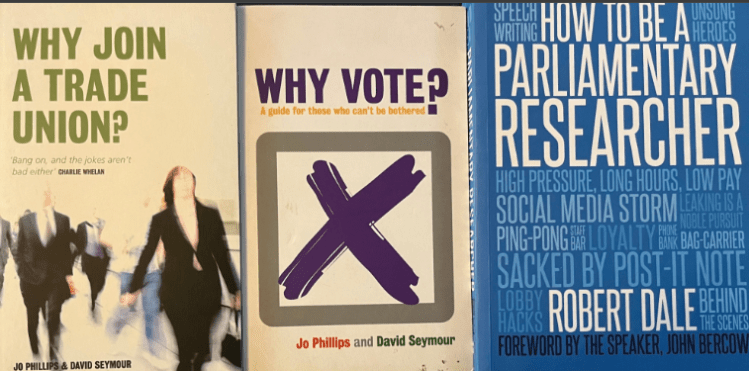
Above – These three were from the political publishers Biteback (which at the time of writing has a 3-for-2 offer on)
Their unwanted stock dating back a number of years can be found in several warehouse-based companies on ABEBooks starting at under £3, postage included (although some from the 2010s feel far more dated than they actually are, or are simply excruciating given events – such as the manifesto from Liz Truss and several of her key backers from late 2011, through to the case for voting Lib Dems in 2015!)
If you are interested in the longer term future of Cambridge, and on what happens at the local democracy meetings where decisions are made, feel free to:
- Follow me on BSky
- Like my Facebook page
- Consider a small donation to help fund my continued research and reporting on local democracy in and around Cambridge.
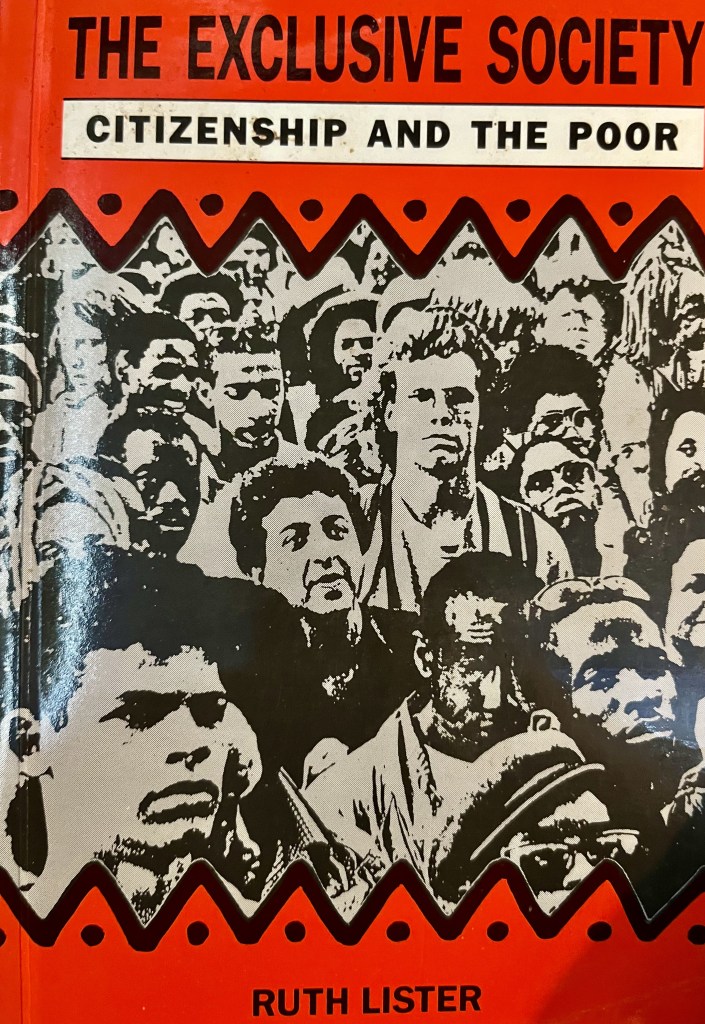
Below – Baroness Lister’s Charter for Social Citizenship (1989). This is really good on why citizenship education was phased out of schools in the 1980s, so that by the time I became a teacher, politics and current affairs was absent. Which makes it much, much harder to persuade the public to fight for a democracy that collectively we know very little about.

 The Cambridge Town Owl