…but will it be enough to keep hold of the mayoralty? I shouldn’t count my chickens and all that but the results won’t be known until 3pm tomorrow. So for those of you wanting reading material before then…
…Well, I’m still of the view that it’s too close to call and that the state of politics in Cambridgeshire and Peterborough is far too volatile to be making the sort of wild predictions we’ve seen some publications come up with.
“Such as?”
The PoliticsUK model here …which reckons Labour will lose all of their county council seats, and that The Greens will come from nowhere to win their non-target seat of Cherry Hinton. While the Lib Dems who have all-but-abandoned Newnham (Party and council leader Lucy Nethsingha contesting Cambourne instead), are predicted by that model to come ahead of both Labour and the Greens, which hold one and two of the three city council seats respectively.
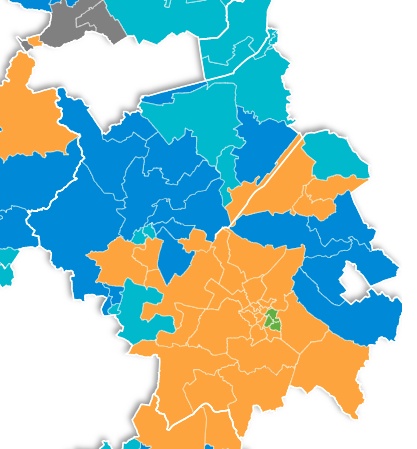
Above – what PoliticsUK’s model predicts
I’m not going to come up with my own predictions. I leave that to Phil Rodgers.
Above – Phil Rodgers predicting a close mayoral contest. (In terms of county council seats, I think the predictions will be the base lines for both Labour and the Greens – they’ll be relieved if they don’t get fewer seats than this, but ideally will want to secure more)
How many seats TeamNigel’s candidates get is anyone’s guess – but recall that in 2013 they won 12 seats, one of which was a seat that a non-campaigning candidate won just by being on the ballot paper.
“Well that’s a turn up. To be honest I didn’t do anything … I just put my name down and that was that. I didn’t even ring anyone up.”
Cllr Gillick (UKIP – Waldersey) via Richard Taylor’s blog, 16 July 2013
The same councillor every so often ended up in the papers for various quotations he was accused of making.
How many Cabinet Ministers does it take to change a lightbulb / win a mayoral election?
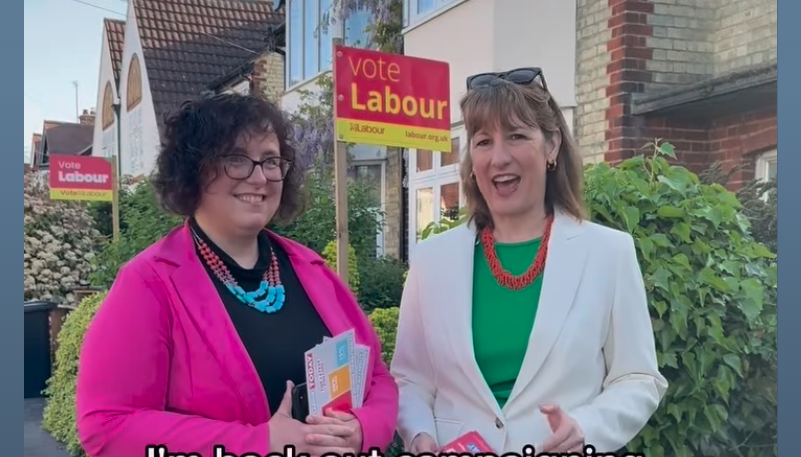


Above – Via Cllr Smith’s FB Campaign Page, Chancellor, Party Chair, Foreign Secretary, and Deputy Prime Minister all rocked up to the county ***on polling day*** to record a series of short social media videos
***So why in the world did none of them insist on reversing the change in the law the Tories brought in which switched the voting system from second preference voting to First Past The Post?***
It can’t have been an oversight because ministers were warned time and time again about this. So someone in ministerial office must have taken a policy decision not to proceed with the short piece of legislation needed to zap that change.
Because it was the second preference votes that won the mayoral contest for Labour’s Nik Johnson back in 2021 – a result announced shortly after Sir Keir Starmer conceded that Labour had done really badly in the county council elections. Not in Cambridgeshire where not only did they win the mayoralty but they also, with the Liberal Democrats turfed out the Tories from leading the council for the first time since the mid-1990s. Furthermore, despite the best efforts of the Conservatives, the Joint Administration did a pretty good job of holding things together over that four year term, even though I didn’t agree with some of their core policies. Such as the sale of Old Shire Hall.
Also, where did all of their activists go?
Only even for local elections there seemed to be far fewer activists appearing in social media photographs, or even at the very few public events that took place in this election campaign. With Labour it was particularly noticeable (because have bumped into a number of them over the past decade or so), but it was also visible with some of the other parties. The student presence this time around was minimal compared with previous local elections – which was disappointing. Not least because as campaigners they give campaigns the sort of energy and dynamism that only young people can bring. Furthermore, I think then public like seeing young people being active in civic life and doing democracy irrespective of the brickbats that are thrown their way.
Cambridge’s large institutions failed democracy.
“The fact there was only one publicly accessible event that took place represents and reflects the collective failure of civic society in Cambridgeshire and Peterborough.”
I wrote the above in my previous blogpost
In the past year or so I have been struck by the number of University of Cambridge members and alumni who have expressed concerns about the actions of the institutions of which they are members of – particularly the colleges. Former Queen Edith’s independent councillor Sam Davies MBE called out the democracy imbalance a few days ago.
Above – how much power and influence will the incoming mayor actually have?
Because one of the most repeated words/phrases mentioned in the Resilience Web hustings (which I filmed and wrote about here) was ‘Influence’. Which was why I found the content of the debate somewhat depressing because there was precious little that the candidates could work with.
In a ‘normal’ election to public office, most people are vaguely familiar with the following concepts:
- That candidates will state what they will do if elected
- That candidates will state broadly how much money will be spent on their policies
- That candidates will state *where that money will come from* – especially what tax increases might pay for things.
The problem with combined authorities is that their independent revenue raising powers are minimal. Precepts on council taxes (which Nik Johnson imposed to pay for much-needed improvements to rural bus services) as about as good as it gets.
Therefore we never got into a serious discussion about what the options are for paying for trams and light rail.
This was hampered further by the lack of a policy statement from The Chancellor and the Transport Secretary on trams and light rail. So a few weeks ago I emailed the Department for Transport for such a policy statement. You can read what they stated here.
In a nutshell, there is no guidance or clear process that the public is aware of on how to prepare and submit a business case to ministers for a new light rail project for any given settlement.
Hence the Conservative candidate Paul Bristow took what I thought was a reasonable risk in his campaign by stating that money would be forthcoming from ministers because there is no way they would embark upon building 100,000 new homes around Cambridge (population now likely over 150,000, with just over 60,000 dwellings within its 1935-era boundaries) – thus creating a much larger city of around 400,000 people in the next 25 years, without a light rail metro.
But Mr Bristow could not guarantee that the money would be forthcoming – which is why his opponent Anna Smith never committed to trams or light rail. Cabinet Ministers had not given their clear and public consent for such a light rail project. And given how centralised Labour’s internal structures are, and given how centrally-controlled Cllr Smith’s campaign was (You don’t pull in three Cabinet Ministers and the party chair on voting day with just a political party’s city or county office alone), there was no way Cllr Smith could have made that public commitment anyway. Had ministers given their clear support for a tram or light rail system, both Nik Johnson and Cllr Smith would have gone along with it. Why ministers chose not to is one for MPs and Peers to follow up with Parliamentary Questions. So far, none has been tabled.
The combined vote of candidates supporting a light rail for Cambridge and the surrounding villages is likely to be greater than the candidates not supporting it
Therefore ministers will have to respond one way or another, as under the FPTP system it looks like the winning candidate is going to win with a very small share of the vote. Either way, I recommend reading the National Audit Office’s report on Light Rail from just over 20 years ago.

Above – National Audit Office Light Rail archived. 23 Apr 2004
I’ll save comments/ideas on how to revive and rebuild democracy – and increase both turnout and active participation, for a future post.
If you are interested in the longer term future of Cambridge, and on what happens at the local democracy meetings where decisions are made, feel free to:
- Follow me on BSky or on LinkedIn (where I pick up a lot of town planning content)
- Like my Facebook page
- Consider a small donation to help fund my continued research and reporting on local democracy in and around Cambridge.

 The Cambridge Town Owl