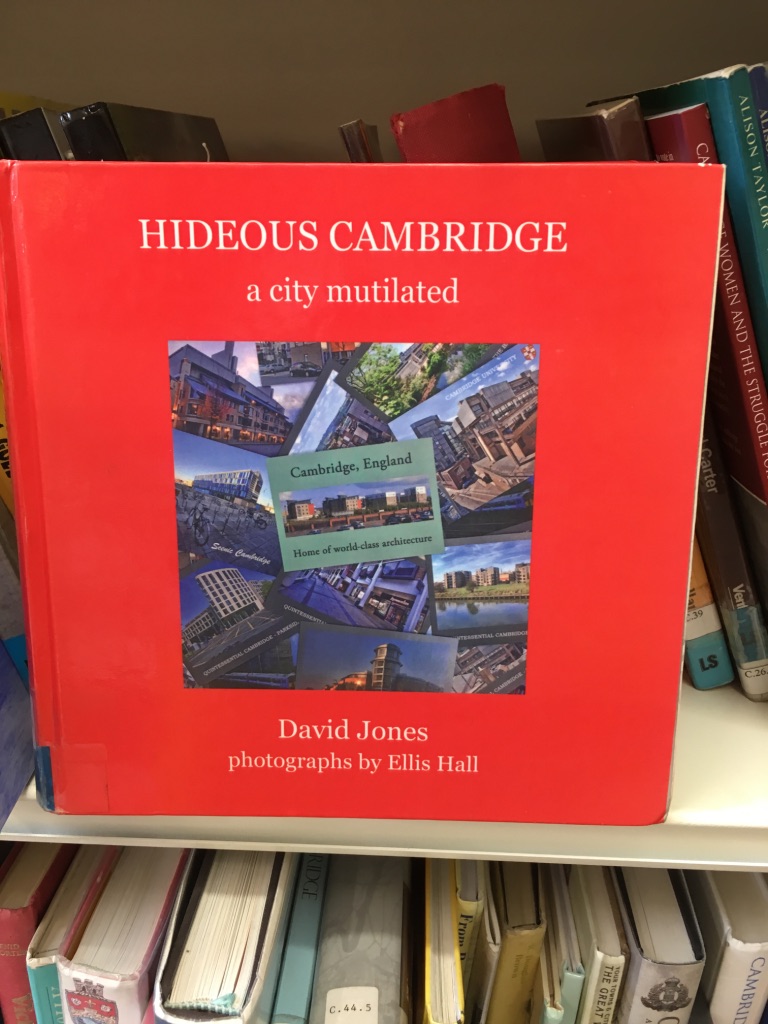
Another candidate for a potential second volume of Hideous Cambridge? Either way, tell the developers what you think
After all, some of you might like this and think Cambridge doesn’t have enough of this sort of building.

Above – from BBC Cambridgeshire, the design by Bennetts Associates
“What were they inspired by? An Excel Spreadsheet?”
Looks like it doesn’t it.
You can put that question to them at their consultation event on Monday 19 May 2025
4pm – 7.30pm at:
St Paul’s Church Hall
Hills Road
Cambridge
CB2 1JP
See more on the consultation here.
I’m not going to lose too much sleep over this.
I don’t particularly like the existing building as it is, and given that Brookgate and Aviva are involved in this current project, past form suggests they will bulldoze their way through the planning process irrespective of what local residents think – and even what local councillors think, and get their way. We saw that last year when Conservative Planning Minister Lee Rowley MP approved Brookgate’s Chesterton North scheme on appeal despite opposition from councillors, planning officers, and the Environment Agency even though the complexity of the scheme warranted (in my view) a time extension to enable all of the statutory consultees time to get their responses in.
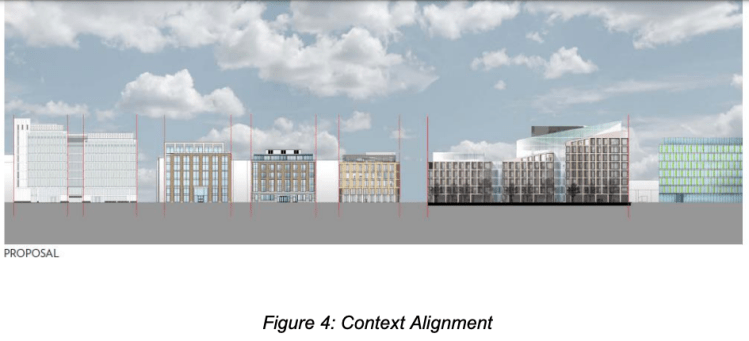
Brookgate and Aviva’s submission to the emerging local plan indicates their ‘vision’ for the south side of Station Road
If you go to this webpage, click on the ‘supporting evidence’ tab and click on the Kett House file at the top, you will see the report and computer-generated images – such as the ones below that were generated in 2020.

You can browse through the other submissions from 2020 to see who wants what in an expanding Cambridge
You should see a map that looks like this if you scroll down. Click on any of the shaded areas/shapes and you’ll get a pop-up link to find out who is behind it
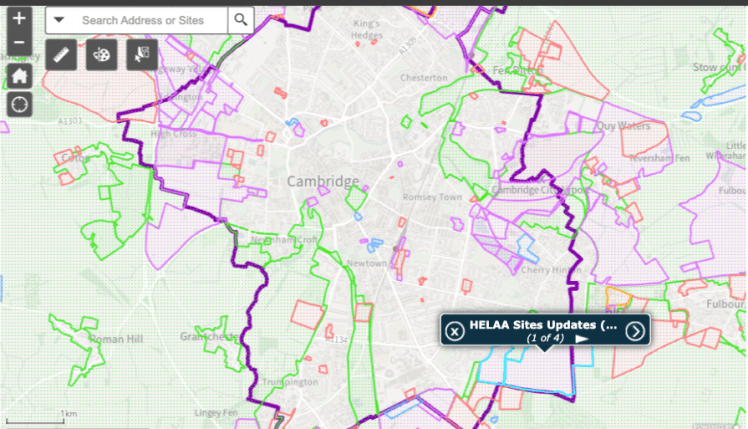
Above – From Greater Cambridge Shared Planning Service – call for sites responses for 2031-40 emerging local plan
Click on the pop-up and in this case we get details of a monster proposal that wraps around Lime Kiln Hill
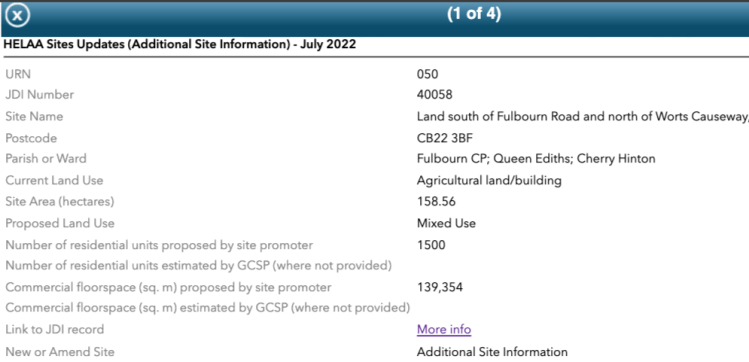
Click on the ‘More Info’ hyperlink and we get to the documents
You then get to a screen that looks like the one below. Click on the ‘supporting evidence’ tab
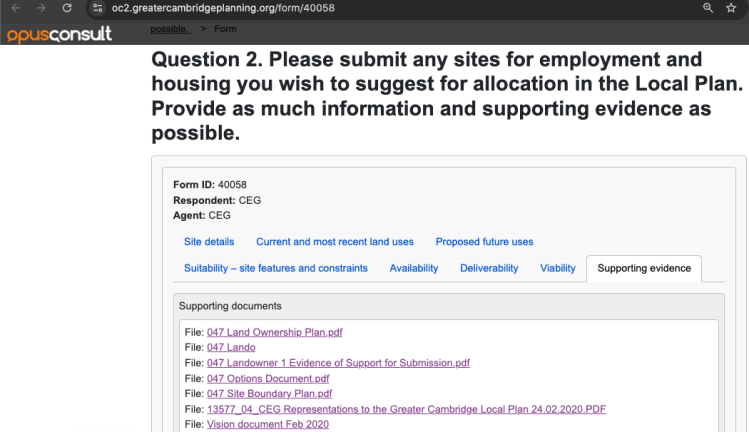
Above – supporting evidence from landowners and developers – in this case the Commercial Estates Group

Above – land owners (institutional ones) and CEG

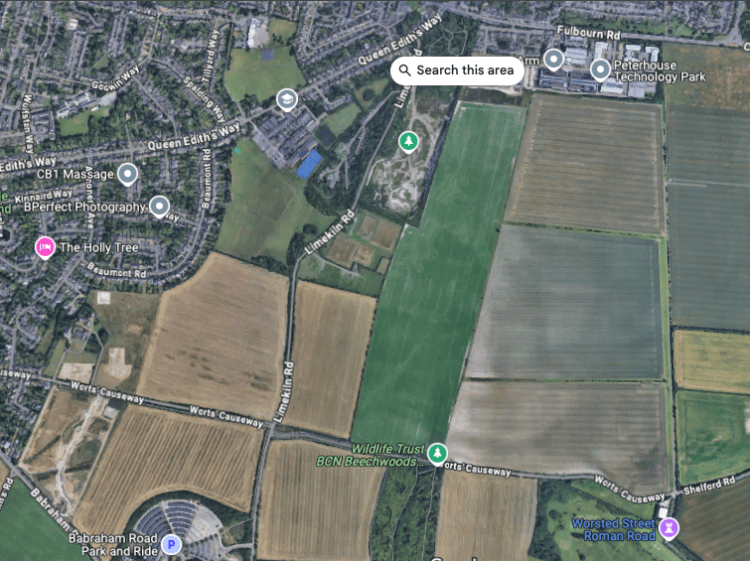
Above – the same area on G-Maps
At some stage, it might be an idea to have a large event or a series of small workshops to go through the publications in more detail, and invite people to write about them. Because the scale of the submissions – and I expect many of these will be heading to the Cambridge Growth Company, is beyond the capacity for one person to scrutinise. It needs a critical mass from whole city – county even, to take an interest.
The risk of letting developers getting what they want rather than what the city needs
It would be a catastrophe if all of the developers were allowed to build what they’ve proposed in their responses to the call for sites. The reasons include:
- The developers have a fiduciary duty to their shareholders and owners. They have a very strong incentive to maximise the financial returns on their investments – even if it means ruining things for people already there, or reducing the amenity of the land to the wider community. Socialising the losses, privatising the profits?
- The developers have no incentive to provide for the wider needs of an expanding city. However, as Cambridge expands, so it will have to provide facilities and amenities that reflect the growing population. For example the Cambridge Corn Exchange is already too small to hold the sorts of big names seen in the larger cities. If it wants to attract those more famous names, the only option is to charge much higher prices – as it is doing with the brilliant Amy MacDonald who I would really like to see, but I can’t afford the over £50 ticket price with booking fee.
- The developers will build whatever the law and state policies will allow them to build. Which brings us back to the ecological limits to growth that still have not been resolved. Furthermore, councils need more powers and resources to insist on post-occupancy evaluation to ensure that developers build to the standards they say their plans are designed for. Because if we look at the recently-released constituency data on the energy efficiency of homes from the House of Commons Library, far too many homes that should be EPC-level C due to the Building Regulations in force at the time of planning approval, fail to meet that standard. And we know it’s an issue in Cambridge because Daniel Zeichner MP told Parliament it was back in Feb 2021, and the Grenfell Inquiry exposed the problem nationwide. These things don’t resolve themselves overnight. The cladding scandal still has not been resolved – showing the power and influence of the construction industry on policy-making.
As I’ve mentioned many times before, part of the remedy for these issues is increasing the levels of democratic literacy in society – and increasing the number of people who are both willing and able to get involved in civic and democratic life. That way, we may get a few more people involved in the close scrutiny of proposals that will affect the future of our city.
If you are interested in the longer term future of Cambridge, and on what happens at the local democracy meetings where decisions are made, feel free to:
- Follow me on BSky
- Like my Facebook page
- Consider a small donation to help fund my continued research and reporting on local democracy in and around Cambridge.
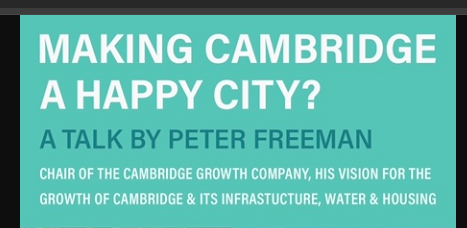
Don’t forget Peter Freeman’s talk this evening!
 The Cambridge Town Owl