
Transport Secretary Heidi Alexander MP once again refrained from even mentioning Ely Junction in her statement to the Commons. Furthermore there is nothing in the press release about this heavily-lobbied for rail upgrade plan
“To be fair, £500million is a very big ask”
She stated in response to questions from MPs that ministers “prioritised the schemes that deliver the greatest improvements to passengers most quickly”
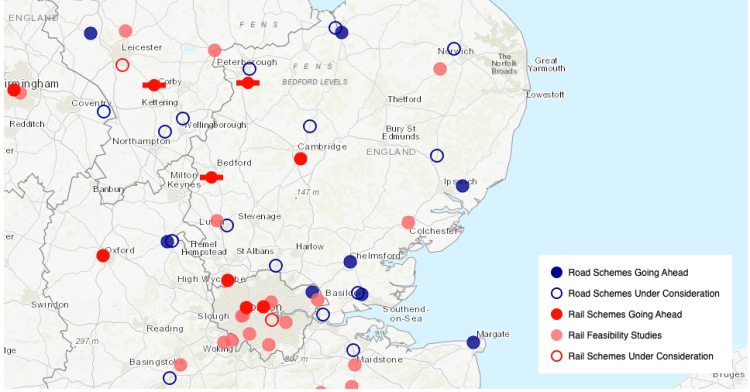
This is a further disappointment following the absence of the Ely Junction upgrade from The Budget – which I wrote about here, and which local politicians were particularly critical of. The ‘last chance saloon’ to get the upgrade funded before 2030 is with the looming announcement on the expansion of Cambridge later this month, but I’m not hopeful. Not least because in the recently-published interactive map from the Department for Transport here, the Ely and Haughley Junctions that would significantly increase the capacity of rail freight from Felixstowe docks to the Midlands (amongst other things) is not even a scheme under consideration.
Above – From the oral statement to Parliament by Transport Secretary Heidi Alexander MP
“I understand some communities will feel frustrated. But by taking this decision, we’re rebalancing funds towards those areas that, for too long, haven’t had the infrastructure investment they’ve deserved. The North and Midlands will now get a higher proportion of strategic road spend than we’ve seen in the last 5 years.”
Above – Transport Secretary’s statement to Parliament 08 July 2025
Understandably the Mayor of the Combined Authority was not happy with the decision – putting out another press release today on Ely Junction.
“I am deeply disappointed that today the Department of Transport have announced over 50 road and rail upgrades totalling over £92 billion, and once again, Ely Junction and the East of England have been forgotten about.”
Above: Statement from the Mayor of the Combined Authority Paul Bristow
“Should Cambridge be expecting such handouts from central government given East West Rail?”
Other places have got things far, far worse when you look at the state of their high streets, depressing as the retail centre of Cambridge currently is.
Given the soul-destroying impact of the chronic under-investment in rail infrastructure in the North of England, I don’t have a problem with ministers prioritising the North of England. During my civil service days I was shocked at the state of rail infrastructure I saw in the mid-late 2000s on my travels to various projects funded by whichever policy area I was working on at the time.
What I didn’t know at the time (and as I’ve mentioned in previous blogposts), everywhere I went I was absorbing information like a sponge in a bowl of water. Which is why I’m not critical of ministers in using the criteria they have, and making the judgement calls that they have.
The problems Cambridge has are due to the inability to tax the wealth being generated within the economic sub-region, and re-investing it in much-needed infrastructure
These days when I walk around town (Cambridge’s city centre – I’ve always called it ‘going into town’ since childhood) I feel a sense of ‘civic shame and embarrassment’ at the state of the street scenes, and the feeble public policy responses from central government to deal with very serious issues – including chronic homelessness, recalling this video from seven years ago. Given how Cambridge is marketed around the world – there’s a lot of money to be made selling the exclusivity of ‘Cambridge’ as I mentioned nearly a year ago in this blogpost.
Defining ‘civic shame’
Put simply, for me it’s a sense that this is my home town and we are better than this – hence doing my bit to keep local politicians on their toes not through ‘Why doesn’t someone do something about this?!?’ social media posts but getting an understanding of the structures, systems, and processes (and even personalities) that make it harder for us to sort the problems out.
The most frustrating aspect is having to wait for central government ‘to give permission’ for things to commence or get done.
I won’t bore you with the local government finance problems and the lack of powers. Ministers and MPs should be more than aware of the problems given past select committee reports:
- Council finances unsustainable without reform, say MPs – 19 July 2021
- System of government in England in need of serious overhaul, say MPs – 31 October 2022
I remain to be convinced that what ministers are proposing for both will be anything other than a temporary solution.
Let’s see what the Minister for Housing and Planning’s statement on the future of Cambridge brings – a statement that must be made in the next two weeks as Parliament breaks for the summer recess on 22 July.
If you are interested in the longer term future of Cambridge, and on what happens at the local democracy meetings where decisions are made, feel free to:
- Follow me on BSky
- Spot me on LinkedIn
- Like my Facebook page
- Consider a small donation to help fund my continued research and reporting on local democracy in and around Cambridge.

 The Cambridge Town Owl