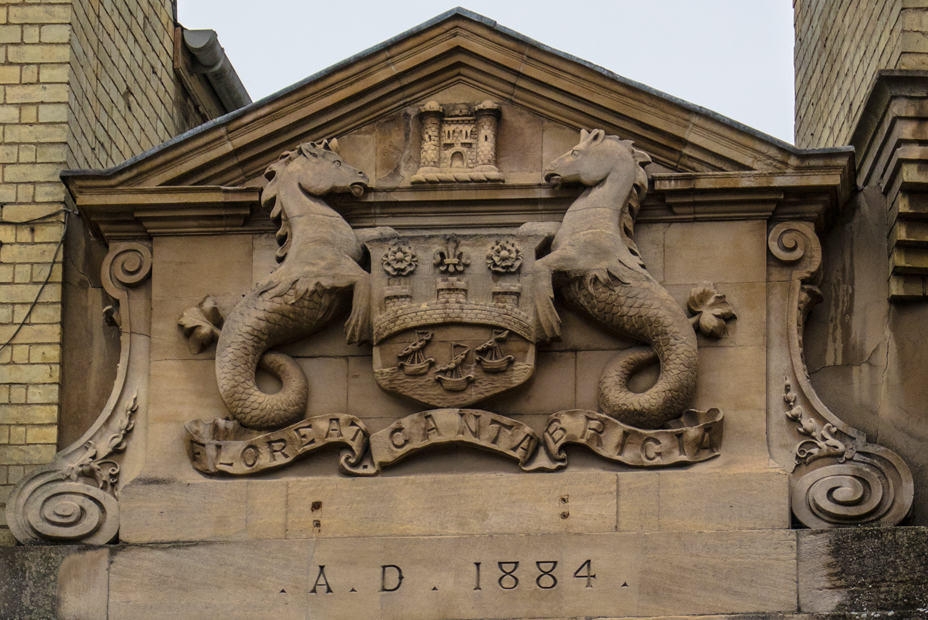
The saga of what should happen with council-owned buildings in an era of austerity continues – as ministers continue to hold back on granting greater revenue powers for local government
[Updated to add:]
The library, commissioned by our first public librarian John Pink was closed at the end of John Major’s government in the mid-1990s despite a huge local campaign to save it. It has remained in council ownership since then, let out to various different groups but none of them generating enough income in the longer term to keep it as a going concern.
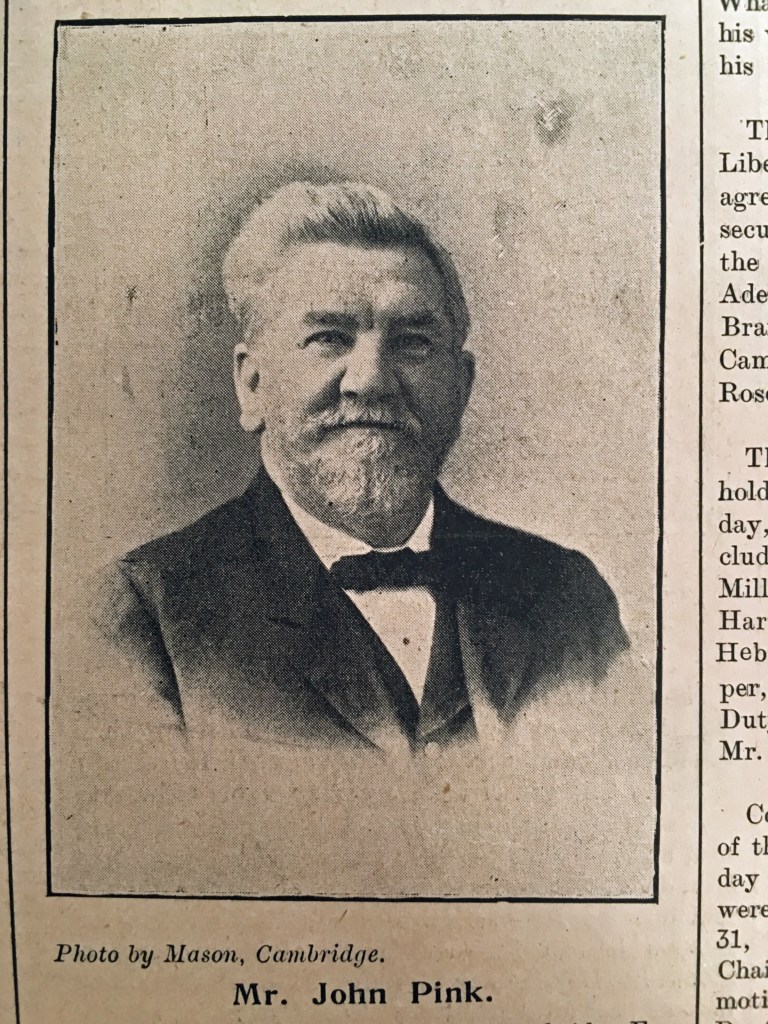
Happy Chap – Cambridge civic titan John Pink, who built up Cambridge’s municipal libraries service from scratch following the enactment of the Libraries Act 1850, authorising local councils to establish public libraries. He did just that for Cambridge in 1854, spending half a century as our borough librarian. Photo from the Cambridgeshire Collection – which Mr Pink also founded for us.
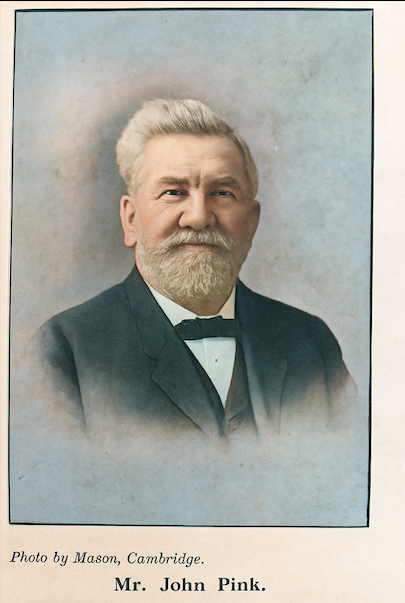
Above – the newspaper photo put through an AI-generator to colourise it. A reasonable effort but I think a professional digital colourist would have done better!

The Mill Road Library as a civic centre
Before the opening of the current Mill Road Community Centre, I posted on how the library could be used as a starting point for rebuilding our city’s civic society. That was back in 2021 shortly after we emerged from another lockdown – that one was particularly tough as I recall it. As with most of my suggestions, that one came to nothing.
I moaned again when the county council marketed the building again in October 2024. There’s little more to add to this other than trying to find out who was the preferred bidder and what they wanted to do with it proved very difficult for local residents.
The restructure of local government
The inevitable result of the restructures mean that the assets will be transferred over to the new unitary council. I lobbied councillors to bring in a moratorium on the disposal of such civic assets including Shire Hall until the restructure was completed. (Here’s me moaning about Shire Hall’s ongoing saga from October 2024) but to no avail.
At the moment, ministers are not considering substantial new revenue raising powers for councils in England
This is despite Scotland having granted visitor levy powers for their local councils.
The Scottish Parliament passed the Visitor Levy (Scotland) Act 2024. Following this, the Scottish Government published this guidance for local councils looking to make use of the new powers. The City of Edinburgh Council ran a consultation which came back with a number of interesting findings – which you can read here.
Above – as I wrote on 15 July 2025 – scroll halfway down to see the list of businesses and property owners it will apply to (which include AirBnBs & student accommodation outside of university term times).
The people of a council area like Cambridge/Greater Cambridge could benefit substantially by enabling local government to capture more of the financial benefits of the tourism industry – one that only brings costs to them given that the business rates regime exports 90% of the city councils’ business rates revenue to the rest of the country. With revenues from the tourism industry, I’d be content to see the total revenues top-sliced and redistributed via a formula grant to support council-run local tourism initiatives for those areas that otherwise don’t have the means to grow and sustain their own local industries. Furthermore, I wouldn’t be overly prescriptive on what such redistributed revenues could be spent on. For example if councils could make the case for subsidising public transport services that stop at attractions – in particular where there is a wider benefit such as schools and colleges that have sports facilities that can be let out later in the evening and at weekends.
Until ministers come up with a better system and set of structures for local government finance, and taxation more generally, they will continue to make more work for themselves and also perpetuate the dependency culture that local government has on Whitehall. And why would anyone really want that?
If you are interested in the longer term future of Cambridge, and on what happens at the local democracy meetings where decisions are made, feel free to:
- Follow me on BSky
- Spot me on LinkedIn
- Like my Facebook page
- Consider a small donation to help fund my continued research and reporting on local democracy in and around Cambridge.

 The Cambridge Town Owl