Will BBC News and Current Affairs have to provide them with more coverage vs Team Nigel?
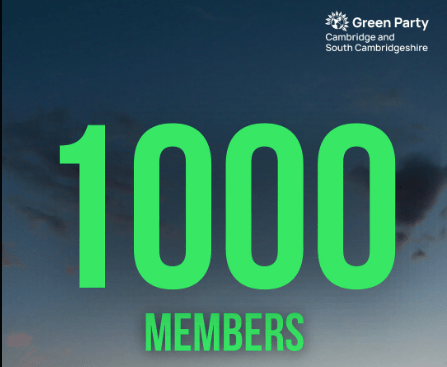
As the newly-elected leader of the Green Party of England and Wales posted, the party just smashed through the 130,000 members ceiling – with the 1,000 figure for Cambridge and South Cambridgeshire Green Party now already out of date.
Above – following Sunday with Laura Kuenssberg Show (see 39m20s here)
In Scotland (which has a separate Green Party for Scotland), the National published this supportive piece following Mr Polanski’s appearance on the BBC Laura Kuenssberg Show which Victoria Derbyshire filled in for the former – leaving some people wondering why. An innocent explanation might simply be that following a very busy party conference season that requires a fair amount of working on location and staying away from home and working late, now would seem like a reasonable time for annual leave to recharge batteries. At the same time it’s hard to avoid the comments that she didn’t want to do this interview where her own interviewing record might come under question from her interviewee.
“What are the pitfalls of being a party leader?”
Back in September Victoria Derbyshire (who I rate as an interviewer) was host of BBC Newsnight shortly after Mr Polanski was elected with 85% of the vote. There was some interesting advice from one of his co-panelists Baroness Foster (Ind – former DUP Leader in Northern Ireland) about balancing the competing interests. Have a listen from around 4mins here. Which is why his two deputies Mothin Ali and Rachel Millward, the latter who I wrote about following her powerful speech here, will be ever so important when the proverbial hits the fan. Because it will. It’s party politics – it goes with the territory.
The decline of the longform Political interview
Mr Polanski only had 8 minutes 1-2-1 with Victoria Derbyshire. Throughout the 1980s, TV interviews were much, much longer and had much higher audiences. For example in 1989 shortly after her Chancellor resigned (leading to her resignation the following year), Margaret Thatcher went head-to-head with Brian Walden – watch it here. It wasn’t just senior ministers – senior opposition politicians also got a similar cross-examination.
Turning the longform interview on its head – Mr Polanski as the interviewer
What the Bold Politics podcast does is enable Mr Polanski to explore a series of issues with familiar figures from both within the Green-Left part of the political matrix and beyond, while at the same time bringing their expertise and experience to a broader audience. As a party leader Mr Polanski has to be a generalist and cover as many policy bases as possible. Doing so however means you cannot go into the level of detail that a policy specialist has. Hence bringing in journalists that have specialised in specific policy areas – something that we see much less of sadly. (I think he should invite Pete Apps in to talk about Grenfell and housing, given that he sat through much of the Grenfell Inquiry and picked up things that the rest of us will have missed. Ditto Chris Wolmar on public transport – even though he’s a Labour member – also see his book on trams!).
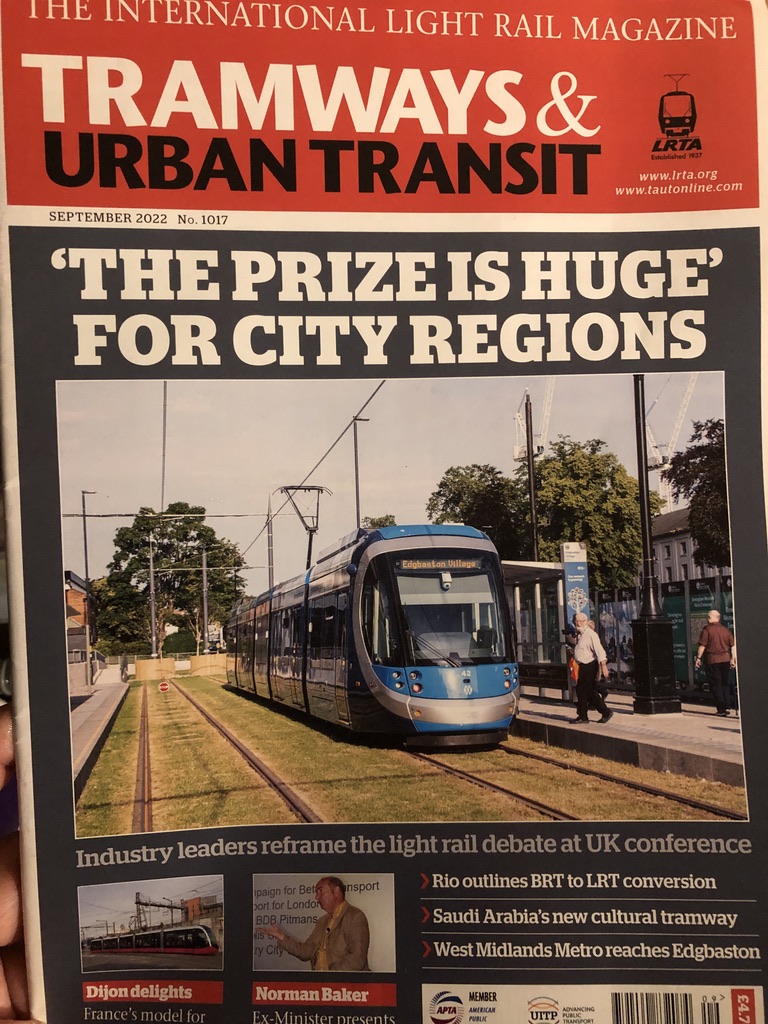
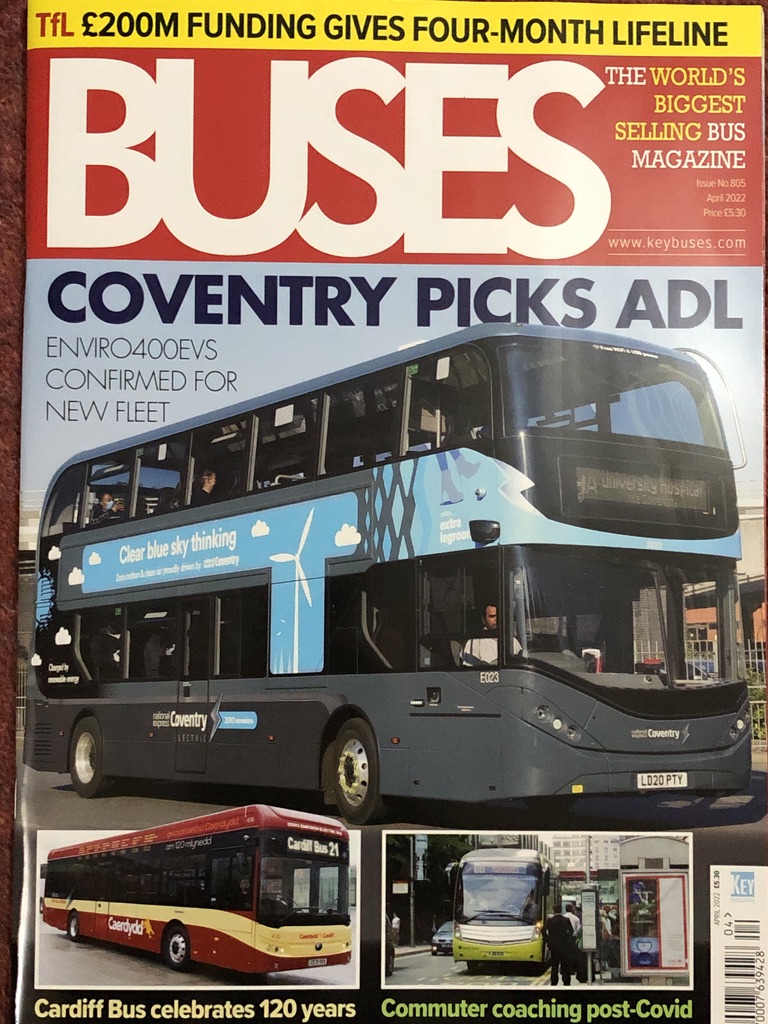

Above – for anyone interested in making transport more sustainable, getting into the policy details via specialist publications is all too often overlooked
Which also reminds me, Rail Future East Anglia meets in Cambridge in six weeks (06 December 2025). All the more important given the recent setback for the east-of-Cambridge section of East West Rail recently
“What’s behind the Green surge?”
Or rather this one – there have been others before, just not as numerically big as this one. But in term of magnitude and pressure on internal party systems, the jump from just over 10,000 members to over 60,000 in the mid-2010s was significant as well. Credit for that has to go to former leader Natalie Bennett, who was a regular visitor to Cambridge over that same period.
Above – previous smaller rises included the run-up to the 2010 general election when Caroline Lucas won the first parliamentary seat (Brighton Pavilion – where I lived in my final year of university) and in 2014-15 in the run up to that general election.
Some on the right have put it down to unhappy people in ‘woke’ professions switching from Labour, while others on the far left have put it down to the return of class-based politics that the workers and young people like. (The New Statesman gave its take here, and the HuffPo here.) And the random auto-AI function that I’ve only just worked out how not to default to:
- Zack Polanski’s leadership and communications talents in the face of growing mainstream media exposure (i.e. audiences beyond party politics)
- The shortcomings of Sir Keir Starmer and his Labour Government
- The shortcomings of other opposition parties in an increasingly polarised environment
- The changing political and social values in society
As if to make the point about mainstream media coverage, he was on Peston on ITV earlier (20 Oct 2025)
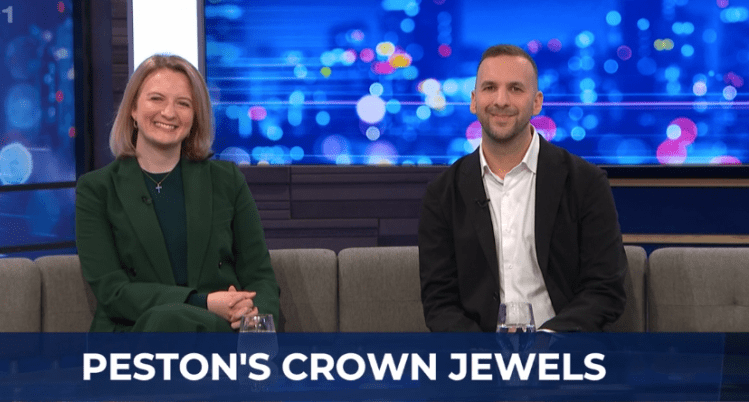
Above – calm before the storm: Mr Polanski called out the comments from Shadow Home Office Minister Katie Lam MP which also drew a robust response from James O-Brien
The local impact of the Green Surge
The Cambridge and South Cambridgeshire Green Party posted a few days ago that they had over 1,200 members. What they have also done (and I’m a little surprised we don’t see more of this from other political parties) is they’ve started organising community and neighbourhood events in pubs, cafes, and other community venues. Some have had guest speakers, some local training events, others purely social, and even a new book group. They have also hosted online discussions too.
Ultimately it’s the party’s prerogative as to what information they collect and divulge on the demographics of the new members.
- Age distribution (Students and young adults? Young professionals? Middle-aged and elderly?)
- Occupations and educational attainment? (Noting the longstanding stereotype of The Greens being a very middle-class party – one that caused friction in some areas with traditional heavy & polluting industries experiencing job-losses)
- Ward distribution – will this indicate future target seats in future local elections? (I might ask Phil Rodgers to do an updated blogpost on this!)
- Previous party-political and campaigning experience/memberships – how many are new to politics? How many left one party to join another? (Mindful of the accusation thrown at TeamNigel that they can be portrayed as being full of Tory rejects, tied to the failures of the previous 14 years)
Where does this leave Your Party of Corbyn/Sultana?
They had their Norwich regional assembly at the weekend which going by the photos had over 100 people participating, and which some of the Cambridge-based members went along to. They also had an online meeting following it, so we await the summaries of what happened from them. (Again, it’s their prerogative as to what they choose to share/keep within themselves, but they need to update their landing page).
Obviously the headlines of the fallout between the two most senior MPs in the grouping has not helped. If anything I feel sorry for people who got involved in good faith – perhaps for the first time in activism/politics, only to see their efforts squandered because of leadership failings. The contrast between the communications coming from The Greens vs Your Party has also been attributed as one of the reasons for the Green Surge – the former giving a much stronger impression of being competent and in control of their party standing in sharp contrast to the latter succumbing to the stereotypes made popular by Monty Python’s Life of Brian.
How the two parties deal with each other locally and nationally – and at election time, still remains to be seen
If you are interested in the longer term future of Cambridge, and on what happens at the local democracy meetings where decisions are made, feel free to:
- Follow me on BSky
- Spot me on LinkedIn
- Like my Facebook page
- Consider a small donation to help fund my continued research and reporting on local democracy in and around Cambridge

 The Cambridge Town Owl