If the Cambridge Leisure Park is redeveloped, Hills Road Sixth Form College should make a pitch for additional facilities on site given that many of their students spend their lunch hours there anyway
This stems from the recently published emerging local development planning documents
What’s ***really frustrating*** about the local planning consultation process is that they are ever so complicated that most members of the public have no idea which is the bit to make their views known. Take a new swimming pool for Cambridge – something I have been banging on about for coming up to a decade. Yet if you scroll down to the Wellbeing and Social Inclusion Paper from the Greater Cambridge Shared Planning Service (Do a keyword search for ‘Wellbeing’ on the page via the link here), the report says only one person responded calling for a swimming pool.
***And that person wasn’t me!!!***
“Well I’m glad someone was awake to make the case!”
Likewise!
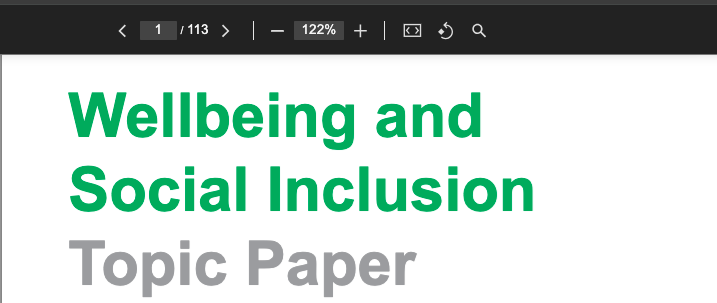

Above – both of these comments in the Wellbeing and Social Inclusion Topic Paper are symptoms of an utterly broken consultation process
“One member fo the public highlighted Cambridge skateparks are not suitable for year-round use; to be suitable in winter these require lighting and rain covers“
GCSP (2025) Wellbeing Topic Paper p35
Go to the CamSkate Skate Park off Coldham’s Lane by the Beehive Centre roundabout and you will find ***lots*** of young people (and a few older ones too) who will be more than happy to provide supporting comments for new permanent indoor facilities for skaters and those interested in trying it out. That is why they have regular sessions for beginners and for under 10s.
“Why only one respondent for the swimming pools?”
Because it’s so damn hard to find what to submit and where.
Take this page in the Greater Cambridge Shared Planning Service – the Wellbeing theme. You’ve got to know it exists in the first place. You’ve then got to scroll down to find out who said what in the first consultation in ‘View Responses’. This was the only recorded response on the swimming pool.
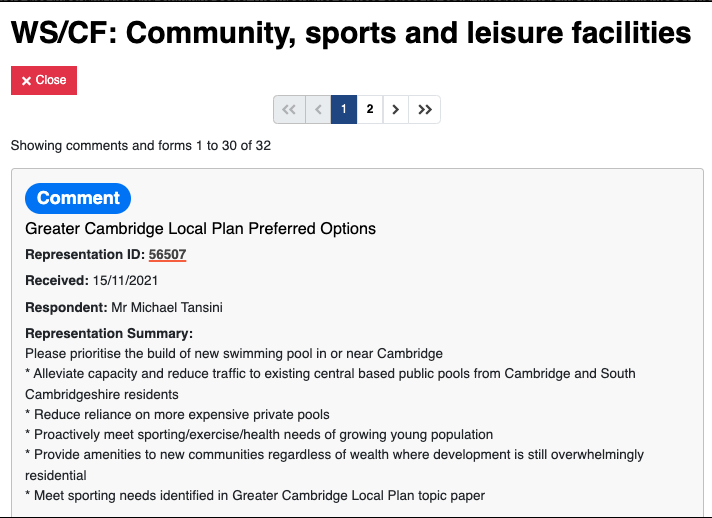
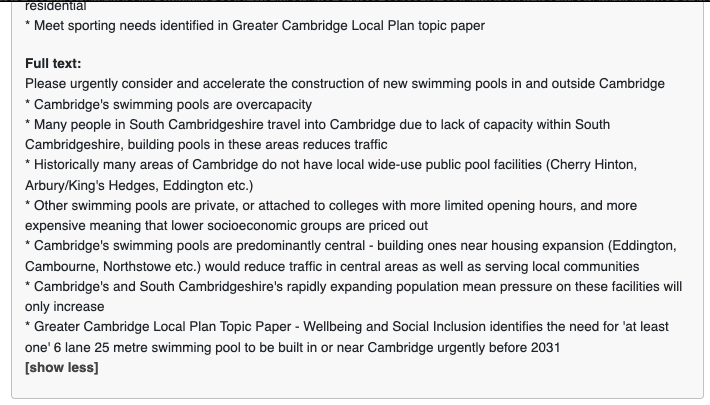
Above – I’m grateful to Mr Tansini for taking the time to put forward a strong case for new leisure facilities in and around our city.
“The council will say they have consulted widely though”
They have already:
“Some of the key feedback received during the First Conversation consultation included that the plan should require a range of facilities to be available. The timing was important, as people’s needs should be met when they move into new developments. We should also consider where they are placed, as they should be easily accessible by walking and cycling. A wide range of types of facilities were referenced, including community rooms, meeting places, communal workspaces, through to art galleries and venues.
“Sport facilities were also important, including swimming pools. The importance of these spaces for social interaction was important, highlighted by the isolation impacts of COVID-19. In terms of their delivery, we should involve communities at the planning stages, and consider longer term issues of governance and maintenance.”
Above – Community Sports and Leisure Facilities
I’ll leave it to councillors and council officials to decide how to ensure residents – especially teenagers, young adults, and students can make their views not only heard, but recorded and accounted for in the deliberations when it comes to new facilities.
“Yeah – where is the bit that we get to make the case for a new large concert hall?”
Mindful that a new concert hall for Cambridge is now part of the Mayor of the Combined Authority’s local growth plan. I tabled a public question for him at the CPCA Board Meeting last week. You can re-watch the webcast via this link at item 3 of the agenda.
“I am grateful for Mr Carpen’s support, although it may be a case of me agreeing with him, given his longstanding support for a concert hall in Cambridge. It’s important that any venue is accessible and of sufficient size.
“However, the critical factor in the success of a new concert hall is always its acoustics, as Birmingham triumphantly proved. London has lacked a large concert hall with outstanding acoustics since the loss of The Queen’s Hall, with neither the Royal Festival Hall nor the Barbican able to overcome their inherent limitations, despite multiple upgrades. This provides Cambridge with an opportunity. I will continue to engage with our constituent councils and others on this exciting potential.”
“Does a revamped Junction count as a new large concert hall?”
No – and nor should it, for it is a completely different type of venue meeting a very different demand. Or at least trying its best to in very difficult circumstances. Which is why I encourage anyone who can to join The Junction’s membership scheme to support their work in the city. I’ve been a member for a number of years, choosing to invest some of the donations I receive for my community reporting back into a facility that was one of the few entertainment venues accessible to us 1990s teenagers at a time when there was very little else for us to do.
The Junction and the Leisure Park are identified as redevelopment sites – as is the Clifton Road Industrial Estate. The latter raises *huge* issues around how our city functions, and the sorts of small businesses that are essential for it to function properly. For example there are a number of trades and building supplies merchants there that construction workers and repair professionals (esp for plumbing and electricity) can get essential small parts within the city. Get rid of that industrial estate and people in the trades are more likely to have to go out of town – especially with the closure of Mackays as well.

Above – GCSP (2025) Site Allocations paper p6
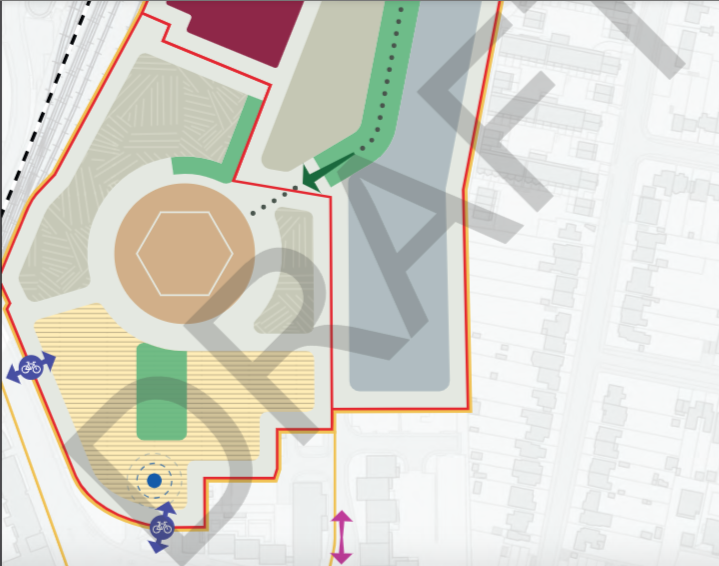
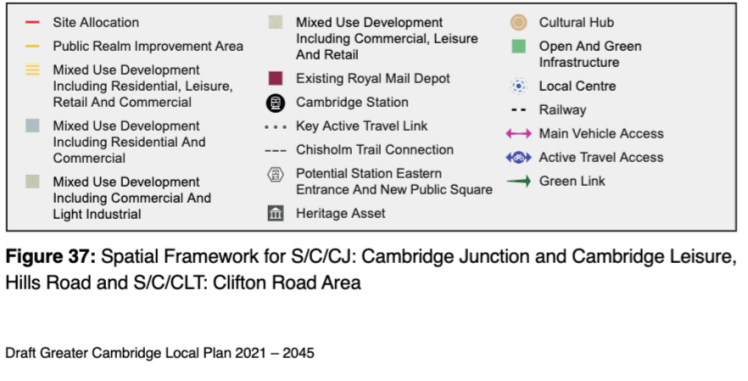
Above – the Cambridge Leisure Park diagram on p52 of the same document indicates something very different to what is there today (See Gmaps here)
But then that’s because (in my view) Land Securities made an absolute hash of what is a prime site – and as a result it has never achieved its full potential despite having that all-important ten-pin bowling alley and cinema on site.
“What does the document say?”
“Cambridge Junction is a local and regional music venue and forms an important part of the cultural offer of the City. The allocation also includes Cambridge Leisure, which comprises a mix of commercial leisure uses and food and beverage outlets, and is designated as the Hills Road Local Centre. To the rear of Cambridge Junction is a multi-storey car park and self-storage unit. The site is within a highly sustainable location, close to Cambridge railway station and local services and facilities.
“Based on landowner discussions, there are aspirations for a comprehensive redevelopment of the site. At the heart would be a new Cambridge Junction, providing a mix of performance space, workshop studios and a dedicated nightclub. The final design proposal of a redeveloped venue would need to be informed by local and stakeholder engagement to ensure it reflects local aspirations and is informed by best practice. Organisations such as the Music Venue Trust should be engaged.
“The redevelopment of the Junction should act as the catalyst for regeneration of the site. New and improved commercial leisure uses (including the re-provision of a multiplex cinema and bowling alley) must form part of a diverse entertainment, leisure and food and beverage mix, creating uses and high quality public spaces for people to visit throughout the day and evening. The public spaces should be designed to accommodate a wide range of uses, from public events like pop up markets to performance space, creating a vibrancy to the area that is currently occasionally lacking whilst opportunities should be taken to improve the relationship between the site and Hills Road.”
Above – GCSP (2025) Site Allocations paper p54
An Eastern Entrance to Cambridge Railway Station is also mentioned
“The site should also make provision for any possible future eastern entrance to Cambridge Station through the layout of the site and approach to movement and legibility. Given the wide range of uses proposed, there is an opportunity for a new energy centre to serve the site and potentially the wider area.”
Above – GCSP (2025) Site Allocations paper p54
Well I’m glad someone listened to my moans of the past decade or so! (Or had a look at the Holford Wright Report of 1950 and decided it was about time to get that sorted!)
What happens when developers go for short term profit over long term sustainability
This time nine years ago I wrote a blogpost about the then recent property developments around the railway station. Combined with a blogpost about the problems of crime around the railway station here posted in 2017, the whole thing ended up going viral and was picked up in The Guardian who ended up interviewing several people who you may recognise.
Fast forward to today and we might have an opportunity to undo at least some of the damage done by the poor urban design of the leisure park site. Furthermore, we might also have the chance to do something for the teenagers at Hills Road Sixth Form College. A couple of summers ago one recent former student told me how bad things had gotten because central government had incentivised the massive expansion of places without providing the funding for sufficient independent study facilities on site. This is why the Central Library in Cambridge is, she told me, ever so popular with teenagers: free wifi and warmth. The other alternative for teenagers once they turn 18? Local pubs. Again, free wifi.
Should Hills Road Sixth Form College acquire a property interest for independent study facilities there?
That’s one option, but our fragmented system of local government at present makes this all but impossible. No one seems to be in control of strategic planning for the provision of education for 16-19 year olds – successive Conservative Governments liking the concept of institutions being ‘independent’ of ‘big government’ but failing to make any provision for those institutions co-operating with each other for the good not only of their students but of the wider city as well. As it is, skewed financial incentives have resulted in a huge proportion of 16-19 A-level places in Cambridgeshire being concentrated in one small part of Cambridge.
Our teenagers deserve better
The emerging local plan could be an opportunity undo some of the errors of past decision-makers. But it will take some bold, visionary politicians (local and national) as well as the support of wider civic society to make it happen.
Do we have what it takes?
Time will tell.
If you are interested in the longer term future of Cambridge, and on what happens at the local democracy meetings where decisions are made, feel free to:
- Consider a small donation to help fund my continued research and reporting on local democracy in and around Cambridge
- Follow me on BSky
- Spot me on LinkedIn
- Like my Facebook page

 The Cambridge Town Owl