
In an extended statement to Parliament, the Minister for Housing Matthew Pennycook outlined twelve new changes he’s proposing to national planning policies
You can read more in the consultation document here
The headlines of the 12 changes:
- A permanent presumption in favour of suitably located development.
- Building homes around stations.
- Driving urban and suburban densification
- Securing a diverse mix of homes
- Supporting small and medium sites
- Streamlining local standards
- Boosting local and regional economies
- Supporting critical and growth minerals
- Embedding a vision-led approach to transport
- Better addressing climate change
- Conserving and enhancing the natural environment
- Taking a more positive approach to the use of heritage assets
One legal firm says this represents a radical change to Government Policy
- They Royal Town Planning Institute concur in their response.
- The Town and Country Planning Association are concerned that good place-making has been deprioritised
- The Council for the Protection of Rural England are concerned about risks to rural communities
There are some things which represent significant changes, including:
Building new homes close to existing rural railway stations
“We are also proposing a minimum density of 40 dwellings per hectare around all stations and 50 dwellings per hectare around ‘well-connected’ stations – maximising opportunities for sustainable development, making the most of high levels of connectivity, and improving access to jobs and services.”
Above – NPPF (2025) Consultation p15
The developments at rural stations was announced a month ago
I wrote about the Secretary of State’s announcement on 18 November 2025 here.
“This new policy will form part of the consultation on a revised NPPF by the end of the year, and will apply to land around both train and tram stations with a sufficient frequency of services.”
Above – Minister says, minister does. Hansard 18 Nov 2025
Today’s announcement is that above-mentioned consultation
Noting also that last month’s announcement mentioned tram stations but not guided busway stops!
***Ooof!***
“What does 40 dwellings per hectare look like?”
The case studies from URBED below give some idea of the housing types much as I find the blank areas of featureless cladding, the lack of symmetry and lack of artistic detailing visually off-putting.
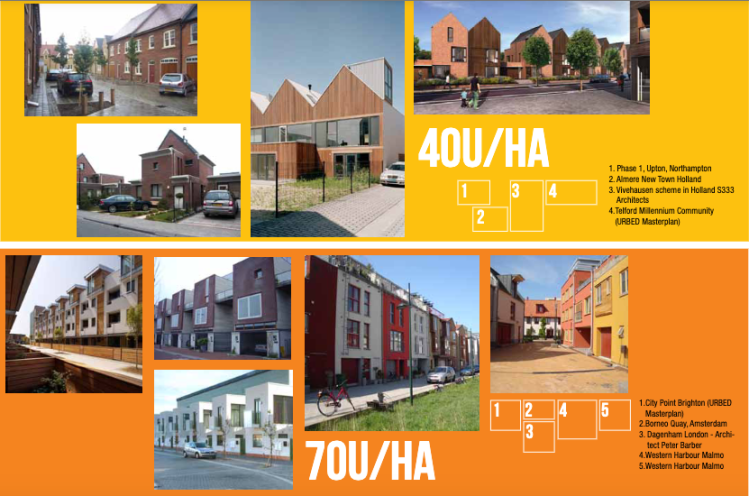
Above – URBED Case Studies on housing density, p3
In reality the densities are likely to be higher because of housing demand in places like Cambridge, especially given the firm intentions from Peter Freeman that he and his team are not going to give developers a money-printing machine at the expense of the people who live in the new developments.
On high quality design
I’ve actually lost faith in what building professionals tell me is ‘good design’ because all too often the exteriors of too many of the buildings going up in Cambridge fill me with rage. Or worse. Which is not good for my health. The lack of colour and variety in too many new developments is something I find profoundly depressing – especially when compared with neighbouring European countries that seek inspiration from their own historical design cultures such as the one from the Netherlands pictured below.
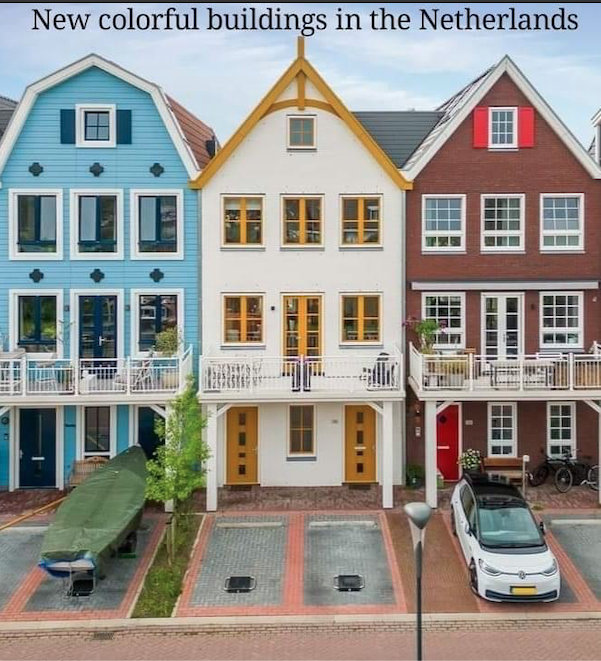
Above – I found this on my phone dating from 2024 and appears to be this development in the Netherlands
Four stories is medium density – a mix of single family to flats in the same row. The historical context for the familiar canalside buildings we associate with the Netherlands relate to the land constraints (very limited), taxation (you were taxed by the length of the canalside you occupied, but not by the height), and the wealth generated from becoming a trading and later a colonial power from the early modern period. Hence some of the exquisite detailing I recall from past visits in the 1990s to that part of the world.
For those of you who think I’m suggesting copying and pasting identikit designs from foreign places in the assumption that it will all work out fine here…please don’t. I’m demanding something far better.
Local history as an inspriation
Want to see the proposals and designs from previous eras going back to the 1800s? Have a look at RIBA’s archive here.
The Cambridge Biomedical Campus Housing Study by Lichfields 2024
I wrote about it back in May 2024 here noting that their staff housing requirements exceeded the cumulative total of additional new homes in Greater Cambridge for the entire emerging local plan. Which is why they looked further afield.
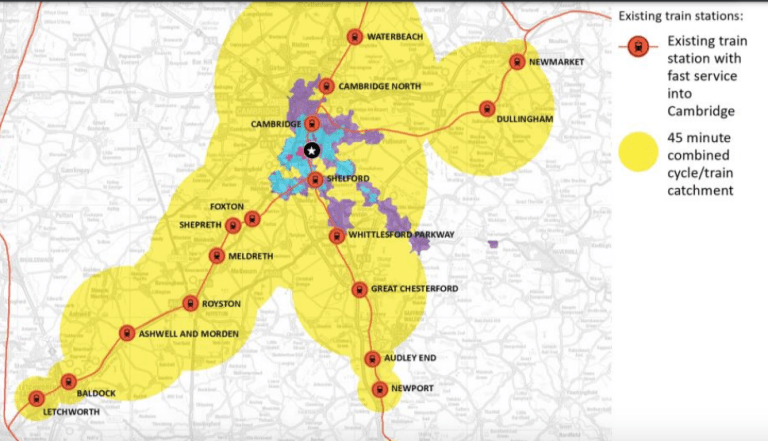
Above – CBC (2024) p26
The new proposals from ministers put all of the villages with railway lines within range of being considered for new developments. Note this is before we got more certainty from Peter Freeman about the Cambridge Growth Company as the general election 2024 followed a few months after this.
This is why as I stated last month, improvements in rail services and in rail infrastructure will be a key dependency for the Cambridge Biomedical Campus should those village stations become sites for large housing developments.

Above – from Rail Future East – noting that the call from Rail Future East for a new station at Cambridge East has since been incorporated into the Government’s plans.
Question: Does this mean that Cambridge and South Cambridgeshire’s town planners need to start work on new supplementary planning documents for those villages with rural railway stations?
Vision-led transport planning
One other issue that stood out for me in the 12 highlighted by the Minister was on something Cambridge has never really had – vision-led transport planning. Or rather it has been something that has swayed from ultra caution to undeliverable fantasy and back again. The common theme with all of them is enfeebled local government institutions. In England, transport infrastructure inevitably involves central government. With so many overlapping institutions and an adversarial structure of ‘for vs against’ rather than ‘here is a shared problem that we must all solve’ we end up in situations with the GCP busways where the Mayor of the Combined Authority is against them, while local government has in general acquiesced to transport officers doing their thing with very few making the Political case for the projects.
In the time that the controversial ‘city deal’/Greater Cambridge Partnership has been around, technological advances across a range of transport modes that made me wonder whether the GCP picked the wrong technology when supporting automated vehicle trials rather than micro-e-vehicles. Hence the International Transport Forum’s report on these makes for interesting reading.
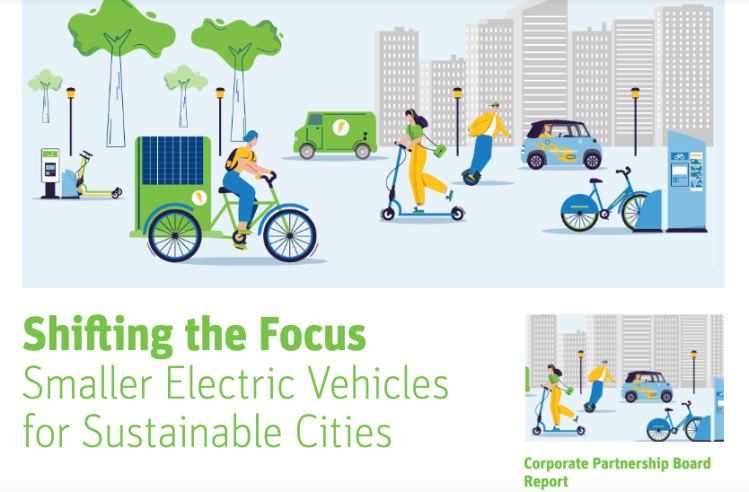
Above – Shifting the Focus (2024) ITF
Interestingly, the same forum has their own Vision-led Transport Planning workstream
Anyway, as it’s ‘Take out the trash’ week in Whitehall due to the looming Christmas recess, expect a flurry of new policy announcements in the next few days.
What will Policy Santa bring us?
If you are interested in the longer term future of Cambridge, and on what happens at the local democracy meetings where decisions are made, feel free to:
- Follow me on BSky
- Spot me on LinkedIn
- Like my Facebook page
- Consider a small donation to help fund my continued research and reporting on local democracy in and around Cambridge

 The Cambridge Town Owl