
And can their county councillors intervene to pull the application, change the architects and commission someone different to come up with a better design?
Turns out it’s Essex County Council (or more specifically their pension fund) that is the applicant according to Bidwells.

Above – confirmation from Bidwells 18 Dec 2025 to Cambridge City Council
I didn’t have nice things to say about the proposals from the architects which I wrote about here. But now that we know who the ultimate applicant is, you can:
- Contact the council directly,
- Contact your Cambridgeshire county councillor to make representations to your counterparts on Essex County Council (or alternatively, your local MP),
- Those of you who know people who live in Essex can lobby your county councillors to ask why their pension fund is insisting on such designs that will ultimately see millions of people go past it on their way into Cambridge’s city centre from both the south (up Hills Road) and from the railway station – noting again what new research about such designs in the field of neuroarchitecture is telling us.

Above – “We consider that the proposed scheme is an inappropriate and harmful overdevelopment of the site, primarily due to its excessive massing and scale” – Cambridge Past, Present and Future
Whatever your views of this application are (See the GCSP Portal here and search Ref: 25/04039/FUL. It’s for “Demolition of the existing building and structures, erection of an office building” on the corner of Station Road and Hills Road”), submit your comments via the portal following the guidance here. After all, you may strongly disagree with me and want to support the application (as a couple of formal responses to the application have done).
Cambridge PPF continued:
“Furthermore, the building’s uninspired, angular form and repetitive architectural character do not respond to the area’s history or draw inspiration from the innovative design of nearby landmark buildings.””
Above – summary from Cambridge PPF
It turns out the council’s pension fund acquired the site and building some time ago.

Above – Essex CC Pension Fund Statement of Accounts 2018 p171/p28 of the pdf
“County Hall Chelmsford – can we do a building swap instead?”
If only!
Actually they have some nice local histories of how they got their county hall site and how it expanded over the past couple of hundred years. The design of their 1700s-era hall is very similar to James Essex’s guildhall for Cambridge.
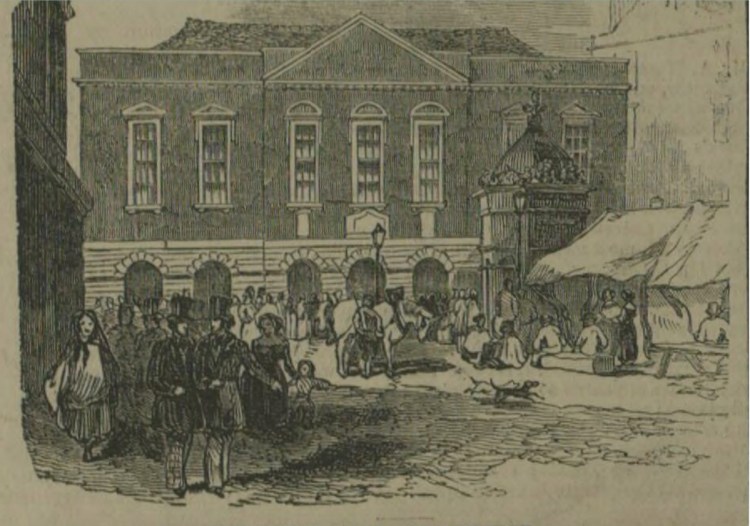
Above – Cambridge Guildhall and Market Square from Illustrated London News 1845
The additions they made to the county buildings (managing to preserve their original shire hall) in the 1930s are somewhat obstructed by buildings and trees in front of it, which is a shame.
Given the state of Cambridge’s civic buildings and the understandable complaints that the city is prevented by law and government policy from raising revenues locally for something splendid, combined with the move to Alconbury and the disposal of the old Shire Hall on a 250 year lease, for me there’s a huge civic gap for public buildings. Something I hope that is put right with Peter Freeman’s work on the Cambridge Growth Company. Which reminds me – see his latest email update for the end of 2025
If you are interested in the longer term future of Cambridge, and on what happens at the local democracy meetings where decisions are made, feel free to:
- Follow me on BSky
- Spot me on LinkedIn
- Like my Facebook page
- Consider a small donation to help fund my continued research and reporting on local democracy in and around Cambridge
A reminder about the emerging local plan for Greater Cambridge
There are many research papers tucked away in the appendices. This one is important as it covers arts, civic and leisure buildings and facilities.
Click on the library of documents for the emerging local development plan and scroll down to the heading that says Wellbeing and social inclusion. See the document called Draft Greater Cambridge Cultural Infrastructure Strategy Stage 1 (2025) in the row below it? That’s it. (Or click here)
 The Cambridge Town Owl