
Applying the conclusions of recent national reports to East Cambridge – where Abbey Ward is one of the most economically-deprived in Cambridgeshire
ICYMI – see the Cambridge Civic Quarter planning applications here
Only I missed them and will probably spend between now and the New Year going through them! Only the deadline for comments is 27 December 2025
I’m having another look at a specific part of the Greater Cambridge Local Plan Consultation which closes on 31 Jan 2026.
The two reports:
Above:
- Shared Institutions – The public’s view on the role of universities in national and local life by University College London / More in Common
- The Missing links: Connecting disadvantaged neighbourhoods to new economic opportunities by the Neighbourhoods Commission
“How do these apply to Cambridge?”
First of all have a play around with the data maps on Cambridgeshire Insight here. Use the menus to explore the data sets and compare the geographical differences in the different poverty indices.
We have been here before
One of my all-time civic heroes Eglantyne Jebb
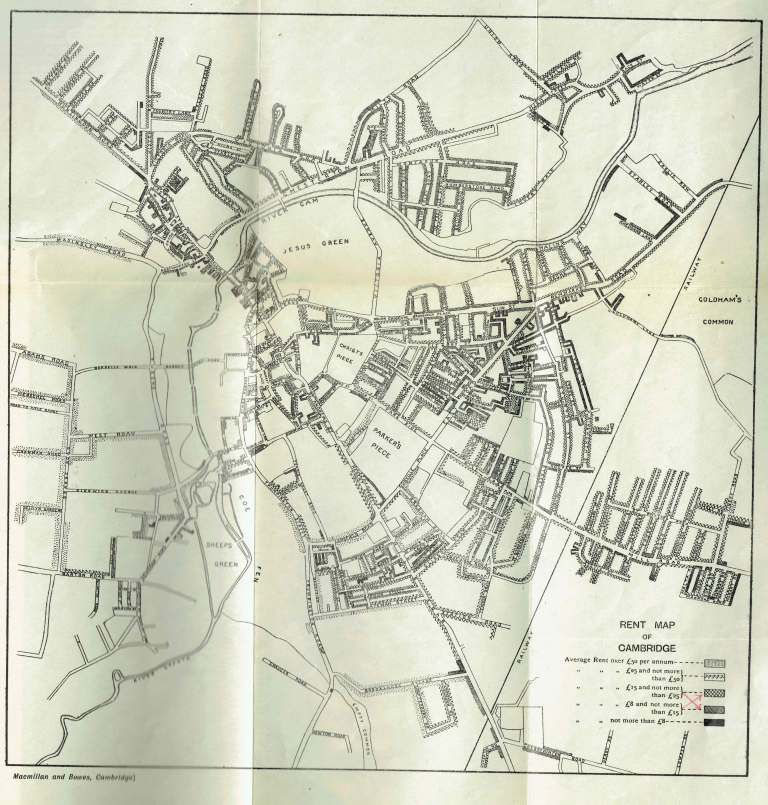
Above – Gwen Darwin, Cambridge (1906) Rent Mapp, in Jebb, E (1906) – A Brief Study in Social Questions.
As you look at the ground-breaking data map created by one of Charles Darwin’s granddaughters (Gwen, who went on to become a renowned woodcut print artist) for Eglantyne’s pioneering borough rent survey, you can see that the roads with the darkest shading have the lowest rents – which indicates where poverty is at its most extreme.
With the shading reversed in the Cambridge City Council 2023 report on mapping poverty, we’re now looking at the lighter shades for higher levels of poverty and multiple deprivation.


Above – Mapping Poverty 2023 – Cambridge City Council, p22
You’ve got Abbey Ward at the top right incorporating East Barnwell. (West Barnwell – or the original Barnwell is the old Kite where The Grafton Centre got imposed in the 1980s), and the affluent neighbourhoods with the generally more modern college-owned accommodation and Dons’ housing in Newnham ward in the bottom-left. An aside for political scientists: Despite being at opposite ends of the income tables, seven out of the eight councillors are Green Party councillors. And with Phil Rodgers having observed that the Leader of Cambridge City Council, Cllr Holloway has been announced as Labour’s candidate for Petersfield ward in May 2026 (assuming the city council elections are not postponed), it could be a clean sweep for the Greens. What are the explanations for this?
Note the continued large inequalities in Cambridge has now become a point of focus from a number of businesses who are now trying to work out what the most appropriate way is for them to ‘do something positive’ about this stain on our city. (See Abbey People and Cambridge Ahead with one initiative here). I remain of the view that the root of the problems are structural – to do with governance and ones that rely on central government intervention in the form of new legislation for an empowered local government.
Going back a decade – a third of children in North Cambridge were living in poverty in 2015
You can read the evaluation by the Red Hen Project here

Above – the front of the Red Hen Project’s evaluation 2013-17
“What did the national reports say?”
On the Shared Institutions report (the orange one) from UCL/More In Common, they concluded the following on local actions for universities:
“Focusing on the local: residents of university towns speak of their local university with pride, but also concern. Prioritising local contributions – such as shared facilities, outreach and local skills – while working with landlords and councils to manage challenges around housing, will be crucial to maintaining a positive relationship with local people. This includes demonstrating how international students can contribute locally and to the UK.“
Shared Institutions – Cambridge and Anglia Ruskin Universities
Obviously the Cambridge University context is different to almost every other university because of the massive endowments and college-based landholdings in the city centre that gives the institution/s the sort of influence in city policies that no local council could stand up to. And that’s before we look back at more distant histories and injustices which readers of The Spinning House by Caroline Biggs are familiar with.
In the context of Anglia Ruskin University – established as a local institution by Cambridge academics in the mid-1800s but for me made into something far greater by Dorothy Enright, the first woman to become Principal of a Technical College in England in 1925, the recommendations apply more clearly. At the moment I don’t see much evidence of this in terms of the quality and design ideas from their retained architects in their proposals for East Road in Cambridge. Furthermore as I wrote in June and told some of their senior executives at a conference they hosted recently, I think they should bring back their old module catalogue and refresh it for the challenges that our city and county now face – along with the desires for ‘learning for leisure and enjoyment’.
This also means universities need to consider the financial incentives on recruiting international students and the wellbeing of both local residents and the international students themselves who, institutionally are all too often seen as this ‘collective magical cash cow by the sector. (Personally I think all universities should be doing far, far more to integrate their students into the lives of the settlements they are located in.) The one institutional move that would influence their decision-makers would be amending the constitutions of universities so that they would be required to account for the needs of the ordinary residents in their local council area that they are located in. That would influence the evidence bases informing the major strategic decisions they take – and not require micro-managing from above, while at the same time enabling students, staff, and residents to hold the institutions accountable.
Missing Links – how the redevelopment of the Cambridge Airport site could help
As mentioned above, Abbey Ward is one of the most economically deprived in Cambridgeshire, with the eastern side of the ward hemmed in by the railway line to the left, the River Cam and Stourbridge Common above it, the airport on the right, and Coldham’s Common to its south. (See G-Maps here – it’s striking)
The moving of the airport frees up the site for major redevelopment
Having a look at the outline plan below, you can see what their initial ideas are.
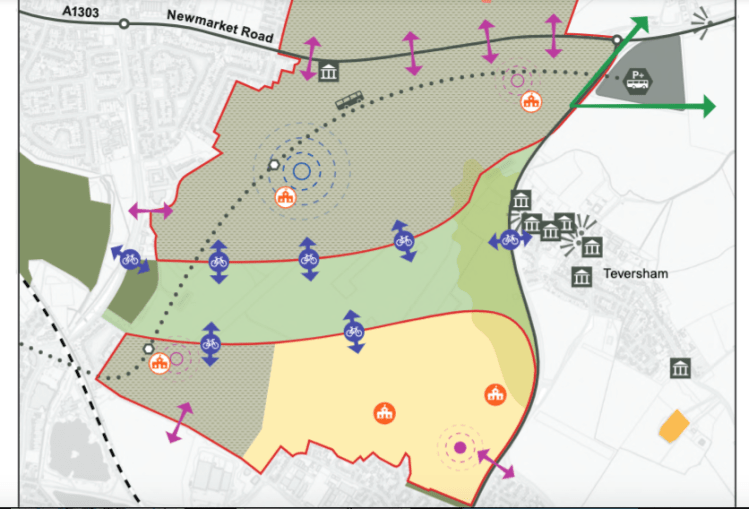

Above – from p207 / 113pdf in the Site Allocations Paper here
Policies for the airport site – please could we have a large adult education institution here?
You can read the draft policy for the airport site here.
“Cambridge East will be a vibrant, inclusive new city district that reflects the spirit of Cambridge while shaping its future. Rooted in a unique setting, Cambridge East will offer welcoming, walkable neighbourhoods which support an intergenerational community to live well, work purposefully, learn, and thrive.”
Above – well that sounds fun!
A world class offer for adult education
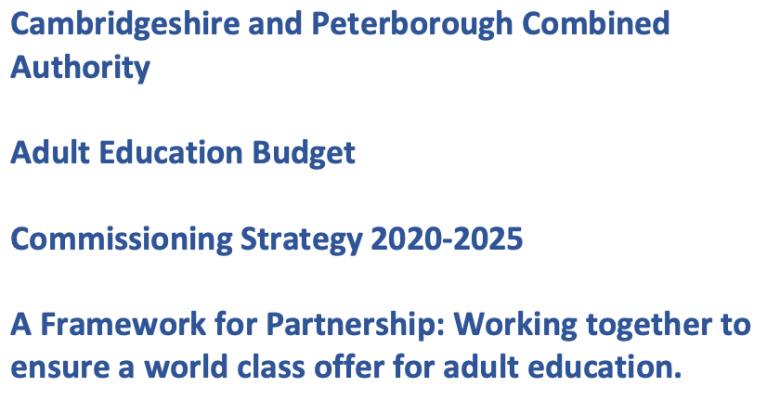
The Combined Authority’s words, not mine! Hence exploring here what that might be like
Nightingale Skills Centres recommendation from the Neighbourhoods Commission
The report pulls no punches on the failures of successive governments to ensure new further education institutions were properly and intelligently located.
“We have repeatedly heard how hard it is to get to further education colleges or other institutions that provide skills training.” We need to bring skills provision directly to
disadvantaged places rather than relying on people to travel miles, potentially tens of miles, to get access to basic qualifications and support.The government should consider the introduction of new ‘Nightingale Skills Centres’ to be set up in disadvantaged, economically isolated neighbourhoods.
Above – The Missing Links (2025) p28
Two things to note here:
- Such centres can only be located and established in places where there are a sufficient number of potential learners/participants to use them, therefore establishing such institutions must be:
- part of a wider regeneration plan
- involve the local residents at design stage so that they are helping scope the problems as well as identifying solutions that can block the barriers before they get put up (for example ensuring there are GPs, dentists, and creches on site and running by the time the new facilities are open)
- For larger centres (such as the one I’m calling for on the airport site), public transport that is hard for a future government to take away is as essential as are active travel routes. Or as Create Streets have written: It’s time for trams.
There’s also nothing to stop the creation of a large regional level lifelong learning college on the airport site that can also be connected to community-based venues that can provide some of the neighbourhood-based basic learning support that some people might need as first steps.
The airport site as a new urban and regional centre
On the site uses, the emerging policy for the airport site states that the uses/activities will include:
“A range of supporting services and facilities to meet the day-to-day needs of those living, working, visiting, travelling through and attending education there, including education, health, community and retail uses. These uses will be delivered at a series of walkable and wheelable neighbourhood centres;”
and
“Provision for such a wider range and scale of cultural, leisure, education, shops, community and faith facilities as will meet the needs of Cambridge East and the immediately surrounding area, as well as those of the wider city and sub-region, that will complement and not compete with Cambridge city centre, which may include civic uses, a conference centre, concert hall, arts centre or leisure facilities”
Above – Policy S/CE: Cambridge East
Which transforms the potential of the airport site into one that can host regional-tier facilities. Something that the planners (and the rest of us) need to consider when choosing what sort of facilities, amenities, and services can be provided and where.
“Won’t the new concert hall compete with the Cambridge Civic Quarter proposals“
Not if they are properly scoped.
My view is that if we get the rail-based public transport designed and built well, and if the specification of the new regional-sized facilities on the airport site is done at a scale significantly beyond what the city centre venues can handle, then this won’t need to be an issue.
I’m not suggesting an arena – which are normally over 5,000 in capacity and inevitably are limited in what they can look like. Most are minimalist boxes by necessity more than anything else. I’m thinking more along the lines of the list of venues here.
One of the reasons for calling for a new urban centre with regional tier facilities is to create a new part of town *where people would choose to be*
And not have to pay to be there or feel the pressure to spend money as at a shopping centre. Because as a separate More in Common report showed, over half of people with incomes under £40,000 feel disconnected from society around them.

Above – Social Cohesion (2025) by More in Common
And I’m part of that 50% – chronic illness meaning I’m unable to function full time so spend most of my awake hours in the council ward that I live in. Don’t ask me when the last time was that I was more than 5 miles from Cambridge’s city centre. (You can measure it in years!)
Right, it’s 1:30am.
If you are interested in the longer term future of Cambridge, and on what happens at the local democracy meetings where decisions are made, feel free to:
- Follow me on BSky
- Spot me on LinkedIn
- Like my Facebook page
- Consider a small donation to help fund my continued research and reporting on local democracy in and around Cambridge

 The Cambridge Town Owl