A short post on a recently-formed support group in Cambridge that meets at The Alex Pub on Gwydir Street
The group was formed by Angela Brown who you can contact via the above-two links.
The significant underfunding of neurodiverse health services – in particular ADHD in Cambridgeshire is grim – have a look at the picture here from the CPFT NHS Trust. Accordingly, some of you may want to become members of the Trust and give them some much-needed support.
Neurodiversity and loneliness in society
On IG which I generally use for doomscrolling, browsing for new music, and getting meme-bombed by neurodiversity-related posts, I get things like the below post.
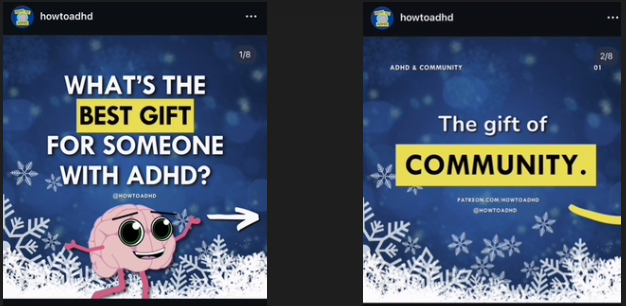
Above – the gift of Community
Going beyond single issue support-type groups
I won’t repeat what I wrote about Loneliness in Society in 2026 here. The biggest lifetime challenge of my adult life – one that I failed at completely – was trying to either form or become part of a community of close friends with multiple shared interests and multiple shared experiences.
I wrote about the concept in the context of a rapidly-growing Cambridge
“When I first left home to go to university down in Brighton back in 1999, I very quickly sussed out that whatever my new uni friendship group would become, it would be one with multiple shared interests and multiple shared experiences. But as I wrote [several] years ago, I never found my tribe. And following my heart attacks and my chronic fatigue diagnosis, I’m reconciled to the fact that I never will.”
Which is why part of my own existential challenge in recent years is to figure out ‘what do to now’?
“Does Cambridge risk becoming a mosaic of exclusive communities that seldom interact?”
That’s how I experience Cambridge at the moment. In that blogpost I noted examples of how that fragmentation is designed in:
- “The privatisation of public spaces where private security guards can eject people (brought in as a means of ‘moving on’ anti-social behaviour, but has gone far beyond that)
- Only making provision for paid activities rather than having free-to-access and safe open spaces
- Not making provision for key groups of people who have the greatest need – for example young people to the elderly, to people with limited mobility (I’m one of them)
- Having only expensive shops that people on low incomes cannot afford to frequent“
Hence as an initial collective response my decade-plus-long call for a Cambridge Societies Fair on an annual basis similar to what the students have
Because at least that way the public can find out about the support groups in one place, and also other shared interests that they might have with others. It cannot be done piecemeal – especially with a rapidly growing population *and* a sizeable transient population too. Those institutions responsible via their terms of employment/study/research need to re-assess their civic duties to the rest of the city and county to reduce the negative impacts of their short/medium term contracts have on the social stability of residential communities. That includes reassessing their rates of expansion – especially with post-graduate students.
Food for thought?
If you are interested in the longer term future of Cambridge, and on what happens at the local democracy meetings where decisions are made, feel free to:
- Follow me on BSky
- Spot me on LinkedIn
- Like my Facebook page
- Consider a small donation to help fund my continued research and reporting on local democracy in and around Cambridge

 The Cambridge Town Owl