Ministers want your views on their new draft guidance. How many of our recent developments meet their standards? (Actually, don’t answer that!!!)
How do some of the recent completions compare? Will we see improvements in urban design?
“What constitutes a well-designed place?”
- Liveability – healthy, mixed and integrated communities
- Climate – mitigating and adapting to change
- Nature – enhanced and optimised
- Movement – accessible and easy to move around
- Built Form – a compact and connected pattern of development
- Public Space – safe, social and inclusive
- Identity – attractive and distinctive
“Yeah – not seeing much identity in the recent carbuncles for Cambridge – particularly Kett House by Bennett Associates.”

Above – “We consider that the proposed scheme is an inappropriate and harmful overdevelopment of the site, primarily due to its excessive massing and scale” – Cambridge Past, Present and Future
Whatever your views of this application are (See the GCSP Portal here and search Ref: 25/04039/FUL. It’s for “Demolition of the existing building and structures, erection of an office building” on the corner of Station Road and Hills Road”), submit your comments via the portal following the guidance here. After all, you may strongly disagree with me and want to support the application (as a couple of formal responses to the application have done).
Cambridge PPF continued:
“Furthermore, the building’s uninspired, angular form and repetitive architectural character do not respond to the area’s history or draw inspiration from the innovative design of nearby landmark buildings.””
Above – summary from Cambridge PPF
The guidance features a few Cambridge-located developments
And one of them is Eddington.
****Wooaah!!! Uglington!!!***
Fortunately it was in the ‘movement’ section
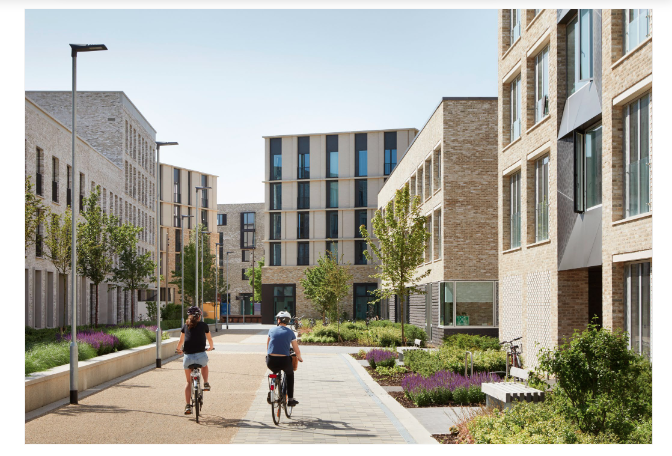
Above – the comprehensive active travel network of the new Cambridge University exclusive community with no social housing
I try to avoid Eddington because the architectural style increases levels of mental stress in my brain – which is inevitably bad for my health. It’s only from the research in the pioneering field of neuroarchitecture that I’ve discovered the words and language with which to use in a way that industry and medical professionals – and politicians find harder to ignore. Turns out I’m not the only one triggered by such things. Here’s Dr Cleo Valentine in Seoul back in Sept 2025. She got her Ph.D at Cambridge University (See here for the subject details) – which is one of the reasons why at the Urban History event yesterday evening I invited the researchers attending to apply their expertise to the consultations on the future of Cambridge. (See my previous two blogposts).
What the guidance covers.
Have a look at p92 of the draft guidance.
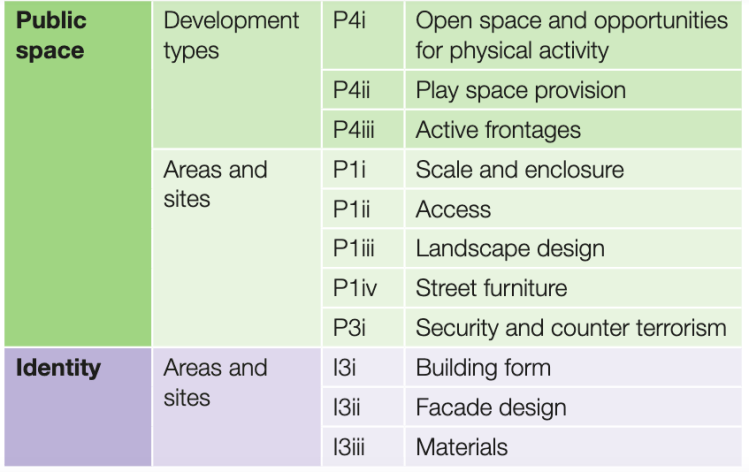
The guidance also says:
“Create character and identity – design codes for character and identity should respond to and celebrate the culture of the local community”
Which in principle should make it harder for bland spreadsheet-style blocks. The following page also states that buildings must relate well to surrounding spaces.
There are a number of interesting examples – in particular of what is and is not acceptable.
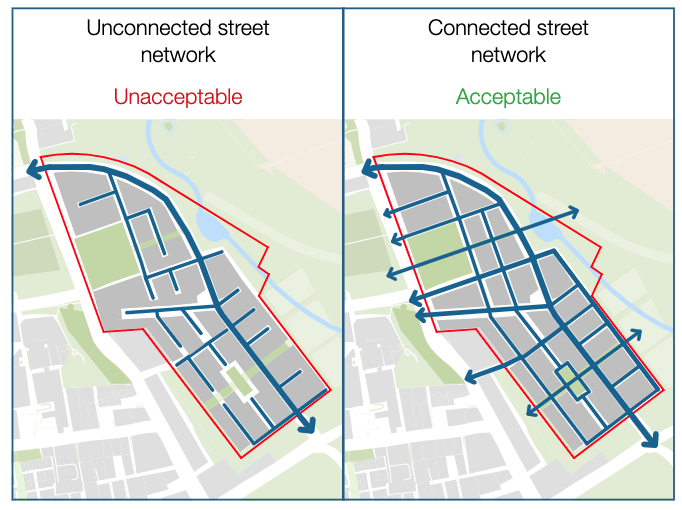
Furthermore, there are some lovely illustrations in it which make it feel more readable to the general public.
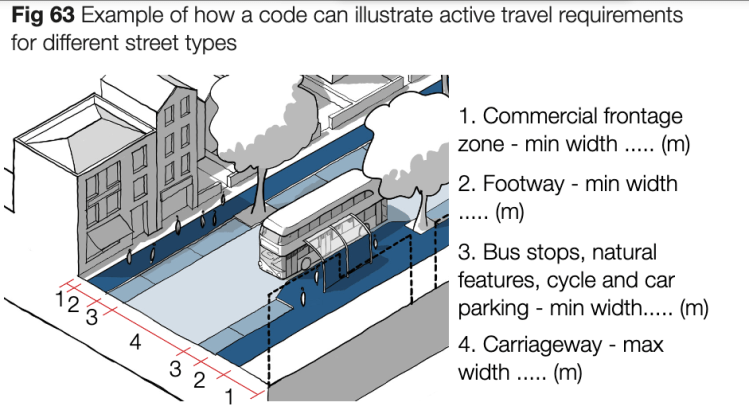
The illustrations remind me of the pioneering epic Radical Technology from 1976
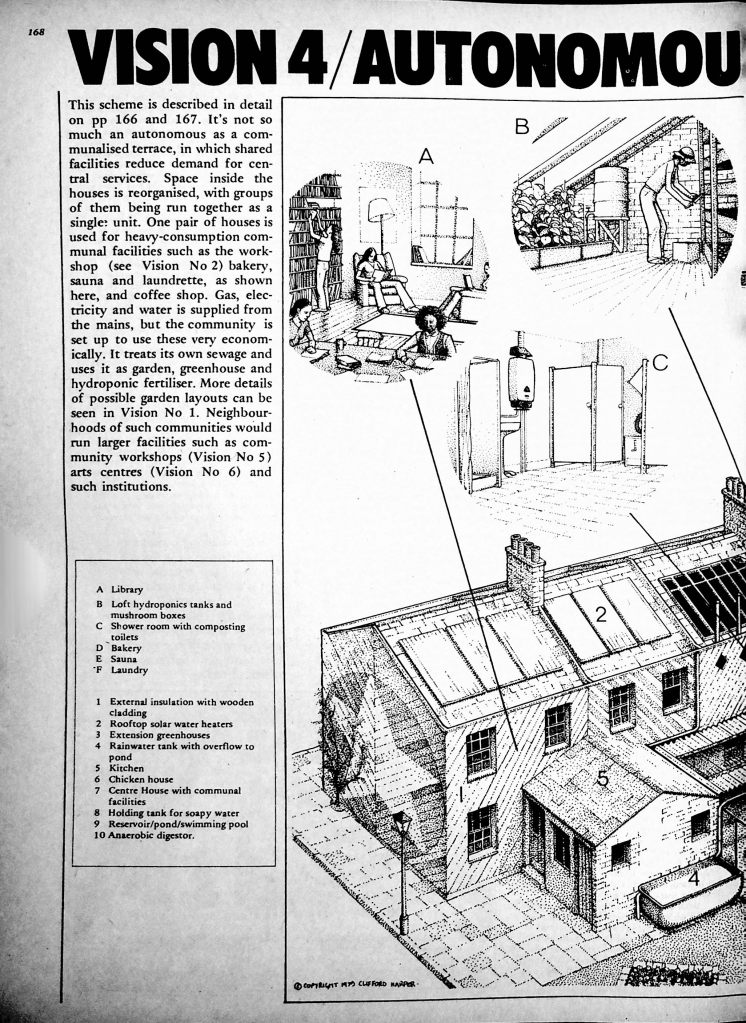
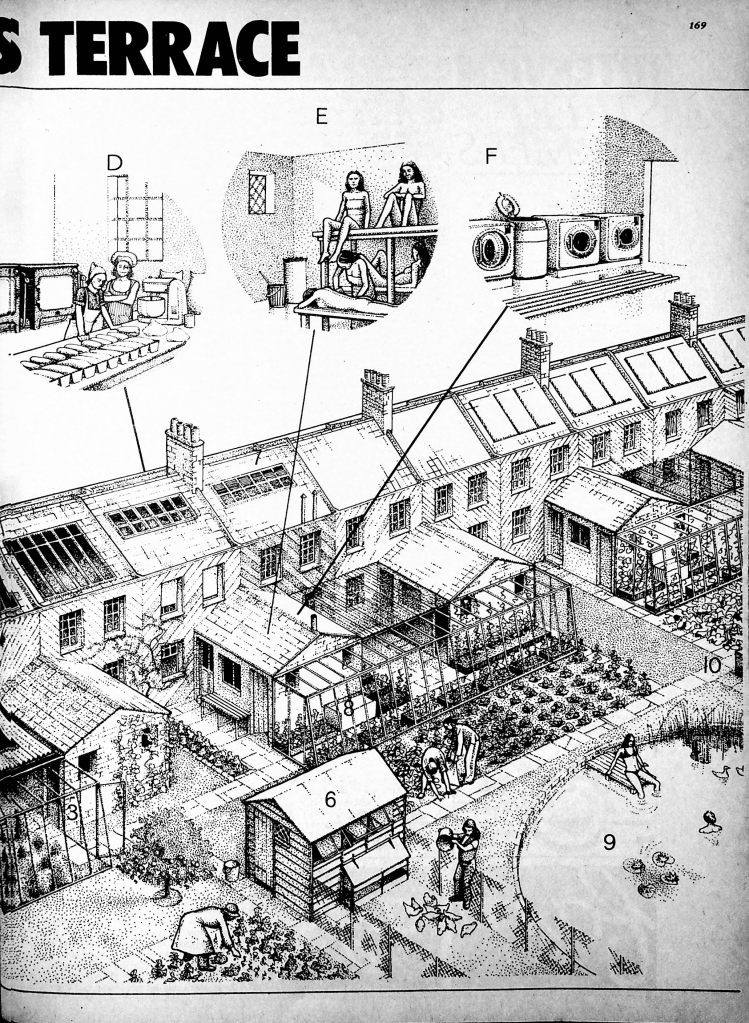
Above – Radical Techonology (1976) by Undercurrents p168
I have **no idea** how I recalled that image from half a century ago (probably me leaning into a neurodiverse trait that likes making connections with what’s stored in my head!) but the book Radical Technology is worth browsing through – I digitised my copy here. It shows what some of the early environmentalist movement in the UK was working on.
What also has been done well is they have selected a single anonymised area demonstrating how the guidance can apply.
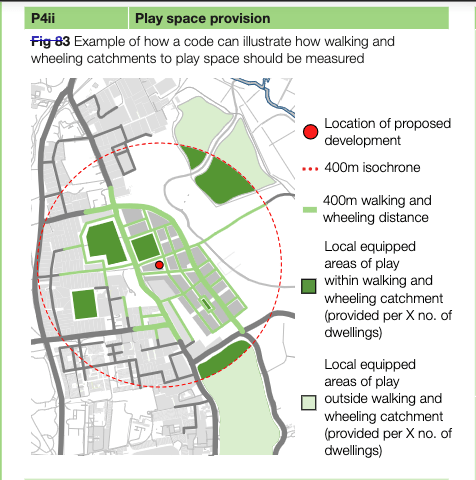
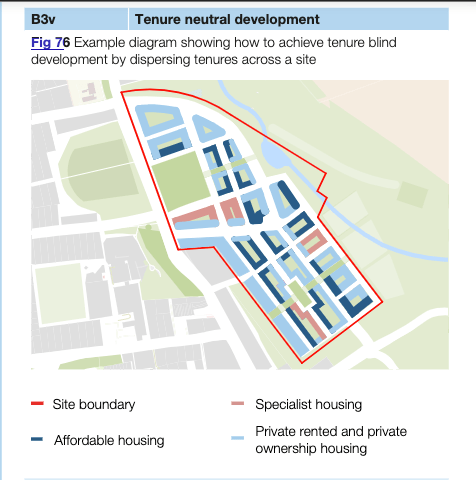
Above – p129 and p140
So if you are interested in the built environment and designing out bad things, have a look at the Government’s consultation being run by the Ministry of Housing, Communities and Local Government, and let them know! (For what it’s worth, I think this consultation would make for an interesting informal discussion event in a community venue. Just a group of people on beanbags or comfy chairs).
It’s also worth looking at in the context of Emotional Mapping
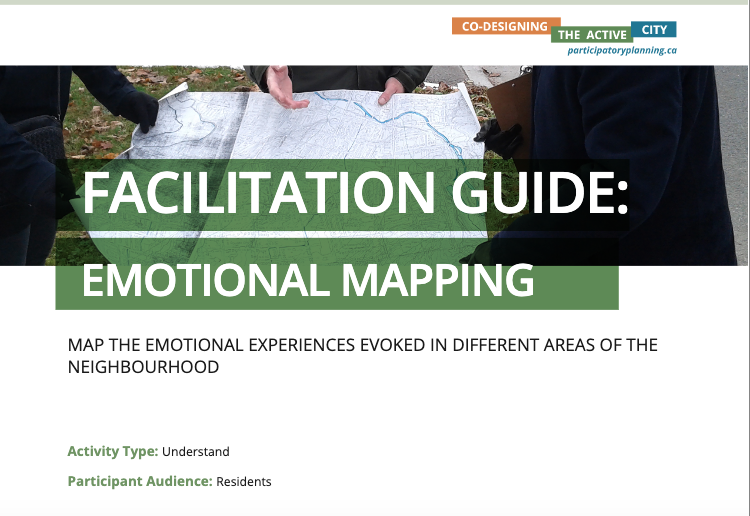
Above – you can access the practical guide here from Participatory Planning Canada.
This is from Canada’s Participatory Planning toolkit here – there are ***lots*** of other useful things in it. I included it in my previous blogpost here.
I’m hoping we’ll see some significant improvements in building design and our urban environments. Not least because if the international picture is telling us anything, we’ve come to the end of the era of whatever you want to call the era 1945-2025. Combined the international instability with the climate emergency – and the sobering national security assessment slipped out by the Government a few days ago here, we cannot carry on as normal.
If you are interested in the longer term future of Cambridge, and on what happens at the local democracy meetings where decisions are made, feel free to:
- Follow me on BSky
- Spot me on LinkedIn
- Like my Facebook page
- Consider a small donation to help fund my continued research and reporting on local democracy in and around Cambridge.

 The Cambridge Town Owl